Rare Fletcher Jones images inspire top artist

[printfriendly]

MC room 1948
Just one of the wonderful images: Workers in the main sewing room at the then-newly opened Fletcher Jones factory at Pleasant Hill, Warrnambool, in 1948.

By Carol Altmann

[dropcap style=”font-size: 60px; color: #A02F2F;”] A[/dropcap] treasure trove of rare images capturing the lifespan of the Fletcher Jones story is poised to be the focus of a series of artworks by noted Warrnambool artist, Glenn Morgan.

More than 100 images are contained on three CDs given to Glenn by the late David Jones – son of Sir Fletcher – about eight years ago when the pair were sitting on the Warrnambool Art Gallery Advisory Board.

join us2

“I’d made a couple of pieces around the Fletcher Jones theme and so David turns up with these three discs of images that he said I could have, so I put them to one side thinking I would take a proper look one day,” Glenn explains.

[box]Subscribers can access more images from this extraordinary archive here.[/box]

“I have always been interested in doing a sculpture reflecting the Fletcher Jones’ floats in the Florado festival (an annual Warrnambool street festival that started in the late 1950s) and so I started browsing the images on the discs and thought, bloody hell, there is some good stuff in here!”

Parade 30s - 2
“A dash of Cold War spy”: a Fletcher Jones’ fashion parade in the 1930s, possibly staged at the Warrnambool Town Hall?

[dropcap style=”font-size: 60px; color: #A02F2F;”]G[/dropcap]lenn is not exaggerating.

The photographs provide a literal snapshot of the growth and the hey-day of the Fletcher Jones story, from Sir Fletcher’s humble beginnings as a hawker, to the beginning of the last great years of the Pleasant Hill factory the late 1980s.

There are images of window displays, fashion parades, staff parties, the legendary Christmas picnics, the construction and opening of the Pleasant Hill site, family shots, staff shots, FJ sports teams, samples of early advertising and some of the many social and community causes that the Jones’ family supported.

“There is some really interesting stuff and it takes in not only Warrnambool, but Fletcher Jones in Adelaide, in Hobart, in Collins St,” Glenn says.

“The more you delve into it, the story just gets richer and richer.”

B ball Team 1946
The Fletcher Jones basketball team from 1946. Do you recognise any of these faces? If so, let us know in the comments box below.

[dropcap style=”font-size: 60px; color: #A02F2F;”]G[/dropcap]lenn has already started to seek private and public funding to build a new body of work from a series of images he has selected from the 100-plus.

“I would, ideally, like to spend a couple of years just working purely on this project – an FJ project – leading up to an exhibition at the factory itself, and then touring to Melbourne and Sydney,” he says.

“Funding, of course, is always the issue but I am applying for grants as we speak and hope to get some funding on board.”

glenn_morgan
Artist Glenn Morgan, known for his quirky sculptures, hopes to produce a body of work around the rare Fletcher Jones images.

The art project would also sit alongside the ongoing Fletcher Jones community storytelling project, coordinated by Julie Eagles, and the archiving of the Fletcher Jones industrial story by Melbourne University Archives, led by Melinda Barrie.

“It is such a great story, a very Warrnambool story, and I would love to be able to tell a part of it,” Glenn says.

Glenn and fellow artists Barry Tate and Jenny Altmann all run individual art classes at the former Fletcher Jones factory, with Jenny and Barry recently launching the Outlaw Gallery in the same space.

[box]Read our earlier profile on Glenn Morgan here.[/box]

newsletter Eat And Drink StonesYou might also enjoy…


Rare images of the FJ silver ball

Uncovered: Rena Jones’ lovely letter to the people

W’bool losing its character brick by brick

Montgomery buys a slice of ‘Motang’ history


All words, no funding, for the Fletcher Jones story

fletcher jones picnic
Just like old times: the Fletcher Jones gardens came to life at the recent spring picnic, under the watchful eye of the silver ball. The next challenge is to preserve the Fletcher Jones stories.

OPINION – Carol Altmann

If there was any doubt as to how much the Fletcher Jones Pleasant Hill site in Warrnambool means to locals, the recent spring picnic has laid it to rest.

Around 1500 people flocked to the gardens last weekend to wander among the market stalls, listen to the music, stretch out on the grass and – like so many thousands of children and adults before them – take pleasure in the many garden delights that Sir Fletcher Jones created in his factory grounds.

Cr Jacinta Ermacora has leapt on this huge wave of support to announce today in the local newspaper that she thought it was “time to tell the Fletcher Jones story”, and a meeting would be held shortly between all of the interested parties to work out how this could be done.

What Cr Ermacora failed to mention, or was not reported, was that the council was first asked to collect these stories way back in 2002, when it was a key recommendation in a report it commissioned into the future of the Fletcher Jones site.

What has been done by anyone on the council since then?

Absolutely nothing.

Thousands of stories make up the fabric of the Fletcher Jones story, which is still yet to be documented from a social history perspective. Image: Save the Silver Ball and Fletcher Jones Gardens Facebook page.


There is also a vast amount of precious Fletcher Jones memorabilia cast about Warrnambool, with some in History House, some at The Artery, and some in people’s private homes, that needs to be collated, assessed and preserved for future installations.

What has any council member done about that so far?

Absolutely nothing.

In the interim, as people age, and pass away, the stories are being lost and the memorabilia is getting harder to trace (and let’s not forget that many items ended up in a skip bin when the site was first sold by the council in 2005, only to be retrieved by artists).

This is why a small group of people, led by Julie Eagles from the Warrnambool Planning and Heritage Group, has been asking the council for months whether there is any funding set aside in this year’s budget to at least start the process of gathering these stories.

It was hard to get a clear reply.

Bluestone got a reply on Thursday and this is it in full:

“We have no funding specifically allocated to telling the story of Fletcher Jones in this year’s budget.

However, the history of Fletcher Jones and other elements that tell the story of Warrnambool will be on the table when the time comes to look at public art as part of the city centre renewal.

Once we have the foundation stage of the renewal plan completed – which addresses issues including accessibility and mobility – we’ll be engaging the community in a discussion on public art.” – Nick Higgins, Manager Communications.

So how much funding is there for the Fletcher Jones story project?

Absolutely nothing.

fletcherjones
The stories behind working for Fletcher Jones are yet to be captured.

By contrast, Melbourne University has already started work on collating and recording the business story behind Fletcher Jones and Melinda Barrie, from this project, has shown a willingness to work with local groups to capture the local stories.

It is embarrassing, to say the least, that a Melbourne institution has been more motivated and excited by our local, contemporary history than our own council.

And by contrast to the council’s inertia on what we might call the whole Fletcher Jones package – the stories, the site, the potential – last Sunday’s picnic was a triumph of what can be done through hard work, passion and belief.

Not only did it showcase the magnificent efforts of resident gardener Lex Caldwell and his team of volunteers who have kept the gardens alive, but it was a celebration for all those other volunteers who believed that the best parts of this iconic site were worth saving.

Those who pressed hardest to keep Pleasant Hill on the public radar – Julie Eagles, The F Project arts collective, us here at Bluestone Magazine, and the consequent Save the Silver Ball and Fletchers Gardens Facebook page started by Tonia Wilcox – all did so without any official backing.


The annual Fletcher Jones Christmas parties were legendary in the 1960s and 70s. A little of that feeling will be revived next month. Image: Courtesy of Lost Warrnambool.
The annual Christmas party picnic was a highlight of the Fletcher Jones calendar. Plans are afoot to bring them back again, albeit in a revised version. Image: Courtesy of Lost Warrnambool.


Similarly, the spring picnic was organised within weeks by The F Project/The Artery without a cent of funding and relied heavily on volunteers who pulled it all together – people like Dr Emma Charlton, Megan Nicolson, Des and Helen Bunyon, Ruby Richardson, Danielle O’Brien, the Factory Arts crew, Julie Eagles – the same names that keep coming up time after time and who continue to make exciting things happen around the city.

They don’t sit around waiting for others to do something: they just get on with it.

The F Project, for its efforts, made less than $400 on the day from a raffle, but it was never about raising money. It was all about bringing life back to the gardens through the arts, but you can’t keep expecting volunteers to do all the heavy lifting.

And so it is with the capturing of the Fletcher Jones stories.

The funding is there: it’s just how the council chooses to spend it. 

It recently found $10,000 on short notice for the Oddball movie, and another $3 million of state and council funds are about to be plunged into sound and light shows at Flagstaff Hill.

So unless Cr Ermacora can come to the meeting armed with a firm proposal for council funding, it is nothing more than hollow words on the back of very successful picnic and that – unlike a pair of Fletcher Jones’ scissors on the factory floor – just won’t cut it.


David Jones Jr on the future of the FJ site


silver ball, fletcher jones, mark rashleigh
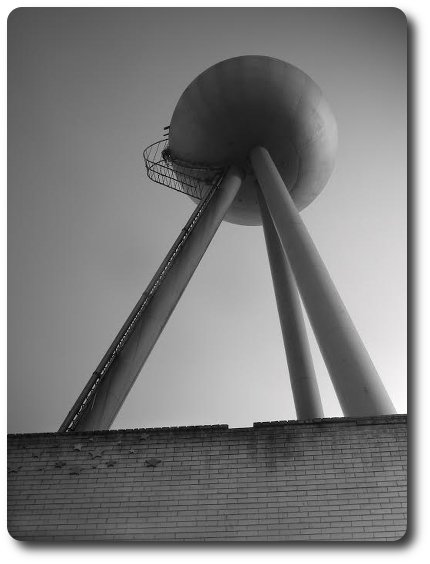
This stunning image of the Fletcher Jones’ silver ball was taken by Deakin University fine art academic Mark Rashleigh who has kindly given us permission to reproduce it here. It depicts the tower with its ladder and railings intact.


OPINION

[dropcap style=”font-size: 60px; color: #ABCCAB;”] A [/dropcap]s Heritage Victoria prepares to inspect the dilapidated Fletcher Jones factory in Warrnambool next Monday (7/4), the grandson of Fletcher Jones said his family would be delighted to see something “creative” happen with the site.

In so saying, however, David Fletcher Jones Jr said that his family fully appreciated the complexity of the situation that has developed since the current owner, Daramking (owned by failed Geelong businessman Ian Ballis), went into receivership in 2012.

“I am anxious to stress that we recognise how challenging this all is,” Mr Jones said in an exclusive interview with Bluestone.

Mr Jones is the son of the late David and Isobel Jones and lived in Warrnambool until his teenage years. As a result, he is keenly aware of the connection that many people feel to the Fletcher Jones factory site because of the high esteem in which his grandfather was held.

“How the site looks today is very sad,” he said.

“Everyone would like to see something better done with it.”


old fj gardens shot
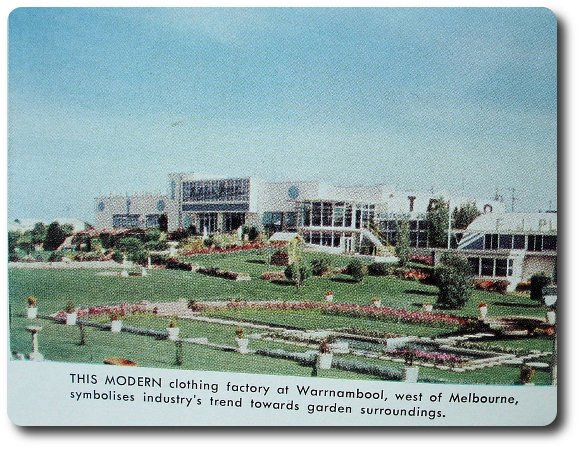
Fletcher Jones factory, Warrnambool circa 1950’s. Photo source: Land of the Southern Cross Australia. Published by The Australian Publicity Council. Private collection.


[dropcap style=”font-size: 60px; color: #ABCCAB;”] M [/dropcap]r Jones, who with his sisters, Susan and Anne, oversees the philanthropic FJ Foundation, said the debate around the future of the site reinforced that there was no easy answer and a solution would require a “thorough engagement with the council and the community”.

“Quite a complex and thoughtful solution is going to be needed,” he said.

“And we would be excited if something thoughtful and appropriate could be done.”

While Mr Jones did not wish to specify what sort of development he would like to see on the site, he agreed that a project that linked to the broader community would certainly reflect the values of his grandfather.

The Jones’ family have had no direct involvement in the FJ factory site since the company was sold in 1995, but the personal links remain strong.

The water tower was designed by Fletcher Jones’ son, Ralph, who was a consulting engineer and is now aged in his 80s. The Pleasant Hill gardens, meanwhile, were designed by Fletcher Jones’ brother-in-law Darby Boucher.

The heritage-listed water tower, gardens and other key elements of the iconic site have been central to recent discussions between Heritage Victoria, the Warrnambool City Council, the administrators and the mortgagors as to who has responsibility for maintaining these historic elements.

A Save the Silver Ball and Fletcher Jones Gardens group has also added a strong element of grassroots community activism.


inside fjs

[dropcap style=”font-size: 60px; color: #ABCCAB;”] I [/dropcap]n the meantime, the various tenants occupying different parts of the building are still paying rent and, in most cases, repairing what they can as the building continues to crumble around them.

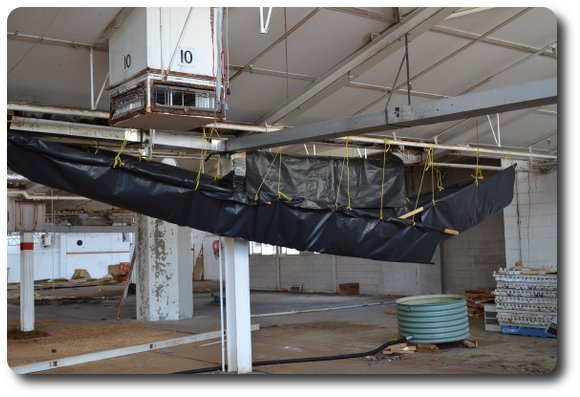
The Triton Woodworkers Club, for example, pays around $9000 a year for a space directly under the silver ball that is substantial in size, but leaks like a sieve whenever it rains.

The club has rigged up an improvised internal drainage system that keeps most of the rain off their equipment – if not the floor –  but an outsider can’t help wondering why they are being charged anything at all, especially as a not-for-profit community group who, simply by being there, help to keep the vandals out.

So where does the long-term solution to the site lie?

Hopefully a constructive plan will emerge from the talks between the various parties, but, in the meantime, it is worth revisiting a key recommendation of the 2003 consultants’ report, commissioned by the council, into the site’s future.

It suggested the council, even if it no longer owned the site, keep the dialogue open between the community, any developer and the council to ensure its future life was in keeping with community expectations.

To date, this has not happened. This may change and, if it does, we may be on our way to the “thoughtful and appropriate” solution that such a high-profile and important site deserves.

[box] Postscript: According to the Warrnambool City Council, it spent almost $160,000 on the Fletcher Jones site between 2002 and 2008. A breakdown of this figure was unavailable, but it included repairs on the silver ball after an assessment in 2004.[/box]

newsletter Art Music Stones More on the Fletcher Jones campaign…


Who will step up for Fletcher Jones?

Close Flagstaff Hill; save Fletcher Jones

Don’t drop the ball on FJ’s icon

Mini FJ’s silver ball to shine again for festival

Fletcher Jones site taken off the market 

The Save Fletcher Jones campaign


Keeping the spirit of Fletcher Jones alive

Fletcher Jones gardens circa 1970
Pleasant Hill in its prime in the 1970s. Image: Corangamite Regional Library Corporation. Copyright 2004.


It says a lot about the importance of the Fletcher Jones gardens to Warrnambool that even though the Raglan Parade factory has fallen silent and into disrepair, the gardens continue to hold on.

“Pleasant Hill” was once a major tourist attraction for the city, with busloads of visitors pulling up to the kerb and pouring out to take photographs, while locals all have their favourite memories of the beautifully landscaped gardens: the fish pond, the stepping stones, the wishing well, the sun-warmed cement turtle, the archways, the mosaic ‘basket’ garden bed, the tall man in the white trousers who advertised Fletcher Jones menswear.

The gardens were established over a period of years after Fletcher Jones first selected the site – a disused quarry – for his factory in 1948. And while they are a shadow of what they were in their prime, when up to eight full-time gardeners were employed, the fact they are maintained at all is quite incredible.


Fletcher Jones gardens volunteers
Fletcher Jones gardens volunteers: Lester Campbell (left), Philomena Headen, Don McLean and Lex Caldwell.


[dropcap style=”font-size: 60px; color: #A02F2F;”] F [/dropcap]or this we can thank our Quiet Heroes for the week: Lex Caldwell, who oversees the gardens in exchange for living in a cottage on site, and a small, rotating team of volunteers who turn up each Tuesday morning to weed, mulch, mow or do whatever else needs to be done.

When we visited, the volunteer crew included Don McLean, Lester Campbell and Philomena Headen who were hard at work weeding one of the garden beds and picking up bits of broken glass.

Imagine how the place would look without them?

[box]The FJ gardens crew will receive a coffee and cake voucher from Lozzar’s Lounge Cafe, 52a Kepler St Warrnambool. Thankyou to owners Loretta and Phil for supporting this week’s Quiet Heroes.[/box]


Lozzar's Logo


newsletter Eat And Drink Stones Meet some of our other quiet heroes…


Tackling a hidden terror: Pat McLaren

A life-changing adventure: Schoolies with a Cause 

A winner for Woodford: Tania Ferris

United we stand – Wbool Uniting Church

Kylie Thulborn – pushing boundaries