The artistic face of Christopher Grace

[printfriendly]
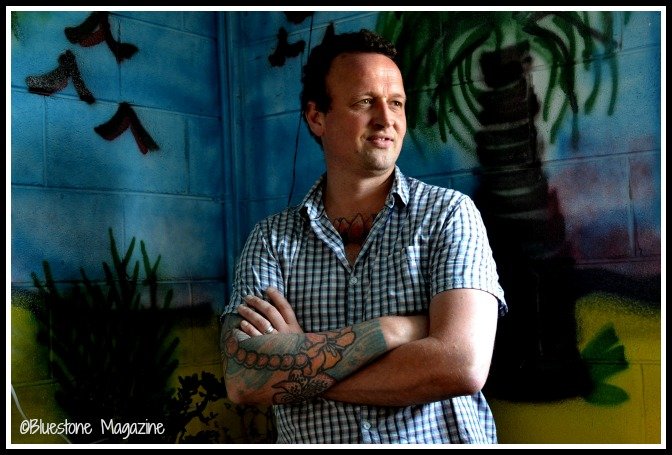
Having walked away from a potential career as a photographic artist in his teens, Christopher Grace is returning to his love of shooting with film.

Words and images by Carol Altmann

[dropcap style=”font-size: 60px; color: #A02F2F;”] N[/dropcap]ot long into our conversation across a table outside Proudfoots Boathouse, Christopher Grace lights a second cigarette and leans in: “I realise I fucked up”.

The celebrated south-west chef, who has worked at just about every top restaurant in the region, is not talking about stuffing it up with food, but his first love – art.

He is also speaking of a time when he was not Christopher Grace – which is virtually a brand name – but Chris Grace, a gifted art and music student fresh out of Box Hill Tech, who was accepted into the highly competitive photography degree at RMIT university.

gift subscription pic

He dropped out after two years. Not because the work was beyond him, but because, like for so many uni students, the temptations beyond the tute room proved too great.

“There is a level of self motivation required to succeed at university and I, unfortunately, didn’t have it at that time,” he says with a crooked smile.

What should have been a beginning, became an abrupt ending.

Reaching out - or back - to a love of photography has reignited a creative heart in well-known chef, Christopher Grace, who works with a trusty Nikon F4 film camera.
Reaching out – or back – to a love of photography has reignited a creative heart in well-known chef, Christopher Grace, who works with a trusty Nikon F4 film camera.

[dropcap style=”font-size: 60px; color: #A02F2F;”] C[/dropcap]hristopher left art behind and, like local counterpart Ryan Sessions, fell into cooking (by taking a job at a takeaway joint near the call centre where he was working) and realised he had a knack for the chemistry of food.

His career as a chef has been stellar, including 14 years in the south-west working at celebrated restaurants including the Royal Mail, Merrijig Inn, Portofinos, Basalt and in his current role as manager of Proudfoots but now, at the age of 36, there is a stirring.

“I quit the booze for a while about 18 months ago and had a realisation that I was never going to be content unless I had another crack at photography,” he says.

The only problem was, the world had moved on and digital images and Photoshop had all but replaced film and darkrooms.

“I didn’t own or know how to use a digital camera, and I didn’t want to,” Christopher says.

“For me, it is still about film. Film is really important to me because you make decisions, you control the process, you have an intent and it is so much more rewarding than holding up a computer and letting it take the photo for you.”

chris grace_11
A face in the crowd: one of the 30 best images Christopher shot on film during a recent trip to Bali using the Nikon F4 which, he says, made people feel more relaxed than pointing at them with a smartphone.

[dropcap style=”font-size: 60px; color: #A02F2F;”] A[/dropcap] friend sold Christopher his Nikon F4 film camera, a heavy, full-metal-jacket unit built to withstand a war zone.

Christopher carted the beast across Bali and shot four rolls of precious film with 36 shots per roll. The results are framed and waiting for a wall in his home, where we pick up the conversation.

” I got about 30 images that I really like,” he says, pulling a selection from the pile.

They remind me of photos from the 70s: pre-Photoshop, natural, muted tones, and strangely captivating for this very reason.

“The images have scratches, burn marks, finger prints and some have been developed in old developing fluid, which has created its own effect. They are imperfect and that is the whole point,” Christopher says, his voice animated.

black cockatoo - chris grace
A photograph or a drawing? Christopher’s hand-coloured photograph of yellow-tailed black cockatoo blurs the boundaries – and that’s just how he likes it.

[dropcap style=”font-size: 60px; color: #A02F2F;”] P[/dropcap]art of the appeal of both cooking and photography to Christopher is that they both rely on rules: what works, what doesn’t.

But while he says he “likes rules”, he also likes to bend if not break them.

As Christopher shows me his portfolio of work, which includes photography, collage and spray painted art works, it is hard to tell what is a photo, what is a drawing, and what is a painting. And that, again, is the whole point.

“I will take a photo and hand colour it with pencils or Textas, so it is no longer looks like a photo, but a drawing – but it is still a photograph,” he explains, smiling at the deliberate confusion he creates.

chris grace_9
Christopher with a section a large work, a photograph of gravel on the roadside that is being transformed into something quite different through hand colouring.

[dropcap style=”font-size: 60px; color: #A02F2F;”] I[/dropcap]t is all about the freedom to experiment, explore and maybe even occasionally fuck up, and in this I get a sense Christopher is rediscovering a freedom that no longer exists for him in cooking where, in a smartphone world, food has become an obsession and everyone is a critic.

So while Christopher has set a goal to create 52 art works in 52 weeks – and is on track – he is ambivalent about an exhibition.

“I would love to have a small exhibition, but I am not sure if anybody would come and that doesn’t bother me, because I don’t need other people judging my work when I already judge myself so harshly,” he says.

If any proof was needed of that fact, look no further than the letters on Christopher’s spare bedroom, where much of his art is stored: MONASA.

“The Museum of New and Shit Art,” he laughs.
chris grace_13
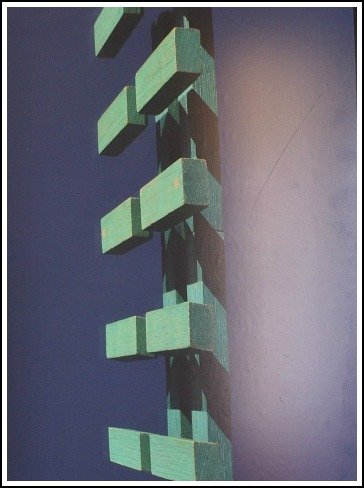
A detail from a series of images experimenting with objects laid on mirrors and photographed from above.

newsletter Eat And Drink StonesComplement this story with…


Diving deep into an ocean of risk: Peter Condon

The Stag starts a new chapter in Sessions

Developing a passion for vintage cameras

A life behind the lens: Jack Wilkins

Revealing the eye of the tiger: Peter Clayfield


Revealing the eye of the tiger: Peter Clayfield

peter clayfield
Photographer – and collector – Peter Clayfield in his mini musuem of a lounge room: “I have always been what you might call acquisitive”.

[dropcap style=”color: #a5cecd;”] P[/dropcap]hotographer Peter Clayfield lives on the edge of a cliff which, on a clear day, has the sort of view that stretches all the way to Tasmania – well, almost.

The invisible thread that connects his home overlooking the Southern Ocean to the rugged coastline of north-west Tasmania is symbolic, as Peter has a self-confessed obsession with the thylacine (Tasmanian tiger) and has devoted a large part of his life to collecting imagery of the animal.

“It started when I was about 15 and my parents bought me a book about the thylacine and from that point I was hooked,” he says.

Peter now owns more than a dozen books on the subject and, perhaps more importantly, a couple of hundred pieces of thylacine imagery including lithographs, 19th Century etchings, hand-coloured engravings, antique prints and more modern incarnations that he has collected from around the world.

“The thylacine is a very potent symbol of the environmental movement and this is part of its appeal to me, that symbolism,” he explains.


peter clayfield_16
The poster to be used for Peter’s collection of thylacine material that will be exhibited at the Warrnambool Art Gallery later this month.


[dropcap style=”color: #a5cecd;”] A[/dropcap] substantial chunk of Peter’s collection is now with the Warrnambool Art Gallery in preparation for his exhibition that opens on July 25 and will run concurrently with the Glenn Morgan retrospective.

Recapturing the tiger: a personal collection of thylacine imagery from past and present” is a departure from what most people have come to expect from Peter’s exhibitions, which normally showcase his exquisite photography.

An alumni of the now defunct Warrnambool Institute/Deakin University Diploma of Visual Art, Peter has exhibited over the past 30 years in just about every gallery in Warrnambool – past and present – and is known for his ability to transform every day urban landscapes, people and objects.

“Those art classes in the 80s opened up a new world to me about the possibilities with photography, especially by being exposed to the great photographers and artists in the US and Europe,” he explains.

Peter recalls, in particular, how the head photography lecturer Ian Cosier would stock the campus library with books by photographers that came to be major influences on his work, including Diane Arbus, Henri Cartier Bresson and the wonderfully named Ralph Eugene Meatyard.


peter clayfield_14
Peter’s photography is known for capturing the unusual in the usual, like these topiaries draped in protective netting.


[dropcap style=”color: #a5cecd;”] P[/dropcap]eter now has a collection of books by these same artists, among many others, that line the walls of his cosy lounge-room which is, in itself, a work of art because of the many rare and beautiful objects that he has accumulated. Thylacines are only a part of it.

“I have always been what you might call acquisitive,” he says with a soft laugh.

It is difficult to describe the scope and diversity of what has caught Peter’s eye over the years, but imagine squashing the Smithsonian Institute into a small cottage and you are getting close.

Among his eclectic tastes are tribal masks and carvings, delicate silver spoons, palm-sized ceramic bowls, select pieces of Australian pottery, charms, chimes and dozens of animal and religious bells that create the most wonderful sounds.


peter clayfield_32
Peter’s house on the edge of the world where, on a good day, you can almost spot Tasmania.


[dropcap style=”color: #a5cecd;”] T[/dropcap]he complete Peter Clayfield Collection may well be an exhibition of the future, and deservedly so, but for the moment the spotlight will remain on the thylacine which, some believe, still exists in parts of north-west Tasmania.

Does Peter?

He pauses to consider his answer.

“Definitely in the 60s and 70s, yes, but those areas in which it was living have since been heavily logged,” he says.

“I guess I have a faint hope that it might still be surviving in those very remote areas, but it is only a faint hope.”

[box] Recapturing the tiger will be officially opened at the W’bool Art Gallery on July 25 by Dr Carol Freeman, author of Paper Tiger: a visual history of the thylacine.[/box]

[button link=”http://the-terrier.com.au/subscribe-2/” type=”icon” icon=”heart” newwindow=”yes”] Did you enjoy this story? Please subscribe here to help Bluestone thrive.[/button]

Stones Smile newsletter You might also enjoy…


A sculptor with the heart of a Lyon: Jon Dixon

Shaking the ocean to see what falls out: Carmel Wallace

An intricate webb: the art of Ella Webb

Inspired by clay: the face behind Clare Claybody

Family ties behind every stitch: Sue Ferrari


Our world: Robin Sharrock

rollcloud sharrock1

[box] This incredible image of a rollcloud above Ryot St, Warrnambool, was taken by local photographer extraordinaire Robin Sharrock and has gone global. It was also chosen by the Bureau of Meteorology as its January shot for its 2014 calendar: a competition that attracts thousands of entries. Superb. Robin works freelance and can be contacted at: robinsharrock@hotkey.net.au [/box]