Abbott actions reveal toxic culture in council

Peter_Abbott, Michael Neoh, Denis Napthine
Flagstaff Hill manager Peter Abbott, right, with Mayor Michael Neoh and former Premier Denis Napthine. Mr Abbott has been exposed for writing critical, anonymous comments about councillors in an online forum. Image: Warrnambool City Council.

OPINION – Carol Altmann

The exposure of senior Warrnambool City Council manager Peter Abbott as the author of anonymous comments to the local newspaper attacking some councillors has revealed a toxic culture developing within its walls.

The local newspaper has today named Mr Abbott, who is the head of the council’s tourism services and manager of the Flagstaff Hill Maritime Village, as the author of a string of comments to its online forum in which he regularly targeted Crs Peter Hulin and Brian Kelson while hiding behind a pseudonym.

This is not the actions of some junior staff member, over-excited by the opportunities of social media to air his spleen anonymously.

It is the actions of an experienced, highly-paid council manager who has set out to systemically discredit two of the people elected to represent ratepayers.

Mr Abbott cannot claim to have had a single rush of blood to the head.

Instead, he has carefully differentiated between commenting under his real name and making up a string of names such as Robinhood, Trash and Smallman to accuse Cr Kelson, in particular, of making false claims, getting his facts wrong, and failing to attend meetings.

These are highly personal attacks, designed to diminish the public’s view of elected members that – as representatives of the people – Mr Abbott is paid to serve.

If he was a senior public servant within the state or federal government making anonymous, critical attacks on MPs, he would have been dismissed for behaviour that is unethical, unprofessional and totally inappropriate.

The question is, how did Mr Abbott come to think that his behaviour was acceptable and, now that it has been exposed, how has he survived in his position?
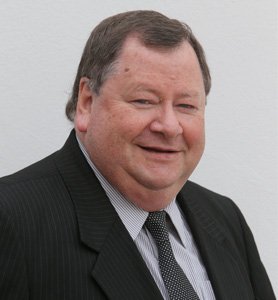
brian kelson
Cr Brian Kelson was one of the councillors in Mr Abbott’s sights for personal attacks. Image: Warrnambool City Council.

Mr Abbott’s actions are indicative of a toxic culture that has been allowed to flourish within the council that considers some people – in particular Crs Kelson, Hulin and Sycopoulis – to be fair game.

It is a culture fed by a misguided belief that a council should be passive by not asking too many questions, not rocking the boat and agreeing to every decision as a united front.

Those who refuse to fit this mould are considered troublemakers who need to be discredited or, even better, removed from council altogether.

With this in mind, Mr Abbott no doubt thought that he was doing his bit.

The council’s chief executive Bruce Anson knows a lot about the potential problems of attacking councillors behind pseudonyms when he was scrutinised – and cleared – of any involvement in a series of letters to the newspaper written by his son under the pseudonym of Wilma Wright.

These letters, written over a period of four years, included personal attacks on Crs Sycopoulis, Hulin and then-councillor Jennifer Lowe during the 2012 election campaign.

Given this recent history, I would have expected Mr Anson to come down heavily on a senior staff member who has been exposed for such extraordinary and unprofessional behaviour.

Instead, Mr Anson has backed Mr Abbott to the hilt.
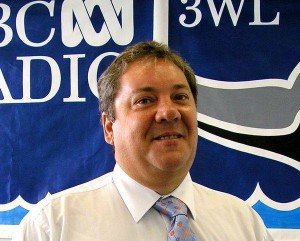
bruce anson abc
Despite the revelations, council’s chief executive officer Bruce Anson has thrown his full support behind Mr Abbott. Image: ABC Radio.

In his statement to the paper, Mr Anson said while “staff” should not engage in political debate online, he stood by “the excellent work” Mr Abbott had done at Flagstaff Hill and that he would  “be heavily involved” in the upgrade of the site.

Indeed Mr Anson even feels sorry for Mr Abbott: “It’s always a challenge, when you work as a public servant, to weather the criticism that comes with the job.” (I am sure the people who Mr Abbott has attacked would agree).

So Mr Abbott is going nowhere and will suffer no professional consequences for his actions.

I am trying to imagine the CEO’s response if Mr Abbott’s anonymous, public criticisms were aimed at Mayor Michael Neoh or, indeed, himself?

Would it be considered okay to continue in your position if you publicly criticised the two top civic officials you worked for?

Or what if Mr Abbott had used his anonymous comments to undermine the two women councillors, Crs Gaston and Ermacora? Would he (quite rightly) be taken to task then?

This should not be about individuals, but standards. Unfortunately what we have seen unfold today indicates that our local council has a long way to go in not only setting the highest standards for its staff, but enforcing them.

Note: It was Cr Brian Kelson who exposed the extent of the problems with the collection management system at Flagstaff Hill that has since revealed more than 130 missing artefacts, damage to Loch Ard relics and inadequate to non-existent record keeping. You can read our two earlier pieces on this issue here and here.


Flagstaff Hill: a museum in transition or a mess?

Flagstaff hill
The cracks in Flagstaff Hill’s museum collection are being revealed as a result of persistent questioning by those concerned about missing items. Image: Bluestone Magazine.

OPINION – Carol Altmann

[dropcap style=”font-size: 60px; color: #A5CECD;”] W [/dropcap]arrnambool’s Flagstaff Hill Maritime Village has finally admitted that it has lost more than 100 items from its collection in what is a clear indication that all is not well down on the hill.

Privately, people who have had a long association with the village either as former staff members, volunteers, or long-term supporters are questioning how has it all gone so wrong and, more importantly, can it be fixed?

In response to my piece last weekend in which I asked if the missing Loch Ard ingots were the tip of the iceberg (they were), FHMV manager Peter Abbott wrote a letter to the local newspaper in which he confirmed that at least 129 items donated to the museum could no longer be accounted for.

This is not about a clerical error on a database, this is about losing irreplaceable items that were given to Flagstaff Hill for protection. Put simply, despite being an accredited museum, Flagstaff Hill has no idea where these objects are because of years of poor record keeping and poor storage.

As to be expected, Mr Abbott used his letter to downplay the issue, referring to a missing bar of soap and a “small tin”, but even a single button can be valuable depending on who wore it: that’s what museums are about.

The 129 missing objects are not a comprehensive list.

Bluestone has since learned, for example, that the very first items donated to Flagstaff Hill back in 1973 are also missing. They are a lamp that is believed to have come from the Loch Ard, and a police lamp, believed to have been used in the search for survivors from the Loch Ard.

These are not insignificant items.

Copper Sheets-2
Copper sheets salvaged from the wreck of the Loch Ard have been damaged since coming into the possession of Flagstaff Hill, including a large cut to one sheet in the Bond Store.

[dropcap style=”font-size: 60px; color: #A5CECD;”] I [/dropcap]t should also come as a shock to learn that while the copper sheets from the Loch Ard (1878) are not missing, some have been cut up.

As I wrote last week, these 10 sheets were given to the village by the Federal Government in 1984 and were supposed to be housed under a loan agreement that, until recently, had been forgotten about.

The online listing for the copper sheets confirms: “One sheet appears cut or severed in a diagonal line downwards from its top left hand corner. One sheet has a 10cm X 10cm square cut out of its top right hand corner.”

The sheet that has been virtually sliced in half can be found inside the Bond Store.

When asked about these two sheets, Mr Abbott referred me to a third sheet, now housed at the Port Campbell Tourist Information Centre, that had a small drill hole added so that it could be secured to the wall (the people responsible apologised to Flagstaff Hill in 1993 for their mistake.)

Mr Abbott didn’t explain why these more recent and much larger cuts were made, but it has been suggested that at least one piece was used to create a copper sculpture.

FHMV also considers it acceptable to store some of the remaining sheets – those twisted by the blast during their salvage – outside in the weeds near the Barracks, as if they were storing bits from Bunnings, rather than relics from the Loch Ard.

loch ard copper
Buckled copper sheets (centre) from the wreck of the Loch Ard are “stored” among the weeds and an assortment of other items outside the Barracks. Image: Bluestone Magazine

[dropcap style=”font-size: 60px; color: #A5CECD;”] M [/dropcap]r Abbott also used his letter to confirm that the brass bell from the wreck of the Newfield (1892) has disappeared after being removed during renovations in 2002 – 13 years ago.

Bluestone has been told that Flagstaff Hill was alerted to the missing bell back in 2009, but did nothing: there was certainly no public call for its return.

In fact the whistleblower who first raised concerns about the security and integrity of the collection management process has since left Flagstaff Hill in frustration.

None of this, it must be said, is the fault of the volunteers who provide countless hours of unpaid labour to try and fix problems that have been years in the making. They are doing their best and I saw that first-hand during a visit last Friday.

The volunteers, however, are history enthusiasts, not experts. Mr Abbott, similarly, comes from a tourism management background rather than a curatorial one.

Indeed one of the few people on staff who had a qualification in cultural heritage management, Helen Sheedy, has this year left Flagstaff Hill to work elsewhere in the council.

It is hard to imagine the Warrnambool Art Gallery being managed with so few expert hands and I can just imagine the outcry if it lost more than 100 artworks along the way.

In the meantime, Flagstaff Hill has gone from being a profitable venture – where it made money for the council – to one that now loses about half a million dollars a year.

Whether Flagstaff Hill is given the resources it needs to operate a well-oiled museum like it did in the 70s, 80s and 90s remains to be seen, but the cracks are starting to show and, for those who donated their items in good faith, the revelations of the past few days will be shocking.

[box]If you would like to do a Flagstaff Hill back-of-house tour of your own, you can join the free tour this Wednesday Jan 14 at 11.30am and 6pm. [/box]

[button link=”http://the-terrier.com.au/subscribe-2/” type=”icon” icon=”heart” newwindow=”yes”]To help Bluestone continue its work with Opinion, please subscribe here for just $85 a year.[/button]

Stones Smile newsletterYou can find more Opinion here…


Are missing Loch Ard ingots the tip of the iceberg?

The changing landscape under Midfield Meats

Street artist secures W’bool mural project

Sucking the wind out of Portland’s sails

Granny’s Grave buried in bureaucracy

All words, no funding, for Fletcher Jones story


Are missing Loch Ard ingots the tip of the iceberg?

loch ard ingots_3
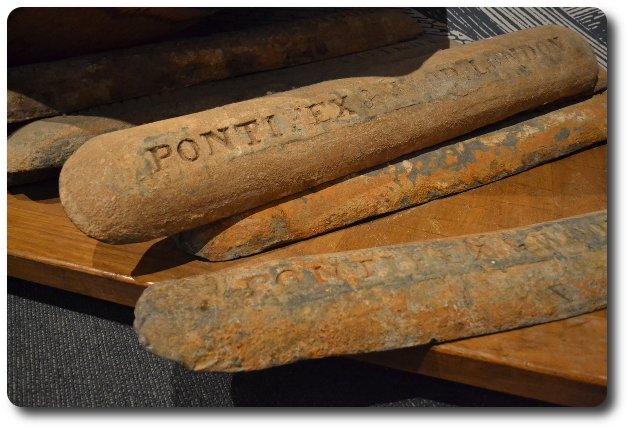
Ten of the original 872 lead ingot weights from the Loch Ard that were loaned to Flagstaff Hill by the Federal Government in 1984: more than 200 have since gone missing. Image: Bluestone Magazine


OPINION – Carol Altmann

[dropcap style=”font-size: 60px; color: #5C747D;”] H [/dropcap]ow did Warrnambool’s Flagstaff Hill Maritime Village lose track of more than 200 lead ingots that were part of the most famous shipwreck in Australia – the Loch Ard – given to it by the Federal Government for safe keeping?

This is a question that has the Warrnambool City Council scrambling for answers but – so far – the explanations have only raised even more questions about how the maritime collection has been managed and whether more irreplaceable items may have fallen through the gaps. (*Update: Flagstaff Hill has since confirmed more than 130 items are missing from its collection, including the Newfield bell from 1892.)

Cr Brian Kelson started asking about the location of all the Loch Ard (1878) ingots late last year and the information that has been provided since has been surprising, in terms of how loose the record keeping and storage has been around relics that should be considered precious.

In a written report to council at its December 1 meeting, the Flagstaff Hill advisory committee revealed that 872 lead ingots and 10 copper sheets from the Loch Ard were loaned to the village by the Federal Government in 1984.

They have a written agreement to prove it, but unfortunately it would be almost 30 years – yes, 30 years – before Flagstaff Hill did a full count of the ingots, each of which weighs around 60kg but, because of their French-stick shape, can be carried by two people.

That count was in 2012 and they could only find 728 of the 872, meaning 144 had somehow vanished, which is not surprising given there was no proper audit for almost three decades.

Some of the Loch Ard ingots stacked alongside the Flagstaff Hill lake.
Some of the Loch Ard ingots stacked alongside the lake at Flagstaff Hill in Warrnambool. Image: Bluestone Magazine

[dropcap style=”font-size: 60px; color: #5C747D;”] T [/dropcap]he advisory committee admits that this number – 728 – wasn’t cross-checked, but it was still added to the Flagstaff Hill database.

Another count was done in 2014 and could only locate 652 of the 728, meaning another 76 ingots were added to the already missing 144, bringing the total now missing to 220.

Oddly, however, Flagstaff Hill has brushed off the missing 144, saying it could have been an error in the original loan agreement, which I would say is unlikely, given it was an official government document that was dealing with maritime treasures. (Update: see former FHMV director Peter Ronald’s comment at the end of this piece, confirming the initial intake.)

There has also been no mention of the 10 copper sheets – does Flagstaff Hill still have them?

The copper sheets were listed as item no. 3078 on its public database – that was until last November, when the listing disappeared. (Update: the copper sheet listing has been reinstated, together with a copy of the federal loan agreement. You can see both here.)

The council’s focus has been narrowed to finding the 76 ingots missing from the 2012 count, and this is where things have become quite bizarre.

Flagstaff ingots_10
Some of the 286 ingots that are stored inside the Reginald M moored on the lake at Flagstaff Hill. Image: Bluestone Magazine

[dropcap style=”font-size: 60px; color: #5C747D;”] F [/dropcap]irst, at the same December 1 council meeting, council CEO Bruce Anson gave a verbal update to Cr Kelson in which he said that another count had been taken and 64 of the missing ingots had been found in a false floor of the Reginald M: one of two boats in the Flagstaff Hill lake.

A false floor? We took a look inside the Reginald M at the weekend and counted 286 ingots – the same number in the advisory committee report – and there were no signs of any ingots in a false floor (but, as an aside, plenty of signs of a rotting floor filling up with water).

Mr Anson went on to say that any remaining missing ingots were inside the hull of the nearby derelict Rowitta.

This reassurance was repeated in the local newspaper on December 23, although Flagstaff Hill manager Peter Abbott said it was too unsafe to actually count the ingots in the Rowitta, but his people could “peer in”.

Mr Abbott then revealed that some ingots could also be in the mud at the bottom of the lake, thrown there by night-time intruders. What? When did this happen and were police notified of a break-in at Flagstaff Hill?

More slivers of the puzzle came to light at the weekend when the local newspaper reported that some ingots were being used in Port Fairy while another, not necessarily from Flagstaff Hill, may have been sold at a local clearing sale.

A close-up of the Loch Ard ingots, each of which bear the maker's mark.
A close-up of the Loch Ard ingots, each of which bear the maker’s mark. These are among 10 on display in the Great Circle Gallery at Flagstaff Hill in Warrnambool. Image: Bluestone Magazine

[dropcap style=”font-size: 60px; color: #5C747D;”] S [/dropcap]o how many Loch Ard ingots have we actually got on display, in storage and in the mud at Flagstaff Hill?

I don’t know, I am lost, but I counted a total of 647 when I was there on Saturday.

To throw a final curve ball into the mix, the council’s director of city growth, Bill Millard, who sits on the Flagstaff Hill advisory committee, sent a memo to all councillors on December 10 saying that “the most recent count” identified the location of 802 ingots and he was “confident” that the ingot collection was intact.

Mr Millard may be confident, but the rest of us have a right to be utterly confused.

By any account, the audit of the Loch Ard ingots is an embarrassing mess caused by years of inaction to update the paper-based (yes, paper-based) collection system at Flagstaff Hill.

It is now being left to Peter Abbott – who, in what must be a vast role, is also head of council’s tourism services – and his team of largely volunteers to untangle it.

Perhaps most troubling, however, is how many more precious objects have “gone missing” from the thousands collected by or donated to Flagstaff Hill over the last 40 years?

There are already rumblings about items such as Newfield bell, which once hung in the Great Circle Gallery at Flagstaff Hill, but no longer even appears on its collection database.

While the analogy may be more suited to the Titanic  than the Loch Ard, I fear that the missing ingots may prove to be just the tip of the iceberg.

[button link=”http://the-terrier.com.au/subscribe-2/” type=”icon” icon=”heart” newwindow=”yes”]If you would like see Bluestone survive, please subscribe here for just $85 a year.[/button]

Stones Smile newsletterYou can find more Opinion here…


The changing landscape under Midfield Meats

Street artist secures W’bool mural project

Sucking the wind out of Portland’s sails

Granny’s Grave buried in bureaucracy

All words, no funding, for Fletcher Jones story