Near fatality exposes call system black spots inside Lyndoch
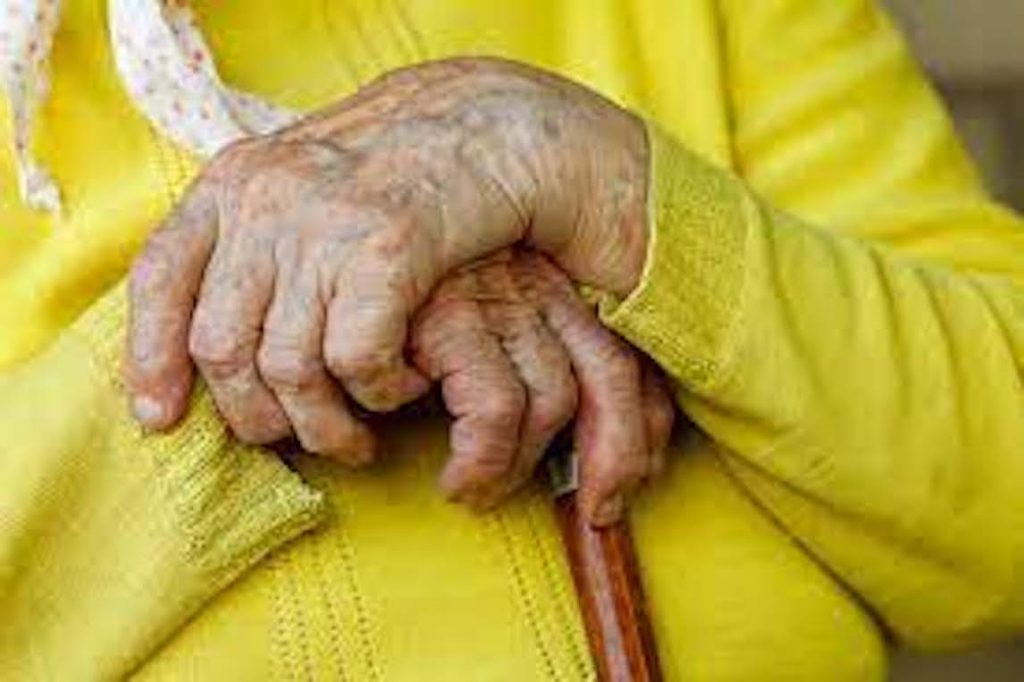
The potentially catastrophic failings of the internal nurse communication system at Lyndoch Living was exposed when a resident required CPR. Image: Stockfile

Carol Altmann – The Terrier

This time a year ago, a personal care worker at Lyndoch Living faced a nightmare scenario – a resident suffered a cardiac arrest and the nurse call system failed.

The care worker desperately tried to contact the on-duty Registered Nurse, who was in another part of Lyndoch – the new Swinton Wing – but the calls failed to go through.

The nurse-to-nurse comms system hit a black spot; a wireless dead zone that has plagued parts of Lyndoch for two years.

It was only when the RN moved out of the black spot that the frantic emergency calls came piling in from the care worker.

Fortunately, in the meantime, the care worker was helped by other staff to administer CPR and the resident survived.

Twelve months on, and the nurse-to-nurse call system is still failing. It is still not 100 per cent reliable across Swinton Wing and neither is the resident call bell system, or mobile phones.

All three are different systems, and all three suffer from the wi-fi black spots that can affect calls coming into Swinton Wing, going out of Swinton Wing, or between people inside Swinton Wing.

While the near fatality is the most serious incident that I am aware of from the past 12 months, there have been other red flags in more recent times.

In one case, a resident was left on a toilet for more than 40 minutes after the call bell failed to alert a nurse.

It’s hard to believe a nursing home is allowed to operate without a 100 per cent reliable call system for nurses and residents, but Lyndoch does.

It’s even harder to believe that the area with the black spots, Swinton Wing, re-opened last year after a $13 million makeover that, my sources tell me, failed to include an IT expert in the planning.

As of today, staff are still lodging ‘black spot’ complaints.

Part of the problem, apparently, is that a key piece of wireless equipment was destroyed by a lightning strike in 2019 and has not yet been replaced because it would cost around $500,000.

There are also compatibility issues between old technology and new technology across the different wings of Lyndoch.

Added to this is what has been a tumultuous time in Lyndoch’s IT department, including its Director of Technology, Strategy & Transformation, Dr Ed Rhode, resigning in April after less than two years, and the loss of two other staff more recently.

Before these resignations, there was some progress early this year when it was announced a new nurse-to-nurse call system would be rolled out from June to December although, according to one report, there were “no guarantees it will work”.

There were “no guarantees” because the new system could suffer the same issues as the old system, unless the underlying problems were resolved.

The roll-out hasn’t happened.

First the excuse was a supply problem.

Then the delay was blamed on Covid-19 preventing experts coming on site to install the equipment, even though it;s classed as an essential service.

But sources believe – and I am trying to confirm this from Lyndoch – that things have ground to a halt because Lyndoch is not prepared or is unable to spend the money.

A proper fix must include “back end” upgrades, equipment upgrades and ongoing maintenance, and all of that costs money.

And right now, Lyndoch is plunging its money and bank loans into the $22 million medical clinic being built just 100m from Swinton Wing.

A medical clinic that will have no discernible impact on improving the safety of the residents.

It’s not surprising that Lyndoch care staff are frustrated and angry.

As one put it, they are “sick of fighting for the basics, while they continue to pour money down the drain on this medical centre”,

Others are frightened, knowing they are unwilling players in a game of Russian roulette where the consequences for a resident could be fatal.

Again, this is not scaremongering, this is real and I, for one, find it both disturbing and frightening.

I asked Lyndoch and its chair Sue Cassidy for comment on these issues today. If any is forthcoming, I will publish it in full.


Where did you go? Crunching the numbers on Lyndoch staff

Foxy takes a close look at the Lyndoch financial reports to flush out what is happening with staffing numbers.

Carol Altmann – The Terrier

I was lucky enough to have my Mum cared for by the fabulous staff of Lyndoch Living for 10 years before she died there in April (at the ripe old age of 94.9), but so many of the faces I used to see during those 10 years are no longer there.

Where did they all go?

One source told me between 70 and 80 people have left Lyndoch in the past couple of years.

Some retired, some retired early, some moved on to other jobs, some now work for themselves, and some, well, some allegedly left for reasons which indicate an “interesting” workplace culture and I have to tread carefully as I slowly unpick that picnic.

But I am unpicking it, piece by piece, having had dozens of people contact me over the past nine months.

Today, as part of my slow, deep dive into the changing world of Lyndoch, I have called on Foxy the Fact checker to crunch the staff numbers.

First, have 70 to 80 staff left Lyndoch in the past few years? I can’t say for sure, but I have sent that figure off to Lyndoch CEO Doreen Power and board president Kerry Nelson for confirmation and will see if a response is forthcoming.

What has definitely happened, however, is the Lyndoch staff mix is changing.

Let’s start at the top.

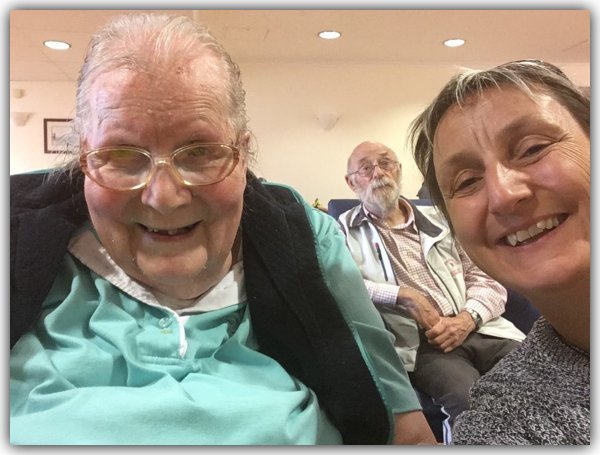
A very random photo of my Mum and I, with a lovely gent in the background, taken at Lake Lodge, Lyndoch in 2018.

The first thing Foxy found was a big jump in Lyndoch administration.

In 2016, there were 37 people in admin, in 2017 there were 41, and by last year it had grown to 59 – 19 more people than in 2016.

At the same time, the cost of “administration and other expenses” jumped by almost $1 million in 12 months, from $2.4m in 2017 to $3.31 million in 2018.

While admin numbers have gone up, the number of allied health workers employed by Lyndoch has gone south. (Q: What’s an allied health worker? A: Clever people who do things like occupational therapy and physiotherapy).

In 2016 there were 28 allied health professionals on staff at Lyndoch, but last year that dropped to just 12.

Allied health has largely been – oh, I dislike this word – “outsourced” and a Melbourne-based agency called Agestrong is the boss of the “outsourced” physio and o/t workers. (Agestrong, by the way, is owned by a private company called Designacare. Good grief.)

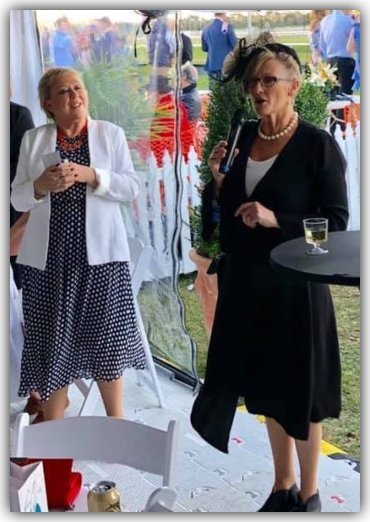
Lyndoch CEO Doreen Power and board chair Kerry Nelson at the 2019 Warrnambool May Racing Carnival. Photo: Lyndoch Living Facebook page.

What about the nursing staff, you ask? What is happening there? After all, these are the hard-working people at the very coalface of feeding, washing, dressing, nursing and cheering up the residents.

Well, using the numbers dug out from Lyndoch financial reports and Lyndoch annual reports, the picture from 2016 to 2018 looks like this:

the number of registered nurses (RN, senior nurses) has flatlined, from 32 in 2016 to 30 in 2018;

the number of enrolled nurses (EN, other qualified nurses) has climbed by 13% from 90 to 102;

the number of personal care workers (PCW) shot up 34% from 109 to 147;

a lot of these staff, especially PCWs, are part-time or casuals;

overall, the number of full-time-equivalent staff took a dive from 280 to 230 between 2017 and 2018.


What does this all say to a humble fact checker like Foxy?

It says that PCWs, the lowest paid workers, are picking up a lot of the workload for what can be a very tough gig.

At the same time, it suggests that the RNs and ENs must be working their backsides off with pretty much the same numbers that they had two years’ ago.

(As we speak, Fair Work Australia is nutting out a dispute between Lyndoch and the nurses’ union over proposed cuts to senior nursing levels.)

To be super clear, I am not suggesting Lyndoch Living is breaking any rules.

Indeed Ms Power told the local paper in July that Lyndoch Living “aligned with the Safe Patient Care Act and nursing ratios” and was working to increase full-time-equivalent numbers.

I also know that all nursing staff work very hard to make the residents’ lives comfortable and enjoyable and that this is their absolute first priority.

But what is filtering down to me from the 30-plus people I have now heard from is that Lyndoch is finding it tough to find and keep senior nursing staff, that there are often roster shortages that need to be filled at short notice, and that many people are starting to feel exhausted.

I take all this as a cry for help.

I am listening.

We, as a community, need to listen because we own and we love Lyndoch.

I have put a series of questions to Ms Power and Ms Nelson for a piece I am planning for Sunday.

See you for the next instalment then.

[The Lyndoch Living AGM is next Tuesday 29 October at 4pm at Lyndoch.]

If you would like to support the work of The Terrier, please consider throwing something in the tip jar.

Terrier Tip Jar