Community ready to fight Lyndoch Living gatekeepers
Carol Altmann – The Terrier
On Friday, I deposited all the $$$ we raised to mount a legal challenge against the Lyndoch Living board into a trust account. Now, we wait.
And while we wait for the barrister’s opinion, let’s remember why this legal challenge is even necessary.
It’s necessary because, after seven decades of needing the community to survive, the seven remaining members of the Lyndoch board have decided to disconnect Lyndoch from the community, without consultation or explanation.
These seven people have become gatekeepers and, in my view, enablers.
They are not the only ones. There is a band of hand-selected enablers across Lyndoch now: carefully chosen for their willingness to oblige without question in return for…what? A salary? A promised career path? A certificate of appreciation?
Those who wouldn’t oblige, or who spoke up, or challenged, or simply decided they had had enough, are either going ….or gone. There was actually a hit list of those Lyndoch wanted out. They are all gone.
And as I write this tonight, yet another clinical leader has left.
And as I write this, I come to the end of another week where the distressing messages just keep coming in about staff shortages, care workers covering for nurses, nurses being run ragged, staff working double-shifts, being exhausted, and almost spent.
I would normally show you a screenshot of the staff shortages, but now Lyndoch is so paranoid about who is “leaking to The Terrier” (aka, letting the truth out) that staff fear text messages from Lyndoch will contain clues to try and trace them.
Staff also know – even if they no longer work at Lyndoch – that Lyndoch is watching closely to see if they comment or like a Terrier post.
The intimidation doesn’t end, it seems, even if you no longer work there.
So I will instead tell you that yesterday, 26 February, Lyndoch sent out a text saying it was, once again, “desperately in need of staff” in the dementia (Audrey Prider) and high care (Lake Lodge) wings.
In Audrey Prider, the high-care dementia wing, the shortages included four staff on two shifts, from 7am to 3.30pm and from 1.30pm til 10pm.
Audrey Prider has 45 beds and, during the day, should typically have nine staff: 1 Registered Nurse, 6 enrolled nurses and 2 care workers.
If you remove four staff from that equation, resident care suffers. Many, I am told, have to spend the day in bed as there is just not enough staff to go around.
And yet amid all of this desperation and exhaustion, we hear nothing from Lyndoch and nothing from the board.
So this, this is just one of the reasons that we are fighting back for our voice to be heard at the table. Not as board members, but as general members – from the community – who are prepared to stand up for our elderly and those who care for them.
I know for a fact the staff are reading these posts. We are here for you. We are fighting for you. And we are not giving up. #pressingon
Lyndoch fighting fund smashes target out of the park
Carol Altmann – The Terrier
This time last week, this page pushed a boat from the shore in the hope of raising $5000 to fund a court challenge against the Lyndoch Living board.
Not only did we meet that goal within two hours – we have more than doubled it.
Online and offline donations now sit at $10,570 (the fundraiser closes at midnight tonight).
Thankyou.
Thankyou to every single person who donated whatever they could afford to help.
Some people donated five or ten dollars, some donated two hundred or five hundred, but every person donated with the same sense of purpose: to bring the community back to the heart of Lyndoch.
Every cent of this Lyndoch fighting fund will go toward that goal.
The funds will shortly be transferred to a trust account with a legal firm and will be used to secure a barrister who is the best in this field of law.
The barrister will provide an expert legal opinion on whether the current Lyndoch board – collectively and individually – have failed in their duty to uphold the original spirit and purpose of Lyndoch aged care, which was started by the community more than 60 years ago.
This failure includes the rejection of all general membership applications these past two years.
It’s a challenge that, we believe, will result in a hearing in either the County or Supreme Court, and this is the first step.
We have been fighting this battle for accountability and transparency for more than two years, in fact it is almost two years to the day since a group of concerned people met with local federal MP Dan Tehan to express their serious concerns about Lyndoch.
Those concerns, in the past 12 months, have only escalated.
But now the community has spoken.
It is no longer waiting for the cavalry to arrive.
It IS the cavalry.
I will keep you informed every step of the way as this challenge unfolds but for tonight, I want to say thankyou.
Thankyou to every person who has had the courage to stand up for Lyndoch and to not simply sit back, stay silent, and watch.
And thankyou to everyone who has helped this terrier to keep fighting.
On we go.
[The fighting fund will remain open until midnight. You can find it here. If you would prefer direct deposit, please email me at TerrierCarol@protonmail.com]
Deakin: Phillpot discreet amid leadership vacuum
Former Warrnambool mayor Glenys Phillpot OAM, third from right, was one of 16 Deakin University council members until her recent resignation. Image: Deakin University.
Opinion – Carol Altmann
[dropcap style=”font-size: 60px; color: #DC943C;”] A[/dropcap]s the long-term future of Deakin University, Warrnambool, remains in the balance, there is one person who has had a ring-side seat to the action, former Warrnambool mayor Glenys Phillpot OAM.
Until it was drawn to my attention recently, I didn’t know Ms Phillpot was a long-standing member of the Deakin University Council, which is effectively the “board” for a university and has the power to do all manner of things, including appointing a Vice Chancellor and overseeing the finances, university performance and overall direction.
Love Bluestone?Make a donation!
Ms Phillpot served on the 16-member council from 1 January, 2013 and was reappointed in January this year, but for some reason resigned on 30 June. When I asked why she had stepped down, Ms Phillpot said it was not appropriate to comment.
Given Ms Phillpot has been so close to the heart of the discussion and is no longer a council member, I had hoped she might be in a position to be able to shed some more light on what Deakin planned to do about the troubled Warrnambool campus, which has only 872 enrolments and, according to Deakin, needs at least 2000 to be viable.
But Ms Phillpot has opted for discretion, declining to comment beyond saying: “I just hope that there is an outcome that brings benefit to all of our community”.
The sprawling Deakin-Warrnambool campus has less than 900 students enrolled. Image: Deakin University.
[dropcap style=”font-size: 60px; color: #DC943C;”] T[/dropcap]he absence of Ms Phillpot’s voice from the public discussion is a pity, because as former local Liberal MP Adam Kemptonrecently wrote in his opinion piece for Bluestone, the demise of Deakin-Warrnambool can be sheeted home to a lack of leadership on multiple levels.
For my mind, Ms Phillpot could help to fill that void by adding a reasoned, informed view on what needs to happen next if Deakin is to stay or go. God knows we need strong local leadership at this critical time.
As has already been reported, but somehow easily forgiven, local federal Liberal MP Dan Tehan said he was shocked to learn of Deakin considering pulling out of Warrnambool. Former local Liberal member and Premier Denis Napthine was equally as outraged when the news broke earlier this year.
Surely both men, as long-standing local MPs, should have had their finger on the pulse well before it got to this? (For the record, Ms Phillpot is also a member of the Liberal Party.)
Why did nobody apparently see this coming, especially when people like Toni Jenkins, who also wrote an Opinion piece for Bluestone on the issue, have been shouting from the rooftops for years about the poor educational standards in the south-west?
Many south-west students are either failing to complete Year 12 or achieving only low ATAR scores. Image: eStock
[dropcap style=”font-size: 60px; color: #DC943C;”] O[/dropcap]ne of the biggest problems for Deakin-Warrnambool is that it relies heavily on local enrolments and yet we have the lowest Year 12 completion rate in the state.
And of those who do finish year 12, many are struggling to reach an ATAR of 50.
In other words, many of our students are not qualified to go to university.
As it happens, I was working at Monash University Gippsland when exactly the same scenario played out there in 2012-13.
In the wake of falling enrolments and local school students from the Latrobe Valley failing to reach university entry scores, Monash sold the campus to Ballarat/Federation University.
The loss of the prestigious Monash “brand” was significant to the Gippsland academics, some international students and no doubt some local students, but the campus is still alive and growing again by returning more to its roots (Gippsland started as the Gippsland Institute of Advanced Education).
Love Bluestone?Make a donation!
In my view, Warrnambool would be best served by a TAFE/Deakin university hybrid, based out of the TAFE complex in Timor St, with the Sherwood campus land sold off and used for eco-friendly housing or a conference centre.
Can it be done? Is it possible or feasible? I don’t know, but we all need to be a part of this critical conversation.
Education campaigner Toni Jenkins, CEO of the South West Local Learning and Employment Network. File image.
OPINION
With Deakin University still to decide its long-term future in Warrnambool, TONI JENKINS* asks whether its priority should be making a profit, or serving the people:
[dropcap style=”font-size: 60px; color: #A02F2F;”] D[/dropcap]uring the recent Federal election I watched many political interviews and began to wonder if I lived on a different planet to the politicians.
In particular, I was and still am most concerned about the state of education in Australia.
Donate
According to the OECD, we are slipping globally from a well-regarded, high-ranking country to a very mediocre, middle-ranking country with falling results in literacy, numeracy and the sciences.
By the end of the election – after the results rolled in – I was left with the question I started with. It’s a vexing question and one that I know I don’t ask alone: is education a service, or are our educational institutes corporate profit making entities?
Deakin University Vice Chancellor Jane Den Hollander. Image: Deakin University.
[dropcap style=”font-size: 60px; color: #A02F2F;”] M[/dropcap]y work for the past 13 years has been focused on improving education outcomes for the young people of our region.
It is thankless and goes largely unnoticed as we work behind the scenes brokering changes, developing projects, highlighting trends and in many cases, cajoling other service providers to change what they do to better address the needs of young people.
There are very few wins in this work, so when we recently scrambled to develop a partnership to keep Deakin as the university provider in Warrnambool, I couldn’t believe the audacity or the attitude of Deakin Vice Chancellor Jane Den Hollander telling our community that we ‘had no appetite for higher degrees’.
What rubbish.
To top it off, we had a look at Deakin’s balance sheet and there it was, with millions upon millions of dollars derived from providing education services at a handsome profit. Putting it nicely, they’re rolling in it.
Our community, so it seems, is no longer a community which ‘suits the Deakin business model’.
No, they can’t make enough profit down this way: in fact we cost the corporation money. Imagine that…… an education service costing money!!! WOW!
While the Deakin Warrnambool campus is struggling, the university overall is making significant profits. Image: Deakin University.
[dropcap style=”font-size: 60px; color: #A02F2F;”] I[/dropcap]n 2014, the Victorian Auditor General produced a report about the Department of Education’s ability to meet the needs of rural and regional Victorians.
It cited many instances where the department had failed to understand and respond correctly to the needs of rural and regional Victorians. It went further still, to say that policy needed to be developed that reflected the real needs of rural and regional communities. Spot on!
They’ve just discovered what we have known for a very long time: the proliferation of policy, structural adjustment initiatives and bureaucratic edicts that purport to support education in our communities but in fact do more damage than good is staggering.
Even good policy, by the time it trickles down to the local level, has little chance of being implemented before it is changed OR altered along the way to suit the bureaucracy of the day.
So how about we simplify things here and now? How about we draw a line in the sand?
Here’s the deal: we get State and Federal Departments of Education to agree to a few basic rules:
1. Offer and provide the same level of education service to ALL young people regardless of postcode;
2. Give ALL young people the opportunity to access education across the breadth of provision in a mode that suits their needs;
3. Make sure that education is affordable to everyone;
4. Provide value for money for the tax payer by ensuring that education services paid for by the government are spent on education services and not accumulated like a corporation. Caps on equity and assets, over the cap is reinvested into EDUCATION SERVICES;
5. Make sure that NO SCHOOL is operating in deficit and stop punishing them for having too many senior teachers on their payrolls – a ridiculous imposition. Either give them real autonomy and stop regulating every breath they take OR go back to the State run system that didn’t burden the local balance sheets of these individual schools.
Then Deakin University, or any other University who cares to act with humanity, can put education provision above profit.
They can develop and thrive in the south west, leveraging off a community that highly values ‘learning for life’ and its young people with an economy that feeds the nation a good portion of its protein, leads the way in renewable energy, and promises to thrive in a future where water is scarce and land, a non-renewable commodity.
Just imagine all the schools developing programs and services out of educational need rather than the need to balance the books.
How about a systemic approach, making sure that every young person, at every step along the way is supported as needed?
To quote John Lennon, yes, I’m a dreamer, but I’m not the only one. In fact Finland, Norway and Sweden are living the dream by providing free education to every citizen from pre-school to higher education.
In the words of scientist Karl Kruszelnicki, “education is not an intolerable burden upon a society, but rather an investment in the future”.
[box]Toni Jenkins cares deeply about country students having the same opportunities in education as city students. As CEO of the South West Local Learning and Employment Network, Toni has campaigned on this critical issue for many years. You can visit the SWLLEN website here.[/box]
Are missing Loch Ard ingots the tip of the iceberg?
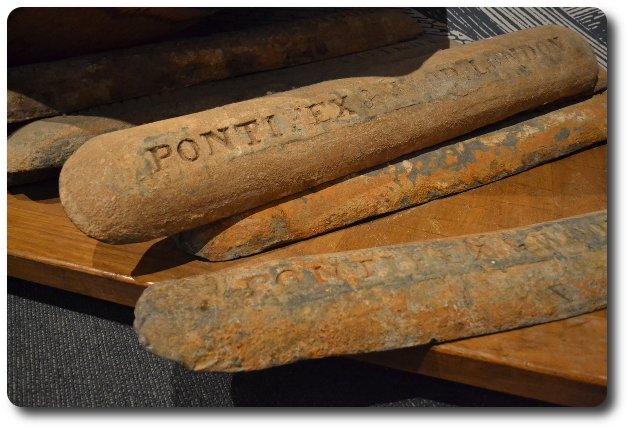
Ten of the original 872 lead ingot weights from the Loch Ard that were loaned to Flagstaff Hill by the Federal Government in 1984: more than 200 have since gone missing. Image: Bluestone Magazine
OPINION– Carol Altmann
[dropcap style=”font-size: 60px; color: #5C747D;”] H [/dropcap]ow did Warrnambool’s Flagstaff Hill Maritime Villagelose track of more than 200 lead ingots that were part of the most famous shipwreck in Australia – the Loch Ard – given to it by the Federal Government for safe keeping?
This is a question that has the Warrnambool City Council scrambling for answers but – so far – the explanations have only raised even more questions about how the maritime collection has been managed and whether more irreplaceable items may have fallen through the gaps. (*Update: Flagstaff Hill has since confirmed more than 130 items are missing from its collection, including the Newfield bell from 1892.)
Cr Brian Kelson started asking about the location of all the Loch Ard (1878) ingots late last year and the information that has been provided since has been surprising, in terms of how loose the record keeping and storage has been around relics that should be considered precious.
In a written report to council at its December 1 meeting, the Flagstaff Hill advisory committee revealed that 872 lead ingots and 10 copper sheets from the Loch Ard were loaned to the village by the Federal Government in 1984.
They have a written agreement to prove it, but unfortunately it would be almost 30 years – yes, 30 years – before Flagstaff Hill did a full count of the ingots, each of which weighs around 60kg but, because of their French-stick shape, can be carried by two people.
That count was in 2012 and they could only find 728 of the 872, meaning 144 had somehow vanished, which is not surprising given there was no proper audit for almost three decades.
Some of the Loch Ard ingots stacked alongside the lake at Flagstaff Hill in Warrnambool. Image: Bluestone Magazine
[dropcap style=”font-size: 60px; color: #5C747D;”] T [/dropcap]he advisory committee admits that this number – 728 – wasn’t cross-checked, but it was still added to the Flagstaff Hill database.
Another count was done in 2014 and could only locate 652 of the 728, meaning another 76 ingots were added to the already missing 144, bringing the total now missing to 220.
Oddly, however, Flagstaff Hill has brushed off the missing 144, saying it could have been an error in the original loan agreement, which I would say is unlikely, given it was an official government document that was dealing with maritime treasures. (Update: see former FHMV director Peter Ronald’s comment at the end of this piece, confirming the initial intake.)
There has also been no mention of the 10 copper sheets – does Flagstaff Hill still have them?
The copper sheets were listed as item no. 3078 on its public database – that was until last November, when the listing disappeared. (Update: the copper sheet listing has been reinstated, together with a copy of the federal loan agreement. You can see both here.)
The council’s focus has been narrowed to finding the 76 ingots missing from the 2012 count, and this is where things have become quite bizarre.
Some of the 286 ingots that are stored inside the Reginald M moored on the lake at Flagstaff Hill. Image: Bluestone Magazine
[dropcap style=”font-size: 60px; color: #5C747D;”] F [/dropcap]irst, at the same December 1 council meeting, council CEO Bruce Anson gave a verbal update to Cr Kelson in which he said that another count had been taken and 64 of the missing ingots had been found in a false floor of the Reginald M: one of two boats in the Flagstaff Hill lake.
A false floor? We took a look inside the Reginald M at the weekend and counted 286 ingots – the same number in the advisory committee report – and there were no signs of any ingots in a false floor (but, as an aside, plenty of signs of a rotting floor filling up with water).
Mr Anson went on to say that any remaining missing ingots were inside the hull of the nearby derelict Rowitta.
This reassurance was repeated in the local newspaper on December 23, although Flagstaff Hill manager Peter Abbott said it was too unsafe to actually count the ingots in the Rowitta, but his people could “peer in”.
Mr Abbott then revealed that some ingots could also be in the mud at the bottom of the lake, thrown there by night-time intruders. What? When did this happen and were police notified of a break-in at Flagstaff Hill?
A close-up of the Loch Ard ingots, each of which bear the maker’s mark. These are among 10 on display in the Great Circle Gallery at Flagstaff Hill in Warrnambool. Image: Bluestone Magazine
[dropcap style=”font-size: 60px; color: #5C747D;”] S [/dropcap]o how many Loch Ard ingots have we actually got on display, in storage and in the mud at Flagstaff Hill?
I don’t know, I am lost, but I counted a total of 647 when I was there on Saturday.
To throw a final curve ball into the mix, the council’s director of city growth, Bill Millard, who sits on the Flagstaff Hill advisory committee, sent a memo to all councillors on December 10 saying that “the most recent count” identified the location of 802 ingots and he was “confident” that the ingot collection was intact.
Mr Millard may be confident, but the rest of us have a right to be utterly confused.
By any account, the audit of the Loch Ard ingots is an embarrassing mess caused by years of inaction to update the paper-based (yes, paper-based) collection system at Flagstaff Hill.
It is now being left to Peter Abbott – who, in what must be a vast role, is also head of council’s tourism services – and his team of largely volunteers to untangle it.
Perhaps most troubling, however, is how many more precious objects have “gone missing” from the thousands collected by or donated to Flagstaff Hill over the last 40 years?
There are already rumblings about items such as Newfield bell, which once hung in the Great Circle Gallery at Flagstaff Hill, but no longer even appears on its collection database.
While the analogy may be more suited to the Titanic than the Loch Ard, I fear that the missing ingots may prove to be just the tip of the iceberg.
[button link=”http://the-terrier.com.au/subscribe-2/” type=”icon” icon=”heart” newwindow=”yes”]If you would like see Bluestone survive, please subscribe here for just $85 a year.[/button]
 Carol Altmann – The Terrier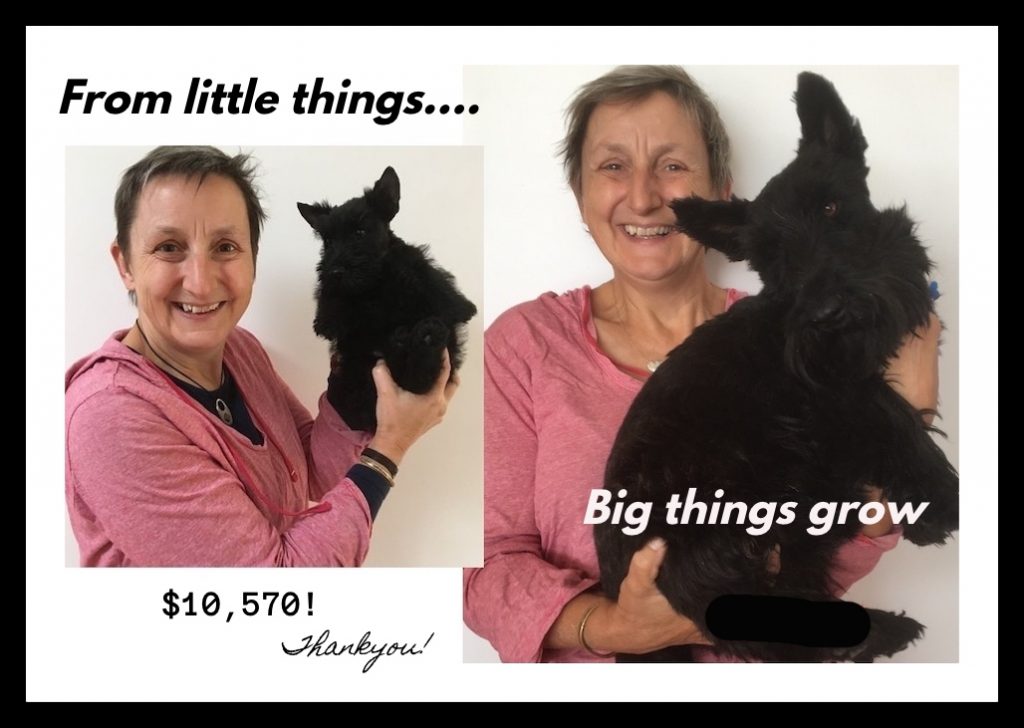


 More Opinion here:


 You can find more Opinion here…