No close shaves here: Paul Howlett
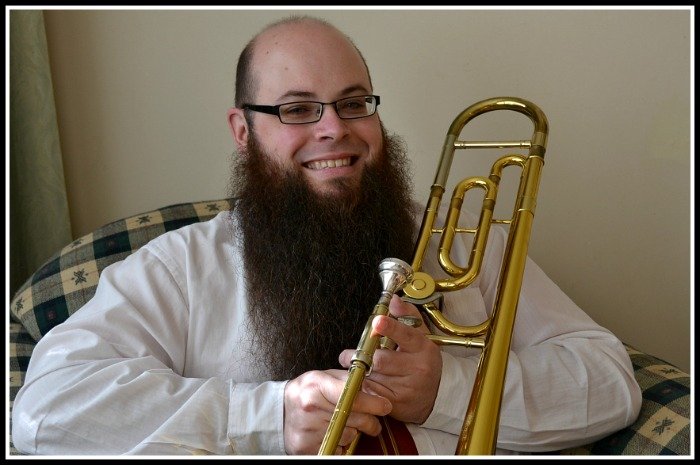
What do you get when you cross a big beard and a slide trombone? The answer is Paul Howlett, accountant, musician and proud owner of a substantial length of chin hair.

By Carol Altmann

The beard is back and there is no more lustrous, free-flowing, eye-catching example than Paul Howlett’s in full flight as he strides down Koroit St.

I first saw Paul’s beard before I saw Paul, its full form divided directly down the middle, two halves happily united at the chin, but separating at the chest as they momentarily caught the breeze.

“It tends to do that,” Paul tells me later.

The whole, heart-warming spectacle was enhanced by the fact that Paul, 33, has very little hair on his head, as if the beard, in its sheer bulk, was making fun of the follicles that occupy the top floor.

Donate

There was also something delightfully defiant about the fact that when I spotted Paul, he was walking into the conservatively decked out establishment of Coffey Hunt, chartered accountants and tax specialists.

(I find out later that Paul works as an accountant for the opposition, Sinclair & Wilson, and that this was merely a visit.)

Even when he is wearing the muted professional uniform of a crisp white shirt and dark pants, Paul’s beard gives the game away: there is more to this guy than meets the eye.

And I was right. He also plays the slide trombone.

Paul works his slide trombone with the Warrnambool City Band, of which he has been a member for 20 years. Image: Bethany Gillie.

[dropcap style=”font-size: 35px; color: #8cc7d0;”] B [/dropcap]

ut let’s stick with the beard for the moment.

“I really didn’t think I could actually grow a beard this long,” Paul says, “but I really like the length now and I really like the feel of it”.

The beard began as a bit of teenage bum-fluff that Paul grew for a high school production of Peter Pan (“I was playing a pirate…”) when he was a year 12 student at Warrnambool College.

From there it morphed into a goatee that extended itself occasionally for Movember, but it wasn’t until December 2013 when Paul had three weeks holiday from his job at Sinclair & Wilson that he let it grow…and grow…and grow.

“The guys at work were a little surprised when I came back, but (my bosses) are okay with it,” he laughs.

“A few people have suggested I should trim it right up, but I’m happy with it.”

Paul Howlett, sporting his trombone tie, with his gorgeous golden slide trombone that he found on ebay.

So how does Paul manage a beard that falls to his heart line when playing a slide trombone?

Surely it is a recipe for a painful pinch during a performance with the Warrnambool City Band, of which Paul has been a member for 20 years.

“Actually it’s not too bad,” he says,”except for when it occasionally catches in the trigger”.

A trigger, I learn, is a little device at the top of the trombone that can be pressed to help push the sliding arm, making it less strenuous for the musician.

“It can be a bit painful when you realise the trigger is also pulling the hair on your face,” Paul says with a slight wince at the memory.

But Paul is not about to give up his favourite instrument, which he was encouraged to learn while at high school and has played pretty much ever since.

“The trombone I have at the moment, I actually found it on ebay,” he says, proving that it really is possible to buy just about anything online.

Aside from regular performances with the City Band in both its concert band and jazz band ensembles, Paul also plays with a Hamilton-based big band, Trax, together with some blues work and the occasional trip into the orchestra pit for live theatre productions.

It is clear that talented trombonists stand out from the crowd in the south-west.

“There are not many of us in town, that is true,” says Paul, before rattling off the names of two others and a young man who is still learning.

I think it is also fair to assume that, among this group of four, Paul is the only one with such a distinctive appearance.

“Um, yeah, I think so,” he laughs.


In full voice: the irrepressible Lyn Eales

The irrepressible Lyn Eales enjoying some down time in her ‘girl shed’ at the back of her Warrnambool home.

By Carol Altmann

[dropcap style=”font-size: 35px; color: #8cc7d0;”] L [/dropcap]yn Eales is a performer, a pacifist, an activist and an organiser; a leader, a doer, a mentor and a singer; a lover, a friend, a sister and a daughter; a mother, a grandmother and a mate – no wonder she is hard to pin down.

It takes days – no, weeks – for us to finally find a mutually agreeable time to sit and talk for a couple of hours, tucked away in Lyn’s “girl shed” behind her Warrnambool home where she retreats at the end of the day to savour a glass of champagne, a cigarette and some down time.

It is raining, but the shed has a pot belly stove, some comfy chairs and is made cosy with feathers, ephemera and an eclectic array of artwork that mirror Lyn’s gregarious personality. This is a woman who is not afraid to be seen, who is comfortable in her skin and who oozes that undefinable mix of qualities that add up to charisma.

“I am the daughter of publicans. People and music have always been a part of my life,” Lyn says, and it explains so much.

Her parents, Val and Lyal, ran the Hawkesdale Hotel for many years. Like so many country pubs, the place was a catch-all for those in need of a laugh, a drink, a listening ear, or maybe a bit of each.

Donate

“There was always music in the dining room, always,” Lyn says. “Something was always going on: people playing guitar, playing piano, dropping in and playing an impromptu concert.”

The little Lyn couldn’t wait to be part of it.

“I remember singing for the CWA ladies luncheon when I was about 12 or 13. I had plaits and wore a long, seersucker pinafore that I thought looked quite good,” she recalls with a laugh.

“The song was ‘Take Me Home, Country Roads‘ and it must have been okay, because the women didn’t complain.”

In the zone: Lyn Eales performing on stage with drummer Jon Emery. Image supplied.

[dropcap style=”font-size: 35px; color: #8cc7d0;”] L [/dropcap]yn hasn’t stopped singing since and even though she hasn’t had a single lesson, her voice has found its own way from the peppy John Denver to the silky, sultry blues of Billie Holiday and beyond.

As Lyn describes it, there is singing that people hear, and then there is singing that people feel.

“As a singer, you are telling a story and you want people to not only hear that story, but to really feel it, to connect with you and the music and the words,” she explains, her fingers splayed as if grasping for the right words.

“Summertime, and the livin’ is easy….Fish are jumpin’ and the cotton is high…”

You only need to hear Lyn sing the opening line of this Ella Fitzgerald classic to know she is a feeler. By the end of the song, you are broken hearted and elevated all at once. That’s how it works.

Flashback: Lyn, far right, sharing the stage with Wendy Goyen and John Hudson at the Royal Hotel, Warrnambool, in 1999. The Royal was one of many local pubs that once hosted live music. Image supplied.

[dropcap style=”font-size: 35px; color: #8cc7d0;”] L [/dropcap]yn is now part of Warrnambool’s musical royalty: she has been around long enough to know everybody, to have played in bands with great local musicians who are still making great music – John Hudson, Richard Tankard, Barry Galbraith, Wendy Goyen, Gavin Franklin, Lee Morgan…the list goes on – and to inspire others to find their voices, figuratively and literally.

In the past that has involved teaching young people how to develop their music, from start to finish, through an Australian Music course offered at TAFE. This later incorporated a Koori music course – Songlines – with Richard Franklin and Wal Saunders, and gave Lyn an entree into the rich, local indigenous community which she still cherishes.

She also leads the Red Tent Singers, a local women’s choir that welcomes all women regardless of experience or age, where she signed up “to do six weeks”. That was 16 years ago, give or take a few breaks.

“Red Tents is about singing, but it is also so much more than that,” Lyn says.

“It is an incredibly nurturing, caring, grounding environment. To see women arrive with low self confidence and watch them blossom through this slightly whacky group is wonderful.”

Lyn works in a similar vein in her “day job” as a project coordinator with Brophy Family and Youth Services, where, in particular, her work to empower young LGBTI people has been transformative.

Lyn is choir leader for the Red Tent Singers, a women’s choir that formed in Warrnambool 16 years ago and has since encouraged dozens of women to find their voice. Here they are performing at St Brigid’s Fifteen Minutes of Fame. Image supplied.

[dropcap style=”font-size: 35px; color: #8cc7d0;”] I [/dropcap] am starting to see a thread here.

When it comes to standing up for the marginalised or minorities – women, LGBTI, kooris, refugees, asylum seekers – Lyn is the sort of person who will march, who will turn up to protests, who isn’t afraid to stand at the front in full voice.

It is a strong sense of social justice that began in her parents’ pub and has shaped her ever since.

“I can get tingles 10 times a day from doing the various things that I do, and that is my gauge.

“That tells me I am on the right track.”

Lyn chilling out with the sunflowers that form part of her “very random but enjoyable” garden.

[box]Lyn is leading a vocal workshop by the Red Tent Singers at St Brigid’s Crossley on Sunday April 30 from 10.30am to 1pm. All welcome and no experience necessary. Cost is $15/$10 and includes catering. Call 0407 917 774 for bookings and more details. Find the event on Facebook here. Lyn also performs regularly at the Warrnambool Hotel: keep an eye out for dates and times.[/box]


The musical highs of Cooper Lower

By Carol Altmann

It was late November last year when a teenage singer-songwriter named Cooper Lower took to the stage at Blarney Books & Art, Port Fairy, knowing that most of the crowd had not come specifically to hear him – he was a support act to Irish folk artist Gallie.

Those – like me – who had not heard Cooper perform before perhaps expected what I did: a few cover songs belted out with the enthusiasm of a 17-year-old clutching a guitar.

What followed, however, was magical.

join us2

Cooper has a voice that is both powerful and gentle, lilting and strong and the intimate Blarney venue combined with Cooper’s songwriting talent, musical ability and stage presence was mesmerising.

[box]Subscribers: We have a copy of Cooper’s EP, ‘Just a Thought’ to give away. Email us at editor@bluestonemagazine.com.au with COOPER in the subject line by Friday Feb 19 at 5pm to be in the draw.[/box]

“Blarney Books put up a Facebook photo that night saying ‘Cooper Lower pouring his heart out on stage’ and that was the coolest thing to read because that is exactly what I try to do every time I perform, and to see that acknowledged really meant a lot to me,” he tells me later.

cooper on stage blarney
Cooper on stage at Blarney Books & Art, Port Fairy, in November last year where he mesmerised the audience with this talent. Image: Blarney Books & Art.

We are chatting at the dining room table in his family home in north Warrnambool, where he also writes and practices his material in his bedroom that houses a string of acoustic guitars – his favourite instrument.

“I got a guitar for my 8th birthday but I only picked it up and started playing it when I was 13,” Cooper, who is completely self-taught, says.

“I would play and sing along to songs and I started to think, ‘actually, I am okay at this.”

While initially inspired by the likes of rapper Eminem (“I have moved on since then,” he laughs), Cooper began to listen to singer-songwriters such as Jack Johnson, John Butler, Ed Sherrin and Xavier Rudd and found “they really had something to say with their songs”.

He wrote his first song – Utopian Nightmare (listen here) – in 2014, at the age of 15 after being inspired by an English school assignment on dystopian fiction.

“I had thought a lot about the theme for the assignment, so that song just fell out of me in two days….but they are not all like that! Deluded Eyes (listen here) took three months to write. Three months of thinking and working that is compacted into four minutes,” Cooper says.

cooper on stage
In the zone: Cooper Lower on stage, where the greatest joy, he says, comes from seeing an audience connect with his music. Image credit: Nicholas Frampton.

As he talks about his work, it is easy to forget that Cooper is just 17, starting VCE (he studies at Mortlake College and is also enrolled in the Emmanuel College Cert 3 Music program), with a young girlfriend, and the loping, big-legged stride of a teenager.

On so many other levels Cooper is a wise head on young shoulders. A quietly spoken, polite and measured old soul in a young body, who thinks and writes very deeply about the world.

“I have very high expectations of my song writing. I will never settle for a word or a line unless I can explain why it is there,” he says.

For Cooper, the challenge is to find the right balance between the music and the meaning and to “reach” an audience by striking that balance.

“If you try to tell people how to think, they won’t want to listen, but if through my music I can tell them what I am thinking, then maybe it offers them a new perspective.”

Cooper’s five-track EP, Just a Thought, tackles such issues as depression, mental illness, hope, loss and love – some of it drawn from his own experience, but most from his own reflections. He is now writing more songs for a full album and taking his music to the people wherever he can, from busking in Warrnambool and Melbourne, to a string of gigs around the south-west.

People like Lynny Mast, who is passionate about promoting local musicians and has started a pop-up shop for local music, and fellow musicians Brady James and Tom Richardson have all inspired Cooper to keep following his dream, together with his mum, Michelle, who helps “carry in all the gear” to the gigs.

“Tom (Richardson) once said to me, ‘I know why we play music – you know why you do it –  and you just have to keep doing it.”

At the end of our engrossing conversation, Cooper realises he has missed the bus for a meeting at Flying Horse Inn. As I offer him a ride, I am reminded, again, that one of the most exciting young talents in Warrnambool right now is still not old enough to drive – but he is a certainly a person going places.

cooper lower note
What it’s all about: a note left by an appreciative listener after a busking session. Image courtesy Cooper Lower.

[box]You can keep up to date with Cooper Lower’s gigs via his Facebook page. He is also scheduled to perform at Blarney Books & Art during the Port Fairy Folk Festival. Film maker Colleen Hughson has created a series of beautiful clips of Cooper performing that you can watch here.  We also have a copy of Cooper’s EP, Just A Thought, to give away to one lucky Bluestone subscriber: email us with the subject line Cooper at editor@bluestonemagazine.com.au by Friday Feb 19 to be in the draw.[/box]

newsletter Why Not StonesYou might also enjoy….


The rich harmony of life: Wendy Goyen

Brady James strikes a chord with Youtube epic

Connecting with kids through music: Barry Peters

A lot to like about these Celts: Likely Celts


Remembering Eva: an arts matriarch

eva gaspar-bunyon
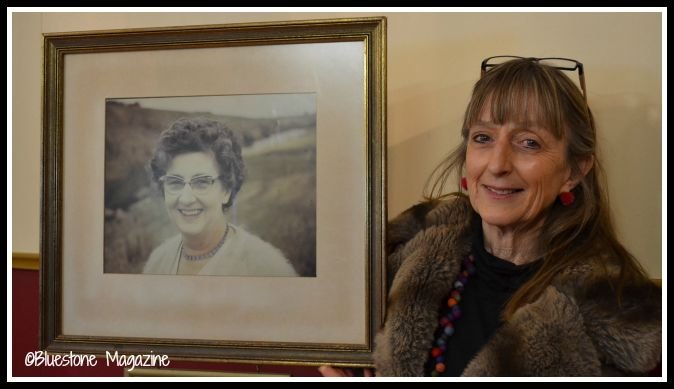
Helen Bunyon, from The F Project and The Artery, with a portrait of the late Eva Gaspar who, like Helen, devoted her life to helping the local arts scene while also being an artist herself.

By Carol Altmann

There is nothing like a tour of the local cemetery to crystallise the mind about how quickly we can forget trailblazers of their time, like Warrnambool musician, photographer and artist Eva Gaspar.

It was during one of family historian Ray Welsford’s gold-coin tours of the Warrnambool Cemetery that I heard Eva’s name raised as one that is slowly vanishing from the landscape since her death in 1978.

Yes, there is a road named in her honour, but perhaps because she was not a sporting hero, never married and never had any children, there are few public memorials to commemorate her enormous – and generous – contribution to developing Warrnambool’s cultural scene in the 50s, 60s and 70s.

eva gaspar_bowes
Warrnambool Art Gallery Acting Director Murray Bowes with a hand-tinted photograph, “Wollaston Bridge”, taken by Eva Gaspar in 1976 and purchased by the gallery in 1977.

It wasn’t always this way.

The original Performing Arts Centre in Warrnambool had the Eva Gaspar Theatre as its centrepiece when it opened in 1983, but the name was dropped when the complex was redeveloped as the Lighthouse Theatre in 2012.

Eva’s portrait is still in the building, but you have to walk to the southern wing to find it, alongside some magnificent tapestries and an assortment of other historic photos.

So who was Eva?

thunder point
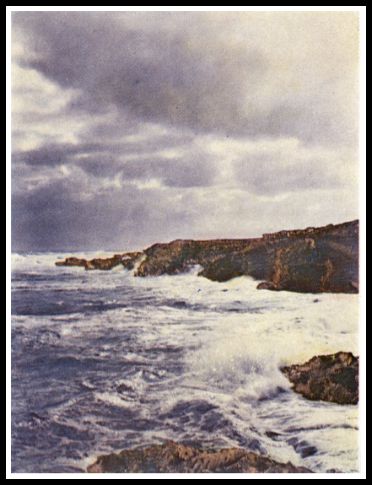
“Thunder Point”, photograph coloured with oils, Eva Gaspar. Reproduced from the catalogue “Exhibiton by Eva Gaspar: Drawings, Photography, Warrnambool Art Gallery, April 1977,” with permission from the Warrnambool Art Gallery and National Library, Canberra.

In contemporary terms, apart from her devout Catholicism and serious perm, she is perhaps best described as the equivalent of today’s Helen Bunyon, from The Artery/F Project: a long-term, tireless and generous volunteer to the arts, who was also an artist herself in music, drawing and photography.

“Eva loved photography – she was part of the very big and very passionate photography scene in Warrnambool in the 1950s and 60s,” recalls photographer John (“Jack”) Wilkins.

That scene, as Jack explains, included his own father, Alex Wilkins and Ralph Illidge who, between them, not only photographed just about every wedding and child born in Warrnambool during that time, but also built an impressive social history archive through photography and film.

eva portrait
A portrait of Eva Gaspar – a copy of which hangs in the Lighthouse Theatre and Mozart Hall.

Eva, Alex and Ralph were all founding members of the City of Warrnambool Camera Club, with Eva holding the presidency from 1954 to 1977, during which time the club hosted the most extraordinary competition of international photography.

“That was in 1964 – it is hard to imagine it now, but they had this whole thing going on in little old Warrnambool and it attracted entries from around the world,” says Jack, in his usual gregarious style.

(Remarkably, some footage from the event is part of the Alex Wilkins’ archive which Jack is now slowly converting to digital and uploading to the internet – he has kindly agreed to us including it here. See below.)

Eva, who later became part of Collett, Bain & Gaspar printers, at one stage worked upstairs in Alex Wilkin’s photography studio in Liebig St (now the office of local MP Denis Napthine), where she would hand-colour the images.

Like any artist, however, she no doubt aspired to holding her own exhibition and through her close connection to the then director of the Warrnambool Art Gallery, John (‘Jack’) Welsh, she finally did so in 1977 – just a year before her death at the age of 65.

The exhibition catalogue (printed by Collett, Bain & Gaspar) lists 39 photographs “coloured with oils”, mostly of local scenes, together with 13 monochromes, again of local scenes, and 10 drawings inspired by religious icons and even Shakespeare.

tower hill
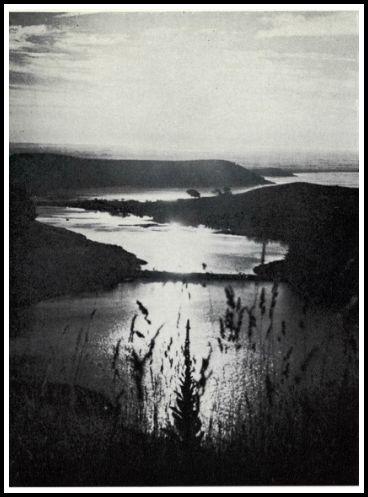
“Tower Hill”, monochrome, Eva Gaspar. Reproduced from the catalogue “Exhibiton by Eva Gaspar: Drawings, Photography, Warrnambool Art Gallery, April 1977,” with permission from the Warrnambool Art Gallery and National Library, Canberra.

Eva was a deeply religious woman from a religious family, with a nun and two priests among her siblings, and she was the organist at the St Joseph’s Catholic Church in Warrnambool for almost 30 years.

It is through her music that Eva Gaspar is most recognised.

According to the Warrnambool Historical Society, she formed her own choir and junior orchestra in 1948 to commemorate the birth of Mozart, and this group not only staged elaborate annual performances of Mozart operas, but went on to become the Mozart Choral Society that still operates from Warrnambool’s cute Mozart Hall today (where you will find another portrait of Eva).

Somewhere in between all of this activity, Eva still found time to teach music to young people for free.

For more than 40 years she taught music, singing, wind and string instruments to a legion of young musicians for whom a keyboard had nothing to do with a computer.

What a generous, creative soul was Eva Gaspar.

eva gaspar_photo
A closer look at the hand-tinted photograph, “Wollaston Bridge” taken by Eva Gaspar in 1976 and purchased by the Warrnambool Art Gallery in 1977.

[box]Bluestone would like to thank Ray Welsford, Jack Wilkins, the Warrnambool Art Gallery and the National Library for their assistance with this story.[/box]

newsletter Why Not StonesYou might also enjoy…


A life behind the lens: Jack Wilkins

Revealing the eye of the tiger: Peter Clayfield

Who is the ‘Granny’ behind Granny’s Grave?

Capturing W’bool’s diverse heart: James Mepham


Cigar box guitars are really smokin’

brendan polak_26
Brendan Polak picks out a tune on the cigar box guitar he bought from the US and which inspired him to start making his own versions of the instrument.

Words and photos by Carol Altmann

[dropcap style=”font-size: 60px; color: #A02F2F;”] B[/dropcap]rendan Polak is no musician, in fact he admits he couldn’t play a note until he began to make instruments that are both simple and fascinating – cigar box guitars.

Cigar box and biscuit box guitars belong to a genre of instruments borne of poverty and portability – right up there with spoons and the harmonica – and are rooted in the blues music of America’s deep south. Some recordings of the cigar box guitar date back to the 1840s.

It was through this music that Brendan, of Warrnambool, became captivated by the unique guitars.

“I listen to a bit of blues and have always wanted to learn to play something, so I ended up buying a cigar box guitar online from the US,” he explains.

That was about three years ago and, in the time since, Brendan has not only got a fair handle on how to play a cigar box, but how to make one.

The guitar begins, of course, with an old cigar box and Brendan has found himself a ready supplier via Gumtree: a Melbourne cigar stockist who is happy to offload the empty boxes to somebody who can use them.

brendan polak_10
A selection of Brendan’s cigar box and biscuit box guitars, excluding the far right instrument which was made in the US. In front is a version of a diddley bow, single string guitar.

[dropcap style=”font-size: 60px; color: #A02F2F;”] T[/dropcap]he boxes are beautiful objects in themselves, with sweet-smelling wood or thick cardboard, tiny gold clasps and usually an intriguing decoration on the top and sides to make the recipient feel like they are enjoying a small luxury (if an ultimately unhealthy one!)

Brendan then adds his own touches – the acoustic guitar strings, the tuner pegs, and the neck, made from bits of recycled wood that could be anything from a broom handle to an off-cut from old wooden pallet. Some even have volume buttons.

“I really love the simplicity of them, yet each one is different,” Brendan says.

“The fact it has only one, two or three strings also makes it appealing to people who think they can’t play an instrument…like me,” he laughs.

Another intriguing element is the “pick up” – a small piece of electronic work that sits inside the guitar for use with an amplifier. Brendan shows me a pick-up hidden inside a vintage ‘Log Cabin‘ tobacco tin and I am beginning to think that these instruments are the ultimate in up-cycling.

There is one more surprise yet to come.

brendan polak_3
Simple but effective. This cigar box guitar made by Brendan includes volume and tone controls and can be used with an amp.

[dropcap style=”font-size: 60px; color: #A02F2F;”] B[/dropcap]rendan offers to play a few bars on his cigars – (that was a line just waiting to be written) – and slips something like a metal socket over one finger.

His hand slides up and down the neck of the guitar as he picks out a tune and suddenly his man cave, and it is a sensational man cave, is alive with the sound of the blues.

“That sounds okay, but then you can do this,” Brendan says, as he plugs an amp into the side of the cigar box and boom – the sound is phenomenal: loud and phenomenal.

Who would have thought that an old box, or biscuit tin, with some guitar strings, recycled wood and a ‘pick up’ could make such music? But it does.

brendan polak_18
Brendan, a self-confessed non-musician, says he is proof positive that just about anyone can play a cigar box guitar or, in this case, a diddley bow.

[dropcap style=”font-size: 60px; color: #A02F2F;”] A[/dropcap]s it turns out, the multi-stringed cigar box guitars are actually the more complex members of the family.

“This one,” Brendan explains as he points to a single-string stretched on a piece of timber, “is called a diddley bow. They come from the days when people would stretch string along a verandah post, or down a broom handle, and use it to make music”.

Now that’s simplicity.

(Click on video below to see a cigar box guitar in blues action.)

[box]Brendan’s custom made guitars are available directly through him (darky99.bp@gmail.com or 0423 696 440) and now Dale Cleves Music, Warrnambool.[/box]

[button link=”http://the-terrier.com.au/subscribe-2/” type=”icon” icon=”heart” newwindow=”yes”]Bluestone needs at least 500 subscribers in 2015. If you wish to read great stories like this one, please click here to become one.[/button]

newsletter Eat And Drink StonesMore great stories about local makers…


Surf’s up in this Kirkstall board room: handcrafted surfboards

Riding a wave of success with surf wax

Recycled timber shapes a new life

Home is where the art is: Karen McKenzie