Be all things or stick to the basics?
council plan
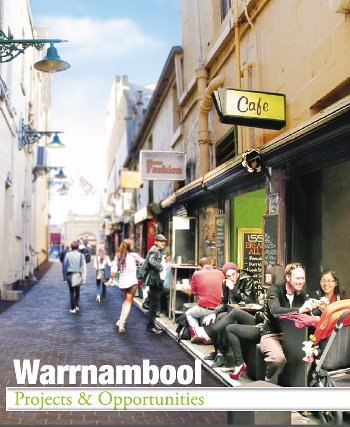
The dream: an image of bustling cafes built into the sides of Warrnambool’s laneways graces the cover of the council’s recently released priority ‘wish list’.


[dropcap style=”font-size: 60px; color: #A5CECD;”] C [/dropcap]ouncils were once primarily responsible for rates, roads and rubbish: my, how times have changed.

The 16-point list of advocacy priorities released by the Warrnambool City Council suggests that the council must now be all things to all people, fixing everything from school retention rates, to unemployment, to developing the region’s food export industry…right down to upgrading the stormwater drains. But is this what ratepayers really want or expect?

Sixteen points is a lot of priorities for a council covering only 32,000 people and they can’t possibly all be met, especially when we struggle to get the public toilets right.

I say this because as I was walking back from a media briefing on the plan last week, I wandered past the vandalised portable toilet box on Gilles St, across the road from the heritage precinct of the former police station and court house.

Having only been back in Warrnambool a relatively short time, I thought these toilets must have been installed for the comfort of the workmen repairing the former post office nearby.

A google search, however, revealed the eyesore is considered a public toilet and has been sitting there since 2011 while the council finalises its public toilet strategy.

My heart sank. If it takes more than three years to sort out the public lavatories, what hope is there of achieving the bulk of the 16 priorities that had just been outlined to the media by Mayor Michael Neoh and CEO Bruce Anson?

Moreover, do we need to have 16 priorities? What about focussing on five, securing the funding for these, and doing them really, really well? (We will list our top five later).

toilet_19
The reality: the ‘temporary’ toilet block on Gilles St indicates that making progress on some projects can take years.


[dropcap style=”font-size: 60px; color: #A5CECD;”] W [/dropcap]hile there is nothing wrong with thinking big and aiming high, we have three levels of government for the simple reason that each one looks after different levels of responsibility.

Ratepayers, I suspect, want a local council to focus on maintaining and improving their local amenities, to ensure that their city is a good looking and vibrant place where people want to live, work or visit for an unforgettable holiday.

Given this, it was heartening to hear Mr Anson list the revitalisation of the CBD as the number one priority, but there was scant detail on how this would be done, and by when. (*Since this piece was written, WCC has announced it is seeking an architect to redesign the portion of Liebig St between Koroit St and Raglan Parade).

The gradual rejuvenation of some of the city’s laneways – a wonderful council project –  is an example of what can happen, yet the F Project artists behind all of this hard work are scrimping and scraping to develop their art space down at The Artery, in Timor St.

The Artery has the potential to utterly transform what was a bland part of the CBD and to draw tourists in droves, but unfortunately this simple project has received very little council money.

At the same time, the council says in its latest document that it hopes to secure $100,000 for a “comprehensive study” into food production in south-west Victoria and potential export markets. Why? Isn’t this the domain of the State Government and, more particularly the local member, Denis Napthine? Or perhaps it is even better suited to the Federal Government, and our local member, Dan Tehan?

bluestone2_29
The Artery artists’ hub in Timor St has the potential to be a magnet for tourists and locals alike.


[dropcap style=”font-size: 60px; color: #A5CECD;”] L[/dropcap]obbying the other two tiers of government is part of what local councils do, but do we really want to secure and spend $100,000 on another study in the process?

Even a portion of this money would go a long way toward, for example, The Artery being able to open its retail space, gallery and studios – heck, they might even be able to get their signwriting done.

To be fair, the council’s priority list does contain some good, grassroots project such as upgrading the dated public swimming pool and working on a plan to improve the equally dated and tiny library, but it also contains a chunk of ‘priorities’ that have been around for so long now, most of us have forgotten when they were first announced, such as sorting out the future of the Fletcher Jones site, Flagstaff Hill and the railway station precinct.


bluestone2_25
Warrnambool will receive a longer airport runway, but the trains will still be slow, unreliable and crowded.

[dropcap style=”font-size: 60px; color: #A5CECD;”] S[/dropcap]peaking of the railway, improving the inadequate train service to Melbourne has been another, long-standing priority that has again been wish-listed by the council, yet it is the extension of the Warrnambool airport runway that is taking precedence for $4.5 million in state and federal funding.

The number of people who use this runway will be minuscule compared to the number of train commuters who already struggle to find a seat on a service that operates only three times a day and lumbers along at a Cobb-and-Co-like speed of 74 kph.

We should be outraged, especially as our compatriots in Bendigo, Ballarat and even Traralgon each have more than a dozen services a day, including a number of express trains.

A fast, reliable commuter service between Warrnambool and Melbourne is also critical to tourism, yet there is no indication that the service will receive another cent from either the state or federal governments.

The council has developed an enormous amount of strategic plans and strategies – the latest one brings the total to 32 in the past 10 years – but my fear is that it is spreading itself too thin, that it expends too much time and money reaching for the stars rather than dealing with the basics, and that, like the toilet box in Gilles St, it will ultimately struggle to be flush with success.

[box] Below are Bluestone’s five funding priorities (what are yours?):[/box]

  • Secure and save the best of the Fletcher Jones site and gardens and lobby for state funds to make it happen. This site is critical to creating a sense of ‘arrival’ to Warrnambool and has the potential to be something very special.
  • Fix the train service with more frequent, faster and reliable trains that include express services.
  • Revitalise the CBD by, for example, offering incentives to restore and repair the heritage buildings, remove the parking meters and create a true restaurant precinct.
  • Finish the sensational foreshore bike path by, as previously suggested by the council, linking it back through Lake Pertobe to the railway station. People would travel to Warrnambool (on a fast train) just to ride this path – I have already met some.
  • Upgrade the whale watching precinct into the world-class attraction that it should be.

Logo Smile newsletter More opinion pieces…


Who will step up for Fletcher Jones?

Time for a fresh start with Australia Day

Broken link for Artlink

Losing sleep over a lot of rubbish
Close Flagstaff Hill; save Fletcher Jones

When scrutiny is sub-standard, democracy suffers


Who will step up for Fletcher Jones?

fletcherjones
Sir Fletcher Jones: a man who helped to put Warrnambool on the map, but whose most visual legacy is being destroyed by neglect.

Analysis – Carol Altmann

In December last year, we first published an opinion piece about the future of the iconic Fletcher Jones Pleasant Hill site in Warrnambool that questions why it is being left to rot as our civic leaders stand by and, it seems, wait for a white knight to show up and make a decision about its future.

At the same time, we also questioned why the Flagstaff Hill Maritime Village – having been invented as a tourist village in the 1970s – continued to be a priority in terms of concern about its future and its funding, despite its flagging popularity.

We suggested closing Flagstaff Hill and creating a combined Warrnambool Art Gallery and Museum (with a strong maritime history presence) at Pleasant Hill.

Whether people agreed with this idea or not, the piece has been our most popular story.

It had more than 1600 page views and almost 500 people shared it on Facebook. We received almost 40 comments on our site and the same amount again on our Facebook page. Almost two months after it was first published, it is still attracting attention.

Fletcher Jones matters to Warrnambool and to Warrnambool people. This message is being sent loud and clear, but I doubt that it is being heard by the people that can actually determine its future.

napthine2
Will Premier and local Member Denis Napthine step up for Fletcher Jones? Has he even been asked? (Image: www.portnews.com.au)

After writing this piece, I sought out a copy of an extensive review into the Fletcher Jones site that was commissioned by the Warrnambool City Council in 2002: that is 12 years ago.

At that time, the council spent what was no doubt a considerable chunk of your money ($10,000? $15,000?) to hire an international consultancy firm Sinclair, Knight, Metz (SKM) to conduct a fulsome investigation into the Pleasant Hill site. SKM spoke to anyone and everyone. They held focus groups and they set up a steering committee made up of existing and former staff, members of the community and council.

And at the end of all this talking and consulting and investigating, SKM wrote a 100-page report with the not very gripping title of “Investigation into future economic opportunities for the Fletcher Jones site” that was presented to the Warrnambool City Council on July 8, 2003.

A copy of this report is now kept under lock and key, literally, at the Warrnambool City Library where a cheerful librarian retrieved it for me and I had the sense that I was the first person to ask for it in a very, very long time.

neoh1
Will Mayor Michael Neoh or Councillors Rob Askew, Kylie Gaston, Jacinta Ermacora, Peter Sycopoulis, Peter Hulin or Brian Kelson step up? Image: ABC.

 
The report outlines a number of potential recommendations for the future use of the FJ site – for retail, housing, aged care – and also suggested the council, who owned the site at the time, to sell it to a willing private developer. This did not mean, however, that the council simply walk away.

Instead, SKM made a key recommendation that there be “continuous consultation and communication between the council, developers and the community” about the site’s future.

The council sold the site in 2005.

And it walked away.

It has been more than a decade since this report was commissioned and the council has done nothing concrete to ensure the preservation of this site. There has certainly been no “continuous communication” about its future.

The council’s apathy is shameful.

All of that time, all of that energy and all of that money – and for what?

Pleasant Hill is recognised by Heritage Victoria as having historical, social and aesthetic significance to the state. So perhaps the state should be contributing to its upkeep?

If so, why isn’t the council lobbying Premier Denis Napthine for this to happen? The Premier is our local MPwhat better opportunity and access could you ask for? But has anybody from the council even asked for state support? I don’t think so.

The Standard editor Steve Kelly. (Image: TheCitizen.org.au)
What about the The Standard and its editor Steve Kelly? Will the paper step up? (Image: TheCitizen.org.au)

And what is our local daily newspaper, The Warrnambool Standard, doing to take up the cause? From what I can see, nothing.

In the middle of last year, the editor of The Standard, Steve Kelly, told a forum here in Warrnambool that he believed print was “still king” in the regions and that his paper firmly set the agenda for this city and that other media outlets (the ABC, regional TV) followed.

“Do we have an absolute monopoly on setting the agenda in this district? Well, my answer to that would be ‘Yes’.  I think the radio station follows our lead. I think to a large extent [the ABC] follows our lead and I think to a large extent [WIN TV] follows our lead,” Mr Kelly is quoted as saying.

Surely it is time, then, for The Standard to take the lead – to set the agenda – on saving Fletcher Jones.

As a new, still growing forum, Bluestone Magazine can only do so much and we are thrilled to have reignited the conversation, but it takes more than conversation: it takes pressure, and it takes action.

Who, I wonder, will step up for Fletcher Jones?

If we care about the Fletcher Jones site, and I believe we do, then we need to make our leaders accountable and ensure it is preserved before all we have are memories, vintage postcards and a dusty report under lock and key to remind us of our failure.

[Since this piece was written, a grassroots supporters group has started to try and save the most important parts of this site. You can join the Save the Silver Ball and Fletcher Jones Gardens group on Facebook here. Read more about the FJ site here.]

fletcher-gardens_26
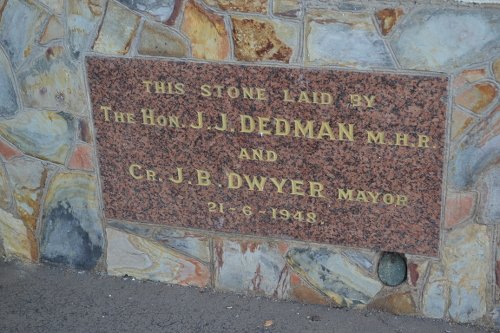
Friends in high places: it was a different story of support when Fletcher Jones opened at Pleasant Hill in 1948.


When scrutiny is sub-standard, democracy suffers

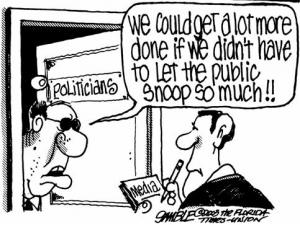
Image: The Florida Times-Union.

Something very troubling is happening in our community when it comes to the local media’s scrutiny of those in power.

Since returning to Warrnambool in January, I have watched with growing disbelief at the apparent reticence of our once-proud local newspaper, The Standard, to go in hard and ask the tough questions of our leaders.

This is what journalists do. This is the role of the so-called ‘Fourth Estate’ – to be the watchdog of the powerful and give voice to the powerless.

It is an essential part of our democracy and ensures that we retain an open, transparent and accountable government – on all levels.

dantehanpic

This past week, we saw national scrutiny of MPs’ spending, sparked by revelations that Prime Minister Abbott had claimed allowances for trips to weddings, triathlons and cycling events.

Was our local federal MP Dan Tehan asked by our paper to detail the $873,992.35 that he spent from 2010-12? No, instead this figure was not even mentioned, but rather the paper’s story (10/10) reassured us that he had claimed $321,000 in ‘legitimate government entitlements’. End of story.

There is no suggestion that Mr Tehan used his allowance improperly, but nor is it improper for a journalist to forensically examine this spending. This is exactly what independent journalist Margot Kingston did when she broke the story about Tony Abbott claiming more than $9000 in taxpayer funds to promote his book.

It is only by drilling down into the detail that all the facts can come to light.

Mayor Michael Neoh. Image: ABC.

Earlier this year, Warrnambool Mayor Michael Neoh visited China as part of a Sister City relationship with Changchun. Shortly after his return, The Standard ran a story (29/6) about Mr Neoh visiting his ancestral home in China and catching up with relatives.

Was this part of the official tour for which ratepayers paid $3500 for both Mr Neoh and Council CEO Bruce Anson?

Did Mr Neoh pay for this portion of the trip himself? Again, there is no suggestion of impropriety by Mr Neoh, but we don’t know the answer to these questions because, it appears, they weren’t asked.*

And when others do ask the prickly, difficult questions, the response is sometimes extraordinary.

Last month, Cr Peter Sycopoulis and several council colleagues questioned whether Mayor Neoh and Mr Anson needed to attend a Sister City function in Japan – expected to cost ratepayers $4000 – given they had just been to China.

For this, the councillors were chastised by the newspaper as being ‘party poopers’ (11/11). What?

And let’s not forget the infamous ‘Wilma Wright’ letters to the editor. These were published by The Standard for four years – four years – without anybody apparently checking the identity of the author, who was revealed as Mr Anson’s son and who at one point used the cover of his pseudonym to openly attack several councillors, including Cr Sycopoulis, in the lead up to a council election.

(Mr Anson, it must be noted, was cleared of any involvement in his son’s activities).

peter syc
Cr Peter Sycopoulis

The names in this column – Mr Tehan, Mayor Neoh, Mr Anson – are irrelevant: it is the public, important positions that they hold that makes them open to scrutiny and a higher standard of accountability.

This is the hard work of journalism.

It is much harder, more time consuming and nerve-wrecking than writing story after story about courts and crime (ie. the powerless) where all of the leg work has been done, yet it is critical if we are to have faith in our media as the watchdog it is intended to be.

If it fails in this task, it is nothing less than our democracy which suffers.

*  The Warrnambool City Council has since confirmed to Bluestone that Mayor Neoh did fund this portion of his travel.

Disclosures:

  • I began my journalism career as a cadet at The Standard in 1989.
  • I was an open supporter of ALP candidate Michael Barling during the last federal election because I thought he was the best option for Wannon. It was the first time I voted Labor in many years: I normally vote Green.
  • I know Cr Sycopoulis through his family: his older sisters and I went to school together.

subscribe