Uncovered: Rena Jones’ lovely letter to the people

rena jones truck
Rena Ellen Jones, wife of the late Sir Fletcher Jones, was a major support to Sir Fletcher as he slowly built his clothing and drapery business from the ground up, including learning how to drive the delivery truck. Image courtesy of The FJ Foundation.

By Carol Altmann

[dropcap style=”font-size: 60px; color: #A02F2F;”] A[/dropcap] little hidden gem has emerged from amid the thousands of items donated to the Melbourne University Archives by the family of the late Sir Fletcher Jones.

MUV archivist Melinda Barrie went searching among the substantial collection for evidence of the contents of a time capsule that is believed to have been installed in the Fletcher Jones factory at Pleasant Hill, Warrnambool, some time after it was officially opened in 1948.

fj invitation2
The official invitation to the opening of the FJ Trouser Unit at Pleasant Hill, Flaxman St, Warrnambool on June 21, 1948. Image reference: 2012.0031 Fletcher Jones Collection, Melbourne University Archives.

What Melinda found was a letter from the late Rena Jones, wife of Sir Fletcher, that she no doubt drafted and re-drafted and then tapped out on a typewriter, to be placed behind the foundation stone of the Pleasant Hill factory.

The letter, which was possibly accompanied by a series of photographs, was intended to capture a little of the ethics, spirit and philosophy of Sir Fletcher and his family as they slowly built their business from the humblest of beginnings.

join us2


What Rena didn’t know at that time, of course, was just how successful the Fletcher Jones company would become, how many people it would go on to employ in Warrnambool, Mt Gambier and Melbourne – and how strong the connection remains to Warrnambool through the revival of the Fletcher Jones site and the ongoing collection of personal stories about the site.

rena jones letter - smaller
The letter penned by the late Rena Jones, wife of Sir Fletcher Jones, and placed behind the foundation stone of the Fletcher Jones factory and gardens when they opened on June 21, 1948. Image courtesy of the Melbourne University Archives.

Here is the letter in full:

To those who follow:

‘This has been written by Rena Ellen Jones, the wife of David Fletcher Jones, to be placed behind the foundation stone of this building, June 21st, 1948.

This is written, feeling that some members of future generations succeeding us may be interested in these brief details and photographs of the life and work of my husband.

David Fletcher Jones, the son of Samuel Henry Jones and Mahala Jones (nee Johns), was born at Golden Square, Bendigo, on August 14, 1895, was a member of a family of seven children, and deprived of education beyond the age of 13 1/2 years.

His first calling was that of a tomato grower, until he enlisted in the 1914-18 war, where he served as an Infantryman. Being invalided home in 1917, he changed his profession to that of a soft goods merchant, with a two-horse waggon (sic). This enterprise led to that of a travelling draper. Photographs of the hawker’s wagon and other vehicles used until 18 months after we were married and settled in Warrnambool in 1923 are included in this history.

Mr Jones’ then specialised in boys’ wear, ladies’ wear and mens’ wear. Three years later, he concentrated on mens’ wear and, at the time of writing, he has a staff of around 200 employees, and is Chairman of Directors of the Warrnambool Woollen Mill Co, and a director of Leviathan Ltd.

Anxious to make a contribution to “peace in industry”, he has made the Warrnambool shop, Melbourne shop and Trousers factory into staff co-operatives, limiting the shares of the family to 48%; 52% having been made available, on easy terms, to the staff.

At the time of writing, there is considerable unrest in the industry. Mr Jones is happily spending himself, endeavouring to evolve a system of sharing all profits with his employees and the consumers of the goods he manufactures and sells. Our three children, Ralph Fletcher, Lois Ellen and David Fletcher Jr, and myself have all happily agreed on this thing and are all anxious to see this world a better and happier place because this family has been privileged to do this work.

We are persuaded that God’s plan is perfect, and that if we only ask Him to guide, teach, manage and strengthen us, and help us to witness humbly, that all will be well.”

rena jones signature

[dropcap style=”font-size: 60px; color: #A02F2F;”] T[/dropcap]he MUV Fletcher Jones collection includes more than 3000 photographs and artefacts – including many from the Warrnambool factory in the 70s, 80s and 90s – all of which will be cleaned and then 300 selected for digitalisation.

“We are on track to get that project well and truly underway this year, to select and digitise the 300 items that best capture the story of Fletcher Jones,” Melinda said.

rena ellen jones
The late Rena Ellen Jones, who died in 1970 at the age of 76. Image courtesy of the FJ Foundation.

newsletter Eat And Drink StonesYou can read more Fletcher Jones related stories here…


Priceless Fletcher Jones that fits us all

Rare images of FJ silver ball

Fletcher Jones cross will light up again
The Silver Ball under the silver ball

Motor Museum to revive Fletcher Jones site


Rare images of FJ silver ball

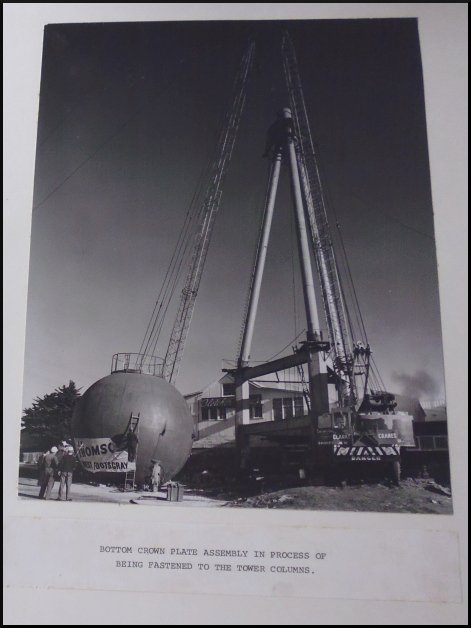
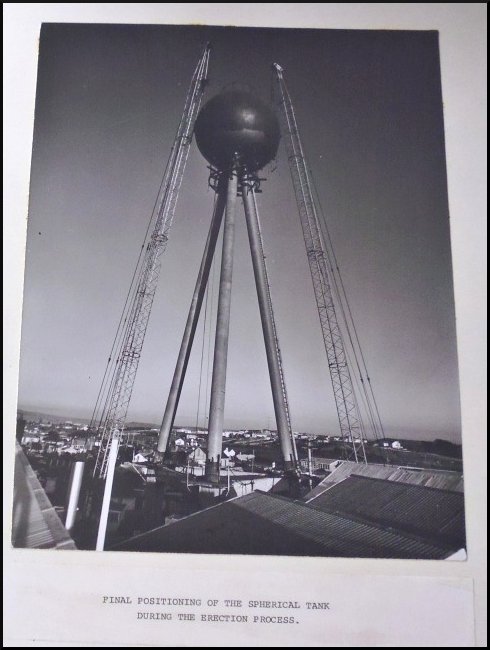
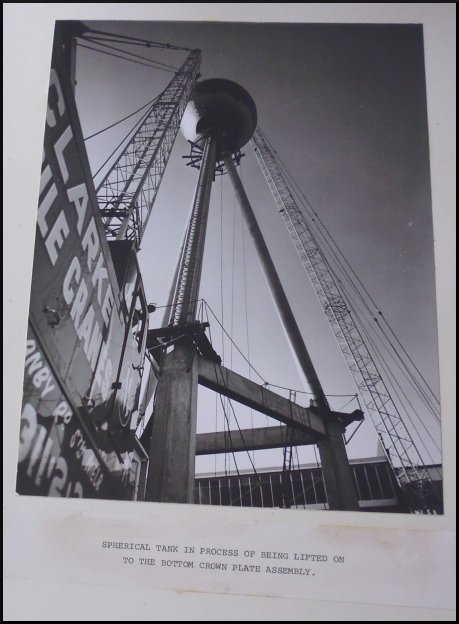
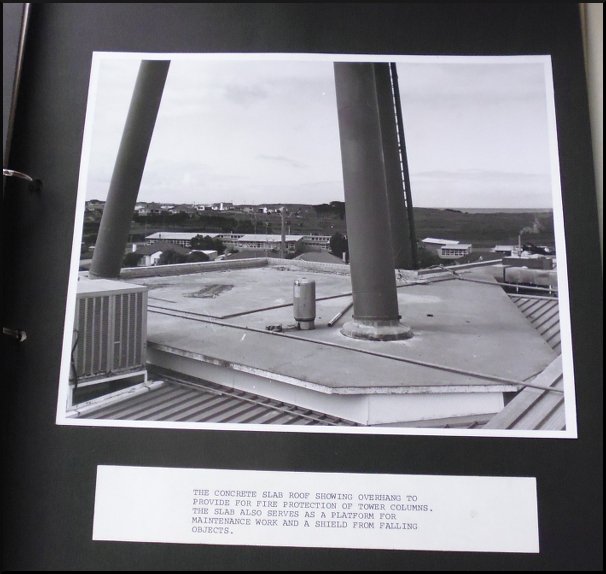
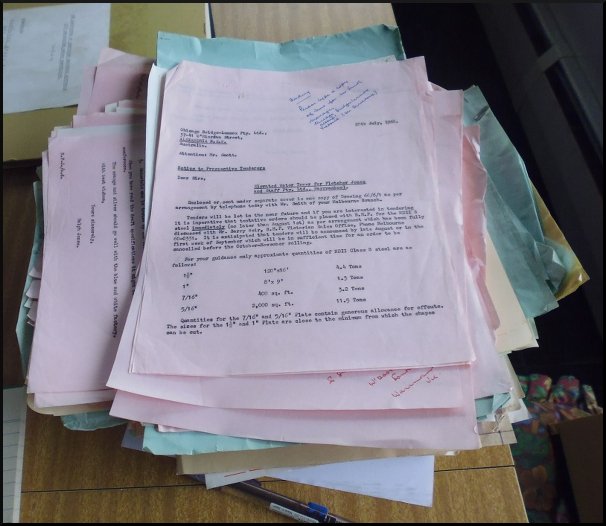
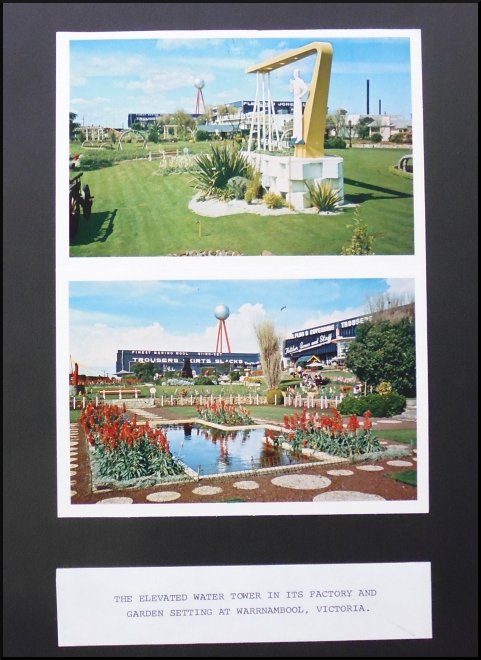
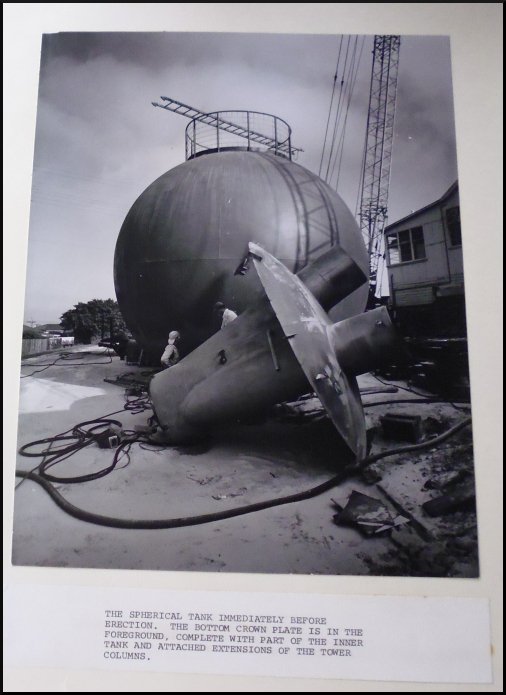
[box]Bluestone Magazine would like to thank Melinda Barrie from Melbourne University Archives for providing us with some examples of the images contained in a collection of items donated to MUA by Ralph Jones (Ralph Jones Construction Engineering Services) who engineered and constructed the unique water tower for the Fletcher Jones factory in Warrnambool, 1965-67. Citation: Ralph Jones Water Tower Submission and Business Papers, 2014.0112, Box 1, University of Melbourne Archives.[/box]

ball ground2

ball ground


ball cranes copy


ball crane 2

ball-legs

ball in place

ball2

drawings

words ball

ball documents

postcards

[button link=”http://the-terrier.com.au/subscribe-2/” type=”icon” icon=”heart” newwindow=”yes”] Do you know somebody who would enjoy this story? Encourage them to subscribe to Bluestone![/button]

newsletter Why Not Stones You might also enjoy:

Rare images emerge as FJ story collection begins

Motor Museum to revive Fletcher Jones site

A different way of doing things: Dean Montgomery

Imagine the skyline without Fletcher Jones


Rare silver ball images emerge from collection

man on ball
Vertigo? What vertigo? One of the rare images of the iconic silver ball water tower being erected at the Fletcher Jones factory in 1967 from the collection of engineer Ralph Jones. (Citation: Ralph Jones Water Tower Submission and Business Papers, 2014.0112, Box 1, University of Melbourne Archives.)

Words: Carol Altmann

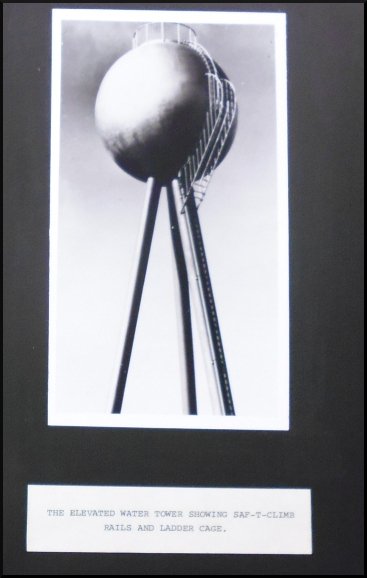
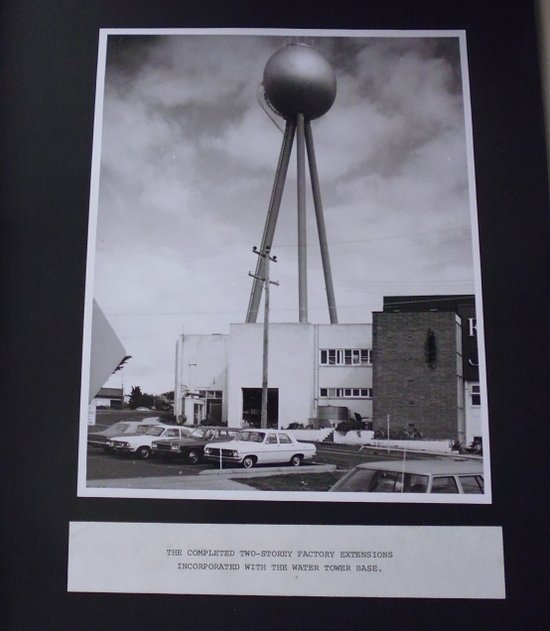
[dropcap style=”font-size: 60px; color: #DC943C;”] R[/dropcap]are images of the Fletcher Jones silver ball water tower have emerged from the private collection of engineer Ralph Jones who designed and supervised the construction.

Bluestone Magazine has been privileged to gain access to the images courtesy of the Melbourne University Archives which has been archiving the story behind the iconic silver ball as part of the Ralph Jones Engineering Services collection.

See all of the images here.

MUV archivist Melinda Barrie said the collection – donated by Mr Jones, who is now aged in his late 80s and living in Melbourne – included detailed documents and correspondence from 1965-1967 when the silver ball was being built.

It also includes Mr Jones’s submission to the 1975 Association of Consulting Engineers Australia -Engineering Awards, where his firm hoped to win a prize for the silver ball that, as far as we know, is without peer in Australia. (Unfortunately, the ball missed out on an award).

ball phone book
The brand new water tower, red-legged and silver-topped, graced the cover of the local phone directory the year after it was assembled. Image from the Ralph Jones collection and reproduced courtesy of Melbourne University Archives.

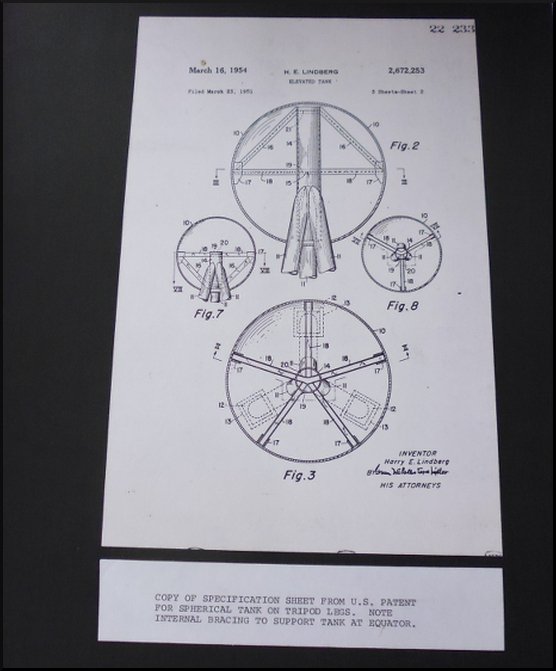
[dropcap style=”font-size: 60px; color: #DC943C;”] T[/dropcap]he documents reveal that Mr Jones’s inspiration for the ball’s design came from US advertisements for water towers made by the Pittsburgh-Des Moine Steel Company, one of which included tripod legs.

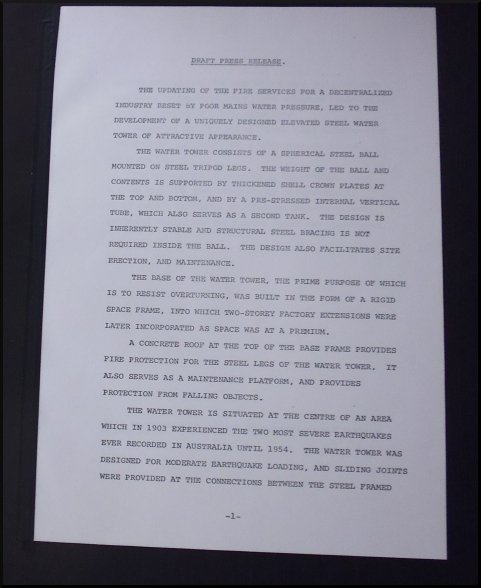
The unique design was also borne of necessity because of the “poor mains water pressure” on the east side of Warrnambool at the time, Mr Jones wrote in his submission.

It also had to take into account potential earthquakes – given that the Fletcher Jones factory was in the middle of an area that in 1903 experienced two of the worst earthquakes in modern Australian history – and was built to withstand “moderate” earthquake loading.

With the Ralph Jones Engineering Collection ready to view at MUA, Melinda and her team are now turning their attention to a significant collection of photographs, documents, personal items and archival films donated by the family of Sir Fletcher.

The collection includes more than 3000 photographs – including many from the Warrnambool factory in the 70s, 80s and 90s – all of which will be cleaned and then 300 selected for digitalisation.

Melinda described the contemporary Fletcher Jones story as a vital part of documenting Victoria’s manufacturing industry.

“We view it as very important, as it celebrates the narrative of manufacturing and retail in Victoria…and so many of those stories have been lost,” she said.

Silver lining: Melbourne University Archive academics Melinda Barrie (centre) and Sophie Garrett (centre right) catch up with working party members Mark Rashleigh, Emma Charlton and Julie Eagles (right) - and some of the artwork that has been inspired by Fletcher Jones and the iconic silver ball. Image: Bluestone Magazine.
Silver lining: Melbourne University Archive academics Melinda Barrie (centre) and Sophie Garrett (centre right) catch up with working party members Mark Rashleigh, Emma Charlton and Julie Eagles (right) – and some of the artwork that has been inspired by Fletcher Jones and the iconic silver ball. Image: Bluestone Magazine.

[dropcap style=”font-size: 60px; color: #DC943C;”]M[/dropcap]eanwhile, in Warrnambool, moves are afoot to start documenting the local, personal stories around Fletcher Jones and Pleasant Hill.

A steering committee has come together with representatives from the Save the Silver Ball and Fletchers Gardens group, the Warrnambool Planning and Heritage Group, the Warrnambool Historical Society and the F Project, with MUA also helping out.

The group has already secured $5000 from the Gwen and Edna Jones Foundation (no relation to Fletcher), which will be used to record those stories considered a top priority because of people’s age or health.

“The next step for us is to sit down and determine who these people are and to capture those stories now,” said group convenor Julie Eagles.

The committee has applied for a further $15,000 from the Public Records Office of Victoria for a much broader project similar to the Silver Ball Screening Festival, where workshops are held to help people record their own FJ story, or that of someone they know.

“There is still such a strong connection between Warrnambool and the Fletcher Jones site, both as part of Warrnambool’s history and part of our individual histories,” Julie said.

fletcher jones staff
The staff behind the name: the stories of everyday workers and those with a strong connection to the Fletcher Jones site will be recorded as part of a new project. Image: Save the Silver Ball and Fletcher Jones Gardens.

[dropcap style=”font-size: 60px; color: #DC943C;”]T[/dropcap]he individual projects of MUA and the local group may eventually lead to a collaborative exhibition or something similar in Warrnambool.

“Most of the people behind these great manufacturing stories want to see their stories out there and their work out there,” Melinda said.

“It is also part of our mandate here at MUA to make our collections accessible to the people, otherwise, what is the point?”

Melinda said the combination of the Ralph Jones collection, the personal collection from Sir Fletcher’s family and the work of the local steering committee would create a “well rounded archive” on one of Australia’s iconic businesses.

[button link=”http://the-terrier.com.au/subscribe-2/” type=”icon” icon=”heart” newwindow=”yes”]Bluestone is aiming for at least 500 subscribers in 2015. If you enjoyed this story, please click here to become one![/button]

newsletter Why Not Stones You might also enjoy…


Glorious remnants of ‘Googie’ groove in south-west

Deep into the cellars of KM Lynch

Victoria’s oldest building right in our backyard

Turning in to the Turn In Motel

The enduring legacy of ‘Tag’ Walter