Finance expert calls on Lyndoch Living board to resign
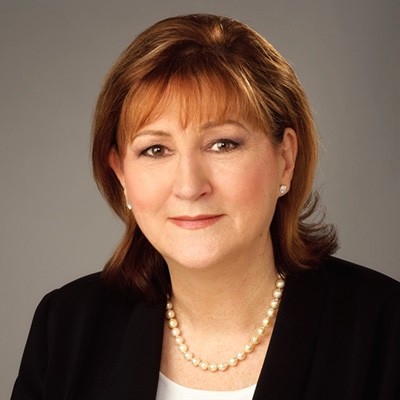
Former Plenty Valley Community Health chair Marcia O’Neill, who oversaw the removal of Lyndoch CEO Doreen Power from her organisation, has called for the Lyndoch board to resign.

Carol Altmann – The Terrier

The crisis around Lyndoch Living continues to deepen.

The following is a statement from the former Chair of Plenty Valley Community Health, Marcia O’Neill, where the CEO of Lyndoch Living Doreen Power worked briefly before being employed by Lyndoch.

Ms O’Neill has called upon the Lyndoch board to resign, and for an administrator to be appointed urgently.

Ms O’Neill is an experienced director and board chair, and a Fellow Certified Practicing Accountant, (FCPA) which recognises global experts in the field of accounting and business. When people the calibre of Ms O’Neill say the Lyndoch board must go, it must go:

“I respect and thank Percy Eccles for his courage in speaking up and I certainly understand his fear from past experiences in dealing with Ms Power when I was Chair of Plenty Valley Community Health (PVCH).

I see history repeating at Lyndoch Living, it’s not the first time, however in this frightful case the damage has been prolonged and action by the Board seriously lacking.

Fortunately, there has been tenacious reporting – which was courageous in the face of threats of litigation – providing some transparency by a local journalist which has documented the issues, decline and terrible harm being perpetrated at Lyndoch Living.

This reporting incurred threats of litigation personally against The Terrier and it remains to be seen if this was financed by Lyndoch Living.

Further, I believe Percy Eccles’ comments about the Boards’ relationship with the CEO, the comments ring very true, and if so, there is a breach of Directors’ Duty. They should resign.

Ms Power’s time at PVCH was very short lived.

PVCH Board consisted of experienced professionals united by courage and integrity with a sound understanding of Directors’ Duties and Corporate Law, and expertise in Corporate Governance.

To my certain knowledge, the true events at PVCH were omitted from Ms Power’s application (to Lyndoch Living) and in the reference checks submitted by the recruitment agent. This too needs to be investigated.

The same search agent was involved when PVCH recruited Ms Power from Seymour.

This was before I became chair of the PVCH, but to my certain knowledge the true events of what happened at Seymour were also not presented to the selection panel.

Members hold board members accountable and Lyndoch’s exclusion of general members means there is no recourse or method of accountability unless the regulator steps in and appoints an administrator.

In this case, it’s urgent.

Companies Limited By Guarantee take millions in Federal and State funding and must be held to account.

Sadly, I understand from experience that there will likely be quite protracted and expensive proceedings ensuing, and my thoughts are with the present and past staff and the residents and families of Lyndoch Living and the people of Warrnambool.”


Plenty more: digging into the back story of Lyndoch’s CEO

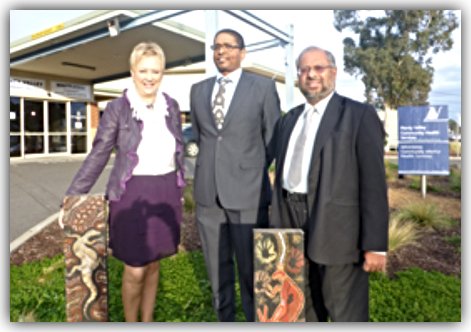
Lyndoch CEO Doreen Power in her former role as CEO of Plenty Valley Community Health, a position she held for just 18 months before leaving. Image: PVCH.

Carol Altmann – The Terrier

Tonight I am digging into the second chapter of where Lyndoch Living CEO Doreen Power worked before being chosen in late 2014 to lead our much-loved aged care home.

To me, Ms Power’s back story is important in the context of what is happening at Lyndoch now:

an extraordinary number of staff that have left since 2015, including a string of senior managers and managers,

allegations of a toxic work environment and;

evidence of staff shortages and equipment shortages for our aged and frail.


As I wrote on Monday, Ms Power was in charge of Seymour hospital for five years from 2007 to 2012, before resigning in the face of a virtual uprising within the town over allegations of a toxic workplace, high staff turnover and extremely low staff morale.

Seymour is almost a mirror image of the concerns now leaking out of Lyndoch.

The back story, however, doesn’t end there.

After Seymour, Ms Power became CEO of Plenty Valley Community Health, in Melbourne’s northern suburbs, but resigned and was replaced by an interim CEO after only 18 months.

Why?

After Plenty Valley, Ms Power was appointed Director of Nursing and Manager of the Clinical Team at the Tweddle Child and Family Health Service – her last position before coming to Warrnambool – but, again, she resigned after a few months.

Why?

I have dug deep into these questions and spoken to many people about this period in Ms Power’s career, and a troubling pattern has emerged.

That pattern centres around a particular management style which results in the same allegations: a toxic workplace, low staff morale, high staff turnover and, in the aftermath, the need for a major overhaul and refocus on the organisation’s people and core purpose.

For various reasons I am, unfortunately, unable to quote any sources directly for this piece, but I can tell you that up to 60 staff left Plenty Valley Community Health during 2012-2013.

I can also tell you that the issues left behind for the health centre to deal with were complex and draining.

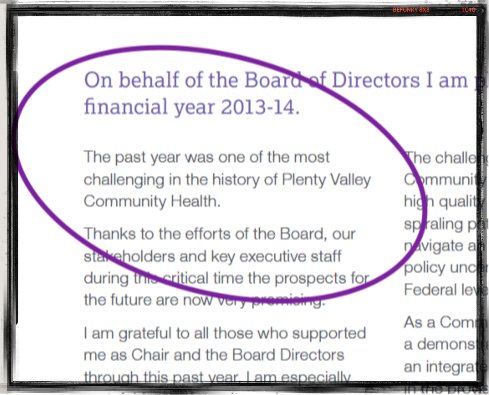
Former Plenty Valley health board director Marcia O’Neill sums it up in her opening line from the 2013-14 annual report, written six months after Ms Power’s resignation:

“The past year was one of the most challenging in the history of Plenty Valley Community Health.

“Thanks to the efforts of the Board, our stakeholders and key executive staff during this critical time, the prospects for the future are now very promising,” she writes.


Ms O’Neill goes on to say that the appointment of a new CEO (Phillip Bain) saw a sound foundation of executive management and loyal staff and a move back to “business as usual”.

Phillip Bain also gave a blunt assessment in the 2014-15 annual report of what Plenty Valley health looked like when he took charge:

“The Plenty Valley that I joined in early August was a much less confident organisation than the one we see today.

“We had a backlog of productivity, infrastructure and policy issues to address.

“We also had very low levels of staff morale arising from changes in senior management, and had missed out on many opportunities for growth or building partnerships in the years prior.”


One source told me that when Mr Bain took over, it was like Plenty was “being liberated”.

Mr Bain goes on to list 25 main areas of change under his watch, including a new strategic plan, a review of financial reporting, and a “dramatic improvement” in staff morale, absenteeism and staff retention.

The Plenty Valley Community Health ‘super clinic’ that opened during Ms Power’s time with the centre. A similar medical centre is planned for Lyndoch Living. Image: PVCH

Did the Lyndoch board, as it was in 2014 when Ms Power was appointed, know about any of this?

If it did, what impact, if any, did it have on the board’s choice of Ms Power as the best person to guide Lyndoch into the future?

Apparently Ms Power was chosen from 20 applicants, but I am not sure who was on the selection panel. (I emailed chair Kerry Nelson about all this today, but she is on leave until 19 December.)

Lyndoch Living is a very different place under Ms Power’s reign and there is no doubt some changes to Lyndoch were necessary, but what has also happened is a growing culture of silence, with staff too scared to speak up and the public not encouraged to ask questions.

On the ground, the Lyndoch staff have been threatened with disciplinary action if they make any comments on social media that are considered unacceptable by management, and especially if they comment on The Terrier.

I have heard a list of names has been taken, which explains the lack of comments from Lyndoch staff on anything I write (don’t worry, I see you).

The lack of information at the last Lyndoch AGM also showed the disregard for wider community input into Lyndoch’s direction.

I am starting to wonder if Lyndoch, which was started by the community, supported by the community and is still accountable to the community, is turning into Leningrad.

How this has happened, and what we can do about it, is where this story goes next.

More soon.

 Thankyou to everyone who supports The Terrier. If you would like to be a part of it, please consider a contribution to the tip jar.

Terrier Tip Jar