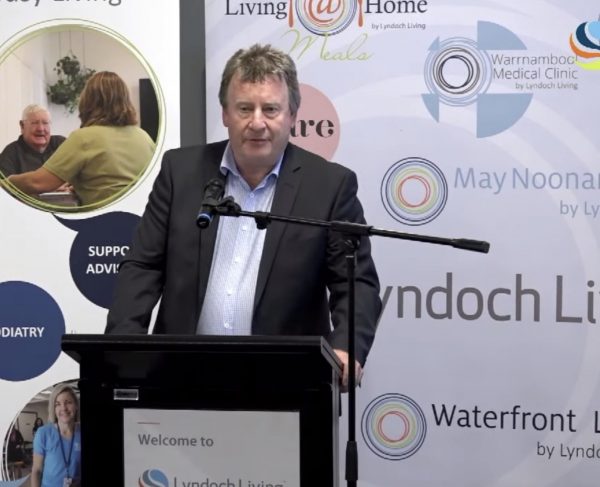
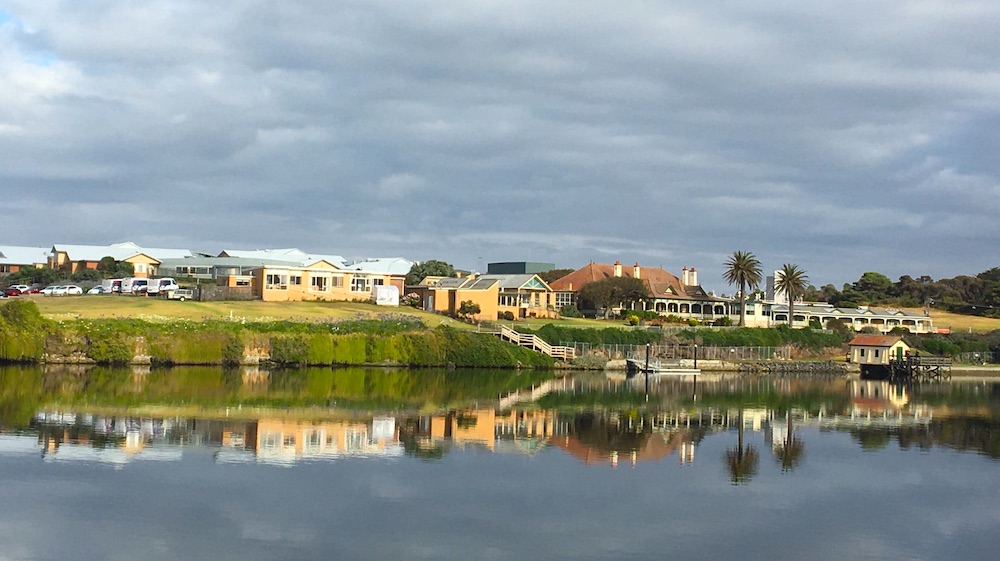
Lyndoch posts record loss as it ploughs on with masterplan
Lyndoch Living aged care is sailing into un-charted waters with big borrowing, big spending and a sharp decline in its overall equity.
Carol Altmann – The Terrier
Lyndoch Living’s full financial figures dropped late today and here is a quick snapshot:
Lyndoch last year posted a record loss of $4.029 million – almost $2 million up on the loss of the previous year.
In 2020, it posted a loss of $2.4 million.
In 2019, it posted a loss of $1.88 million.
In 2018, it posted a loss of $1.77 million.
In 2017, it posted a $846,000 surplus.
Er, is this supposed to be how a not-for-profit operates? Not breaking even, but running at continual losses?
More importantly, Lyndoch’s net worth has dropped to $40 million in 2021, down from $48 million in 2020 and $69 million in 2015.
This net worth/equity figure comes from adding up all of Lyndoch’s assets (around $100m), and subtracting all of its liabilities.
Lyndoch’s assets have hovered around the $100 million mark for several years now.
What has changed are the liabilities – they keep going up, up and up.
In 2018, Lyndoch’s liabilities were $37 million
In 2020, Lyndoch’s liabilities were $47 million.
In 2021, they were up to $60 million.
All of this cuts deep into Lyndoch’s overall financial position.
Lyndoch is borrowing big, it is taking risks, it is investing in a $22 million medical centre that is due to be finished mid-year, ploughing ahead with its $100m masterplan and somewhere in all of that is a whole lot of hope – by us – that it will all work out.
Lyndoch board is changing lanes, but keeping its windows up
Consultant Robert Lane, from SED Consulting, appeared at last month’s Lyndoch Living AGM to outline changes to how the board will be selected, but ordinary members are still not a priority.
Carol Altmann – The Terrier
Lyndoch Living will this year change how it selects its board, but there is still no sign – yet – of allowing “ordinary” members anywhere near the action.
In fact, my sense is that Lyndoch is driving methodically toward becoming a fully corporatised, tightly controlled company and ditching any real input or scrutiny from the wider community about its operations.
I say this because while Lyndoch is changing how it chooses its board members – more about that in a second – it’s in absolutely no rush to let every day people become “ordinary” members.
These pesky “ordinary” members are the ones who can keep an eye on the direction, priorities and performance of Lyndoch, ask questions and, if enough members agree, call meetings and vote on action.
They can be a powerful local voice.
They also reflect the people, or their offspring, who supported Lyndoch for decades – we must never forget that harnessing “people power” is how Lyndoch started and how it has survived for more than 60 years.
Right now, however, Lyndoch has no “ordinary” members. Zilch.
As we know, more than 115 people applied to the board last year to become “ordinary” members and nobody made it through.
It turns out, however, the Lyndoch board has been looking at itself and, a year ago, hired a local consultant – Robert Lane from SED Consulting – to suggest ways it could do things differently.
Mr Lane popped up as a surprise guest at the Lyndoch Living AGM last month, and I felt a surge of hope that maybe the breakthrough we have been waiting for, where membership would become open and accessible, had finally come.
But after meeting with Mr Lane last week to learn more, that hope is on hold because encouraging “ordinary” members was not a part of his brief.
Mr Lane was tasked with other priorities, including setting up a new board selection process that will work something like this:
– All board vacancies will be advertised;
– Nominees will go to a new committee, chaired by Mr Lane and including two board members Kane Grant and Lorraine Mielnik;
– The committee will assess these people against a range of criteria and settle on those it thinks would be best;
– The committee’s decision is then assessed by another, as-yet-unnamed, independent person.
– The final, preferred nominees will then go to a vote at the AGM.
On paper, this looks better than the closed shop of recent years, but is it? I see a gaping hole – who gets to vote for board members at the AGM?
There ARE NO general members of Lyndoch so, once again, the board votes for itself.
Around we go.
I asked Mr Lane: aren’t we right back to square one, with only seven people – the seven board members – having full control and being answerable only to themselves?
We were.
This is not Mr Lane’s fault or responsibility, as he is only tackling what he has been hired to do.
“I am trying to manage an interim process,” Mr Lane said, “(and) in the absence of members outside of the board, this is the process that will take place.”
Mr Lane agreed the situation was “not ideal”, but stressed that he hadn’t “accepted this role to not have a positive influence”.
Well I really hope that Mr Lane’s influence can extend a lot further, because the biggest issue with the board right now is not who sits on it, but its refusal to talk to the people.
It has failed – repeatedly – to tell the community what is going on, or to answer questions.
This is why most people have no clue about the scope of the $100m masterplan, or why Lyndoch became a “Company Limited by Guarantee”, or how it will pay for its $22m medical complex, or why so many staff have left, or why it’s failing aged care standards, or why it even wants to run a medical clinic…because the board has explained none of it.
The board can change this, but does it want to?
In fact I wonder if the next step is for Lyndoch board memberships to no longer be voluntary, but paid positions to progress Lyndoch Living Ltd, rather than – in theory at least – to represent the community?
These next 12 months are critical: they will determine whether Lyndoch is fully answerable to the community, or whether – having become a Company Limited by Guarantee – that side of Lyndoch is now pure nostalgia.
Thanks for reading The Terrier. If you would like to say thanks and buy Jock a juicy bone, you can find the Tip Jar here.
Covid doesn’t stop digging into Lyndoch’s finances and future
As another year begins, the questions over the direction and culture of Lyndoch Living aged care still linger.
Carol Altmann – The Terrier
Righto, off we go. Let’s pick up right where we left off, because after all I am like a dog with a bone, and so tonight I am gnawing on the many things that we still need to know about Lyndoch Living – our community owned aged care home.
If any readers hoped that I might be moving on to another issue, look away now, because I am not finished with what has been a three-year investigation into how Lyndoch has changed, who has been involved, why and whether we can soon rest easy.
I am seeing this through – it will remain the focus of The Terrier for now – and I hope you will too.
Ah but hang on, there is one issue we need to address first and that is Covid.
Covidcovidcovidcovid.
Covid, as we know, is still disrupting aged care homes right across Australia with lockdowns, Covid outbreaks, visitation restrictions, and worsening staff shortages, and all of this is having a terrible impact on those who are isolated from their loved ones.
I am sure we all understand this, but Covid is not and cannot be a reason to stop asking the hard questions of Lyndoch that still remain unanswered.
In my view, it is even more of a reason to probe deeply into our publicly owned aged care home, because the local community are the custodians and caretakers of Lyndoch and we want to know that it is operating at the very highest standards of care, trust, accountability and transparency.
This has been the battle for the past three years – longer for those who work there – and it is not over yet.
Let’s begin with the AGM that was held just over a month ago.
At that time, Chair Susan Cassidy said during the livestream that any questions from members would be taken on notice.
Were there any questions from members taken on notice? If so, what were these questions?
What were the answers?
I asked Ms Cassidy this in an email last week and, so far, have not had a reply.
If there were no questions from members, then Lyndoch – a $100 million publicly owned organisation – held its AGM without a SINGLE question being asked.
Not one.
Perhaps I am wrong and Ms Cassidy will be in touch shortly with the list of rigorous questions and answers.
Such as:
Why has Lyndoch’s equity (assets minus liabilities) progressively fallen by a staggering $28 million in just six years?
In 2015, Lyndoch’s net assets were $69 million.
Last year, they had fallen to $41 million.
We will learn more about the Lyndoch figures at the end of this month, when it reports to the charities commission, so I will write more fulsomely on this then.
For now, however, we know a big slice of Lyndoch’s spending goes on staff costs and that it has also borrowed big time to fund its $22m medical clinic.
So, how is staffing? What are the bed numbers and staff ratios?
We see shift shortages being leaked to this page all the time – so why, in this climate, is Lyndoch bleeding so many experienced staff? Has the board asked questions and read the exit interviews?
And is it correct that Lyndoch is poised to hire a bunch of nurses trained overseas in order to fill the gaps?
What about the accreditation of Lyndoch due next month – is it on track to address all of the failings exposed by the aged care commission and pass with flying colours?
My sense is that Covid will see this accreditation delayed, but that doesn’t change the need for reassurance that Lyndoch has addressed ALL of the failings in Warrnambool and at its May Noonan Hostel in Terang.
And how is the $22 million medical clinic shaping up? Is it on budget?
And are all the GPs who are currently contracted with Lyndoch until April intending to stay on or will they follow Dr Phil Hall if, as reported, he re-opens a clinic at the existing Liebig St site?
What if the GPs don’t renew their contracts? How will Lyndoch fill its ginormous, three-level medical centre and not create another Sam’s Warehouse scenario?
Another whole pile of questions also come from the surprise announcement at the AGM that consultant Robert Lane had been hired to sort out how board appointments, and I assume general membership to Lyndoch, will be handled from here.
Mr Lane said there would be an advisory committee, chaired by himself and made up of two current board members (Mr Kane Grant and Ms Lorraine Mielnik), who would assist the board with its decisions on memberships which, to date, have made no sense to anyone.
I will also be learning more about that whole process this week, so stay tuned.
So many questions…I hope you are well rested and ready.
On we go.
[Thanks for reading, and if you would like to buy Jock a juicy bone as a thankyou, you can visit the Tip Jar here: https://tinyurl.com/yckzankb]
Signs, celebrations and staff shortages: Lyndoch rolls on
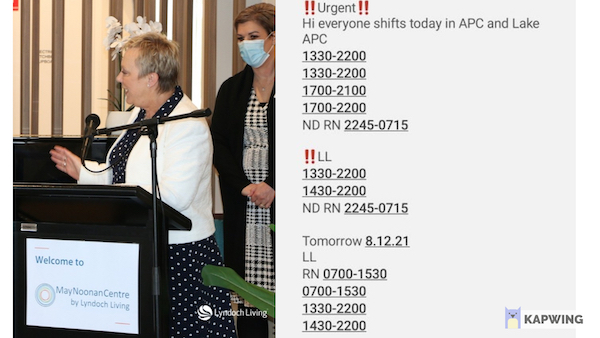
While the Lyndoch Living CEO and Chair celebrated an upgrade of May Noonan Hostel last Tuesday, shift shortages rolled on in the Lyndoch nursing home. Images: Lyndoch Living/supplied
Carol Altmann – The Terrier
Lyndoch Living can be a mind-bender, it really can.
Take, for example, the fact that Lyndoch will appeal the refusal of a permit for its big corporate sign.
Lyndoch has decided to challenge the decision by the Warrnambool City Council through VCAT.
This, you may recall, is the corporate sign that was installed just over a year ago by Lyndoch without a permit because it didn’t apply for one.
It then applied retrospectively for a permit in a classic “do it, then ask later” manoeuvre, but it was rejected by the WCC because the sign is too large under planning laws.
End of story? No way!
So now more aged care funds will be spent by Lyndoch on nurses, oops, lawyers to appeal a sign that was erected illegally in the first place.
And here is the mind-bending, “this-could-only-happen-in-Warrnambool” part:
Lyndoch is fighting a decision made by the staff of one of the board members of Lyndoch.
Andrew Paton, as we know, is a board member of Lyndoch and the Director of City Growth at WCC.
Mr Paton’s staff, who I assume he trusts to know the law, made the decision to reject this sign.
But Lyndoch is now spending aged care funds to fight that decision.
And the council – which employs Mr Paton – will spend ratepayers’ funds, in a roundabout way, defending that decision.
My head hurts.
My head also hurts, and perhaps yours does too, when I see the barrage of public relations pouring out of Lyndoch on its Facebook page at the moment without so much as a whiff of an update on how it’s dealing with its multiple challenges.
Last Tuesday, for example, there was a pile of happy snaps from the “grand opening” of new works at May Noonan Hostel in Terang.
It was all speeches and smiles, but not a word about May Noonan in July failing seven out of the eight national aged care standards – or almost half of the 42 benchmarks – and the 19 specific areas it must address to avoid sanctions.
There was not a peep of an update on how the squad that has finally been assembled to help with May Noonan is actually performing.
Nothing to see here folks! Pass the microphone!
And on this same day that the Lyndoch CEO and Chair were celebrating the new furnishings at May Noonan, the Lyndoch nursing home (Lake Lodge and Audrey Prider Centre), had one of its worst days for staff shortages – about half of the staff required.
It was, I am reliably informed, a nightmare.
Some Registered Nurses at Lyndoch are now working nine to 12 hour shifts to help try and cover the shortages.
This, as we know, is a direct consequence of a culture that has taken root and eroded Lyndoch and left so many good staff on the scrapheap, wondering what they did wrong and why – after decades of service – they are being made to carry the can.
We know it, we read it, we hear it and we feel sick about it and I feel even sicker when I see the pap now streaming out of Lyndoch which is designed to cheer everyone up – as all good propaganda is designed to do – but doesn’t fix anything.
What will fix it and turn Lyndoch around are serious interrogations by the authorities with the power to act, such as WorkSafe, which as of last week is now involved because of serious concerns around staff fatigue.
The Annual General Meeting this Tuesday is an opportunity for some truths.
We have lodged our 31 questions; let’s see if we get even a single answer.
Community bursting with questions for Lyndoch Living AGM
While members of the community can’t officially ask questions at Lyndoch Living’s AGM next week – because they have been denied membership – we can still pose them.
Carol Altmann – The Terrier
Below are 31 questions that have been sent today on behalf of members of the community to Lyndoch Living chair Sue Cassidy for next week’s Annual General Meeting (Dec 14).
Only members of Lyndoch Living are legally entitled to ask questions at the meeting, but – as we know – more than 115 people have been denied membership these past 18 months.
We are shut out of any legal obligations.
My argument, however, is Lyndoch has a moral obligation to answer questions posed by the community.
After all, the Warrnambool community raised $20,000 toward the $80,000 purchase price of Lyndoch in the 1950s.
That $20,000 was essential to the Government providing a grant for the remaining $60,000.
Without that $20,000, there would be no Lyndoch Living, simple as that.
The community has since donated tens, if not hundreds, of thousands of dollars toward Lyndoch via donations, raffles, bequests and salary sacrifice.
As far as I’m concerned, the community and Lyndoch residents are the “shareholders” of Lyndoch Living Limited, and shareholders get to ask questions at the AGM about the company, and its management.
So here are 31 questions, distilled from the more than 50 that were offered by you. We shall see if any answers are forthcoming. Thankyou for being a part of this campaign to return Lyndoch to the community it serves.
1. Why is Lyndoch Living not accepting any new members from the community?
2. Who are the current members of Lyndoch Living?
3. What criteria are used to select member applicants?
4. Why are there no copies of previous annual reports on the Lyndoch Living website?
5. Why is Lyndoch Living no longer advertising board vacancies and how are potential board members identified and selected?
6. Why does Lyndoch Living currently have only seven board members and not nine as required by its Constitution?
7. What steps have been taken to reach the accreditation standards required by February 2022 and to also address the 19 areas of non-compliance at May Noonan Hostel?
8. Is the $22 million primary health care centre (PHCC) fully tenanted in preparation for its opening in 2022?
9. What is the contingency plan if the PHCC is not fully tenanted?
10. Has the cost of the $22 million PHCC been impacted by Covid-19 due to increased costs in construction and materials? When is the building expected to achieve profitability?
11. If a new medical clinic opens at the premises of the former Warrnambool Medical Clinic (as reported by local media), how will this affect the capacity of the PHCC to attract new GPs and retain its existing GPs?
12. Will Lyndoch Living release the Business Case underpinning the Board’s decision to approve the construction of the PHCC?
13. What are the underlying assumptions which gave the Board the confidence to go ahead with an investment of $22m and the assurance that this project will result in a viable, sustainable and successful clinic, which poses no risk to Lyndoch’s ongoing financial position – especially its cash flow and solvency – and ability to prioritise its purpose to provide quality care for the region’s elderly citizens?
14. Will the directors of the Warrnambool Medical Clinic by Lyndoch Living be paid once the clinic is operational from the new premises?
15. Does the Lyndoch Living CEO receive performance bonuses as part of the employment contract approved by the board?
16. What is the current debt of Lyndoch and its strategy for repayment?
17. Can the board identify, separately, how much was spent on consultancies in 2020-21 and how much was spent on legal fees? Was this expenditure signed off by the board?
18. Has Lyndoch budgeted in 2021-22 to repair the nurse call system and resident call bell system?
19. How many staff have left Lyndoch Living in the past 18 months and how much has this cost?
20. What is the strategy to retain experienced staff?
21. What feedback (staff surveys, exit interviews etc) has the board received regarding staff satisfaction at Lyndoch Living and what actions, if any, have been taken in response?
22. Does the Board receive monthly reports outlining all compliments and complaints received, and incidents (falls, wound care etc) and sentinel events which have occurred for the previous month, and does this report include action(s) which will be taken in response? What has been acted upon and lessons learned to ensure continuous improvement in quality of care, and ensure proper oversight and accountability of the Board?
23. What measures are being taken to seek feedback from residents and their representatives, and what is being done to address issues raised by residents and their representatives?
24. Has the board reviewed Lyndoch’s business partnerships and sponsorships and how are these performing in terms of quantifiable benefits to Lyndoch?
25. What is the financial position of Waterfront Living? Is it fully sold and covering its costs?
26. Has there been an increase or decrease in the number of Lyndoch Home Care Package clients in the last 12 months? How does Lyndoch set its fee structures for the packages?
27. How much has the sponsorship of the May Racing Carnival Grand National Steeplechase and Lyndoch corporate tent cost since the sponsorship began, which budget line does this money come from, and what have been the quantifiable benefits to Lyndoch?
28. Is Lyndoch Living currently meeting all of its payments to suppliers on time?
29. How are bequests to Lyndoch solicited and is the approach compliant with the Fundraising Institute of Australia, including charity codes?
30. Has the patient/staff member ratio been met? If not, what has been done to remain compliant?
31. How many falls and pressure wounds were recorded in the past 12 months and how does this compare to the previous 12 months?