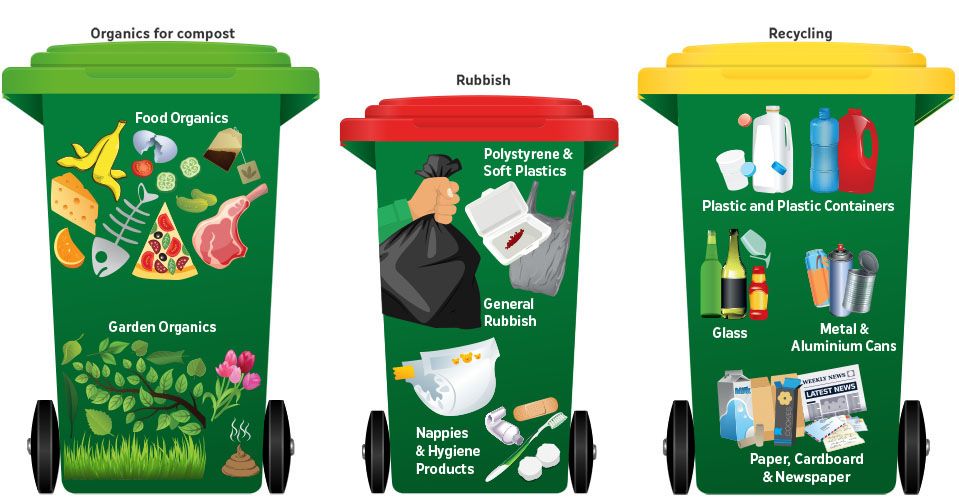
All go, go for FOGO? Well, yes, yes and no, no
Carol Altmann – The Terrier

The Warrnambool City Council’s new organic waste collection is a terrific move, but it could take a year or more before the service actually reaches your street.

Until this week, I didn’t know that the new service – best known as FOGO – could take up to three years to roll out fully across Warrnambool. Did you?

Let me explain.

As has been well publicised, the council ran a pilot of the FOGO service with about 1700 householders in the first half of this year and it was wildly successful. No surprises there; we are a green-minded city.

Buoyed by this success, the council decided several months ago to roll out the service to everyone and I, like most others, couldn’t wait to get that extra bin so organics could be sent off to be composted, rather than dumped in landfill.

In the meantime, the council sent out its 2018/19 rates notices which included a $69 increase in the waste management fee, up from $287 to $356 per household.

As then-Mayor Robert Anderson explained, the sharp increase “covers the rollout of a Food Organics, Garden Organics (FOGO) collection service and also the increase in cost to process recyclable materials”.
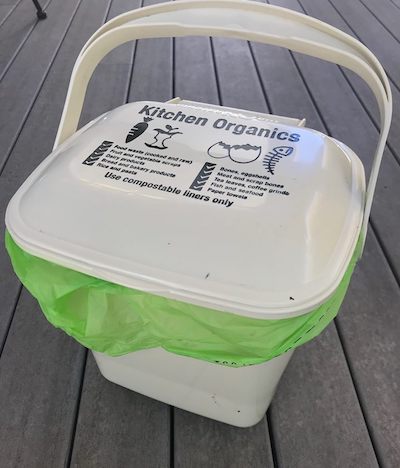
Coming to a kitchen near you – the FOGO rollout includes delivering kitchen caddies and bin liners to each home, like these recently delivered to residents at the Mill.

But this is where things get confusing: just because you are now paying $356 for your rubbish collection doesn’t mean you will get the FOGO service immediately.

It could take months and possibly even years, depending on where you live in Warrnambool.

The council hopes it won’t take that long, of course, but in July this year it flagged that the full roll out across nine pick-up areas, each of about 1600 bins, could take up to three years.


I must admit that I missed that memo and, like others, was wondering why I still hadn’t got my FOGO bin?

Just last week the council announced the winning tenders for picking up the organics, processing it and composting it, with all of these contracts to start from July next year.

So the situation for now is that some Warrnambool residents already have FOGO, some Warrnambool residents are getting FOGO as we speak, and others, like my little household, are waiting to find out when it will arrive.
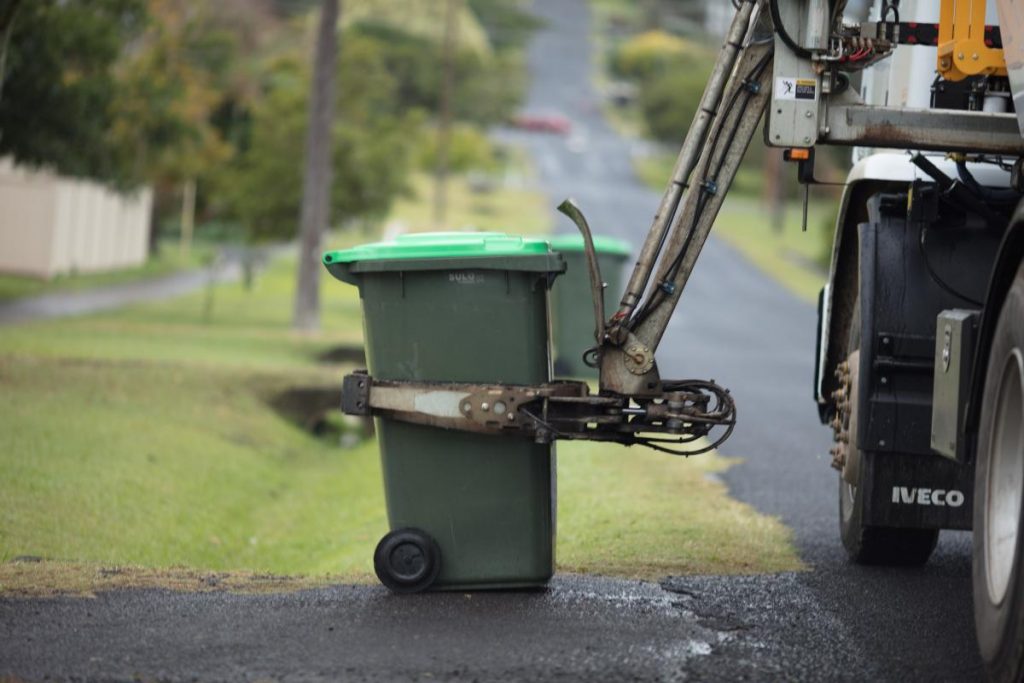
Green bins are on the march in councils around Australia, like Richmond Valley (pictured).

One astute reader asked me earlier this week whether a council can legally charge all ratepayers for a waste collection service that is only being used by some.

It is a good question, but the answer is yes, because, as the council points out, it is still collecting all of your rubbish – including organics that are now going into landfill via our normal old rubbish bins – and this all costs money.

“The FOGO component is allowing us to progressively roll out the FOGO collection which means that we will transition out of collecting (organics) in rubbish bins and move towards the separate collection of (organics), which will then be processed into compost,” council spokesman Nick Higgins said via email.

“While it may have been seen as preferable to roll out a complete FOGO service simultaneously across the city there were practical challenges with doing this,” he said.

Mr Higgins said the council was keen to get things moving as fast as it can and had applied for funds to help speed up the process.

“Council has applied for a grant to assist with the rollout of the dedicated FOGO collection and it is hoped that the full rollout of FOGO across Warrnambool will occur quickly,” he said.

What this all means is that, for the time being, FOGO is slow-go, but we are at least making a start on reducing the 3000 tonnes of food and other organics that are now being dumped into landfill.

Keep the Terrier typing!

Donate


Can W’bool break its coffee cup habit?

The environmental message is clear: we need to ditch paper cups, even recyclable ones. Image: Responsible Cafes.

By Shane Wilson*

Walk down Liebig Street from 8.30am on every weekday, and come to think of it weekends, and you will see the hastened step of the army of coffee addicts. Head down, almost caressing the plastic lid of their disposable coffee cup, infused by caffeine.

I will be clear, this piece is not about bagging out coffee lovers. That would be hypocritical, as I love my morning and lunch time coffee from my favourite café. There’s plenty of vices out there and if yours happens to be coffee, then there is no argument from this corner.

But, and I think this a big BUT, coffee drinkers are becoming an environmental scourge, the equivalent of those despicable nicotine addicts who think it is their right to flick butts on to the footpath and by stubbing it out with their foot, it will disappear.

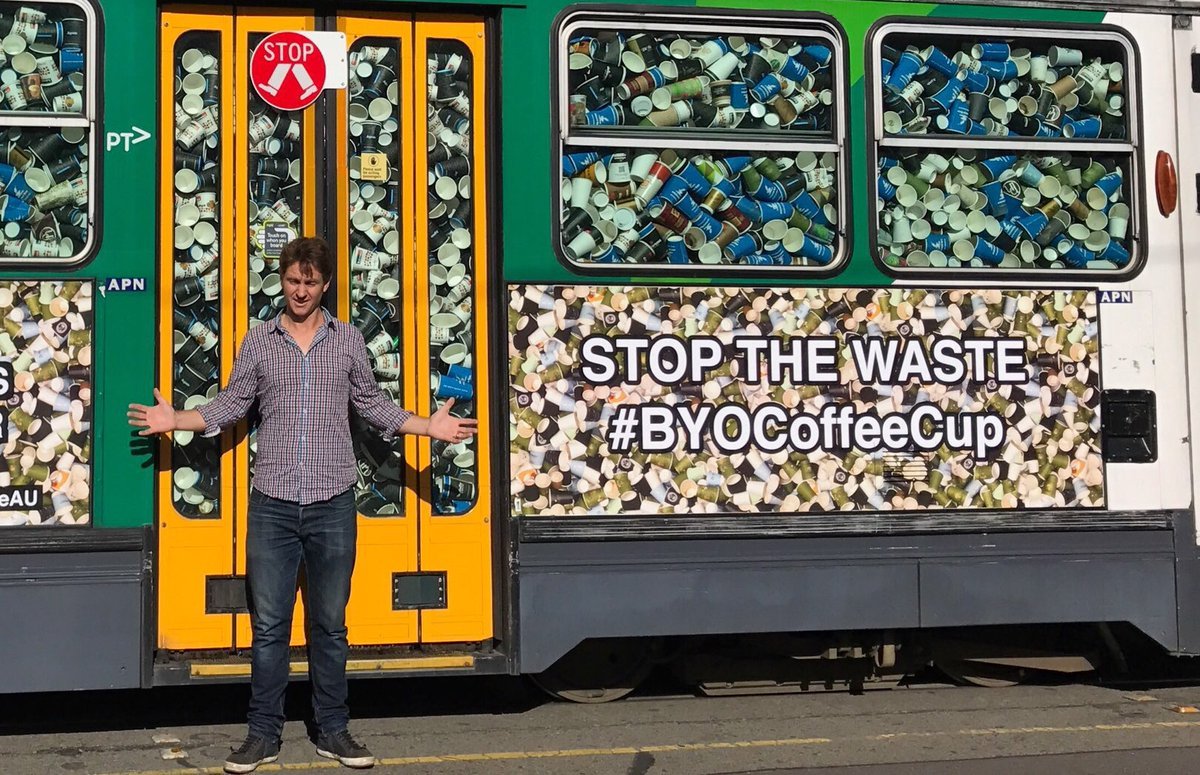
Former Chaser rascal Craig Reucassel reports in his recent ABC documentary War on Waste that it takes 50,000 coffee cups to fill a Melbourne tram. An interesting stat, but even more so when he makes the point that this is the number of coffee cups Aussies dispose of each half hour.

The cups are typically plastic lined and not bio-degradable: 50,000 every 30 minutes, one billion a year, destined for landfill.

Activist and comedian Craig Reucassel made a strong visual point by filling a Melbourne tram with the number of coffee cups thrown away every half hour in Australia. Image @craigreucassel, Twitter.

[dropcap style=”font-size: 45px; color: #8cc7d0;”] T [/dropcap]his coffee-sipping generation has been hammered in one ear about global warming and in the other about living and eating clean and green.

It’s not as if the environmental message is not being delivered. It’s just that it is not being heard. Or perhaps, Generation Now would rather promote their own immediate needs – a craving for caffeine – over a little bit of social responsibility.

But does it have to be this way.

Our town with a little good fortune (a regular, cleansing sea breeze and frequent rains) presents as a clean tidy green village.

We can build on this.

So let’s all support the push by the Leadership Great South Coast (LGSC) to completely phase out non-reusable coffee cups.

The LGSC has been urging local cafes to join the national Responsible Cafes campaign that goes further than recycling cups.

The campaign suggests, and I agree, that single-use cups be banned altogether and we bring our own, reusable cup.

If this sounds unachievable, just think for a moment on how we now all carry our own shopping bags (unless I leave them in the car!) to reduce the use of plastic bags.

As a city, we can all get behind the byo coffee cup campaign: promote it on the banners at roundabouts in the town. Bang the message out on Facebook. Talk to the schoolkids and let them know why the adults are doing this. For once, our generation can lead by example!

In our town, with leadership and meaningful discussion with our cafes, I am sure we can succeed.

The war on one-use coffee cups is going global – and Warrnambool could lead the way. Image: Beevoz

[dropcap style=”font-size: 45px; color: #8cc7d0;”] S [/dropcap]ome Warrnambool cafes, including Country Life cafe, Brightbird Espresso and Piccolo Coffee Roasters, are already taking on the environmental message by offering bio-degradable cups, selling re-usable cups and offering discounts to those who remember to bring their cup.

Warrnambool City Council is also one of the few councils which recycle coffee cups.

But recycling is not the only answer.

Unless coffee cups are disposed into recycle bins and are then appropriately recycled, it all counts for nought.

Bio-pak, which makes bio-degradable cups, state that if their cups go into landfill, they do not break down. Oxygen is required and unless the cups go into the right bins and the council ensures that the cups are correctly recycled, it’s all just more landfill.

In this day and age, with issues such as Adani’s Carmichael coal mine, the degradation of the Great Barrier Reef, and the enormity of climate change generally, people tune out.

It’s all too hard and such issues are typically outside an individual’s field of influence. On this issue, however, Warrnambool can make a difference and be an example for other towns to aspire to and in the process do good.

Yes, it’s difficult, but let’s cut to the nub of this challenge: no more single-use coffee cups in Warrnambool.

Next time you buy a coffee at your local café, take it with a teaspoon of social responsibility and I bet it will taste even better.

[author] [author_image timthumb=’on’]http://www.the-terrier.com.au/wp-content/uploads/2017/07/wilson.jpg[/author_image] [author_info]Shane Wilson is a Warrnambool solicitor, a cyclist, an activist and a coffee nut. He will write occasionally on local issues that stir discussion.[/author_info] [/author]