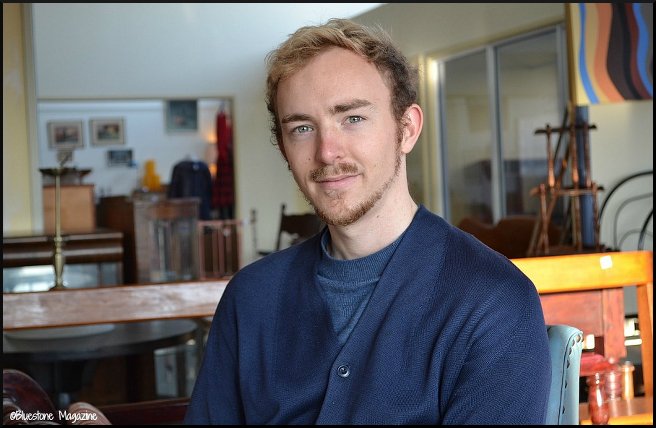
Priceless Fletcher Jones coat that fits us all

jack with coat
Designer Jack Hancock brings out his bespoke Fletcher Jones Memorial Coat as part of the fashion parade before the Fabrication II auction. Image: Kim Sargent-Wishart.

By Carol Altmann

[dropcap style=”font-size: 60px; color: #DC943C;”] M [/dropcap]oments of magic happen when they are least expected which is, of course, what makes them so special.

And such a moment happened Saturday night (19/9), under the stars, in the chilly breezeway next to The Artery, in Warrnambool, when a small group of people bought a coat for the community.

This was no ordinary coat.

Like all of the other items up for sale at the Fabrication II auction that night, the coat was made of unwanted offcuts of vintage Fletcher Jones fabrics that had been retrieved by members of the art collective, The F Project, after the Fletcher Jones factory closed.

subscribe button10

Except these offcuts were made of the finest cashmere and wool, designed and made in the United Kingdom exclusively for Fletcher Jones’ suiting when the company was at its heights and known for its clothing of enduring quality.

back of coat
The Merri and Hopkins rivers on the back of the coat: Image Jack Hancock.

[dropcap style=”font-size: 60px; color: #DC943C;”] Y [/dropcap]oung clothing designer Jack Hancock, who grew up in Warrnambool and is now finding his way in Melbourne, knew this fabric was special and the mere thought of it being destined for a dumpster made him almost weep.

Jack took these offcuts and created something exquisite: a single-button, double-breasted coat that fitted across the shoulders, but was deliberately “shapeless” across the hips so that it could be worn by either a man or a woman. The collar flipped up to reveal a splash of bright orange, a daring bolt of colour.

Turned, the back of the coat revealed an aerial view of the veins of Warrnambool – its waterways – the Merri and Hopkins rivers flowing toward the sea.

Each river was hand-sewn, stitch by gorgeous stitch, using silk thread.

This was a coat of fairytales, of fantasy and of Fletcher Jones.

[learn_more caption=”Read more about the coat here”] ….The internal structure of this wool/cashmere garment is supported by woven horsehair canvas, a traditional suiting canvas used to maintain form. Unlike contemporary suiting and coating construction, these breast plates were mounted against the wools by hand, using needle and thread. The lining is a combination of silk fabrics for the body and shirting for the sleeve. As part of my own process, I strive to maintain these traditional technqiues whilst experimenting with new themes. This coat could be worn casually on a day to day basis or kept as a special garment. It is intended to last for a long period of time and does not draw themes from fashion or trends. Investing in a coat like this could be likened to the purchase of a set of fine silver cutlery or a tea service of fine bone china. Both should be used and enjoyed, and with care, will one day be given to somebody else who will do the same. [/learn_more]

Jack, who is 24, stood nervously to the side, shifting from foot to foot, as he waited and waited and waited for his coat, the last item of the night, to go under the hammer. Would it sell?

young fj
A young Fletcher Jones in his days as a hawker. Image: Screen Australia.

[dropcap style=”font-size: 60px; color: #DC943C;”] A [/dropcap]t 24, Jack is one year older than Sir Fletcher was when he set out in a hawker’s van to sell his wares around Victoria, having been entranced by the world of the tailor.

“The first time I saw a tailor, tape around the neck, pin cushion clipped on his forearm, a chest full of tape and scissors and things, I was spellbound,” Sir Fletcher wrote in his memoir, Not by Myself.

To see Jack standing on the sidelines last night, doubting himself, wondering what would unfold, was to see a 2015 version of a young Fletcher Jones about to set forth on his destiny.

Auctioneer Gary Webb opened the bidding at $500. It then climbed to $800, $1000 and stalled, still below the reserve.

And then the magic happened.
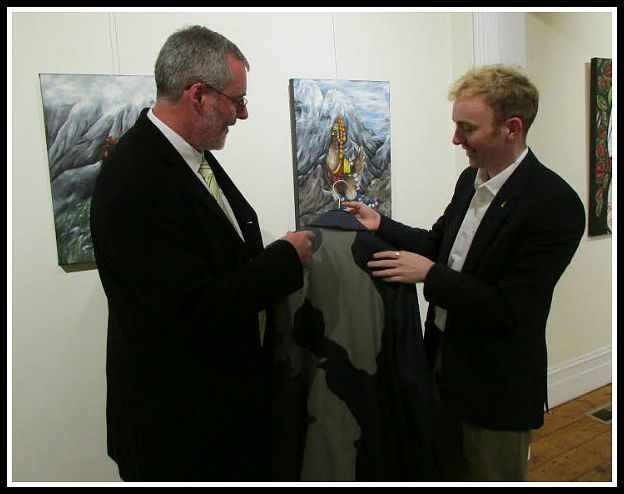
coat
Roy Reekie, left, inspects the exquisite coat made by Jack that he helped purchase for the community. Image: Madeleine Peters.

[dropcap style=”font-size: 60px; color: #DC943C;”] W [/dropcap]arrnambool identity Roy Reekie, together with a bidder who would prefer to remain unnamed, and Bluestone Magazine, all decided there and then that this coat needed to be bought and it needed to be owned by the community.

The three of us all bid independently, but knowing we would all contribute to the final cost – $1400, $1500, $1800, $1900….$1995…sold!

And with the fall of the gavel Warrnambool now has a very special coat – the Fletcher Jones Memorial Coat – that personifies all that Sir Fletcher stood for: quality, care, community, endeavour and taking time.

Jack, it must be said, was shaking.

It is a coat that, both Jack and the buyers hope, will eventually be displayed at the former Fletcher Jones factory but, as Jack insists, in the meantime it “must be worn”.

And it will be worn.

But by whom? When, and where?

Wait and see.

[box]While Bluestone would love to say we made a major contribution to this coat, in reality we only made a small contribution. Roy Reekie and the other donor were the major contributors. The Fabrication II auction is a major fundraiser for The Artery and F Project.[/box]

[button link=”http://the-terrier.com.au/subscribe-2/” type=”icon” icon=”heart” newwindow=”yes”]Please click here to subscribe and support Bluestone Magazine.[/button]

newsletter Why Not StonesYou might also enjoy reading…

Fabrication II gives birth to new life: Delise Oldfield

No cutting corners: Jack Hancock joins Fabrication II

FJ studio proves to be a real plus: Danielle O’Brien

The twists and turns of textiles: Ruby Richardson


No cutting corners: Jack Hancock joins Fabrication II
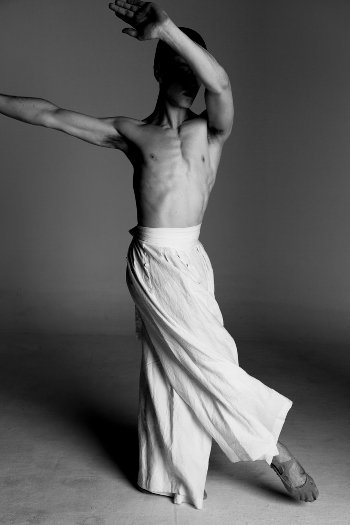
jack hancock_6
Coup: Melbourne-based clothing designer Jack Hancock will be making a bespoke jacket from Fletcher Jones fabric for the upcoming Fabrication II auction.

By Carol Altmann

[dropcap style=”font-size: 60px; color: #DC943C;”] A [/dropcap]mong the remarkable array of items being created from Fletcher Jones fabric for this year’s Fabrication II auction will be something truly special: a hand-crafted garment by emerging Melbourne designer Jack Hancock.

The supremely talented 25-year-old, who grew up – and first learnt to sew – in Warrnambool, was encouraged by a friend and member of the F Project arts collective, Madeleine Peters, to enter a piece for the September event which serves as a major fundraiser for The Artery.

The auction, now in its second year, involves creators making something from pieces of old but unused Fletcher Jones fabric salvaged by the F Project after the closure of the Fletcher Jones factory in 2009.

Jack used a recent visit back home to rummage through the many boxes of fabric and was stunned to find offcuts of top quality, pure wool fabric made by British company, Dormeuil.

“It is beautiful, even after all this time, and too good to be just thrown away, as it was once going to be,” Jack says.

IMG_5344-full-body
One of the stunning pieces Jack created for his graduate portfolio under the theme, Japonism. Image by Olivia Tran, reproduced courtesy of Jack Hancock.

[dropcap style=”font-size: 60px; color: #DC943C;”] T [/dropcap]his Dormeuil material, among others, will be used by Jack to create a unique jacket featuring different panels of fabric, with the rivers of Warrnambool superimposed in contrasting materials across the back.

Some people are already dubbing it “A jacket for Dean Montgomery” – in honour of the man who has revived the fortunes of the former Fletcher Jones site – but Jack is keeping it a little more generic.

The pattern will be based on a Gerber pattern, which was cutting edge, computer-based technology introduced to the Fletcher Jones company in its later years.

“I have managed to get hold of the Gerber pattern for a Fletcher Jones coat thanks to the F Project, so even though I am calling my piece a jacket, it will be from that coat design,” Jack explains.

“Actually it was the Gerber patterns that in a way led to the demise of Fletcher Jones as it was forced to compete in a world of cheap, mass produced clothing, so there is some irony there.”

jack hancock_30
Jack with a mannequin made for the Melbourne Myer Emporium in the 1930s: a time when clothes were made to last. Jack purchased this mannequin during his visit to the FJ Markets and has since renamed it Daisy.

[dropcap style=”font-size: 60px; color: #DC943C;”] T [/dropcap]he global shift from producing and buying clothes that lasted for years, to mass-produced items that barely see out a season, is one that Jack rails against daily.

Indeed he doesn’t particularly like “fashion” – and its built-in expiry dates – but instead likes to talk about “clothing”: quality garments carefully designed and made from quality materials.

“I am fascinated by how textiles are produced and have been produced through history…and the structure and integrity of a particular garment,” he says.

“It is also, for me, about creating sustainable clothing, not just in terms of where the fabric has come from and how it is produced, but that it will last and not be thrown away, just as a pair of Fletcher Jones’s trousers would last a lifetime.”

Rory_2_Small_Warmed
Objects of great beauty: natural wool is one of Jack’s favourite fibres. Image by Olivia Tran, reproduced courtesy of Jack Hancock.

[dropcap style=”font-size: 60px; color: #DC943C;”] W [/dropcap]hile Jack doesn’t consider himself an artist, but “someone who just makes clothes”, his eye for design emerged at a young age.

Former Warrnambool College art teacher Ollie Morgan was an early influence while he was at school and, as a teenager, he completed a two-year Certificate in Clothing Production through South-West TAFE that at that time held classes in the former Fletcher Jones factory.

“I did work experience with Hemden tailors, in Melbourne, and worked next to the guy who tailored the Fletcher Jones trousers, so there are all sorts of connections to Fletchers,” Jack says, smiling.

Jack’s impressive portfolio of work led to him being accepted into RMIT to study a Bachelor of Design (Fashion), from where he graduated with first class honours and was invited to show his work in the national graduate showcase at Melbourne Fashion Week.

It was to be the first of many such endorsements for his work.

jonascolour
Colonial meets couture: another of Jack’s creations for his graduate portfolio that demonstrates his creativity and skill. Image by Olivia Tran, reproduced courtesy of Jack Hancock.

[dropcap style=”font-size: 60px; color: #DC943C;”] S [/dropcap]ince graduating, Jack has been developing his own label, Tack Jancock, and has worked with the Melbourne dance outfit, Chunky Move.

His work for Chunky Move dancer and choreographer Benjamin Hancock (no relation) was this year recognised with a prestigious Green Room Award for best visual design for the show, Princess.

And when we meet, Jack is recovering from what sounds like a marathon effort to produce costumes for wait staff at the spectacular Dark MOFO festival, held in Hobart each winter.

“It was a fantastic opportunity, but I think I am still recovering!” he says, rubbing his eyes.

While much of Jack’s work to date might be described as theatrical – particularly that he designed for his RMIT graduate year – he is moving toward a collaboration with fellow designer, Domenic Coloca, to create clothes for the everyperson.

tack jancock -japonism
Gender fluidity in fashion. Image by Olivia Tran, reproduced courtesy of Jack Hancock.

[dropcap style=”font-size: 60px; color: #DC943C;”] T[/dropcap]hese are clothes that will be less theatrical and more about people feeling like themselves. The starting point is the human body, and how it moves in the world,” he explains.

Again, however, the focus is on creating unique, durable, distinctive clothing that could even be considered collectable.

“Just as people collect pottery or work by particular crafts people, I see clothing can be a part of that, where you look for a particular designer who has created a one-off piece,” Jack says.

With this in mind, the bidding for Jack’s Fabrication II entry is sure to be spirited – and lead to someone sporting one of the best jacket’s in town.

jack hancock_36
Jack Hancock, pictured here in the FJ Markets, was born – and learnt to sew – in Warrnambool. He is now one of the most exciting emerging designers in Melbourne.

[box]You can see more of Jack’s exquisite work at the Tack Jancock website here. Fabrication II will be exhibited and auctioned at The Artery, 224 Timor St, Warrnambool on Saturday Sept 19 from 6pm. For full details about the event and how to be involved, please email f4u@fproject.org.au[/box]

[button link=”http://the-terrier.com.au/subscribe-2/” type=”icon” icon=”heart” newwindow=”yes”]Bluestone needs at least 500 subscribers in 2015. If you wish to support independent media, please click here to become one.[/button]

newsletter Why Not StonesYou might also enjoy reading…


Stitch Up: Fabulous Fabrication on again

Powerful family ties behind every stitch: Sue Ferrari

A softie at heart: Megan Nicolson

Biblio-Art Award another triumph