The transformation of 222 Timor St, Warrnambool continues, with a new hairdressing salon filling the bottom floor. Image courtesy of Sinead Murphy.
As it was before the transformation by Luke and Nat Taylor began early last year.
[dropcap style=”font-size: 60px; color: #A02F2F;”] L [/dropcap]ate last year, Bluestone Magazine captured the transformation of 222 Timor St, Warrnambool, from a derelict heritage-listed building to a wonderful, character-filled space that was ripe for a new tenant.
And while the building is still not completely finished – owners Luke and Nat Taylor have plans for an apartment and residence on the top floor – it has started a new chapter in its 164-year history with the arrival of the upmarket hairdressing salon, Biba.
It is the first Biba to be opened outside of metropolitan Melbourne and marks a return to Warrnambool for owner, Mia Nicolson, who had previously worked at Paris Hair and Beauty in East Warrnambool.
Mia Nicolson, left, has made a conscious decision to keep the character of the building…while adding some quirky and funky touches. Image courtesy Sinead Murphy (http://www.sinead-murphy.com/)
[dropcap style=”font-size: 60px; color: #A02F2F;”] M [/dropcap]ia has made a conscious effort to capture the character of the old building, while adding some very modern and funky touches.
There is a vintage barber’s chair (picked up from the Mailors Flat secondhand store), a heavy work bench from Melbourne, and old wooden boxes from Ponting Bros that Mia found in her grandmother’s stables, but also an eye-catching, off-beat mural by local artist Felix Pilling that dominates one wall of the colour bar. Recycled leadlight glass enhances an antique window in the same room.
“Biba salons have an industrial look, so I have added some of those industrial features while also linking in to the heritage aspects of the building,” Mia explains.
The series of photos below capture the full transformation. The Biba images were taken by talented graphic designer and photographer Sinead Murphy who has kindly given us permission to reproduce them here. (You can find Sinead’s website here.)
Nat and Luke Taylor, with son Lewis, in the front room of the building early last year.
The same space today is almost unrecognisable and forms the main entrance to the salon. The vintage barber’s chair is to the left and the old workbench doubles as a reception desk.
As it was: the back room behind the main salon space.
The same space converted into a ‘colour room’, complete with the leadlight-enhanced antique window.
One long wall of the colour room now features a mural by local artist, Felix Pilling.
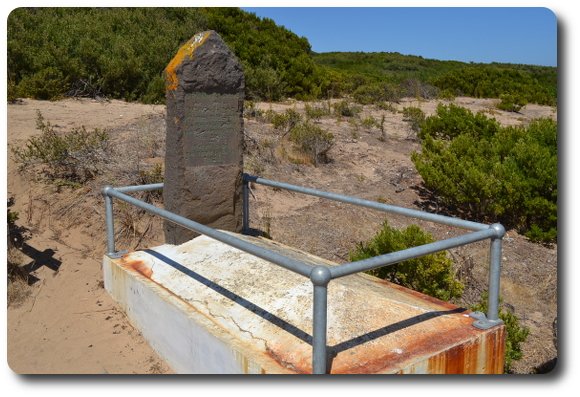
The mystery behind “Granny” of Granny’s Grave has finally been unravelled.
By Carol Altmann
One of Warrnambool’s most enduring mysteries has been the identity of the “Granny” buried at Granny’s Grave high in the sand hills of Lady Bay and now, more than 165 years after her death, she is to finally have due recognition.
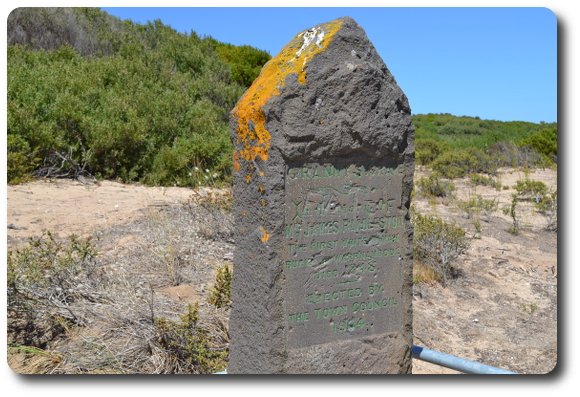
The Warrnambool City Council will add a plaque to the grave site by the end of June that will correct a long-standing error that named “Granny” as Mrs James Raddleston – the name inscribed on the headstone – and confirm that she was in fact Agnes Ruttleton.
Very little was known about Agnes Ruttleton beyond the perfunctory details etched into her headstone that told us she died in 1848 and was the “first white woman buried in Warrnambool” which at that time was still part of NSW.
Bluestone, however, has pulled together the threads uncovered by various researchers to tell her full story.
We began with a bunch of history books and a visit to the Warrnambool & District Historical Society that holds a thin manila folder on Granny’s Grave which contains the bare bones of her life and identity.
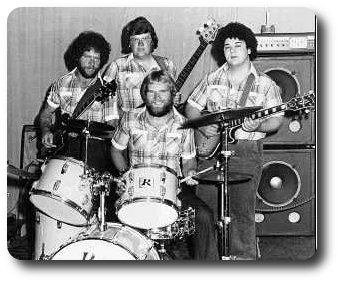
The Granny’s Grave band in the 1980s: Teejay Netherway, (left) Peter ‘Prof Walters, Eric ‘Coogee’ Read (drums) and John ‘Marra’ Maroniti (image: South-West TAFE archive).
The books and clippings reveal that Agnes and her husband – who was incorrectly named as a James Raddleston – lived in a tent somewhere near Flagstaff Hill in 1847-48 and eked out an existence through odd jobs and selling crayfish. At that time, Warrnambool was just a speck, with the first land sales having been held in 1847 and its population at around 100.
Among the first people to buy land was Richard Osburne, the newspaper publisher and historian, who at the age of 22 bought a block on the corner of Kelp and Merri streets not far from where Agnes and James were living. Richard knew Agnes as “Granny”, probably because of her age (more on that later) and, it appears, became quite emotionally attached to the “old” woman.
When Agnes died in 1848, Osburne is named among a group of men who organised for a coffin and a funeral service to be held at a burial spot in the isolated dunes, as Warrnambool did not yet have a cemetery. A fence was built around her grave but years of scarifying wind, rain and shifting sands saw the fence – and entire gravesite – eventually disappear from view.
Indeed Osburne was mortified when he returned to Warrnambool in 1886 and despite “walking and walking” he was unable to find Granny Raddleston’s final resting place.
“I tired myself from the search,” he wrote in a letter to the local paper.
Granny’s bluestone headstone was finally erected in 1904 – more than 50 years after her death.
Osburne used his letter to implore the council to erect a proper headstone in honour of one of Warrnambool’s pioneering women, but nothing was done for almost another 20 years when, in 1904, a group of citizens raised funds for the bluestone headstone that stands today.
(In the intervening years, an anonymous resident used a piece from the 1888 wreck of the Edinburgh to mark Granny’s Grave – perhaps as a subtle hint for the council to hurry up.)
When the headstone was finally unveiled, it had Agnes reduced to “Mrs James Raddleston”, a person who did not technically exist, although it was not uncommon for name spellings to be mangled through either mis-spellings, poor handwriting or mispronunciation. Raddleston had been recorded as Rittleton, Ruttleton and Raddlestone.
And this is where Jenny Fawcett, from Warrnambool, comes in.
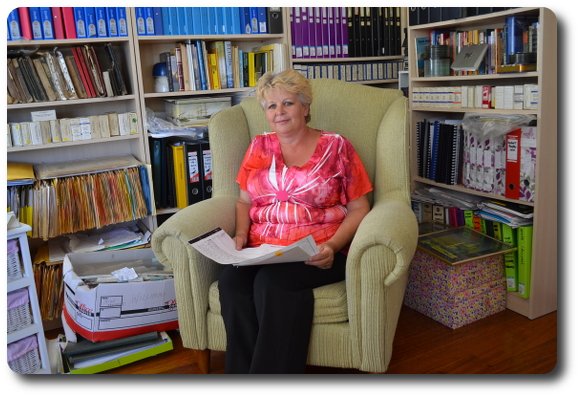
Researcher Jenny Fawcett in her library: she has devoted more than 20 years to uncovering the stories and mysteries of the south-west coast, including that of Granny’s Grave.
To call Jenny an amateur historian is a gross understatement: she is researcher unlike any other we have met before. Jenny has devoted hours of her time, driven by personal passion rather than profit, researching the history and characters of the south-west Victorian coast.
Her files are extraordinary, and her recall of individual details and events is mind-boggling.
It is Jenny who has reached back through time to find that Agnes Raddleston is Agnes Ruttleton and, in so doing, uncovered how James and Agnes came to be in Warrnambool.
“I like unravelling the mystery behind an individual, and Granny’s Grave is one of those stories that just had to be unravelled,” she said.
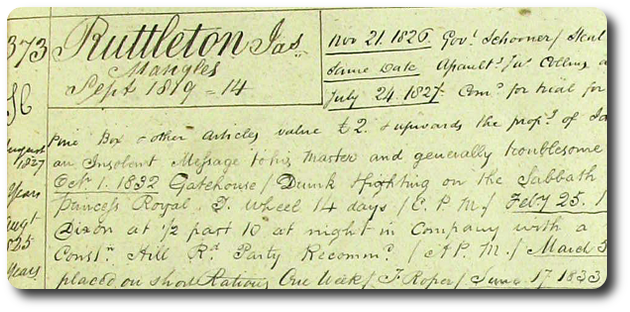
Through meticulous searching of convict records, Jenny traced James Ruttleton as an English boatman who was sentenced to 14 years for stealing and transported to Australia in 1820 – first to NSW, and later, after escaping, to Hobart Town. He was 31 years old.
Tasmanian convict records track the story of James Ruttleton, who was sentenced to 14 years for stealing.
After a variety of indiscretions, James was finally granted his Certificate of Freedom in 1834 and settled into a life in Tasmania.
Somewhere along the way, he met Agnes. Jenny has not been able to uncover her maiden name, or whether she was a convict too, but there is no record of James ever marrying.
“Maybe they were already married when he was sentenced and she joined him in Australia later, which could happen, or perhaps they were never married at all,” Jenny said.
What we do know, thanks to Jenny’s research, is that the pair sailed from Tasmania to Port Fairy on board the Essington in November 1846 and are listed as James and Agnes Ruttleton.
Both were then aged in their late 50s, but Jenny believes James may have been lured by the opportunity of better work. The Geelong and Portland Bay Immigration Society – which included Port Fairy – was keen to bring in labour.
Shipping records show the Ruttleton’s among the passengers on board the Essington bound for Port Fairy in 1846.
It appears the new opportunity didn’t quite work out, however, with James and Agnes living in virtual poverty for their final years.
Agnes died only 12 months after they arrived, at the age of 60, on December 13, 1848.
Agnes was also not the first white woman to die in the area.
Landholder John Allan (from Allansford fame), lost his first wife Jemima in 1842 and buried her on an island in the Hopkins River. There were most likely other deaths among the original sealers and settlers.
Agnes was, however, perhaps the first white woman to be buried in the newly proclaimed area of Warrnambool.
James Ruttleton died three years after Agnes, on June 15, 1851, and is buried in the Port Fairy cemetery…his death certificate incorrectly names him as John.
While Warrnambool’s infamous “Pioneers Board” (now housed in the library) doesn’t include any female pioneers among its faces, the Granny’s Grave plaque will recognise at least one of the many brave women who ventured to what was then nothing more than a tiny settlement behind the sand dunes.
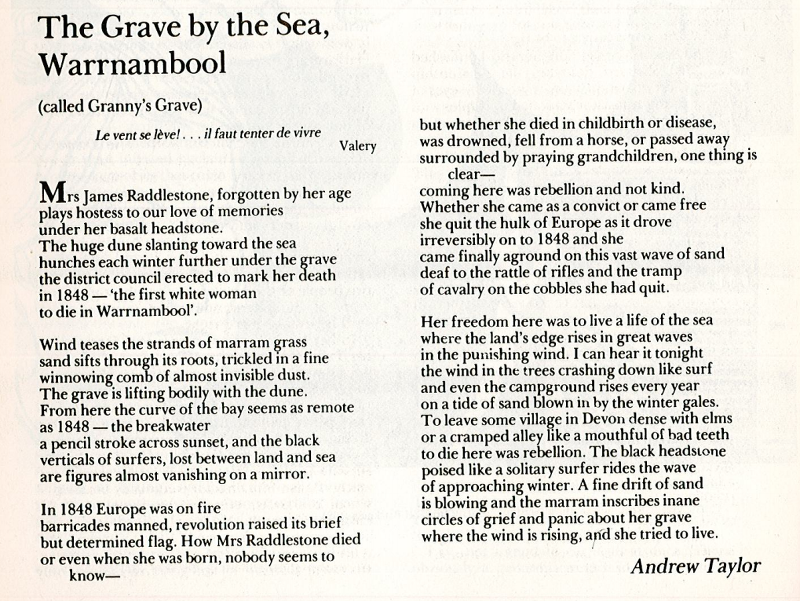
In researching this story, we uncovered a rare and beautiful poem about Granny’s Grave by Professor Andrew Taylor, who was born in Warrnambool. The Grave by the Sea, Warrnambool was first published in Quadrant Magazine in March 1981. Prof Taylor has kindly granted us permission to reprint his poem in full here. We would also like to thank Dr Simon Cooper for his efforts in finding a copy of the poem that, being written pre-computers, Prof Taylor did not even have. He does now!
Close Flagstaff Hill; save Fletcher Jones
Our history: while all hands are on deck to revive the recreated village of Flagstaff Hill, the authentic Pleasant Hill is slowly rotting away.
Analysis – Carol Altmann
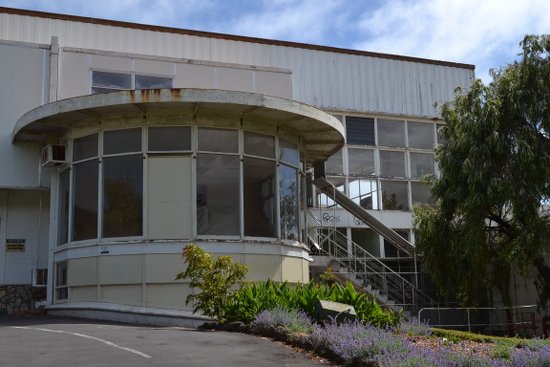
It is supremely ironic that so much time and effort is being devoted to reviving the flagging Flagstaff Hill Maritime Museum, when a critical slice of our authentic history is being left to rot.
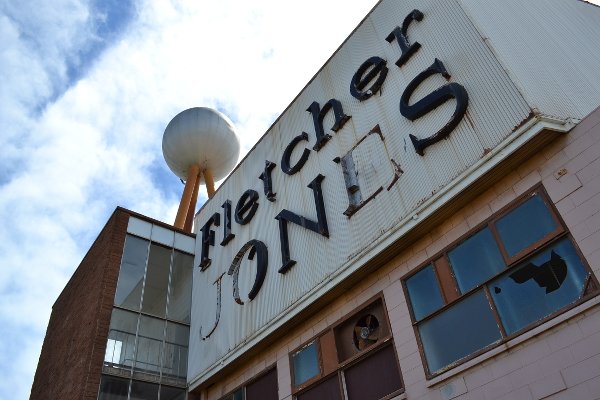
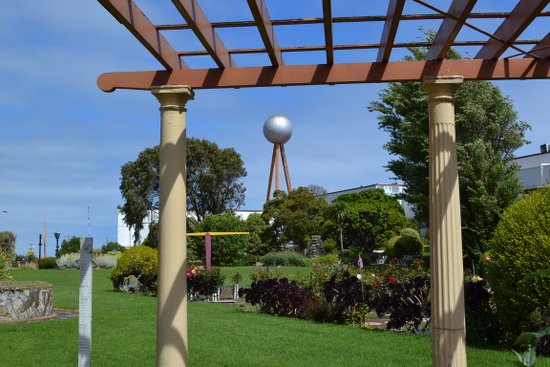
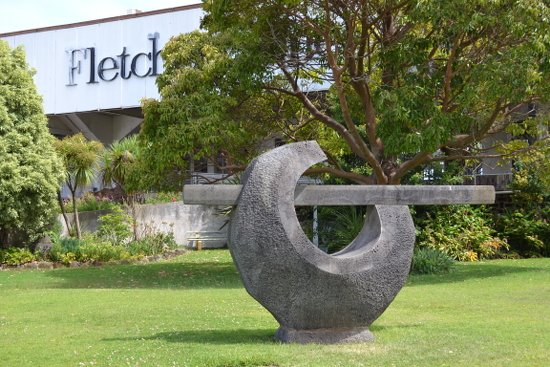
Unlike Flagstaff Hill, which was built in the 1970s as a pseudo-colonial tourist attraction popular in that era, theFletcher Jones factory, silver ball water tower and spectacular gardens have occupied a special place in the hearts and minds of the people of Warrnambool for almost 70 years.
Sir Fletcher Jones was one of our greatest philanthropists and Pleasant Hill was his special gift to the city; a gift that, I am certain, he thought would remain in perpetuity.
But if he were alive to see the site today, his heart would break.
That’s because Pleasant Hill is being ‘preserved’ in the way that Warrnambool seems to do best: coat a run-down heritage property with complex planning conditions, wait for a cashed-up developer to buy the site and then watch as they slowly go broke – or lose interest – because of these same conditions, and, in the final act, see the neglected site bulldozed or burnt down in a mysterious fire.
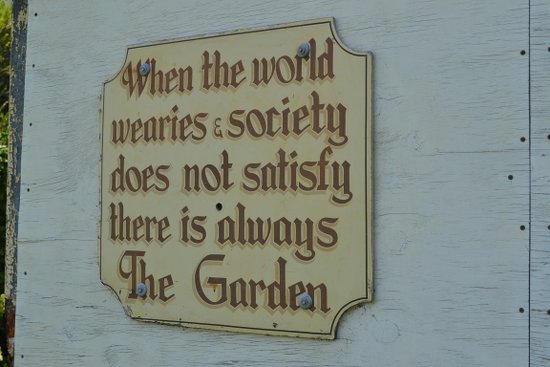
Some Fletcher Jones wisdom: if he could see his vision today, his heart would break.
We have seen this happen in recent years with the Criterion Hotel, the Grand Hotel, and the ill-fated cottage at 94 Merri St*, yet we still haven’t learnt that the only way to save our icons is to work together: for government bodies (including Heritage Victoria and the Warrnambool City Council), developers and the community to have a clear vision of what should happen with a site as precious as Pleasant Hill and to be prepared to share the cost of its preservation to make sure that it is, in fact, preserved.
And Pleasant Hill is precious because, unlike Flagstaff Hill, the Fletcher Jones story is our story.
As much as we would like to claim the sea-shanty tales captured in Flagstaff Hill as our own, Warrnambool was primarily a place of industry, farming and commerce.
The whaling story belongs to Portland and Port Fairy. The Loch Ard Gorge story belongs to Port Campbell and the entire shipwreck mythology is one that has been built around ships that, for the most part, were passing by Warrnambool on their way to somewhere else.
Hence we don’t have locals sharing tales of their sea-faring great grandfathers, but instead we talk about the Woollen Mill, Swintons, Crammond and Dicksons, Nestles, the cordial makers, millers and brewers, the dairy farmers, potato growers, butchers, bakers and bullock drivers and, of course, Fletcher Jones.
The Fletcher Jones story is our story: generations have grown up under the ‘Silver Ball’.
This is why there is a disconnect between Flagstaff Hill and the local community who, it seems, have stopped visiting or who don’t visit nearly enough.
And tourist numbers are also falling. I suspect one problem is that reconstructed, theme-park style villages have lost their lustre, despite the valiant efforts of the many volunteers involved.
This tribute to Fletcher Jones by Robert Ulmann sets the scene for what could be a magnificent sculpture garden.
The cold-shower moment is to accept that Flagstaff Hill has had its day and will only continue to chew up funds as it recreates itself to fit changing tourism tastes.
The site could be returned to open space and the $13-15 million directed toward restoring and preserving Pleasant Hill, but as what? The suggestions so far include – god forbid – more housing, retail, offices, or even an aged care facility. How boring.
What about this: transform Pleasant Hill into a combined Warrnambool Art Gallery and Museum. Given FJ’s support for the arts, it is a perfect fit.
The already-squeezed art gallery in Timor St could be relocated and stretch out, including into the gardens that would become an outdoor sculpture park.
The best of the Flagstaff Hill collection could be housed in the museum, which would also include a tribute to Fletcher Jones and artefacts from the factory (much of which, unbelievably, ended up in skip bins before being retrieved by art students).
A table for two please: the ‘Round room’ could be converted into a restaurant or cafe.
The Tourist Information Centre would fit nicely, and the ‘Round Room’ – once part of the FJ canteen – would be perfect as a restaurant/cafe called Fletcher’s. The silver ball can just remain the silver ball: restored and shining.
There is more than ample – and completely unused – parking in the Raglan Parade median strip and a pedestrian overpass would solve the issue of crossing a busy highway.
It will take money, it will take vision and it will take commitment, but in 20 years time, which do you think will have the more enduring appeal: a “recreated” maritime village where people are strolling around in gingham caps and hooped dresses, or a dynamic art gallery and museum housed in one of our most iconic buildings?
We don’t need a crystal ball to predict the outcome: just a silver one.
*The Warrnambool Planning and Heritage Group wrote a report 18 months ago that warned Fletcher Jones faces the same fate as 94 Merri St, which was right across the road from Flagstaff Hill, unless action was taken now. The Warrnambool City Council’s response to the group’s 15 recommendations was tabled at its meeting last Monday: see pp 181-185 of agenda 9/12/13. Or you can see a summary here.
Keeping the spirit of Fletcher Jones alive
Pleasant Hill in its prime in the 1970s. Image: Corangamite Regional Library Corporation. Copyright 2004.
It says a lot about the importance of the Fletcher Jones gardens to Warrnambool that even though the Raglan Parade factory has fallen silent and into disrepair, the gardens continue to hold on.
“Pleasant Hill” was once a major tourist attraction for the city, with busloads of visitors pulling up to the kerb and pouring out to take photographs, while locals all have their favourite memories of the beautifully landscaped gardens: the fish pond, the stepping stones, the wishing well, the sun-warmed cement turtle, the archways, the mosaic ‘basket’ garden bed, the tall man in the white trousers who advertised Fletcher Jones menswear.
The gardens were established over a period of years after Fletcher Jones first selected the site – a disused quarry – for his factory in 1948. And while they are a shadow of what they were in their prime, when up to eight full-time gardeners were employed, the fact they are maintained at all is quite incredible.
Fletcher Jones gardens volunteers: Lester Campbell (left), Philomena Headen, Don McLean and Lex Caldwell.
[dropcap style=”font-size: 60px; color: #A02F2F;”] F [/dropcap]or this we can thank our Quiet Heroes for the week: Lex Caldwell, who oversees the gardens in exchange for living in a cottage on site, and a small, rotating team of volunteers who turn up each Tuesday morning to weed, mulch, mow or do whatever else needs to be done.
When we visited, the volunteer crew included Don McLean, Lester Campbell and Philomena Headen who were hard at work weeding one of the garden beds and picking up bits of broken glass.
Imagine how the place would look without them?
[box]The FJ gardens crew will receive a coffee and cake voucher from Lozzar’s Lounge Cafe, 52a Kepler St Warrnambool. Thankyou to owners Loretta and Phil for supporting this week’s Quiet Heroes.[/box]
A labour of love: Ben and Helen Fennessy spent a year measuring up what lay ahead before deciding to take on the restoration of a rundown Rosebrook property that is now their home.
[dropcap style=”font-size: 60px; color: #A5CECD;”]T[/dropcap]aking on the restoration of a bluestone cottage in a rugged coastal landscape may sound romantic, but it is not a task to be taken lightly.
Artist Ben Fennessy and his wife Helen, who writes, spent a year deciding whether or not to buy a ramshackle, rundown dump on five acres that overlooked the Belfast Lough at Rosebrook, near Port Fairy, and turning it into a home.
The historic bluestone cottage and assorted add ons and out-buildings had been on the market for five years – five years! – when the Fennessy’s happened upon it during one of their visits to Port Fairy from their former home in the Otways.
The house sat unloved for years before the Fennessy’s took over.
The original kitchen …
The same space as it looks today.
[dropcap style=”font-size: 60px; color: #A5CECD;”] I [/dropcap]t took a special vision to see the beauty beneath the ugliness of the place, which had suffered from a combination of poor building extensions, a lack of maintenance and a series of tenants that showed little respect for the property, if not outright neglect.
(The state of the house was summed up when the Fennessy’s later removed boards covering the fireplaces and found piles of dirty nappies).
“It was very, very rundown and fairly hideous when we first saw it six years ago,” Ben said.
“We walked away for a year, but we kept coming back to it in our minds, thinking that it had really great potential, but that it would take a lot of work.”
The extent of the task ahead was laid bared in an Archicentre report that, Helen said, “ran to several pages”.
“The roof was being held up by tomato stakes,” she said, laughing at the memory.
Out with the Besser block extension: Helen Fennessy hard at work during the renovations…
And in with a light-filled, bluestone extension designed by Tim McLeod and that overlooks the Belfast Lough.
[dropcap style=”font-size: 60px; color: #A5CECD;”] U [/dropcap]nderneath all of the half-baked renovations, however, sat a sweet, four-room bluestone cottage that, despite all of its terrible makeovers, was as solid as the day it was built some time in 1856 as the engineer’s house for the local mill at Rosebrook.
“The original bluestone was actually in good nick, so we brought it back to that original footprint,” Ben said.
Over a two-year period, the Fennessy’s tore down a parasitic, 1970s extension at the rear of the cottage, restored the original cottage and added a magnificent big-windowed, light-filled space – designed by Warrnambool architect Tim McLeod – that overlooks the lough.
The result is a character-filled blend of the very old and the ultra modern – but the story doesn’t end there.
Clare meet Rosie, Rosie meet Clare: an old railway building and carriage have been converted into a self-contained living space.
[dropcap style=”font-size: 60px; color: #A5CECD;”] B [/dropcap]en’s eye for the quirky has seen two more fascinating additions that, together, form a separate, self-contained living space for their daughter and ceramic artist,Clare Fennessy.
Clare’s lounge room, small kitchen and bathroom is housed in a pre-fab railway building originally from the Warrnambool Railway Station that, when Ben found it, was being used as a hayshed out in a paddock.
“Rosie”, as the railway shed is now known, snuggles neatly against an antique railway carriage that dates back to 1911 and was once used to transport refrigerated goods. It is now Clare’s bedroom, complete with a roof insulated by horse hair.
“I’d seen it sitting in a paddock at Illowa and so I approached the owners and asked if they wanted to sell it,” Ben explained.
“It was being used as a fertiliser shed at the time.”
With the property finished, and two alpacas installed in the surrounding paddocks to keep the grass down, the Fennessys need only enjoy the inspiring space: perfect for such creative souls.
After many years of hard work, the renovation and restoration is complete.


 You might also enjoy…