The Silver Ball under the silver ball

silver ball salo_11
In the shadow of the silver ball: Clive Bray has been the owner operator of the Silver Ball Hair Design Salon in Warrnambool for almost 45 years.

If there is one thing Clive Bray has never had to worry about during his many years as a hairdresser, it is explaining how to find his salon: it sits right under the famous Fletcher Jones silver ball.

Indeed, Clive deliberately named his salon after the silver ball because of its landmark status in Warrnambool and the Silver Ball Hair Design salon, in Flaxman St, is almost as old as the ball itself.

“My salon was the first one outside of the CBD, so I needed to choose something memorable,” Clive explained.

“I also had Isobel Jones and Lady (Rena) Jones as clients, so I asked them if I could use the name and they were quite happy for me to do so.”

Silver Ball Hair Design was originally named the Silver Ball Beauty Salon and Hairdressing and will celebrate a remarkable 45 years of business in August this year.


silver ball salo_18

As it happens, Clive, who grew up in Naringal, is among the hundreds of Warrnambool people with a personal link to the Fletcher Jones factory, as he worked there for two years “in the design and pleating department”.

Clive, however, took a leaf out of Sir Fletcher Jones’ book by deciding to break new ground and pursue his own business.

Being the 1960s, there were not a lot of men working as hairdressers in salons, as opposed to barber shops, and Clive could see an opportunity to cater for a growing market for personal grooming.

He spent four years training in Melbourne, followed by a year in Adelaide, before returning to Warrnambool and starting a mobile hairdressing service.

After building up a client base, Clive decided to set up his own salon and bought a weatherboard house at 46 Flaxman St, to which he added the salon that looks almost exactly the same today as it did when it first opened in 1969 – two years after the ball was erected.

The purple vinyl chairs, disco-silver wallpaper and egg-shaped hairdryers are the ultimate in retro cool, even if unintentional.

silver ball salo_4
Clive inside his silver-wallpapered salon that has changed little since it first opened in 1969.

Clive’s loyal clients have proven to be equally as durable.

“I have had one lady coming here for 45 years, another two for 43 years and about six who have been clients for 35 years,” he said, smiling.

His co-worker, Pam Henderson, has been at the salon for 43 years.

“I like to think that we create a relaxed and easy-going atmosphere here,” Clive said.

“We treat our clients like personal friends.”

But Clive, who has two sons that work in other professions, knows that when he retires, his salon will go too.

“When I pull the plug, then this building comes down,” he said.
fletcher-gardens_21
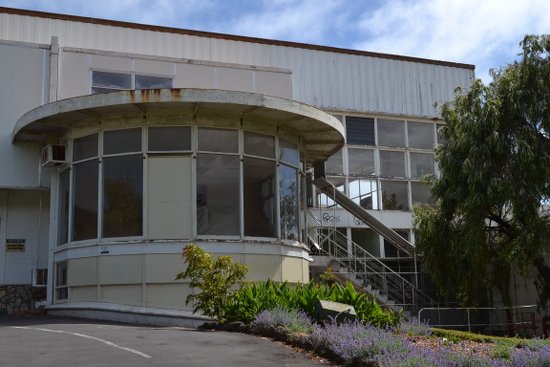
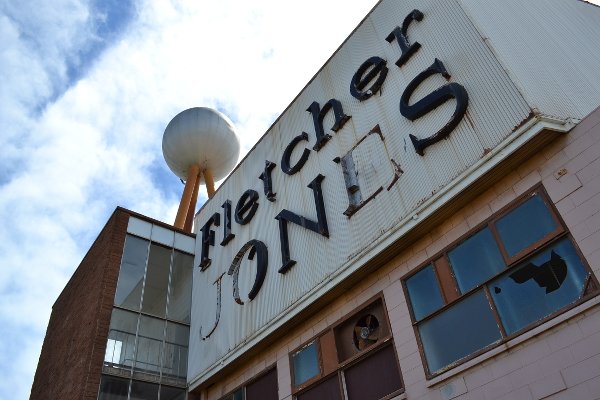
The view across the road from the Silver Ball salon is certainly not what it used to be, with the buildings falling into disrepair.

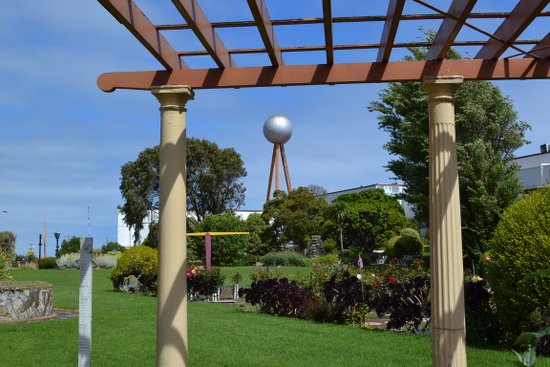
And what about the silver ball water tower? Should it come down too?

As a long-time observer of the silver ball, we asked Clive if he had an opinion on the campaign to save the icon from further neglect.

“Well there is no doubt it is an iconic landmark. The number of people who still stop outside our salon and take photographs of it is quite incredible,” he said.

“I would like to see it saved, but if it is saved, it needs to be maintained: it is no good just letting it sit there.”

[box] Bluestone Magazine supports the grassroots campaign to save the best of the Fletcher Jones site in Warrnambool from being lost through neglect. We support a sensitive development of the site that respects its social and physical history and preserves the gardens and silver ball for future generations.[/box]

Stones Smile newsletterYou might also enjoy…


Mini FJ’s silver ball to shine again

An eye for the bizarre at this bazaar

Dynamic duo step out on their own: Glenn Morgan & Barry Tate

Life as a soul sister: boot repairer Heather McVickers


Fletcher Jones recommendations:

fletcher7

THE WARRNAMBOOL PLANNING AND HERITAGE GROUP:

[dropcap style=”font-size: 60px; color: #DC943C;”] R [/dropcap]ecommendations to council:


i) Council and Heritage Victoria to conduct a survey of the Fletcher Jones site in Warrnambool to consider the current condition and integrity of its state heritage listed aspects. The survey should re-examine what remains of the most significant aspects of the site to the local community and to the state. We would like to see Heritage Victoria and Council take a proactive role with the owner (present or future) to find a solution for renewal of this site and a way to share the stories attached to this site. Examples of best practice and processes for renewal of similar sites could be used to inspire recommendations for options and incentives to ensure it has a viable, vibrant future.

ii). Council and Heritage Victoria to provide funds for a current structural assessment of the Fletcher Jones water tower (locally called the Silver Ball) with a view to determining a schedule of repair and maintenance works (and their cost) to ensure this state heritage listed structure is safe and viable for the next 50 years.

iii). Council and Heritage Victoria work with the Jones family to develop a social history project that tells the Fletcher Jones story and connection in Warrnambool.

The Warrnambool City Council’s response (as listed 9/12/13):

[dropcap style=”font-size: 60px; color: #DC943C;”] A [/dropcap] number of buildings and features within the site are listed on the Victorian Heritage Register (VHR) as significant.

Council is interested in working with the current landowner, or any future landowner, to ensure that significant elements of the site are properly protected and managed. Council is also interested in ensuring that any future redevelopment of the site involves renewal and moves away from its historical manufacturing past.

A structural assessment of the former water tower (silver ball) was undertaken in 2004. The assessment identified rectification works including replacement of hold down bolts on the south-western column, and removal of ladder and water pipe. The assessment also recommended a painting program to protect the tower from further corrosion.

In 2010, the bolts were replaced, and the water pipe and ladder were removed. It is unknown whether the painting program has been implemented.

Council officers will continue to work with the current landowner, or any future landowner, with a view to update the 2004 structural report and identify any further matters that may need addressing.

The former Fletcher Jones factory is clearly of social significance to Warrnambool and the State of Victoria. There will many people within the community who have strong links to this site. It is becoming increasingly important that these stories are captured and shared.

Council officers will investigate funding opportunities to undertake a social history of the site (involving the Jones Family, former factory workers and members of the community). These stories will assist in the preservation of important elements of the site and in any future redevelopment of the site.

* * *


Oh Biba, look at you now!

Biba_Salon36
The transformation of 222 Timor St, Warrnambool continues, with a new hairdressing salon filling the bottom floor. Image courtesy of Sinead Murphy.

shopfront
As it was before the transformation by Luke and Nat Taylor began early last year.

[dropcap style=”font-size: 60px; color: #A02F2F;”] L [/dropcap]ate last year, Bluestone Magazine captured the transformation of 222 Timor St, Warrnambool, from a derelict heritage-listed building to a wonderful, character-filled space that was ripe for a new tenant.

And while the building is still not completely finished – owners Luke and Nat Taylor have plans for an apartment and residence on the top floor – it has started a new chapter in its 164-year history with the arrival of the upmarket hairdressing salon, Biba.

It is the first Biba to be opened outside of metropolitan Melbourne and marks a return to Warrnambool for owner, Mia Nicolson, who had previously worked at Paris Hair and Beauty in East Warrnambool.


Biba_Salon06
Mia Nicolson, left, has made a conscious decision to keep the character of the building…while adding some quirky and funky touches. Image courtesy Sinead Murphy (http://www.sinead-murphy.com/)


[dropcap style=”font-size: 60px; color: #A02F2F;”] M [/dropcap]ia has made a conscious effort to capture the character of the old building, while adding some very modern and funky touches.

There is a vintage barber’s chair (picked up from the Mailors Flat secondhand store), a heavy work bench from Melbourne, and old wooden boxes from Ponting Bros that Mia found in her grandmother’s stables, but also an eye-catching, off-beat mural by local artist Felix Pilling that dominates one wall of the colour bar. Recycled leadlight glass enhances an antique window in the same room.

“Biba salons have an industrial look, so I have added some of those industrial features while also linking in to the heritage aspects of the building,” Mia explains.

The series of photos below capture the full transformation. The Biba images were taken by talented graphic designer and photographer Sinead Murphy who has kindly given us permission to reproduce them here. (You can find Sinead’s website here.)

lukefamily
Nat and Luke Taylor, with son Lewis, in the front room of the building early last year.

Biba_Salon18
The same space today is almost unrecognisable and forms the main entrance to the salon. The vintage barber’s chair is to the left and the old workbench doubles as a reception desk.

shop_64
As it was: the back room behind the main salon space.

Biba_Salon21
The same space converted into a ‘colour room’, complete with the leadlight-enhanced antique window.

Biba_Salon26
One long wall of the colour room now features a mural by local artist, Felix Pilling.

newsletter Eat And Drink Stones You might also enjoy…


T-shirt captures the infamous ‘Cri’ 

Who is the Granny behind Granny’s Grave?

Who will step up for Fletcher Jones?

Art is the heart of old Hawkesdale home

Behold this bluestone beauty: Fennessy’s at Rosebrook

Colonial oven still makes a crust, Dunkeld

Secrets of an old shoe 


The Save Fletcher Jones campaign


[dropcap style=”font-size: 60px; color: #A5CECD;”] B [/dropcap]luestone Magazine is part of a growing grassroots campaign to save the best of the iconic Fletcher Jones site in Warrnambool from being lost through neglect.

The site is rapidly deteriorating and yet there is still no firm plan in place to preserve what has been deemed a place of state significance. It is also an important part of Warrnambool’s social history and holds a special place in our hearts.

Shortly after we wrote two opinion pieces on this issue, two people – Julie Eagles and Tonia Wilcox – started a Facebook page for those who wish to see the gardens, the silver ball and other important parts of the site saved. An enormous number of people are sharing their memories and images on this page, some of which we have collated for our youtube clip.

[box] You can join the Save the Silver Ball and Fletcher Jones Gardens group by clicking here.[/box]

You can also read our latest opinion pieces about the Fletcher Jones site below:

Close Flagstaff Hill; save Fletcher Jones

Who will step up for Fletcher Jones?


fletcher-gardens_40


The Warrnambool Planning and Heritage Group wrote a report 18 months ago that warned Fletcher Jones faced the same fate as the demolished 94 Merri St, which dated back to the earliest days of Warrnambool in the mid 1800s, unless action was taken now. The Warrnambool City Council’s response to the group’s 15 recommendations was tabled at its 9 December 2013 meeting (see a summary here).

For more information you can also read the Heritage Victoria statement of significance on why the site is important and which parts have been listed for protection.

[box] If you are passionate about the future of the Fletcher Jones site, as we are, please take a moment to read the latest and to get involved. Bluestone Magazine will have regular updates as the campaign unfolds.[/box]


Close Flagstaff Hill; save Fletcher Jones

fletcher-gardens_21
Our history: while all hands are on deck to revive the recreated village of Flagstaff Hill, the authentic Pleasant Hill is slowly rotting away.

Analysis – Carol Altmann

It is supremely ironic that so much time and effort is being devoted to reviving the flagging Flagstaff Hill Maritime Museum, when a critical slice of our authentic history is being left to rot.

Unlike Flagstaff Hill, which was built in the 1970s as a pseudo-colonial tourist attraction popular in that era, the Fletcher Jones factory, silver ball water tower and spectacular gardens have occupied a special place in the hearts and minds of the people of Warrnambool for almost 70 years.

Sir Fletcher Jones was one of our greatest philanthropists and Pleasant Hill was his special gift to the city; a gift that, I am certain, he thought would remain in perpetuity.

But if he were alive to see the site today, his heart would break.

That’s because Pleasant Hill is being ‘preserved’ in the way that Warrnambool seems to do best: coat a run-down heritage property with complex planning conditions, wait for a cashed-up developer to buy the site and then watch as they slowly go broke – or lose interest – because of these same conditions, and, in the final act, see the neglected site bulldozed or burnt down in a mysterious fire.


fletcher-gardens_39
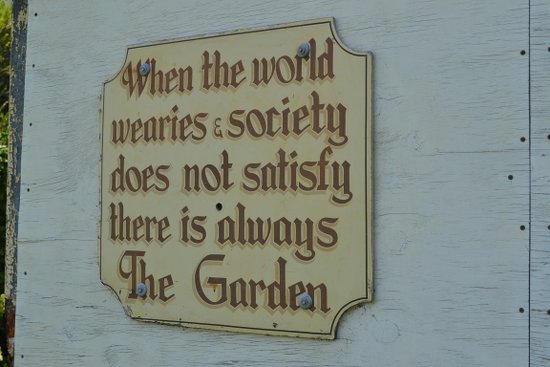
Some Fletcher Jones wisdom: if he could see his vision today, his heart would break.


We have seen this happen in recent years with the Criterion Hotel, the Grand Hotel, and the ill-fated cottage at 94 Merri St*, yet we still haven’t learnt that the only way to save our icons is to work together: for government bodies (including Heritage Victoria and the Warrnambool City Council), developers and the community to have a clear vision of what should happen with a site as precious as Pleasant Hill and to be prepared to share the cost of its preservation to make sure that it is, in fact, preserved.

And Pleasant Hill is precious because, unlike Flagstaff Hill, the Fletcher Jones story is our story.

As much as we would like to claim the sea-shanty tales captured in Flagstaff Hill as our own, Warrnambool was primarily a place of industry, farming and commerce.

The whaling story belongs to Portland and Port Fairy. The Loch Ard Gorge story belongs to Port Campbell and the entire shipwreck mythology is one that has been built around ships that, for the most part, were passing by Warrnambool on their way to somewhere else.

Hence we don’t have locals sharing tales of their sea-faring great grandfathers, but instead we talk about the Woollen Mill, Swintons, Crammond and Dicksons, Nestles, the cordial makers, millers and brewers, the dairy farmers, potato growers, butchers, bakers and bullock drivers and, of course, Fletcher Jones.


fletcher-gardens_40
The Fletcher Jones story is our story: generations have grown up under the ‘Silver Ball’.


This is why there is a disconnect between Flagstaff Hill and the local community who, it seems, have stopped visiting or who don’t visit nearly enough.

And tourist numbers are also falling. I suspect one problem is that reconstructed, theme-park style villages have lost their lustre, despite the valiant efforts of the many volunteers involved.

In the face of fading popularity, a review is being held into the future of Flagstaff Hill, with warnings that it could cost between $13-15 million to redevelop.

I have a better idea: close it down.


fletcher-gardens_29
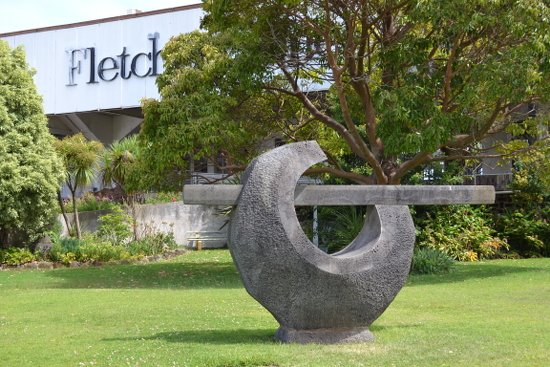
This tribute to Fletcher Jones by Robert Ulmann sets the scene for what could be a magnificent sculpture garden.


The cold-shower moment is to accept that Flagstaff Hill has had its day and will only continue to chew up funds as it recreates itself to fit changing tourism tastes.

The site could be returned to open space and the $13-15 million directed toward restoring and preserving Pleasant Hill, but as what? The suggestions so far include – god forbid – more housing, retail, offices, or even an aged care facility. How boring.

What about this: transform Pleasant Hill into a combined Warrnambool Art Gallery and Museum. Given FJ’s support for the arts, it is a perfect fit.

The already-squeezed art gallery in Timor St could be relocated and stretch out, including into the gardens that would become an outdoor sculpture park.

The best of the Flagstaff Hill collection could be housed in the museum, which would also include a tribute to Fletcher Jones and artefacts from the factory (much of which, unbelievably, ended up in skip bins before being retrieved by art students).


fletcher-gardens_31
A table for two please: the ‘Round room’ could be converted into a restaurant or cafe.


The Tourist Information Centre would fit nicely, and the ‘Round Room’ – once part of the FJ canteen – would be perfect as a restaurant/cafe called Fletcher’s. The silver ball can just remain the silver ball: restored and shining.

There is more than ample – and completely unused – parking in the Raglan Parade median strip and a pedestrian overpass would solve the issue of crossing a busy highway.

It will take money, it will take vision and it will take commitment, but in 20 years time, which do you think will have the more enduring appeal: a “recreated” maritime village where people are strolling around in gingham caps and hooped dresses, or a dynamic art gallery and museum housed in one of our most iconic buildings?

We don’t need a crystal ball to predict the outcome: just a silver one.

*The Warrnambool Planning and Heritage Group wrote a report 18 months ago that warned Fletcher Jones faces the same fate as 94 Merri St, which was right across the road from Flagstaff Hill, unless action was taken now. The Warrnambool City Council’s response to the group’s 15 recommendations was tabled at its meeting last Monday: see pp 181-185 of agenda 9/12/13.  Or you can see a summary here.