Demolishing more of our precious history is a bridge too far
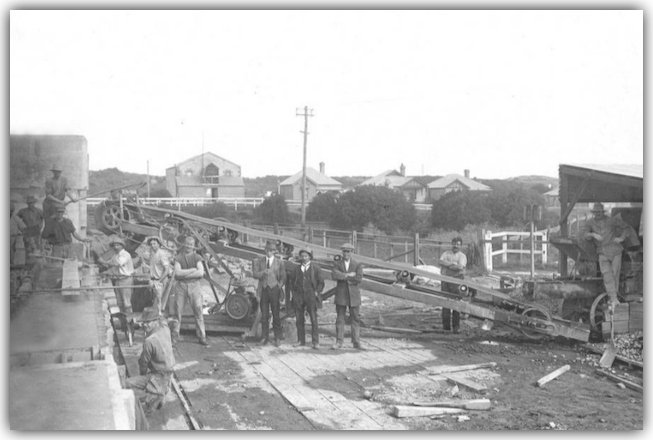
The Stanley St bridge can be seen in the backdrop of this photo taken in 1890, showing workers at a railway reserve unloading huge concrete blocks that would be used to build the breakwater. Image: Warrnambool Historical Society.

Carol Altmann – The Terrier

Will one of Warrnambool’s oldest original bridges survive the wrecking ball? Oh, I hope so.

The Warrnambool City Council will soon decide what to do about the failing Stanley St bridge/Edward’s Bridge that crosses the Merri River near the pastel monstrosity formerly known as the Lady Bay Hotel, and which has been in service for 130 years.

Demolition is an option, such is the Warrnambool way.

Just three years ago –  in 2017 – the council spent tens of thousands of dollars fixing this very bridge and strengthening the piles that hold it up.

Apart from the piles, the bridge was in “generally good condition” the WCC’s then-infrastructure manager said in a media release.

Even better, the end result of spending these tens of thousands of dollars on repairs was that “the historic bridge will be serviceable for decades to come”.

Decades? Not quite.

Here we are, just three years later, and Stanley St bridge is not only in need of major repairs – another $80,000 will be spent straight away – but is under threat of demolition.

How can this be?

And has the council demanded a refund for the works that failed to extend the life of the bridge for five years, let alone decades to come?

I asked the council spokesman these questions on 20 May and also for a figure on how much the 2017 bridge works cost: there has been no response.

Oddly, these 2017 works didn’t rate a mention in the report to the council meeting on 4 May when councillors talked about how much money they would need to borrow to either knock the old bridge down, repair it, or keep it and build a brand new bridge alongside.

Nobody put up their hand and said, hang on, didn’t we just spend a bucketload of public money a couple of years ago to fix this bridge?

Like the Merri River in flood, so much public money just swishes through and is never seen or heard of again.
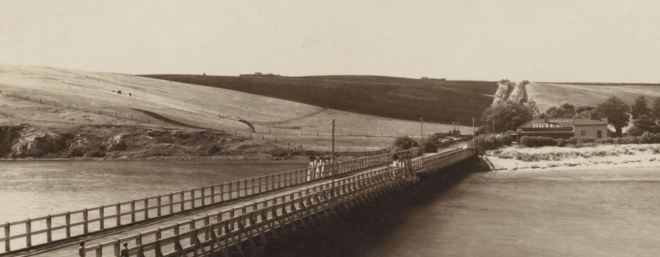
The original Hopkins River bridge was built in 1895 and was completely replaced in 2000. It is now in need of major repairs to prevent a catastrophic failure. Image: State Library Victoria.

The same could be said for the Hopkins River bridge which is also in need of major repairs, despite being completely replaced just 20 years ago.

It will soon have $460,000 spent on it to prevent “catastrophic failure” caused by defective concrete and other work that, obviously, couldn’t handle the harsh conditions.

Here’s part of the shopping list for Pontings, according to the tender:

Concrete patch repairs to pre-stressed beams;

Concrete patch repairs to pier headstocks and pier piles;

Crack injection to pier piles;

Silane treatment to pre-stressed beams;

Silane treatment to pier headstocks;

Silane treatment to pier headstocks; and

Protective paint system for pedestrian walkway galvanised beams & plates/cleats.


Cripes, that is some list.

The Stanley St bridge will cost around $2.6m to replace, or $1.2m to repair, with the council to cover half the cost and the remainder from a grant.

Perhaps if we had got it right the first time, we wouldn’t be facing the loss of another piece of our precious history.

My hope is the new bridge, if it must be built, runs alongside the old….and we push for a decent warranty.

Any other option should not be an option at all.


A renovation on a grand scale: 222 Timor

[printfriendly]

222 timor 2016_smaller
Luke and Nat Taylor, with their children Penny, 2, and Lewis, 4, in the yard of 222 Timor St home that they spent three years restoring to life, including this new sandstone wall built from century old blocks on the property.

By Carol Altmann

[dropcap style=”font-size: 60px; color: #DC943C;”] I [/dropcap]t was a project of Grand Designs proportions – without the cheerful reality checks of host Kevin McLeod – but Luke and Nat Taylor have finished their transformation of a derelict Warrnambool property with stunning results.

Bluestone has followed the Taylor’s progress since they first bought the property at 220-222 Timor St in 2012 and it has been with more than a detached interest.

[box]Bluestone subscribers: click here for full set of photos.[/box]

The 1850s building (the earliest surviving commercial building in the CBD) was once owned by Bill and Mildred Goodall, my grandparents, and sold to the Taylors on behalf of my mother, Jean.

shopfront
Where it began: the 1850s building opposite Swinton’s supermarket in Warrnambool had suffered from neglect before being bought by the Taylors in 2012.

[dropcap style=”font-size: 60px; color: #DC943C;”] F [/dropcap]or reasons that are too complex and probably too personal to explain here, the two-storey, heritage-listed building was in extremely poor condition and had been that way for many years.

Yet while the interior was a calamity, the sandstone structure was solid and the 165-year-old building opposite Swinton’s supermarket had what is often described as “good bones”.

join us2

The richness of its history was also not in dispute and very little of the original structure had changed, it just needed the right people to give it a new life.

Enter the Taylors.

222 timor rear
The rear of the property as it looked when work began. The non-heritage listed outbuildings were removed and much of their materials reused in the home. Image supplied.

[dropcap style=”font-size: 60px; color: #DC943C;”] L [/dropcap]uke and Nat set about restoring the front of the building first, to engage a tenant (now Biba hairdressing), generate some income, and revive the shabby shopfront to its former and original glory, right down to what Heritage Victoria identified as its original paint scheme. (You can read about the first part of the restoration here.)

The second chapter involved demolishing all of the non-heritage listed outbuildings (although salvaging and reusing a lot of the materials) and extending the main building to accommodate side-by-side apartments designed by local architect Mathew Morse: one for the Taylors, and one as short-term accommodation.

But those two paragraphs I have just written don’t go even close to capturing the sheer enormity and physicality of achieving this dream.

222 timor nat working
Nobody escaped the hard work, including Nat Taylor who is seen here helping to lay concrete. Image: Supplied.

[dropcap style=”font-size: 60px; color: #DC943C;”] I [/dropcap]t took a full three years and Luke, a lawyer by profession but I suspect a tradie at heart, spent countless hours working alongside the dozen or so professional tradies and multiple friends and family members who came and went as the project slowly progressed.

“I must admit, there were times that I cried from sheer exhaustion,” Luke says.

“I pushed myself to the limit both physically and personally and I found out the limits of my capacity,” he adds, and this is from a guy who competes in triathlons and Sufferfest.

There were barrow loads of debris to remove, barrow loads of cement to pour, hundreds of nails to be pulled, huge sandstone blocks to be dismantled and stacked, floorboards to be removed, stacked and sanded …. and on, and on and on it went – and that was before the internal fit out began.

rear taking shape 222 Timor
The new home designed by architect Mathew Morse starts to take shape at the rear of 222 Timor St. Image: Supplied.

[dropcap style=”font-size: 60px; color: #DC943C;”] T [/dropcap]he end result, however, is breathtaking and surely worthy of an architectural award in the future.

What was once a dark and damp space has been opened up to the light, with an open-plan interior and huge windows overlooking the back yard.

Massive sandstone blocks have been recycled and repointed into sturdy fences (bricklayer Barry Knowles, take a bow), floorboards have been refurbished, bits of tin and old paintwork left exposed, and even scraps of newspaper stuck to the original walls.

“We really love that it is a combination of the old and the new, that was very important to us,” Nat says.

The couple and their children finally moved into their new home in the week before Christmas.

When the project began, Nat and Luke had a two-year-old son, Lewis, and a baby on the way: Lewis is now 4 and Penny is two.

lukefamily
Back at the beginning: the Taylors (Nat is pregnant with Penny) in 2013 shortly after the renovations began. Image: Bluestone Magazine.

[dropcap style=”font-size: 60px; color: #DC943C;”] E [/dropcap]ach of them, in their own way, has been involved in the restoration and renovation, although Lewis, for one, is glad the project is over.

“When we asked him what he wanted for Christmas, he said ‘for us all to be together’, because I had spent so, so many weekends and late nights down here,” Luke says.

There were more tears – this time of joy – when the family spent their first night in their new home, knowing the job was done.

It is a redundant question, but I still ask it: “knowing what you know now, would you have still taken it on?”

“Yes” they both nod.

“But I couldn’t do another one,” Luke adds with his crooked smile, and Nat, I have to say, looks relieved.

[box]In case you missed it, catch up on our story about the little shoe found under the floorboards during the renovation and how it led to a Warrnambool war hero.[/box]

newsletter Why Not StonesYou might also enjoy reading…
 

End of the road for retro motel Caravilla

Feeling a building in your bones: the designs of Donna Monaghan

Rock my soul, the Rosebrook chapel rises again

Victoria’s oldest building right in our backyard


Little old shoe leads to a humble war hero

The double-fronted shop at 220-222 Timor St Warrnambool (now BIBA Hairdressing) as it was in 1919 when Robert Long, right, ran his bootmaking business. Image courtesy Helen Thomson.

By Carol Altmann

A child’s boot found during renovations of one of Warrnambool’s oldest commercial buildings has unearthed the remarkable story of a local war hero.

Bluestone Magazine wrote about the shoe being found under the floorboards of 220-222 Timor St in one of our very first editions, way back in November 2013, when we reported on the restoration of the 160-year-old building by owners Luke and Natalie Taylor.

At that time, it was known that one half of the two-storey building had been rented during the 1930s by a bootmaker – a Mr Long – but whether the shoe was connected to him, or any more details about this Mr Long, proved elusive.

Enter Rodney Harris, who recently stumbled across our story and called Bluestone to say that he believed his friend, Helen Thomson, a well-known face in Swinton’s homewares department for many years, could fill in all the gaps.

And she could.

ol shoe
The child’s leather boot that was unearthed during renovations at 222 Timor St Warrnambool in 2013.

Helen, now aged in her eighties, is the daughter of the late Pearl Long whose father, Robert Long, started the original bootmaker’s business at 220 Timor St early in the 1900s.

In one of those priceless moments that history buffs live for, Helen produced a photograph – the only known copy in existence – of her grandfather standing outside the shop in March 1919.

As was common for the time, the extended Long family all lived upstairs from the business and Helen believes the English-style boot may have belonged to one of Robert’s six children (another three children had died).

“I know Mum used to talk about these little English boots that her father would buy for them for school, because they were good quality,” Helen says.

“But Mum hated wearing them, because of course they were not like what the others kids wore,” she adds.

Helen went on to explain how her grandfather’s bootmaking business was later taken over by her uncle, Roy Long, who everybody knew as “Toy”, and this is where the story took an unexpected and remarkable turn.

222 timor toy long005
Roy “Toy” Long as a member of the AIF 2/21 Battalion (Gull Force) who became prisoners of war on the Indonesian island of Ambon for almost four years. Image courtesy Helen Thomson.

When war broke out in 1939, Toy Long left his bootmaking business and joined the AIF as part of the 2/21 Battalion (known as Gull Force) that became prisoners of war on Ambon, Indonesia, following the Japanese invasion of the island in 1942.

Toy, together with other members of his batallion also from Warrnambool, was imprisoned for almost four years in appalling conditions.

During this time, it has now been revealed, Toy risked his life by hiding documents given to him by his commanding officer that would prove crucial in the later trials for war crimes.

Helen has a precious copy of the letter written to Toy by his commanding officer, W.R Scott, after the war.

It reads, in part:

My Dear Long,

The time has now arrived when we are no longer POWs…in Japanese hands. I may therefore without risk of your being deprived of your life, write and thankyou for the way and the risks of death you knowingly and yet willingly took secreting most important documents, holding them in your care for a long period of time, during which, I may add, there were two searches carried out by Japanese troops…

“You took all the risks, knew it meant death for you if you were discovered, and I now thankyou on behalf of us for the gallant manner in which you completed the task. I wish you all the best of luck for the future.”

letter
A copy of the letter written to Toy Long by his commanding officer which reveals the great risk he took in hiding documents that would later prove critical in war trials. Reproduced courtesy of Helen Thomson.

After returning from the war, Toy lived with Helen and her parents, and other members of the extended family, in their house in Kruger St.

“My mother was cleaning up one day and found this letter and started to read it, but Toy snatched it out of her hand. He didn’t want anybody to know about it,” Helen says.

Years later, however, one of Helen’s aunts had possession of the letter and typed out a copy for Helen. The original is now in the Canberra National War Memorial.

“He (Toy) never talked about the war, but he had the most horrendous nightmares, yelling out in his sleep,” Helen recalls.

Toy resumed his trade as a bootmaker after the war, opening a shop in the former Market Arcade in Lava St (and, later, opposite the Regal Shoppe in Timor St), and despite his horrific experiences – or perhaps because of them – he embraced life to the full.

“He was always such a kind and generous man and always had something for us kids when he came home from work, sweets or glass beads or something like that,” Helen says, laughing.

Toy later married and had one stepson. He died in 1990.

A humble shoe retrieved from the rubble has revealed the story of a brave and humble man.


Rare images of FJ silver ball

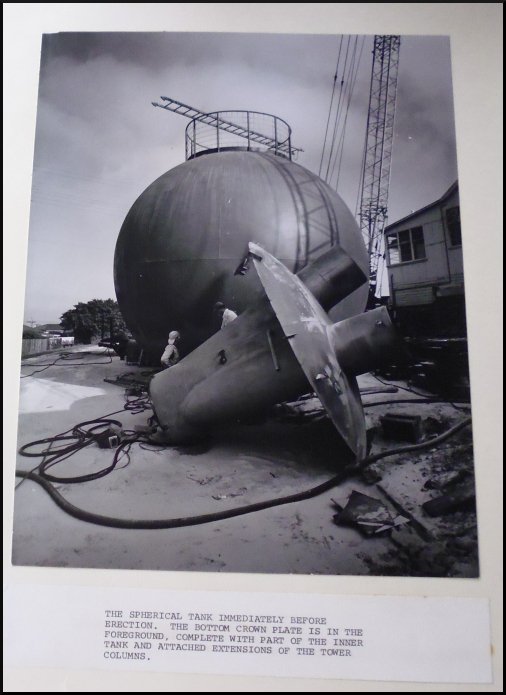
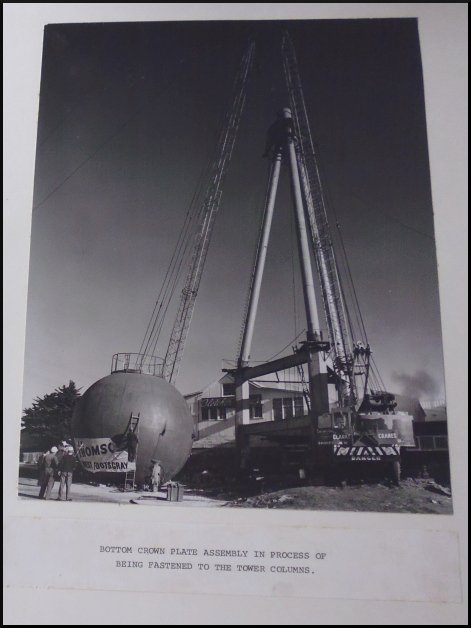
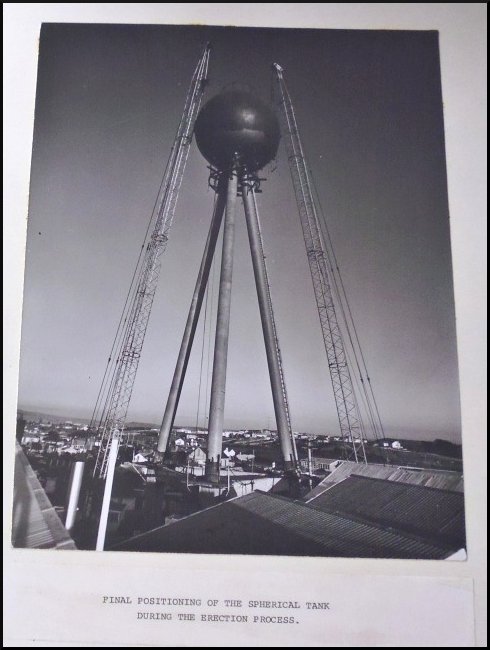
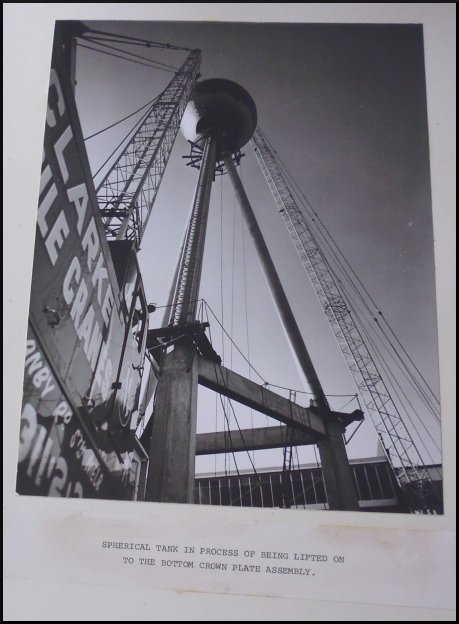
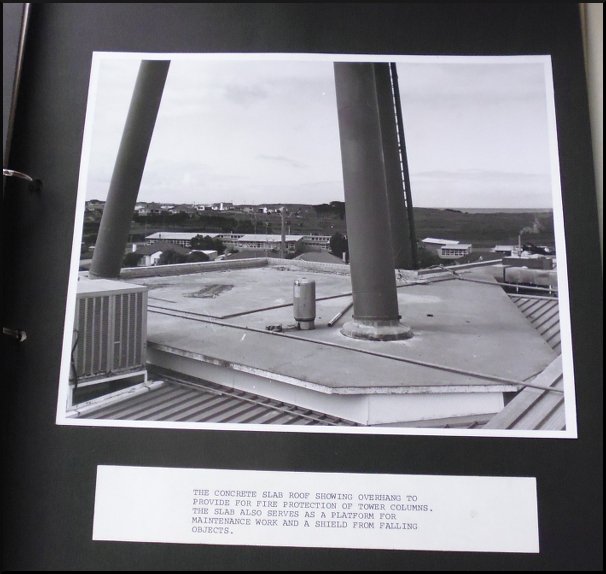
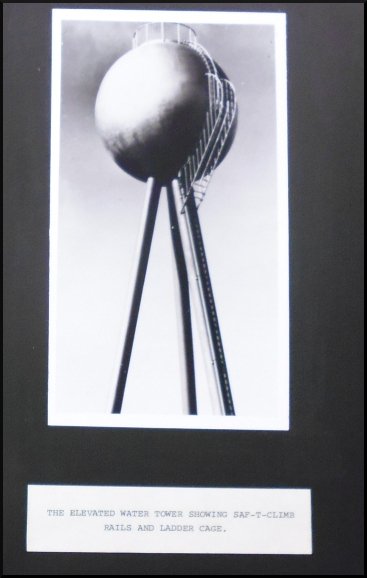
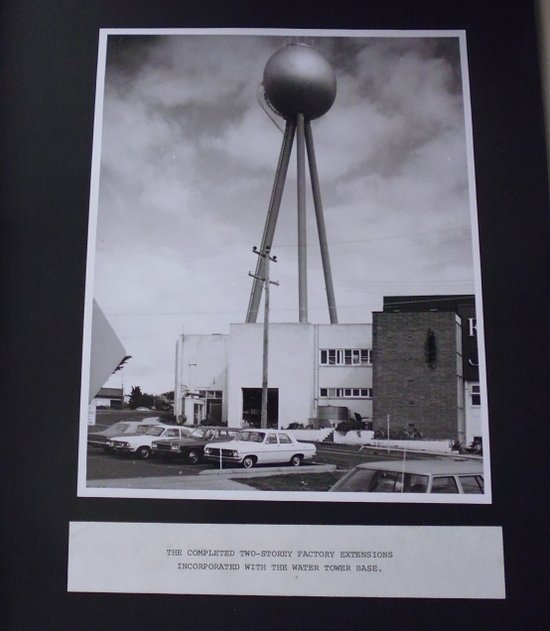
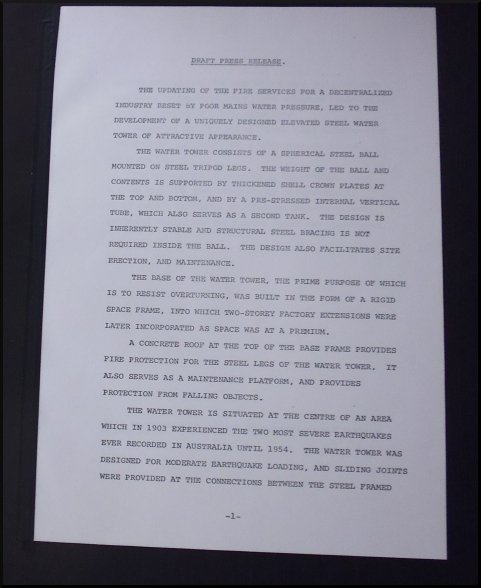
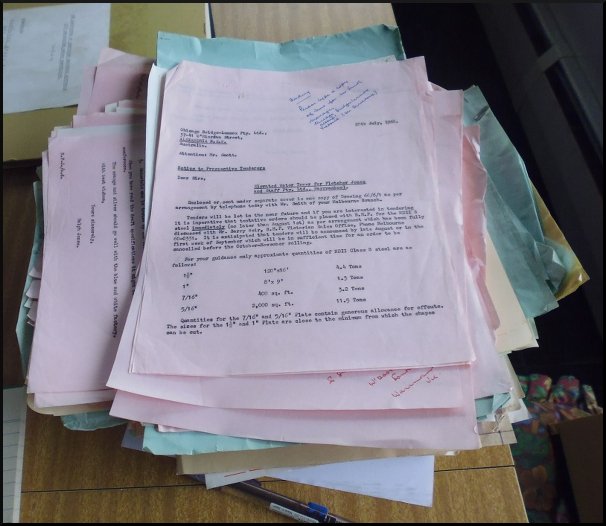
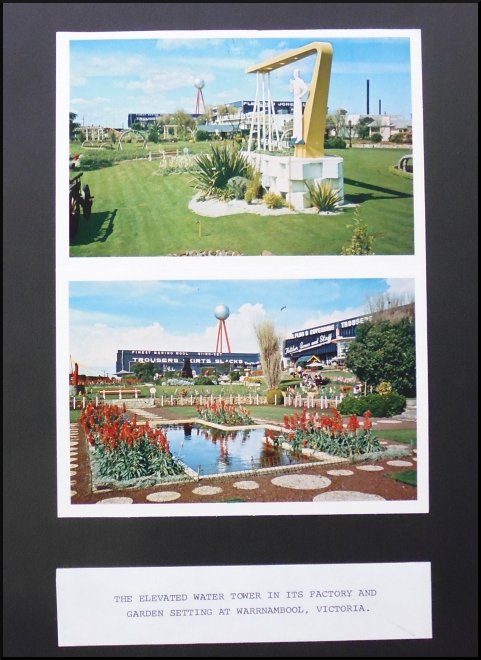
[box]Bluestone Magazine would like to thank Melinda Barrie from Melbourne University Archives for providing us with some examples of the images contained in a collection of items donated to MUA by Ralph Jones (Ralph Jones Construction Engineering Services) who engineered and constructed the unique water tower for the Fletcher Jones factory in Warrnambool, 1965-67. Citation: Ralph Jones Water Tower Submission and Business Papers, 2014.0112, Box 1, University of Melbourne Archives.[/box]

ball ground2

ball ground


ball cranes copy


ball crane 2

ball-legs

ball in place

ball2

drawings

words ball

ball documents

postcards

[button link=”http://the-terrier.com.au/subscribe-2/” type=”icon” icon=”heart” newwindow=”yes”] Do you know somebody who would enjoy this story? Encourage them to subscribe to Bluestone![/button]

newsletter Why Not Stones You might also enjoy:

Rare images emerge as FJ story collection begins

Motor Museum to revive Fletcher Jones site

A different way of doing things: Dean Montgomery

Imagine the skyline without Fletcher Jones


Missing: one old cross, last seen at FJs.


old fj cross
Retired: the second (and final) Fletcher Jones cross sits in council storage, having been replaced by a more modern cross that is erected on the Uniting Church. The whereabouts of the original FJ cross, first used in 1967, remains unknown*.


[dropcap style=”color: #a02f2f;”] W [/dropcap]ith the former Fletcher Jones factory in Warrnambool officially changing hands last Thursday (19/6), there has been a renewed focus on tracking down the iconic, original fixtures in the hope that they can be returned to the site, including the very first FJ cross.

New owner, the Geelong-born, China-based businessman Dean Montgomery, has indicated his willingness to restore the garden furniture and features, including what we call ‘The Man in the Pressed Pants’, but who was formally known as ‘the FJ man’, who once stood so proudly in his pleats at the front of the property.

The man, unfortunately, is now a broken shell of his former self. What does remain, however, has been enough to inspire Mr Montgomery to consider commissioning an artist to rebuild his legs and restore him to his full glory.

Another iconic piece of the original factory that is proving harder to trace is the original Fletcher Jones illuminated cross that was winched up the silver ball water tower each Christmas (and removed after every Easter) to cast its comforting glow across the city.


ball01
Up she goes: this image is believed to show the original, much heavier cross being hoisted into position using a boat winch. Image courtesy Amy Fitzgibbon.

[dropcap style=”color: #a02f2f;”] S [/dropcap]ir Fletcher Jones was a socialist Christian, or what might now be called a left-leaning Christian, who believed the cross would provide a gentle reminder of the role of Christ around an increasingly consumer-driven Christmas.

The cross was first erected when the silver ball was built in 1967 and, it is understood, was literally plugged into a powerpoint on top of the silver ball and ran off a timer.

At some time in the late 80s (nobody we spoke to was exactly sure when), this cross was replaced with a much lighter, aluminium structure that had light bulbs mounted along its sides.

This newer cross continued to be placed on the silver ball each year, right up until 2010 when the deteriorating condition of the ball made it unsafe.

In a now infamous move, the Warrnambool City Council (WCC) – who had taken over responsibility for the cross – found a new home for it on top of a west Warrnambool water tower, owned by Wannon Water.

The cross had barely been lit, however, before it was removed by Wannon Water after a single complaint by a resident, Graham Keith, who claimed that it was “religious advertising” on “public property”. (Mr Keith must have been apoplectic during all of those years that Sir Fletcher Jones and his family kept “advertising” their religious beliefs).


fj cross-sharrock-hs
The second cross, with its somewhat antiquated light system, was relocated – briefly – to a water tower in west Warrnambool before a single complaint saw it removed in 2011. Image: Robin Sharrock, Herald-Sun newspaper.


[dropcap style=”color: #a02f2f;”] A [/dropcap]fter a fierce backlash to the decision by Wannon Water to remove the 2.5m tall cross, the WCC found a new home for it on top of the Uniting Church, in Koroit St, not far from where Fletcher Jones once ran his clothing store, “The Man’s Shop”.

The cross, however, again proved to be a safety hazard due to its basic lighting system. This cross – the second FJ cross – was retired and placed in council storage and a new, smaller cross, with environmentally friendly LED lighting, was built for the church to use.

What became of the original 1967 cross, however, remains a mystery, despite our attempts to track it down*.

The Uniting Church has certainly had never seen it, and the WCC only have the second cross in storage.

WCC media spokesman Nick Higgins sent us the following words about the mystery:

Our infrastructure chief thinks the wooden cross may have its origins in the 1960s. It’s possible it was replaced with aluminium, not because it was rotten, but because aluminium was lighter and easier to install. But we don’t know for certain – this was at a time when the council was not closely involved with FJs.”

Perhaps a reader can help to fill in the gaps?*

* We now know the answer – see story here.

mitch stansfield
The second Fletcher Jones cross shone like a beacon across the Warrnambool skyline for more than 25 years, after replacing the original cross that was first erected in 1967. Image: Courtesy Mitch Stansfield.

[box] Former Warrnambool City Council planner and photography enthusiast Lisa Gervasoni is one of the few people to photograph the cross on all three structures. Lisa no longer lives in Warrnambool (although she maintains close ties), but she kindly gave us permission to reproduce the three images below:[/box]

gervasoni cross 4

gervasoni cross2

gervasoni cross 5

[button link=”http://the-terrier.com.au/subscribe-2/” type=”icon” icon=”heart” newwindow=”yes”] Did you enjoy this story? Please subscribe here to help Bluestone thrive.[/button]

newsletter Eat And Drink Stones If you like local history, you might also enjoy…


Who was the ‘Granny’ behind Granny’s Grave?

Reviving Alf Altmann’s incredible adventure

Restoring an old treasure back to life: 222 Timor St

Art is the heart of old Hawkesdale home

Behold this bluestone beauty: Fennessy’s at Rosebrook

Colonial oven still makes a crust, Dunkeld