Heritage Vic to take no action against Flagstaff Hill

Copper Sheets-2
Some of the copper sheets stored at Flagstaff Hill in the Bond Store, including the one showing a severe cut from right to left.

ANALYSIS – Carol Altmann

[dropcap style=”font-size: 60px; color: #A5CECD;”] H[/dropcap]eritage Victoria has finished a three-week investigation into missing and damaged artefacts at Flagstaff Hill Maritime Village in Warrnambool and found it has no case to answer.

Instead, any responsibility for the missing artefacts and damage to relics from the wreck of the Loch Ard (1878), has been sheeted home to former management of the village.

As first reported in Bluestone Magazine, Heritage Victoria launched a formal investigation into the cutting of copper sheets from the Loch Ard, with a 10x10cm piece taken from one, while another had a large slice removed, allegedly for use as a sculpture or trophy.

Such damage to relics is an offence under the Commonwealth Historic Shipwrecks Act.

In addition, Heritage Victoria was investigating how the museum had lost track of at least 129 items from its collection, including the brass ship’s bell from the wreck of the Newfield (1892) that was once displayed in the Great Circle Gallery, and more than 200 lead ingots from the Loch Ard.

A spokesperson for Heritage Victoria today issued a two-sentence statement to Bluestone Magazine, saying the investigation was finished and there would be no further action, as “most” of the issues had happened more than a decade ago.

Here is the statement in full:

“Heritage Victoria has completed its investigation into suggestions of problems with the management of the collection at Flagstaff Hill Maritime Museum and determined that no action is required.

“Heritage Victoria noted that professional systems highlighting collection management and an internal audit process had been instigated under the present management and that most of the issues raised had occurred more than a decade ago under previous management.”

No other information was available and is unlikely to be available in the future, as Heritage Victoria does not reveal the details of its investigations.

1-loch ard ingots_1
The arrival of the Loch Ard ingots and copper sheets was worthy of front page news in 1984.

[dropcap style=”font-size: 60px; color: #A5CECD;”] S[/dropcap]o what happened to the copper sheets and who cut them?

And where is the missing Newfield bell, among other items?

Even after this investigation we are none the wiser and, from the sound of it, probably never will be.

The outcome of the investigation is not a surprise, however, in light of comments by Warrnambool City Council chief executive officer Bruce Anson to the February 2 council meeting.

At that time, and in response to questions from Cr Brian Kelson who first raised concerns about the missing artefacts, Mr Anson said “we are confident that our discussions with Heritage Victoria will not find any significant issues at all.”

“We have an ongoing and very positive relationship with Heritage Victoria,” he said.

When asked directly by Cr Kelson who cut the copper sheets, Mr Anson said one had been pierced by a nail, while on loan, and another had a corroded edge from lying in water.

The nailed sheet was in fact a drill hole, added to a sheet now on display at the Port Campbell Tourist Information Centre, so that it could be secured to the wall where it was formerly housed (the people responsible apologised to Flagstaff Hill in 1993 for their mistake.)

Mr Anson made no mention of the sheet that has had a large slice removed, or the sheet with a missing 10x10cm piece, but did say some of the cuts were “hearsay”.

Perhaps more will be ultimately revealed by the council, with Mayor Michael Neoh telling the same meeting that he would be happy for Director City Growth Bill Millard to do a full and formal report back to the council on these issues.

Let’s hope so, because as it stands we still don’t know what happened to precious artefacts that were given to our city by the Federal Government for safe keeping.

subscribe

 Stones Smile newsletter More Analysis can be found here…

Veil of secrecy over salary of the WCC’s top job

The changing landscape under Midfield Meats

Abbott actions reveal toxic culture in council

Investigation launched into Flagstaff Hill

When scrutiny is sub-standard, democracy suffers


Investigation launched into Flagstaff Hill

Flagstaff ingots_18
Flagstaff Hill in Warrnambool is under investigation after revelations of missing and lost items, and damage to Loch Ard artefacts. Image: Bluestone Magazine.

EXCLUSIVE: Carol Altmann

[dropcap style=”font-size: 60px; color: #A5CECD;”] T [/dropcap]he Flagstaff Hill Maritime Village in Warrnambool is under formal investigation by Heritage Victoria over missing items from its collection and damage to relics from the wreck of the Loch Ard.

As recently reported in Bluestone Magazine, two of the 10 copper sheets from the Loch Ard (1878) that were loaned to Flagstaff Hill by the Federal Government have been cut.

It is believed that a large slice was taken from one of the sheets in recent years for use as a sculpture or trophy, while the other has had a 10 x 10cm piece removed.

The Loch Ard, arguably Australia’s most famous shipwreck, is listed as a wreck of state and Commonwealth significance.

It is an offence under Section 13 of the Commonwealth Historic Shipwrecks Act to “destroy or cause damage to a historic shipwreck or historic relic” and can lead to a fine of up to $10,000 or imprisonment for an individual, or a $5000 fine for a body corporate.

In addition, Flagstaff Hill manager Peter Abbott recently confirmed in a letter to the local newspaper that the museum had lost track of at least 129 items from its collection, including the brass ship’s bell from the wreck of the Newfield (1892) that was once displayed in the Great Circle Gallery.

Heritage Victoria told Bluestone Magazine late Friday that, as a result of the revelations, it had opened an investigation into the collection practices at Flagstaff Hill.

“Tim Smith, Executive Director, Heritage Victoria confirmed Heritage Victoria is investigating the care and storage of items at Flagstaff Hill Maritime Museum,” a spokeswoman said via email.

Mr Smith was unavailable for further comment.

Heritage Victoria is responsible for the initial investigation into any potential breaches of the federal law governing historic shipwrecks. It is also responsible for investigating if there have been any breaches of the Victorian Heritage Act, which carries its own penalties.

Copper Sheets-2
An image of the copper sheets from the Loch Ard which clearly shows the bottom sheet severed from right to left.

[dropcap style=”font-size: 60px; color: #A5CECD;”] F [/dropcap]lagstaff Hill, which is accredited by the museum governing body, Museums Australia, has had the spotlight turned on its collection management processes after questions late last year by Warrnambool City Councillor Brian Kelson.

Mr Kelson’s probing about gaps in the museum’s online collection database led to revelations that 220 lead ingots from the Loch Ard could not be accounted for.

Flagstaff Hill was given custody of 872 lead ingots in 1984 as part of the same federal loan agreement that governed the copper sheets.

Mr Abbott and council chief executive officer Bruce Anson have both since given assurances that the bulk of the missing ingots are in the hull of the derelict Rowitta ferry, although there has been no official count due to the poor condition of the vessel.

The ferry, which sits on the pond at Flagstaff Hill, is scheduled for demolition later this year.

Mr Abbott has recently been caught up in a separate scandal, after he was named by the local newspaper as the author of several anonymous comments made to its online forums, in which he made personal attacks against Cr Kelson and Cr Peter Hulin.

Cr Hulin has since indicated he will move a motion of no confidence against CEO Mr Anson at the first council meeting of the year on February 2, citing his handling of Mr Abbott’s behaviour as an example of why the Local Government Minister should be asked to intervene.

 [button link=”http://the-terrier.com.au/subscribe-2/” type=”icon” icon=”heart” newwindow=”yes”]Bluestone needs at least 500 subscribers in 2015. If you wish to support independent media, please click here to become one.[/button]

Stones Smile newsletterYou might also enjoy…

Flagstaff Hill: a museum in transition, or a mess?

Are missing Loch Ard ingots the tip of the iceberg?

The changing landscape under Midfield Meats

Sucking the wind out of Portland’s sails

Granny’s Grave buried in bureaucracy

All words, no funding, for Fletcher Jones story


David Jones Jr on the future of the FJ site


silver ball, fletcher jones, mark rashleigh
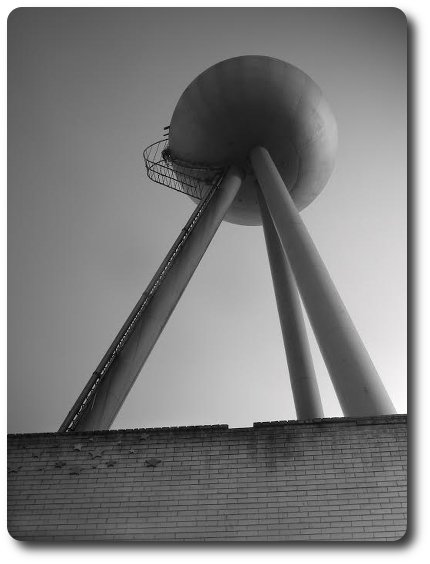
This stunning image of the Fletcher Jones’ silver ball was taken by Deakin University fine art academic Mark Rashleigh who has kindly given us permission to reproduce it here. It depicts the tower with its ladder and railings intact.


OPINION

[dropcap style=”font-size: 60px; color: #ABCCAB;”] A [/dropcap]s Heritage Victoria prepares to inspect the dilapidated Fletcher Jones factory in Warrnambool next Monday (7/4), the grandson of Fletcher Jones said his family would be delighted to see something “creative” happen with the site.

In so saying, however, David Fletcher Jones Jr said that his family fully appreciated the complexity of the situation that has developed since the current owner, Daramking (owned by failed Geelong businessman Ian Ballis), went into receivership in 2012.

“I am anxious to stress that we recognise how challenging this all is,” Mr Jones said in an exclusive interview with Bluestone.

Mr Jones is the son of the late David and Isobel Jones and lived in Warrnambool until his teenage years. As a result, he is keenly aware of the connection that many people feel to the Fletcher Jones factory site because of the high esteem in which his grandfather was held.

“How the site looks today is very sad,” he said.

“Everyone would like to see something better done with it.”


old fj gardens shot
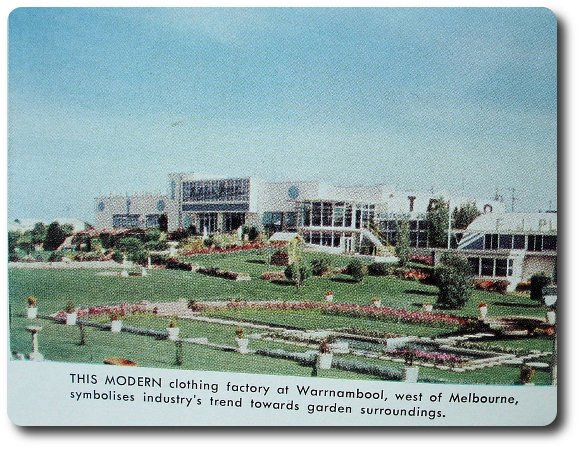
Fletcher Jones factory, Warrnambool circa 1950’s. Photo source: Land of the Southern Cross Australia. Published by The Australian Publicity Council. Private collection.


[dropcap style=”font-size: 60px; color: #ABCCAB;”] M [/dropcap]r Jones, who with his sisters, Susan and Anne, oversees the philanthropic FJ Foundation, said the debate around the future of the site reinforced that there was no easy answer and a solution would require a “thorough engagement with the council and the community”.

“Quite a complex and thoughtful solution is going to be needed,” he said.

“And we would be excited if something thoughtful and appropriate could be done.”

While Mr Jones did not wish to specify what sort of development he would like to see on the site, he agreed that a project that linked to the broader community would certainly reflect the values of his grandfather.

The Jones’ family have had no direct involvement in the FJ factory site since the company was sold in 1995, but the personal links remain strong.

The water tower was designed by Fletcher Jones’ son, Ralph, who was a consulting engineer and is now aged in his 80s. The Pleasant Hill gardens, meanwhile, were designed by Fletcher Jones’ brother-in-law Darby Boucher.

The heritage-listed water tower, gardens and other key elements of the iconic site have been central to recent discussions between Heritage Victoria, the Warrnambool City Council, the administrators and the mortgagors as to who has responsibility for maintaining these historic elements.

A Save the Silver Ball and Fletcher Jones Gardens group has also added a strong element of grassroots community activism.


inside fjs

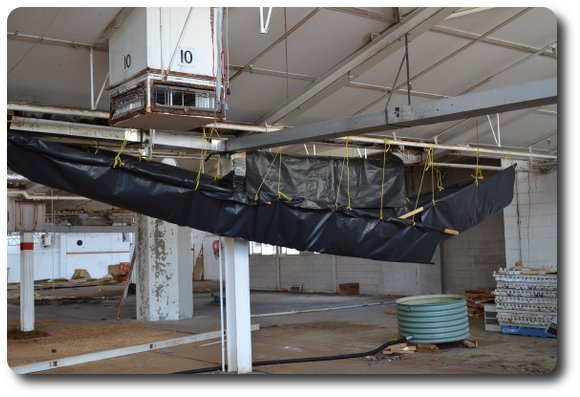
[dropcap style=”font-size: 60px; color: #ABCCAB;”] I [/dropcap]n the meantime, the various tenants occupying different parts of the building are still paying rent and, in most cases, repairing what they can as the building continues to crumble around them.

The Triton Woodworkers Club, for example, pays around $9000 a year for a space directly under the silver ball that is substantial in size, but leaks like a sieve whenever it rains.

The club has rigged up an improvised internal drainage system that keeps most of the rain off their equipment – if not the floor –  but an outsider can’t help wondering why they are being charged anything at all, especially as a not-for-profit community group who, simply by being there, help to keep the vandals out.

So where does the long-term solution to the site lie?

Hopefully a constructive plan will emerge from the talks between the various parties, but, in the meantime, it is worth revisiting a key recommendation of the 2003 consultants’ report, commissioned by the council, into the site’s future.

It suggested the council, even if it no longer owned the site, keep the dialogue open between the community, any developer and the council to ensure its future life was in keeping with community expectations.

To date, this has not happened. This may change and, if it does, we may be on our way to the “thoughtful and appropriate” solution that such a high-profile and important site deserves.

[box] Postscript: According to the Warrnambool City Council, it spent almost $160,000 on the Fletcher Jones site between 2002 and 2008. A breakdown of this figure was unavailable, but it included repairs on the silver ball after an assessment in 2004.[/box]

newsletter Art Music Stones More on the Fletcher Jones campaign…


Who will step up for Fletcher Jones?

Close Flagstaff Hill; save Fletcher Jones

Don’t drop the ball on FJ’s icon

Mini FJ’s silver ball to shine again for festival

Fletcher Jones site taken off the market 

The Save Fletcher Jones campaign