Free kick: Is Labor backing Purcell over its own candidate?
By Carol Altmann

Is Labor backing Independent James Purcell to win this seat at the next election and not its own candidate in Kylie Gaston?

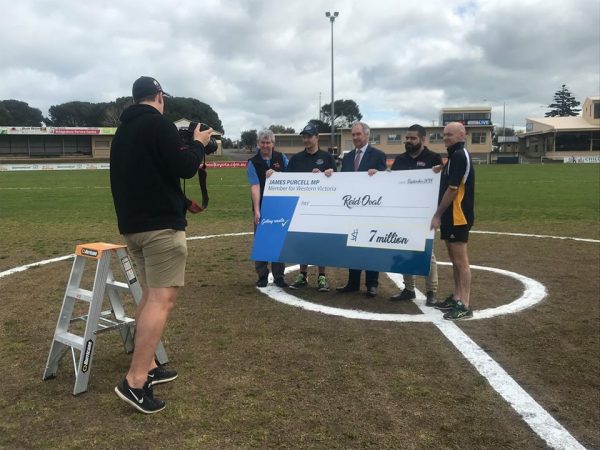
Why else would Premier Daniel Andrews give Mr Purcell a giant free kick in allowing him to announce $7 million for the Reid Oval upgrade in Warrnambool?

I am going out on a limb here, but in all my years of political reporting, I never saw – *ever* – a government miss a chance to announce big bucks for an electorate in the run up to an election.

And yet Labor hand-balled, pardon the pun, the opportunity straight to Mr Purcell who ran with it – of course – and kicked a major goal by giving the local paper the “exclusive” right on the eve of the Hampden League Grand Final.

Bang! Six points to Mr Purcell!

Weeks earlier, Mr Purcell had promised he could get the funding by the footy final and – voila – he did!

I smell a plot, which has only thickened.

The Premier’s dept confirmed today that yes, Mr Purcell had been told about the funding first because “he had campaigned hard locally on the issue”.

They knew “he would probably go public” with the news before they did, but they didn’t seem overly fussed by this.

Wow! What a kick in the proverbials for their own candidate, Ms Gaston!

Mr Purcell, as he has said before, is still thinking about whether to move from the Upper House to the Lower House for the next election. (He has to decide by November 8.)

I reckon the $7 million smackeroos just about seals the deal, which is why Labor is jumping on board.

After all, if Mr Purcell wins the seat, they will have him all buttered up before he arrives.

Mr Purcell will be a vote they can count on – obviously – much more than sitting Liberal MP Roma Britnell.

For Labor, it is almost as good as winning this safe ol’ Liberal seat in the south-west.

And Mr Purcell has shown he likes the power that being a key independent MP can bring. He may not have that same power in the Upper House after the next election – how boring – so why not have a crack at the Lower?

Need more proof? He has even opened an electorate office in Portland, for heaven’s sake!

And let’s be frank, Mr Purcell, who presents like a Liberal and is all tied up with the racing industry, will attract a lot of votes from the conservative side.

When he first ran for the Lower House in 2010, he drew almost 12% of the primary vote, despite being up against Liberal mega-star Dr Denis Napthine.

This time around Mr Purcell has a bigger public profile, a much more vulnerable sitting member in Ms Britnell and now – thanks to the Andrews’ Government – some serious runs on the board in delivering what he says he will deliver, be it funds for a footy oval, or racehorse training on beaches.

If he pulls it all off, Ms Britnell will look like a Melbourne player wondering what in the heck just happened.

Let the game begin!

(Image: www.jamespurcell.com.au)


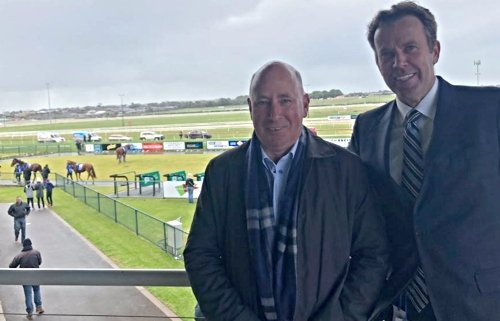
All smiles: Dan Tehan’s friends in racing

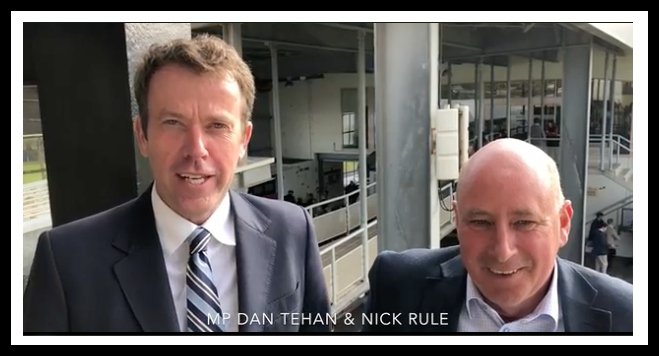
Racehorse co-owners Wannon MP Dan Tehan and Warrnambool Racing Club chairman Nick Rule at the announcement of $1.25m in funds for the WRC. Image via The Warrnambool Standard.

I have tried at least five times to stop writing about local issues so that I can focus on books that I need to write, but each time I try, some frustrated soul contacts me with a story idea or a piece of information that they know will not be investigated or published elsewhere.

So here we go.

Story number one: Dan Tehan’s friends in racing.


A week or so ago, Wannon MP Dan Tehan braved the chill winds at the Warrnambool racecourse to announce a sweet $1.25 million in funds to the Warrnambool Racing Club so it could transform, among other things, its already “first-class” eating and drinking venue into a “world-class” venue.

That little slice of pumped up Trump-speak was from WRC chairman Nick Rule, who told the local paper back in January that: “The club has the support from the Member for Wannon Dan Tehan for the project” aka, he is right behind us on this one.

Dan is a big fan of racing, but more than that, he owns shares in racehorses and, in particular, he owns shares in a racehorse – called Wells – with Nick Rule and others.

That’s right: our local Federal MP shares a horse with the chairman of the WRC and lobbies on behalf of the WRC for public money.

What I don’t understand is why this connection is never mentioned in any media reports?

And why doesn’t Dan Tehan ever mention it in any of his public remarks and Facebook posts?

And why, if it is no big deal, does his staff refuse to answer a simple “yes” when asked if Dan and Nick co-own a racehorse?

Nick Rule and Dan Tehan at the Warrnambool races. From Dan Tehan’s Facebook page on the day of the funding announcement.

It was the same story a few years ago when Dan Tehan and then Premier Denis Napthine part-owned a racehorse (Spin the Bottle) with Midfield Meats owner and multi-millionaire Colin McKenna who, at the time, was seeking state money to expand his operations in Warrnambool. (He got the money and Denis got a political headache.)

And it is the same story, as I have written about before, every time local MP James Purcell, racehorse owner and father-of-trainer-Aaron Purcell, opens his mouth about anything to do with horse racing and allowing large numbers of racehorses to train on beaches.

Let me shout it out:

THESE MPS OWN RACEHORSES!

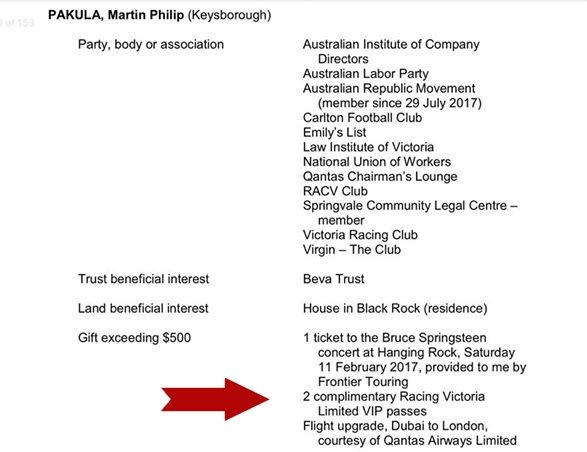
Dan Tehan and James Purcell are not alone. State ministers Lily D’Ambrosio and Martin Pakula, who are among those deciding whether commercial racehorse training should be allowed on our local beaches, have been the recipients of a free annual pass or a VIP pass to Racing Victoria.

Ah, the lure of a ringside seat at the Melbourne Cup.

I am not sure when we started to accept such potential conflicts of interest as normal.


It is difficult to think of another example where an MP would be permitted to be actively involved in any lobbying or decision making when they held such interests but, for some reason, horse racing remains exempt.

I hasten to add, before the lawyers start dictating letters, that there is no suggestion of any impropriety by any of these MPs: they are doing what we allow them to do.

If this is to change, we need to keep calling it out and to keep shining the light into the dim corners, sometimes several times over.

And that is story number one.


Tourism? We are missing out big time

Moyjil/Point Richie is one of three rich cultural and environmental sites in the south-west that could be maximised to form a major tourist attraction at the end of the Great Ocean Road.

The Terrier

A little statistic popped out of Parks Victoria about six weeks ago that should have had us all gasping and wondering what we are doing wrong in Warrnambool.

Here it is:

“A record daily peak of 11,000 national and international visitors made the trip to the Twelve Apostles during Chinese New Year celebrations”.

Please read that again, because it took me at least three reads to believe what I was reading: a record daily peak of 11,000 national and international visitors visited the Twelve Apostles during Chinese New Year (between January 28 and February 15) this year.

This was a 30% increase on last year. Thirty per cent!

And this is all happening less than an hour from Warrnambool – 72.7km down the road – yet we are seeing so little of the action here.

Why??

This is not a new question.

Over the years there has been much head-scratching, hours of discussion and piles of reports on how to encourage this lucrative market of cashed-up, eager travellers to travel just one more hour down the road to Warrnambool where, we would hope, they stay for more than 24 hours rather than passing through on their way to somewhere else, or turning around and travelling back to Melbourne.

To me, the answer starts here: give them something irresistible, something that they haven’t already seen or heard during their trek down the most popular coastal road in Australia.

And what might that be?

To me, the answer starts here: our incredible indigenous story.

I don’t know about you, but whenever I travel overseas, I can’t wait to immerse myself in the indigenous history, to read about it, see it and experience it through a tour, a trek, a talk, a meal or a spontaneous, random encounter.

Here in the south-west, and right here in Warrnambool, we are sitting on some of the richest indigenous stories in Australia, creating a natural ‘trail’ from Moyjil/Point Richie, to Tower Hill and out to Budj Bim (Mt Eccles/Lake Condah) near Heywood.

Budj Bim is on the cusp of a UNESCO World Heritage listing partly because of its stone eel traps that are 1500 years older than the Pyramids or Stonehenge.

And Moyjil, apart from being a geological wonder, has been a site of human occupation for at least 35,000 years and, pending the results of ongoing tests, could also be the oldest site of human habitation anywhere on the planet, dating back 80,000 years.

Why are we not celebrating and promoting this far and wide?

December 2016: The western walkway from Moyjil down to the beach.

Tower Hill, meanwhile, is where Great Ocean Roaders can see a koala, emu or a kangaroo while also learning about indigenous culture, but its full potential as a tourist attraction is far from realised, starting with the poorly signposted, pot-holed and dangerous entrance that must be the worst of any tourism attraction in Victoria.

To be fair, progress is being made at each of these sites to promote its significance (especially Budj Bim) and plans have been drawn up to manage their futures, but I cannot find any coordinated effort to promote the three locations as a not-to-be-missed tourism experience that would, in turn, create jobs and boost our local economy.

There is no single, one-stop-shop to find out about what should be a cultural and environmental gem of a self-guided tour: there is no one map, brochure, website, or app.

Try it yourself: visit the Visit Warrnambool website, click on “what to see and do” and see what you find.

The top listings alternate, but when I clicked, the first item was mini golf.

But back to Moyjil for a moment.

A 24-page conservation and management plan for this area was published in 2013, setting out how it should be cared for by the State Government (which owns it) and Warrnambool City Council (which manages it) but, four years on, there are worrying signs about the financial commitment needed to look after this precious piece of coast.

The western walkway from the carpark fell apart in early December last year, just before the start of the peak tourism season, and access to the beach was blocked.

It is now late April and the walkway is still busted although now, of course, there has been five months’ of people making their own path down the side of the walkway, as we do, and the erosion is obvious.

When it will be fixed, nobody knows.

April 2017: The western walkway from Moyjil down to the beach.

I contacted the state Environment Minister Lily D’Ambrosio and her spokesman said the council had applied last year for a slice of $730,000 in funding to fix the walkway as one of several work projects it had planned for the site.

It was not successful. (The $730,000 fund received applications totalling more than $3.1 million).

“DELWP is willing to look at how it can support Warrnambool City Council in fixing this walkway, and will discuss with Council how the department can assist,” he wrote.

I asked the council for its take on the situation and its spokesman said: “We will continue to seek funding from the State Government for maintenance. It will also be part of Council’s upcoming budget deliberations.”

And that was it. No passion. No prioritising. No real sense of urgency.

I can only wonder when a wooden walkway – a walkway – can’t be fixed (Triton woodworkers + youth unemployment project?), what the long-term future really holds for this magnificent site.

And in the meantime, the vast majority of the tens of thousands of tourists who are travelling to the Twelve Apostles each summer just turn around – or keep driving….


Rare Fletcher Jones images inspire top artist

[printfriendly]

MC room 1948
Just one of the wonderful images: Workers in the main sewing room at the then-newly opened Fletcher Jones factory at Pleasant Hill, Warrnambool, in 1948.

By Carol Altmann

[dropcap style=”font-size: 60px; color: #A02F2F;”] A[/dropcap] treasure trove of rare images capturing the lifespan of the Fletcher Jones story is poised to be the focus of a series of artworks by noted Warrnambool artist, Glenn Morgan.

More than 100 images are contained on three CDs given to Glenn by the late David Jones – son of Sir Fletcher – about eight years ago when the pair were sitting on the Warrnambool Art Gallery Advisory Board.

join us2

“I’d made a couple of pieces around the Fletcher Jones theme and so David turns up with these three discs of images that he said I could have, so I put them to one side thinking I would take a proper look one day,” Glenn explains.

[box]Subscribers can access more images from this extraordinary archive here.[/box]

“I have always been interested in doing a sculpture reflecting the Fletcher Jones’ floats in the Florado festival (an annual Warrnambool street festival that started in the late 1950s) and so I started browsing the images on the discs and thought, bloody hell, there is some good stuff in here!”

Parade 30s - 2
“A dash of Cold War spy”: a Fletcher Jones’ fashion parade in the 1930s, possibly staged at the Warrnambool Town Hall?

[dropcap style=”font-size: 60px; color: #A02F2F;”]G[/dropcap]lenn is not exaggerating.

The photographs provide a literal snapshot of the growth and the hey-day of the Fletcher Jones story, from Sir Fletcher’s humble beginnings as a hawker, to the beginning of the last great years of the Pleasant Hill factory the late 1980s.

There are images of window displays, fashion parades, staff parties, the legendary Christmas picnics, the construction and opening of the Pleasant Hill site, family shots, staff shots, FJ sports teams, samples of early advertising and some of the many social and community causes that the Jones’ family supported.

“There is some really interesting stuff and it takes in not only Warrnambool, but Fletcher Jones in Adelaide, in Hobart, in Collins St,” Glenn says.

“The more you delve into it, the story just gets richer and richer.”

B ball Team 1946
The Fletcher Jones basketball team from 1946. Do you recognise any of these faces? If so, let us know in the comments box below.

[dropcap style=”font-size: 60px; color: #A02F2F;”]G[/dropcap]lenn has already started to seek private and public funding to build a new body of work from a series of images he has selected from the 100-plus.

“I would, ideally, like to spend a couple of years just working purely on this project – an FJ project – leading up to an exhibition at the factory itself, and then touring to Melbourne and Sydney,” he says.

“Funding, of course, is always the issue but I am applying for grants as we speak and hope to get some funding on board.”

glenn_morgan
Artist Glenn Morgan, known for his quirky sculptures, hopes to produce a body of work around the rare Fletcher Jones images.

The art project would also sit alongside the ongoing Fletcher Jones community storytelling project, coordinated by Julie Eagles, and the archiving of the Fletcher Jones industrial story by Melbourne University Archives, led by Melinda Barrie.

“It is such a great story, a very Warrnambool story, and I would love to be able to tell a part of it,” Glenn says.

Glenn and fellow artists Barry Tate and Jenny Altmann all run individual art classes at the former Fletcher Jones factory, with Jenny and Barry recently launching the Outlaw Gallery in the same space.

[box]Read our earlier profile on Glenn Morgan here.[/box]

newsletter Eat And Drink StonesYou might also enjoy…


Rare images of the FJ silver ball

Uncovered: Rena Jones’ lovely letter to the people

W’bool losing its character brick by brick

Montgomery buys a slice of ‘Motang’ history


Close Flagstaff Hill; save Fletcher Jones

fletcher-gardens_21
Our history: while all hands are on deck to revive the recreated village of Flagstaff Hill, the authentic Pleasant Hill is slowly rotting away.

Analysis – Carol Altmann

It is supremely ironic that so much time and effort is being devoted to reviving the flagging Flagstaff Hill Maritime Museum, when a critical slice of our authentic history is being left to rot.

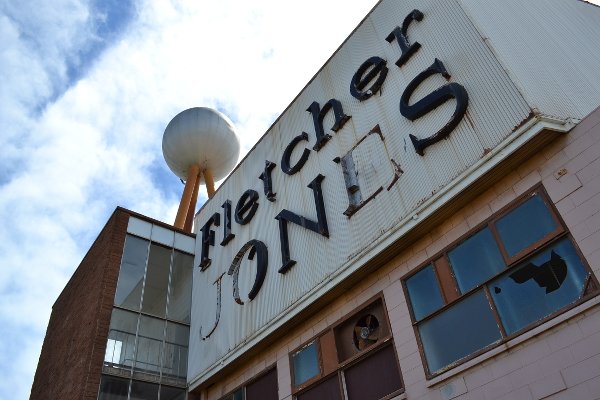
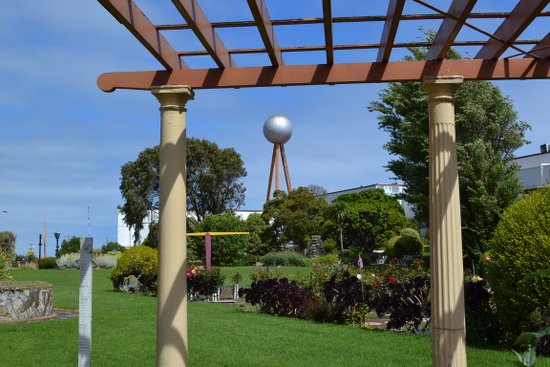
Unlike Flagstaff Hill, which was built in the 1970s as a pseudo-colonial tourist attraction popular in that era, the Fletcher Jones factory, silver ball water tower and spectacular gardens have occupied a special place in the hearts and minds of the people of Warrnambool for almost 70 years.

Sir Fletcher Jones was one of our greatest philanthropists and Pleasant Hill was his special gift to the city; a gift that, I am certain, he thought would remain in perpetuity.

But if he were alive to see the site today, his heart would break.

That’s because Pleasant Hill is being ‘preserved’ in the way that Warrnambool seems to do best: coat a run-down heritage property with complex planning conditions, wait for a cashed-up developer to buy the site and then watch as they slowly go broke – or lose interest – because of these same conditions, and, in the final act, see the neglected site bulldozed or burnt down in a mysterious fire.


fletcher-gardens_39
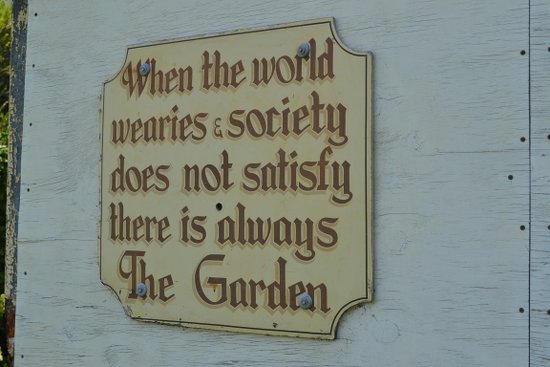
Some Fletcher Jones wisdom: if he could see his vision today, his heart would break.


We have seen this happen in recent years with the Criterion Hotel, the Grand Hotel, and the ill-fated cottage at 94 Merri St*, yet we still haven’t learnt that the only way to save our icons is to work together: for government bodies (including Heritage Victoria and the Warrnambool City Council), developers and the community to have a clear vision of what should happen with a site as precious as Pleasant Hill and to be prepared to share the cost of its preservation to make sure that it is, in fact, preserved.

And Pleasant Hill is precious because, unlike Flagstaff Hill, the Fletcher Jones story is our story.

As much as we would like to claim the sea-shanty tales captured in Flagstaff Hill as our own, Warrnambool was primarily a place of industry, farming and commerce.

The whaling story belongs to Portland and Port Fairy. The Loch Ard Gorge story belongs to Port Campbell and the entire shipwreck mythology is one that has been built around ships that, for the most part, were passing by Warrnambool on their way to somewhere else.

Hence we don’t have locals sharing tales of their sea-faring great grandfathers, but instead we talk about the Woollen Mill, Swintons, Crammond and Dicksons, Nestles, the cordial makers, millers and brewers, the dairy farmers, potato growers, butchers, bakers and bullock drivers and, of course, Fletcher Jones.


fletcher-gardens_40
The Fletcher Jones story is our story: generations have grown up under the ‘Silver Ball’.


This is why there is a disconnect between Flagstaff Hill and the local community who, it seems, have stopped visiting or who don’t visit nearly enough.

And tourist numbers are also falling. I suspect one problem is that reconstructed, theme-park style villages have lost their lustre, despite the valiant efforts of the many volunteers involved.

In the face of fading popularity, a review is being held into the future of Flagstaff Hill, with warnings that it could cost between $13-15 million to redevelop.

I have a better idea: close it down.


fletcher-gardens_29
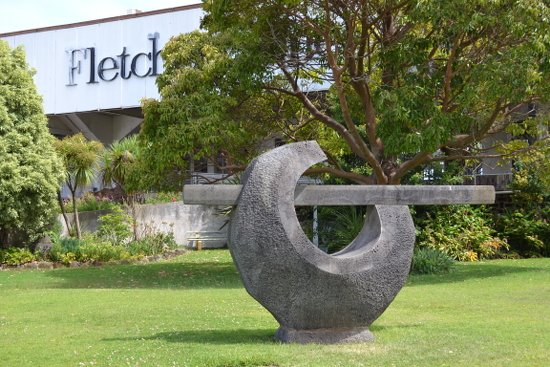
This tribute to Fletcher Jones by Robert Ulmann sets the scene for what could be a magnificent sculpture garden.


The cold-shower moment is to accept that Flagstaff Hill has had its day and will only continue to chew up funds as it recreates itself to fit changing tourism tastes.

The site could be returned to open space and the $13-15 million directed toward restoring and preserving Pleasant Hill, but as what? The suggestions so far include – god forbid – more housing, retail, offices, or even an aged care facility. How boring.

What about this: transform Pleasant Hill into a combined Warrnambool Art Gallery and Museum. Given FJ’s support for the arts, it is a perfect fit.

The already-squeezed art gallery in Timor St could be relocated and stretch out, including into the gardens that would become an outdoor sculpture park.

The best of the Flagstaff Hill collection could be housed in the museum, which would also include a tribute to Fletcher Jones and artefacts from the factory (much of which, unbelievably, ended up in skip bins before being retrieved by art students).


fletcher-gardens_31
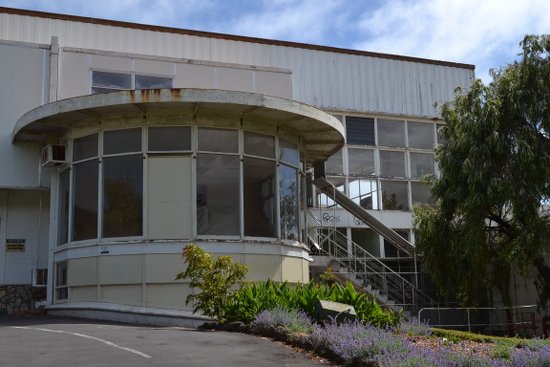
A table for two please: the ‘Round room’ could be converted into a restaurant or cafe.


The Tourist Information Centre would fit nicely, and the ‘Round Room’ – once part of the FJ canteen – would be perfect as a restaurant/cafe called Fletcher’s. The silver ball can just remain the silver ball: restored and shining.

There is more than ample – and completely unused – parking in the Raglan Parade median strip and a pedestrian overpass would solve the issue of crossing a busy highway.

It will take money, it will take vision and it will take commitment, but in 20 years time, which do you think will have the more enduring appeal: a “recreated” maritime village where people are strolling around in gingham caps and hooped dresses, or a dynamic art gallery and museum housed in one of our most iconic buildings?

We don’t need a crystal ball to predict the outcome: just a silver one.

*The Warrnambool Planning and Heritage Group wrote a report 18 months ago that warned Fletcher Jones faces the same fate as 94 Merri St, which was right across the road from Flagstaff Hill, unless action was taken now. The Warrnambool City Council’s response to the group’s 15 recommendations was tabled at its meeting last Monday: see pp 181-185 of agenda 9/12/13.  Or you can see a summary here.