Changing lives, one story at a time: celebrating Jess Chatfield

Carol Altmann – The Terrier

Tonight is an exciting night, because this old terrier gets to showcase the very first work by a new, young storyteller, Jess Chatfield, from the Framlingham Aboriginal community.

Jess is a proud Gunditjmara woman, part of the Maar nation, who grew up at Framlingham about 20kms north east of Warrnambool, and has since returned to live there with her own two children and her extended family.

Jess is the recipient of The Terrier digital indigenous storytelling mentorship, a project made possible thanks to the Judith Neilson Institute for Journalism and Ideas – a national philanthropic fund based in Sydney which, quite frankly, is breathing life into independent, regional journalism in Australia.

Thanks to the support of JNI, I was able to bring Jess together with arguably our best local videographer, Colleen Hughson, from First Ladies Productions, who creates strong, visual stories that empower people and their communities.

As readers of The Terrier know, Colleen’s work has been a game changer in creating local awareness and energy around how we treat our beautiful beaches.

Jess, I have since learned, has that very same fire in her belly that drives storytellers who hope to make a difference, however small, and to inspire their community to find their voice.
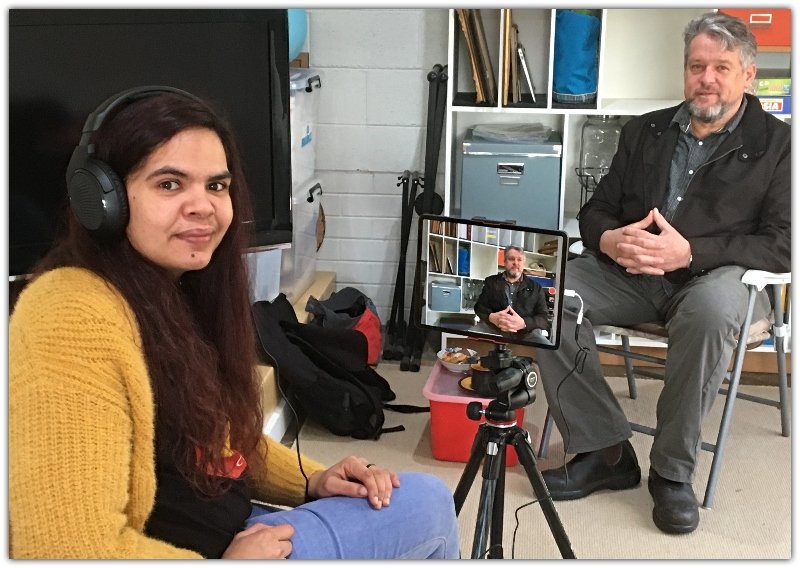
The beginning: Jess Chatfield in the first days of the mentorship, interviewing Geoff Rollinson from Save the Hopkins River- Stop the Quarry.

In these past months, our best laid plans for this mentorship – like those of the entire world – were knocked sideways by Covid-19.

We had planned to start in March, using space kindly offered by Brophy Family and Youth Services in Warrnambool, until the shutdown hit with full force.

We eventually started in June, from a room at the back of my house that was hastily converted into “an office”, complete with a curious Scottish Terrier pup peering through the door.

A plague. Lockdowns. Zoom. Masks. Social distancing. Floods.

How on earth a journalism mentorship could even get off the ground in such a climate is beyond me, but our little trio has pressed on and we have made it work.

This first video is based on Jess’s own family, and the story of her mother, Louise, an inspiring woman, a true matriarch, for whom family is everything.

It’s also a story about the importance of Country, the power of the magnificent Hopkins River, the connection to the Framlingham bush, and the safety and security of “home”.
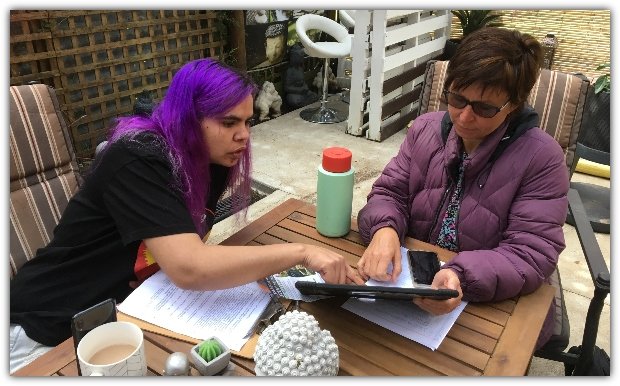
A change of hair colour and a change of location: Jess Chatfield editing with Colleen Hughson at Jess’s home in Framlingham.

Under Colleen’s guidance, Jess has planned, shot and edited every piece of Leenyaar. Warran Pookar. Thookay. (Grandmother. River. Children.)

In so doing, Jess has moved from knowing very little about digital media storytelling, to creating a finished work under the most trying of conditions.

Her second project is now well underway: a narrative of Jess becoming involved in the fight to stop a bluestone quarry near the Hopkins River, not far from the Framlingham forest.
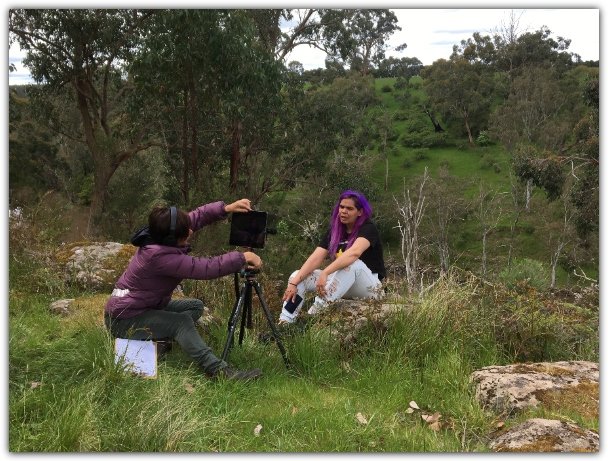
On location: Colleen Hughson and Jess Chatfield setting up a shot in the Framlingham forest, overlooking the Hopkins River.

I asked Jess to write some words that I could send to JNI about this whole experience and this is part of what she wrote:

“Since doing this mentorship, I have developed a love for journalism, I love all the different ways of it.

“I have learnt how to use an Ipad (properly). I also learnt how to plan before I make a documentary, I have learnt the importance of the message you get across to your audience…”

And then this wonderful kicker:

“I have been thinking after my mentorship I would love to continue my love for journalism by doing a diploma next year at Deakin University.

“I have found my passion in life.”

Jess is a natural storyteller and I want to say thankyou to Jess, and her family, for sharing so many of these stories with Colleen and I as we bumped along the backroads of Fram.

On we go, Jess, on we go.

This project has been supported by the Judith Neilson Institute for Journalism and Ideas.
Racehorses: respecting Country and a crucial council vote

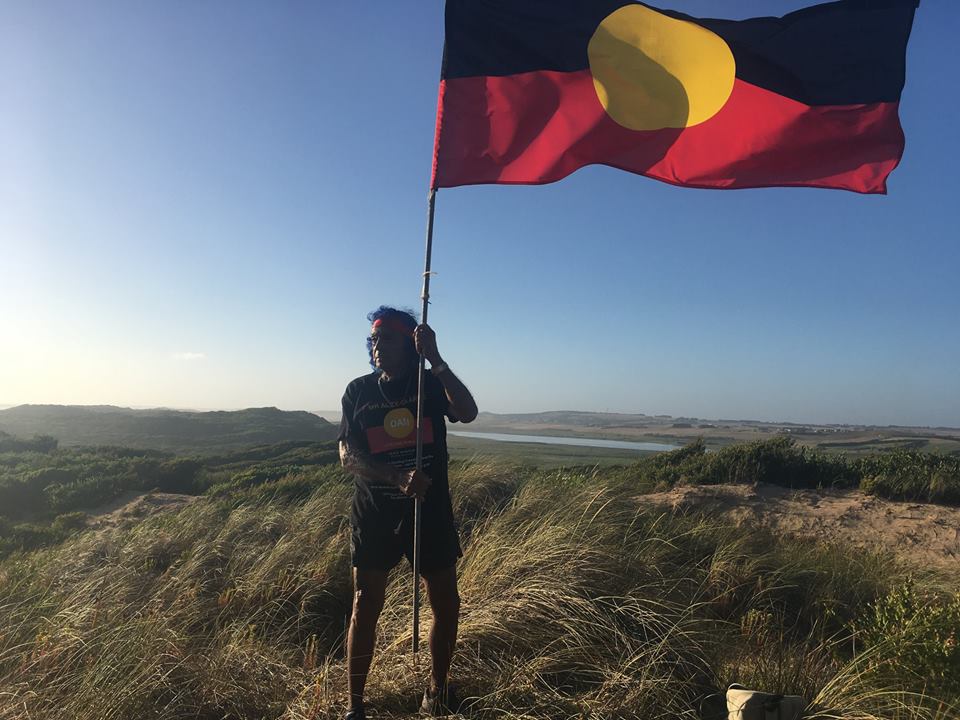
Uncle Alby Clarke is among the traditional owners who are fighting to stop large-scale racehorse training on the Tarerer coast (Levy’s Beach). Image: Shane Howard.

Carol Altmann – The Terrier

The push to allow large-scale racehorse training at Levy’s Beach will return to the Warrnambool City Council again next Monday night (3/2) for a crucial vote that goes far beyond horse racing.

It is, instead, a line in the sand: a time to decide whether Warrnambool is prepared to step into a new way of thinking – a bold Warrnambool – or to remain stuck in the past, as an old Warrnambool.

On the surface, the seven councillors will effectively be asked again whether they support or reject large numbers of racehorses – up to 120 a day on the beach and 40 on a dune – being able to train in the coastal reserve at Levy’s Beach/Spookies Beach all year-round. (This would be in addition to training at Lady Bay for nine months of the year.)

But this vote is also a test of whether, in 2020, we, as a city, are prepared to continue to ignore the wishes of the traditional custodians, the Eastern Maar peoples, for whom the coast around Levy’s is known as Tarerer.

I find it incomprehensible that the council would even consider such a move when traditional custodians are against it, as was first made clear when the consultation process began more than two years ago.

We are all living on Aboriginal land and yet we still find this concept discomforting, rather than a privilege.

Indeed one of the arguments used by Racing Victoria is that horse training on Warrnambool’s beaches goes back to the 1800s – and this is supposed to be a persuasive argument – yet the indigenous connection to this coast stretches back at least 60,000 years and possibly 120,000 years.

Think about that for one second.


Despite this incredible history, it is the European connection through racehorses, a mere speck of sand by comparison, that is held up as evidence of a rich tradition, a deep heritage and a right of passage.

How demeaning this is to the traditional custodians; how gutting.

Like so much of south-west Victoria, Warrnambool has a shocking history around the treatment of indigenous peoples and the destruction of an ancient culture, none of which we learnt about at school, and which contributed to local, white kids like me growing up with a fear and suspicion of Aboriginal people.

I knew nothing until I was old enough to read this history for myself and to learn about the full impact of dispossession and discrimination.

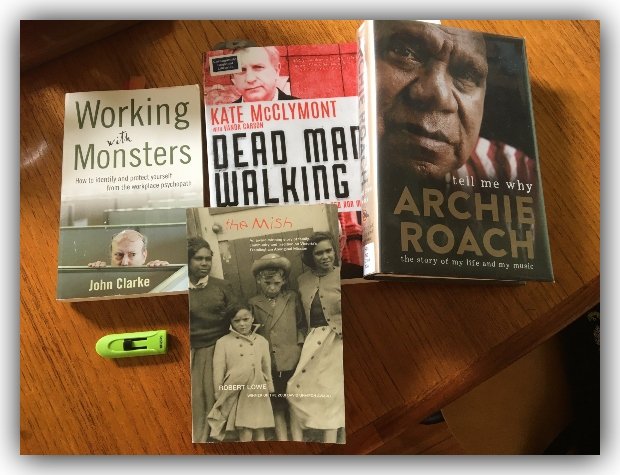
Part of the summer reading list included unforgettable books by Archie Roach and Robbie Lowe Snr.

I am still reading. Over the Christmas holidays I devoured Archie Roach’s magnificent autobiography, Tell Me Why, and Robbie Lowe Snr’s book, The Mish, which spoke of a Warrnambool where I grew up, but barely recognised, because as a middle-class, white kid, I had no idea how life was for those living in Framlingham, just 20kms from Warrnambool, but as far away from my daily life as Mars.

We can no longer use the excuse of ignorance and say that we don’t know, or don’t understand, the indigenous connections to Country.

Times are changing.


Indeed our council includes a Welcome to Country at civic events, and a smoking ceremony at its Australia Day function, and takes great pride in paying its respects to indigenous elders (“past and present”) at the start of each council meeting.

How can our councillors accept all of the above, yet fail to listen to the elders trying to protect and restore a precious slice of Tarerer coast that, even under council laws, is classed as a coastal reserve?

It’s not enough to fly the Aboriginal flag outside the council chambers in Liebig St, or to have a striking Adnate mural of Bernice Clarke and Rylan Miller on the side of South-West TAFE.

These are all important, symbolic gestures that make us feel good, but unless we are prepared to change our thinking around our decision-making, that is all they will be: symbolic.


The Eastern Maar have been fighting to be heard and surely now is the time to listen and to act or we will remain stuck under the heavy shadow of colonialism that has burdened Warrnambool for so long.

Monday night will be a critical test of where we stand as a city and where we are headed, and I, for one, am not going to miss it.

The meeting is at the WCC chambers, 25 Liebig St, starting at 5.45pm.

This article is part of an ongoing series supported by the Walkley Foundation, including funding Freedom of Information applications and other research tools.

If you would like to support the Terrier, you can throw something in the tip jar below. 

The Tip Jar


A quiet hero who flies like an eagle

julie eagles alice ugle

[dropcap style=”font-size: 60px; color: #DC943C;”] T [/dropcap]wo very inspiring and uplifting things have happened around Warrnambool in the past few weeks and a woman by the name of Julie Eagles has been at the centre of both.

Julie, pictured left, with Alice Ugle, was one of the key organisers of the hugely successful 150th anniversary celebrations of the Framlingham Aboriginal Reserve that last month saw hundreds of people enjoy a day of Koori culture, history and pride in a community that is only 30km from Warrnambool, but which many people had never visited before.

The anniversary event changed all that and Julie, together with Alice and the rest of the organising team, artists, musicians, volunteers and supporters, created something very special that people are still talking about – and hope is repeated, if perhaps on a smaller scale.

Running alongside the Framlingham event has been Julie’s ongoing volunteer work as a community campaigner to save Warrnambool’s heritage, including the Fletcher Jones silver ball and the best of the former factory site.

[dropcap style=”color: #dc943c;”] J [/dropcap]ulie, as part of the Warrnambool Planning and Heritage Group and more recently the Save the Silverball and Fletcher Jones Gardens group, has lobbied for more than two years to see positive steps taken toward saving this site and, last week, it was finally sold to a developer who, it appears, is sympathetic to its heritage.

At the very least, Julie has been pivotal in ensuring the heritage aspects of the FJ site are now front and centre of the public discussion and many eyes are watching to see what unfolds: quite an achievement after 10 years of buck-passing over the landmark.

To be an agitator in a regional city is not easy, but Julie manages to educate, motivate and empower people toward taking a stand by stating the simple facts and offering alternative ideas.

For this, and her sheer determination to keep fighting, she is our Quiet Hero.

[box] Julie will receive a coffee and cake voucher from Rocksalt, Port Fairy, and we have another coffee and cake voucher for Alice Ugle from The Pavilion, Warrnambool. Thankyou to Rocksalt (Bronwyn and Sarah) and The Pavilion (Mary-Ellen and Jon) for supporting our quiet heroes.[/box]

Pavilion-Inverse-smallRocksalt-hero


[box type=”bio”] If you know somebody who you think is deserving of a Quiet Hero, please email us at editor@bluestonemagazine.com.au[/box]

[button link=”http://the-terrier.com.au/subscribe-2/” type=”icon” icon=”heart” newwindow=”yes”] Did you enjoy this story? Please subscribe here to help Bluestone thrive.[/button]

newsletter Why Not Stones  Meet our other Quiet Heroes…


Warrnambool’s own Laverne and Shirley

Giving voice to the Portland community: Hilary Endacott

Helping mend broken family ties: Jenny Fawcett

Lost history finds loyal following: Lost Warrnambool

Australia Day awards – did we forget someone? Vicki Jellie

Oh Possum, you’re a hero in the heat: Nalini Scarfe