Mini FJ’s silver ball to shine again

fj small ball
The mini Silver Ball as it was in 2005 when the multi-media installation was unveiled at the back of the Fletcher Jones factory in Warrnambool. (Image supplied by Brenda O’Connor).

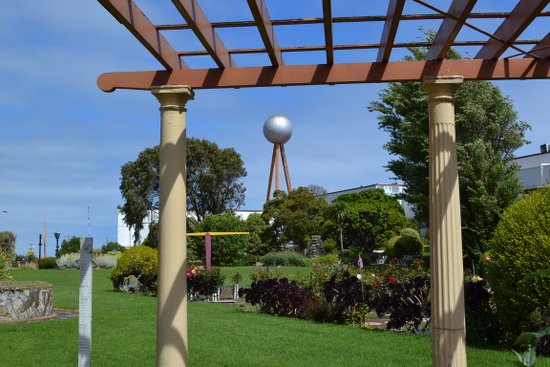
[dropcap style=”font-size: 60px; color:#A02F2F;”] A [/dropcap] miniature, but otherwise almost perfect replica of the iconic Fletcher Jones Silver Ball in Warrnambool is poised to be brought out of storage and re-assembled for the first time in almost nine years.

The three-metre tall replica was built in 2005 as part of an interactive art project managed by the Melbourne-based arts company, Experimenta, and funded through a $34,000 grant from the then Bracks State Government.

Experimenta worked over three months with local artists, community groups and young film makers to create the silver ball installation, which was unveiled during a weekend event staged at the back of the Fletcher Jones factory, off Lava St.

At that time, three flaps on the side of the ball dropped down to reveal television sets (of the old-fashioned, big-bummed variety) that broadcast a series of short films made by the young film makers about the Fletcher Jones story and site.


fletcher-ball_5
The keeper of the sphere: Murray Adams with the deconstructed ball in a farm shed at Wangoom.

[dropcap style=”font-size: 60px; color: #A02F2F;”] T [/dropcap]he ball has not been seen in public since and is now stored in a farm shed at Wangoom under the watchful eye of artist, machine operator and welder Murray “Muzz” Adams who was one of the artists involved in its creation. The other artists included Tamara Sharp, Kate Gage, Carolyn Rundell and Nathan Nicholson.

“It is a fully engineered piece of work with a fibreglass skin fitted over a steel framework,” Murray explained.

Just like the real Silver Ball water tower, the miniature version was built to withstand Warrnambool’s famous winds (up to 90kph, at least) and the three orange, steel legs form a sturdy tripod inside the sphere to ensure it will never topple off its perch and roll away.

“It really is quite durable and can take a bit of a beating,” Murray said.

Plans are afoot to re-assemble the ball, which is currently detached from its legs and base, for the F-Project Cinema’s Silver Ball Screening Project scheduled for early May.

“We are planning to locate it at the back of the post office, in the carpark end of Ozone Walk,” said F-Project President Emma Charlton.

fletcher-ball_10
One of the three flaps on the ball that opened to reveal a television on which local films about Fletcher Jones were screened.

[dropcap style=”font-size: 60px; color:#A02F2F”] T [/dropcap]he replica ball will again be used to screen films made by locals, although the obsolete TV sets will be replaced by more modern technology. It is also hoped to revive an another part of the original installation, which saw a person either pedal a bicycle or operate a manual sewing machine to provide power for the flaps to open and reveal the screens.

“We won’t know what is to be screened in the ball until (the films) are submitted at the end of March, but we’re also thinking of reviving the films which were initially made as a part of this previous project,” Emma said.

The theme of the Silver Ball Screening Festival is ‘Keeping the ball in the air’ and has already inspired some quirky interpretations.

Some of the ideas, Emma said, included animated bugs collecting the silver ball, a documentary about social services in Warrnambool (therefore keeping the metaphorical ball in the air), and a narrative including the water tower tumbling down Lava St in an Indiana Jones-style action film (god forbid!).

[box type=”bio”] The Silver Ball Screening Project on May 9-10 is part of the Hidden Histories Laneway Festival, and is supported by the F Project, Regional Arts Victoria, Warrnambool City Council and Warrnambool Art Gallery. Bluestone Magazine is part of a grassroots movement to save the best of the Fletcher Jones factory site and gardens from being lost through neglect. You can read more about the campaign here and join the Facebook group here.[/box]
newsletter Eat And Drink Stones You might also enjoy…


Dynamic duo step out on their own: Glenn Morgan & Barry Tate

Fabrication: Flaunting Fletcher

Close Flagstaff Hill; save Fletcher Jones

Who will step up for Fletcher Jones?

Art auction to support Peter’s Project


Fletcher Jones recommendations:

fletcher7

THE WARRNAMBOOL PLANNING AND HERITAGE GROUP:

[dropcap style=”font-size: 60px; color: #DC943C;”] R [/dropcap]ecommendations to council:


i) Council and Heritage Victoria to conduct a survey of the Fletcher Jones site in Warrnambool to consider the current condition and integrity of its state heritage listed aspects. The survey should re-examine what remains of the most significant aspects of the site to the local community and to the state. We would like to see Heritage Victoria and Council take a proactive role with the owner (present or future) to find a solution for renewal of this site and a way to share the stories attached to this site. Examples of best practice and processes for renewal of similar sites could be used to inspire recommendations for options and incentives to ensure it has a viable, vibrant future.

ii). Council and Heritage Victoria to provide funds for a current structural assessment of the Fletcher Jones water tower (locally called the Silver Ball) with a view to determining a schedule of repair and maintenance works (and their cost) to ensure this state heritage listed structure is safe and viable for the next 50 years.

iii). Council and Heritage Victoria work with the Jones family to develop a social history project that tells the Fletcher Jones story and connection in Warrnambool.

The Warrnambool City Council’s response (as listed 9/12/13):

[dropcap style=”font-size: 60px; color: #DC943C;”] A [/dropcap] number of buildings and features within the site are listed on the Victorian Heritage Register (VHR) as significant.

Council is interested in working with the current landowner, or any future landowner, to ensure that significant elements of the site are properly protected and managed. Council is also interested in ensuring that any future redevelopment of the site involves renewal and moves away from its historical manufacturing past.

A structural assessment of the former water tower (silver ball) was undertaken in 2004. The assessment identified rectification works including replacement of hold down bolts on the south-western column, and removal of ladder and water pipe. The assessment also recommended a painting program to protect the tower from further corrosion.

In 2010, the bolts were replaced, and the water pipe and ladder were removed. It is unknown whether the painting program has been implemented.

Council officers will continue to work with the current landowner, or any future landowner, with a view to update the 2004 structural report and identify any further matters that may need addressing.

The former Fletcher Jones factory is clearly of social significance to Warrnambool and the State of Victoria. There will many people within the community who have strong links to this site. It is becoming increasingly important that these stories are captured and shared.

Council officers will investigate funding opportunities to undertake a social history of the site (involving the Jones Family, former factory workers and members of the community). These stories will assist in the preservation of important elements of the site and in any future redevelopment of the site.

* * *


The Save Fletcher Jones campaign


[dropcap style=”font-size: 60px; color: #A5CECD;”] B [/dropcap]luestone Magazine is part of a growing grassroots campaign to save the best of the iconic Fletcher Jones site in Warrnambool from being lost through neglect.

The site is rapidly deteriorating and yet there is still no firm plan in place to preserve what has been deemed a place of state significance. It is also an important part of Warrnambool’s social history and holds a special place in our hearts.

Shortly after we wrote two opinion pieces on this issue, two people – Julie Eagles and Tonia Wilcox – started a Facebook page for those who wish to see the gardens, the silver ball and other important parts of the site saved. An enormous number of people are sharing their memories and images on this page, some of which we have collated for our youtube clip.

[box] You can join the Save the Silver Ball and Fletcher Jones Gardens group by clicking here.[/box]

You can also read our latest opinion pieces about the Fletcher Jones site below:

Close Flagstaff Hill; save Fletcher Jones
Who will step up for Fletcher Jones?


fletcher-gardens_40


The Warrnambool Planning and Heritage Group wrote a report 18 months ago that warned Fletcher Jones faced the same fate as the demolished 94 Merri St, which dated back to the earliest days of Warrnambool in the mid 1800s, unless action was taken now. The Warrnambool City Council’s response to the group’s 15 recommendations was tabled at its 9 December 2013 meeting (see a summary here).

For more information you can also read the Heritage Victoria statement of significance on why the site is important and which parts have been listed for protection.

[box] If you are passionate about the future of the Fletcher Jones site, as we are, please take a moment to read the latest and to get involved. Bluestone Magazine will have regular updates as the campaign unfolds.[/box]


Who will step up for Fletcher Jones?

fletcherjones
Sir Fletcher Jones: a man who helped to put Warrnambool on the map, but whose most visual legacy is being destroyed by neglect.

Analysis – Carol Altmann

In December last year, we first published an opinion piece about the future of the iconic Fletcher Jones Pleasant Hill site in Warrnambool that questions why it is being left to rot as our civic leaders stand by and, it seems, wait for a white knight to show up and make a decision about its future.

At the same time, we also questioned why the Flagstaff Hill Maritime Village – having been invented as a tourist village in the 1970s – continued to be a priority in terms of concern about its future and its funding, despite its flagging popularity.

We suggested closing Flagstaff Hill and creating a combined Warrnambool Art Gallery and Museum (with a strong maritime history presence) at Pleasant Hill.

Whether people agreed with this idea or not, the piece has been our most popular story.

It had more than 1600 page views and almost 500 people shared it on Facebook. We received almost 40 comments on our site and the same amount again on our Facebook page. Almost two months after it was first published, it is still attracting attention.

Fletcher Jones matters to Warrnambool and to Warrnambool people. This message is being sent loud and clear, but I doubt that it is being heard by the people that can actually determine its future.

napthine2
Will Premier and local Member Denis Napthine step up for Fletcher Jones? Has he even been asked? (Image: www.portnews.com.au)

After writing this piece, I sought out a copy of an extensive review into the Fletcher Jones site that was commissioned by the Warrnambool City Council in 2002: that is 12 years ago.

At that time, the council spent what was no doubt a considerable chunk of your money ($10,000? $15,000?) to hire an international consultancy firm Sinclair, Knight, Metz (SKM) to conduct a fulsome investigation into the Pleasant Hill site. SKM spoke to anyone and everyone. They held focus groups and they set up a steering committee made up of existing and former staff, members of the community and council.

And at the end of all this talking and consulting and investigating, SKM wrote a 100-page report with the not very gripping title of “Investigation into future economic opportunities for the Fletcher Jones site” that was presented to the Warrnambool City Council on July 8, 2003.

A copy of this report is now kept under lock and key, literally, at the Warrnambool City Library where a cheerful librarian retrieved it for me and I had the sense that I was the first person to ask for it in a very, very long time.

neoh1
Will Mayor Michael Neoh or Councillors Rob Askew, Kylie Gaston, Jacinta Ermacora, Peter Sycopoulis, Peter Hulin or Brian Kelson step up? Image: ABC.

 
The report outlines a number of potential recommendations for the future use of the FJ site – for retail, housing, aged care – and also suggested the council, who owned the site at the time, to sell it to a willing private developer. This did not mean, however, that the council simply walk away.

Instead, SKM made a key recommendation that there be “continuous consultation and communication between the council, developers and the community” about the site’s future.

The council sold the site in 2005.

And it walked away.

It has been more than a decade since this report was commissioned and the council has done nothing concrete to ensure the preservation of this site. There has certainly been no “continuous communication” about its future.

The council’s apathy is shameful.

All of that time, all of that energy and all of that money – and for what?

Pleasant Hill is recognised by Heritage Victoria as having historical, social and aesthetic significance to the state. So perhaps the state should be contributing to its upkeep?

If so, why isn’t the council lobbying Premier Denis Napthine for this to happen? The Premier is our local MPwhat better opportunity and access could you ask for? But has anybody from the council even asked for state support? I don’t think so.

The Standard editor Steve Kelly. (Image: TheCitizen.org.au)
What about the The Standard and its editor Steve Kelly? Will the paper step up? (Image: TheCitizen.org.au)

And what is our local daily newspaper, The Warrnambool Standard, doing to take up the cause? From what I can see, nothing.

In the middle of last year, the editor of The Standard, Steve Kelly, told a forum here in Warrnambool that he believed print was “still king” in the regions and that his paper firmly set the agenda for this city and that other media outlets (the ABC, regional TV) followed.

“Do we have an absolute monopoly on setting the agenda in this district? Well, my answer to that would be ‘Yes’.  I think the radio station follows our lead. I think to a large extent [the ABC] follows our lead and I think to a large extent [WIN TV] follows our lead,” Mr Kelly is quoted as saying.

Surely it is time, then, for The Standard to take the lead – to set the agenda – on saving Fletcher Jones.

As a new, still growing forum, Bluestone Magazine can only do so much and we are thrilled to have reignited the conversation, but it takes more than conversation: it takes pressure, and it takes action.

Who, I wonder, will step up for Fletcher Jones?

If we care about the Fletcher Jones site, and I believe we do, then we need to make our leaders accountable and ensure it is preserved before all we have are memories, vintage postcards and a dusty report under lock and key to remind us of our failure.

[Since this piece was written, a grassroots supporters group has started to try and save the most important parts of this site. You can join the Save the Silver Ball and Fletcher Jones Gardens group on Facebook here. Read more about the FJ site here.]

fletcher-gardens_26
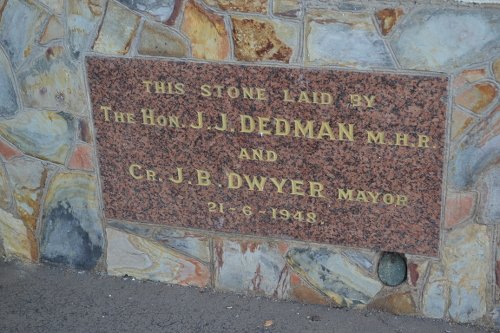
Friends in high places: it was a different story of support when Fletcher Jones opened at Pleasant Hill in 1948.


Close Flagstaff Hill; save Fletcher Jones

fletcher-gardens_21
Our history: while all hands are on deck to revive the recreated village of Flagstaff Hill, the authentic Pleasant Hill is slowly rotting away.

Analysis – Carol Altmann

It is supremely ironic that so much time and effort is being devoted to reviving the flagging Flagstaff Hill Maritime Museum, when a critical slice of our authentic history is being left to rot.

Unlike Flagstaff Hill, which was built in the 1970s as a pseudo-colonial tourist attraction popular in that era, the Fletcher Jones factory, silver ball water tower and spectacular gardens have occupied a special place in the hearts and minds of the people of Warrnambool for almost 70 years.

Sir Fletcher Jones was one of our greatest philanthropists and Pleasant Hill was his special gift to the city; a gift that, I am certain, he thought would remain in perpetuity.

But if he were alive to see the site today, his heart would break.

That’s because Pleasant Hill is being ‘preserved’ in the way that Warrnambool seems to do best: coat a run-down heritage property with complex planning conditions, wait for a cashed-up developer to buy the site and then watch as they slowly go broke – or lose interest – because of these same conditions, and, in the final act, see the neglected site bulldozed or burnt down in a mysterious fire.


fletcher-gardens_39
Some Fletcher Jones wisdom: if he could see his vision today, his heart would break.


We have seen this happen in recent years with the Criterion Hotel, the Grand Hotel, and the ill-fated cottage at 94 Merri St*, yet we still haven’t learnt that the only way to save our icons is to work together: for government bodies (including Heritage Victoria and the Warrnambool City Council), developers and the community to have a clear vision of what should happen with a site as precious as Pleasant Hill and to be prepared to share the cost of its preservation to make sure that it is, in fact, preserved.

And Pleasant Hill is precious because, unlike Flagstaff Hill, the Fletcher Jones story is our story.

As much as we would like to claim the sea-shanty tales captured in Flagstaff Hill as our own, Warrnambool was primarily a place of industry, farming and commerce.

The whaling story belongs to Portland and Port Fairy. The Loch Ard Gorge story belongs to Port Campbell and the entire shipwreck mythology is one that has been built around ships that, for the most part, were passing by Warrnambool on their way to somewhere else.

Hence we don’t have locals sharing tales of their sea-faring great grandfathers, but instead we talk about the Woollen Mill, Swintons, Crammond and Dicksons, Nestles, the cordial makers, millers and brewers, the dairy farmers, potato growers, butchers, bakers and bullock drivers and, of course, Fletcher Jones.


fletcher-gardens_40
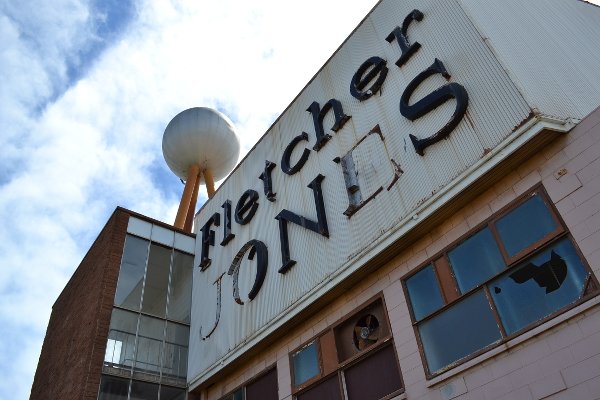
The Fletcher Jones story is our story: generations have grown up under the ‘Silver Ball’.


This is why there is a disconnect between Flagstaff Hill and the local community who, it seems, have stopped visiting or who don’t visit nearly enough.

And tourist numbers are also falling. I suspect one problem is that reconstructed, theme-park style villages have lost their lustre, despite the valiant efforts of the many volunteers involved.

In the face of fading popularity, a review is being held into the future of Flagstaff Hill, with warnings that it could cost between $13-15 million to redevelop.

I have a better idea: close it down.


fletcher-gardens_29
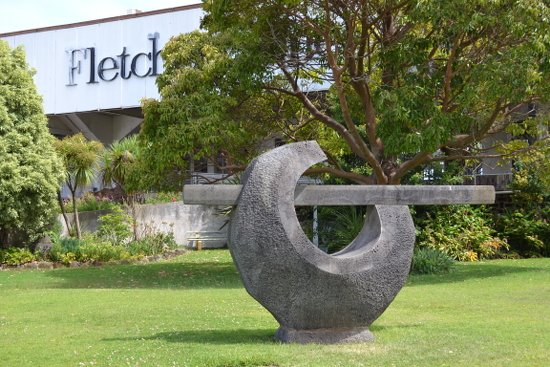
This tribute to Fletcher Jones by Robert Ulmann sets the scene for what could be a magnificent sculpture garden.


The cold-shower moment is to accept that Flagstaff Hill has had its day and will only continue to chew up funds as it recreates itself to fit changing tourism tastes.

The site could be returned to open space and the $13-15 million directed toward restoring and preserving Pleasant Hill, but as what? The suggestions so far include – god forbid – more housing, retail, offices, or even an aged care facility. How boring.

What about this: transform Pleasant Hill into a combined Warrnambool Art Gallery and Museum. Given FJ’s support for the arts, it is a perfect fit.

The already-squeezed art gallery in Timor St could be relocated and stretch out, including into the gardens that would become an outdoor sculpture park.

The best of the Flagstaff Hill collection could be housed in the museum, which would also include a tribute to Fletcher Jones and artefacts from the factory (much of which, unbelievably, ended up in skip bins before being retrieved by art students).


fletcher-gardens_31
A table for two please: the ‘Round room’ could be converted into a restaurant or cafe.


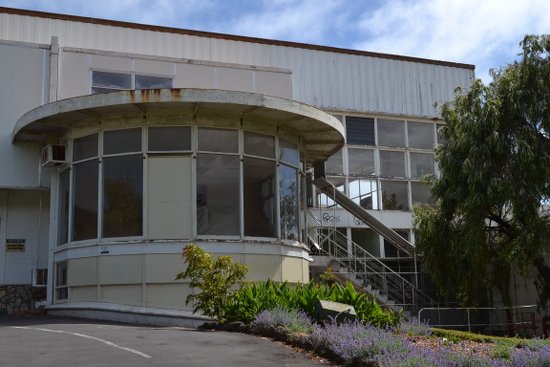
The Tourist Information Centre would fit nicely, and the ‘Round Room’ – once part of the FJ canteen – would be perfect as a restaurant/cafe called Fletcher’s. The silver ball can just remain the silver ball: restored and shining.

There is more than ample – and completely unused – parking in the Raglan Parade median strip and a pedestrian overpass would solve the issue of crossing a busy highway.

It will take money, it will take vision and it will take commitment, but in 20 years time, which do you think will have the more enduring appeal: a “recreated” maritime village where people are strolling around in gingham caps and hooped dresses, or a dynamic art gallery and museum housed in one of our most iconic buildings?

We don’t need a crystal ball to predict the outcome: just a silver one.

*The Warrnambool Planning and Heritage Group wrote a report 18 months ago that warned Fletcher Jones faces the same fate as 94 Merri St, which was right across the road from Flagstaff Hill, unless action was taken now. The Warrnambool City Council’s response to the group’s 15 recommendations was tabled at its meeting last Monday: see pp 181-185 of agenda 9/12/13.  Or you can see a summary here.