Montgomery tipped to buy Glenormiston

glenormiston
The historic Glenormiston Homestead, built in 1847, is believed to have been sold to the owner of the Fletcher Jones site, Dean Montgomery. Image: Heritage Victoria.

A BLUESTONE EXCLUSIVE:

Words by Carol Altmann

The owner of the former Fletcher Jones factory in Warrnambool, Dean Montgomery, is expected to be announced shortly as the new owner of the former Glenormiston Agricultural College.

Bluestone Magazine has learned that Mr Montgomery is the frontrunner to take over the 300ha college site and historic Glenormiston Homestead, near Terang, which has been vacant for two years following the departure of TAFE.

The site has since been under caretaker control of the State Government, which earlier this year launched an Expression of Interest process to try and find a new owner.

Previous attempts by the former Coalition Government to secure a new tenant fell over in 2014 and it was also unable to find a buyer for the site.

The Andrews Labor Government, however, is expected to announce shortly that Mr Montgomery, who is based in China, is the successful buyer following an extensive negotiation process. Mr Montgomery could not be reached for comment.

prenzel
A detail of the exquisite staircase panels carved by Robert Prenzel that are expected to be included in the sale. Image: Weekly Times.

Bluestone has been told that the sale is expected to include the multi-million dollar wooden staircase carved by colonial woodcarver and cabinet maker Robert Prenzel for the original owners of the homestead, the Black family, in 1909.

Wealthy pastoralist Niel Black built the five-bedroom mansion in 1847 and the Black family owned the property until 1949 when it sold it to the State Government for use as an agricultural college, although Glenormiston Agriculture College did not start until 22 years later.

The 35 Prenzel wooden panels along the staircase had been the subject of some dispute over just who owned them, having been removed by the Black family and donated to Melbourne University, which later returned them to the property and included them in the transfer to TAFE in 2005.

The homestead is considered of architectural and historical significance to Victoria because of its design, but also its reflection of how south-west Victoria was colonised.

Heritage Victoria makes the point that, prior to Niel Black arriving at the site, it was the scene of an aboriginal massacre and “as on many other Western District estates, violence towards aborigines was used to consolidate the property”.

“Glenormiston’s origins, thus, are intimately bound up with the violence that accompanied the early expansion of the Western District frontier in the 19th century,” its Victorian Heritage Database listing says.

dean-montgomery2
The owner of the former Fletcher Jones factory, Dean Montgomery, is expected to be announced as the new owner of the Glenormiston College site. Image: Bluestone Magazine.

The expected purchase of Glenormiston College is one of several prominent property purchases by Mr Montgomery in the recent years.

The Geelong-born businessman bought the former Fletcher Jones site in Warrnambool in 2014 with a view to establishing the Warrnambool Motor Museum that is now under construction. He has also purchased the T&G building in Geelong, the Leura Hotel in Camperdown and the historic Motang homestead on Hopkins Point Road, Warrnambool.

At this point we can’t confirm what the Glenormiston College site will be used for under Mr Montgomery’s ownership, although the State Government had stipulated in the EOI process that at least part of it continue to be used for education and training.

Stones Smile newsletterMore good stuff:


Tightening the tap on council leaks

A $4 million Loch Ard peacock, but who has the key?

Fun4Kids costs $450k but provides no report

Trees, transparency and truth

The big shed schemozzle: we follow the money

Wilma Wright, FOI and more


Fascinating images from FJ archive

[box]We would like to thank Warrnambool artist Glenn Morgan for sharing these extraordinary images of the Fletcher Jones’ story with Bluestone Magazine. The images, given to Glenn by the late David Jones, capture the FJ manufacturing story from the early 1900s through to the 1980s. Here follows just a sample from the dozens of images provided to Glenn. You can return to that story here.[/box]

Opening 3
Sea views: The grand opening of the Fletcher Jones factory at Warrnambool in 1948.

Between Mt Gambier and Penola 1923
Just begging to be interpreted by Glenn Morgan: Fletcher Jones on the road between Mt Gambier and Penola 1923.

join-us2

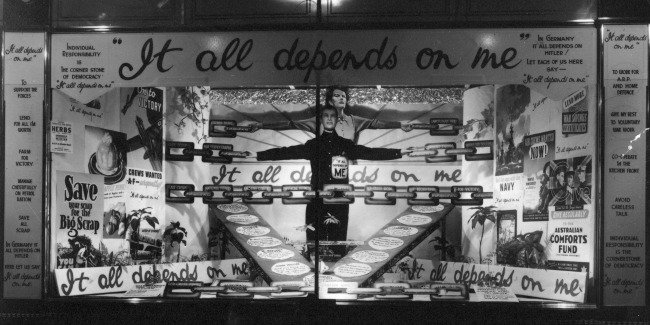
WW 2 Window III
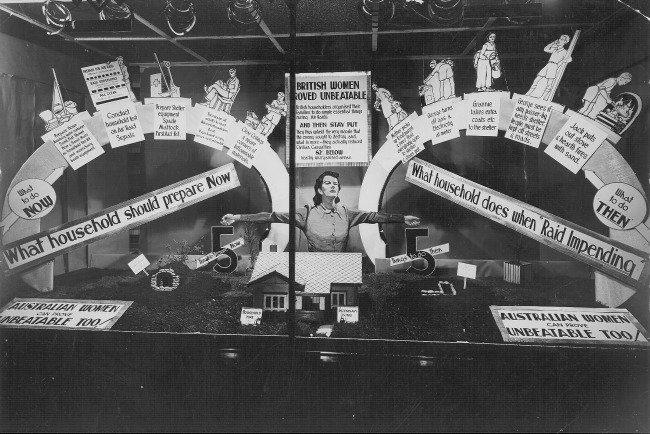
A classic World War II window display in the Fletcher Jones Man’s Shop.

Truck 1920
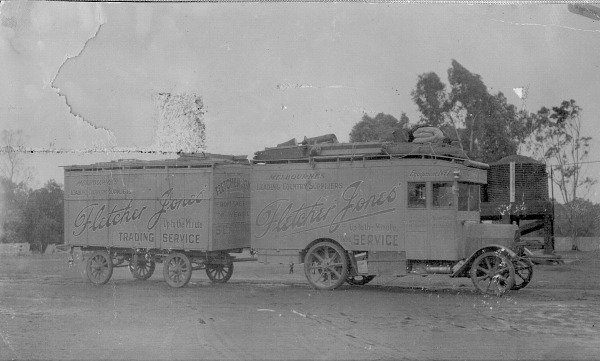
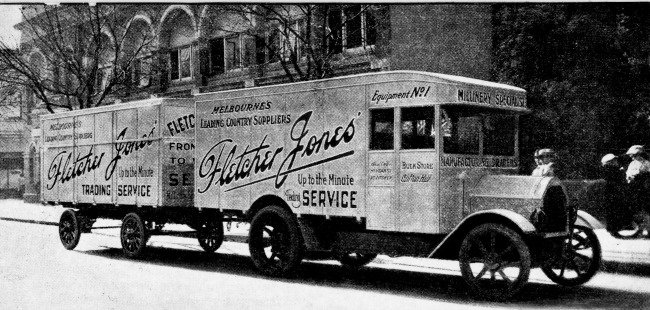
On the road in 1920: Fletcher Jones began his clothing empire as a travelling salesman.

Parade 30s - 2
Scenes from a Fletcher Jones fashion parade in Warrnambool in the 1930s.

Trade Exhibition
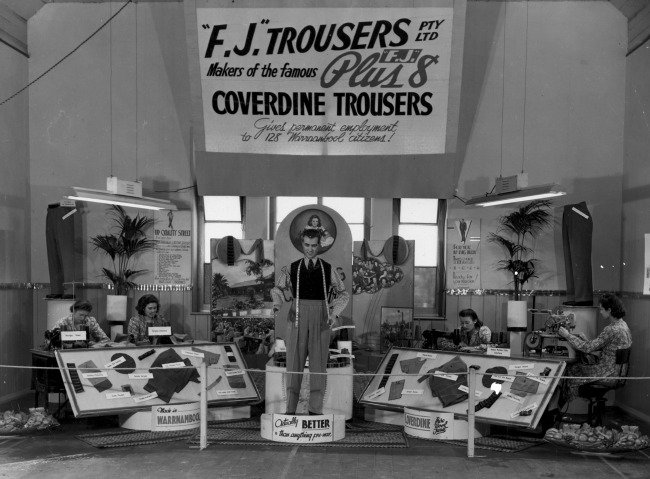
The Fletcher Jones display at a Melbourne trade exhibition: and the models are real!

B ball Team 1946
The Fletcher Jones basketball team in 1946. Do you recognise any of these faces? If so, Glenn Morgan would love to know!

Garden 1954
Smaller than today, but radiant. The Fletcher Jones factory and gardens at Pleasant Hill in 1954.

WW2 window
Another ‘call to action’ window display in the Fletcher Jones Man’s Shop during World War 2.

Jan 1960 - 2
Mad Men eat your heart out: an advertising image from Fletcher Jones in the 1960.

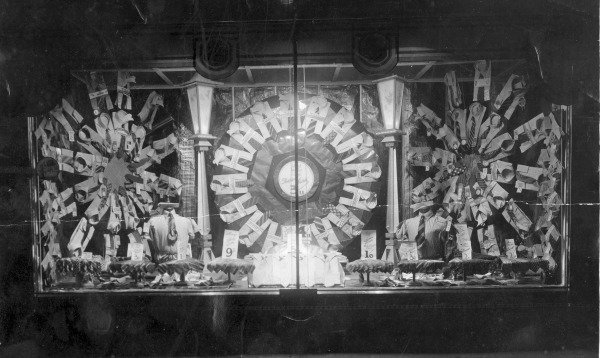
Window - 6
What you can do with a well presented shirt…or several. The window displays in the Man’s Shop were as memorable as the clothing itself.

B Ball Premiers 45
Premiers: The Fletcher Jones basketball team took the crown in 1945. Do you know any of these faces?

Window - 4
Pure style. A striking display of men’s evening wear at the Man’s Shop.

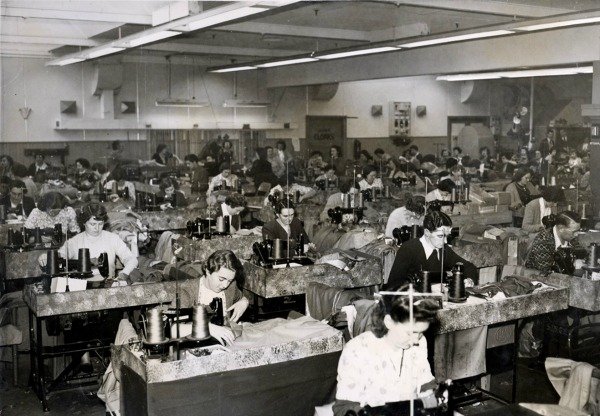
Main Sewing Room
Heads down in the main sewing room at the newly opened Fletcher Jones factory, Pleasant Hill, in the late 1940s.

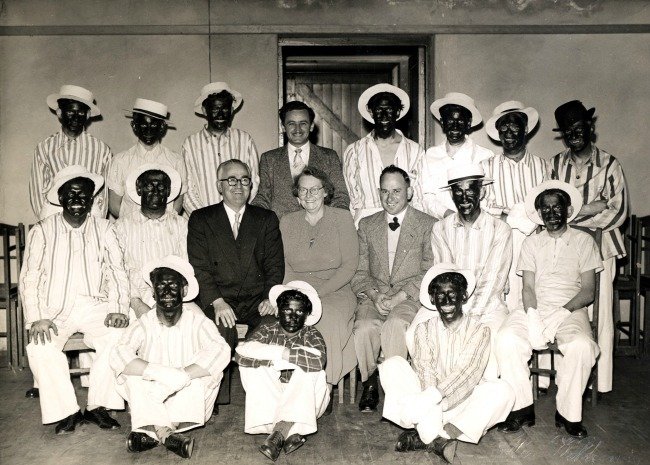
Minstrel Party 50s
Minstrel parties were quite common in the 1950s – Fletcher and Rena Jones are pictured in the centre of this staff photo from 1950.

Jack Grayson - Wbool Shop
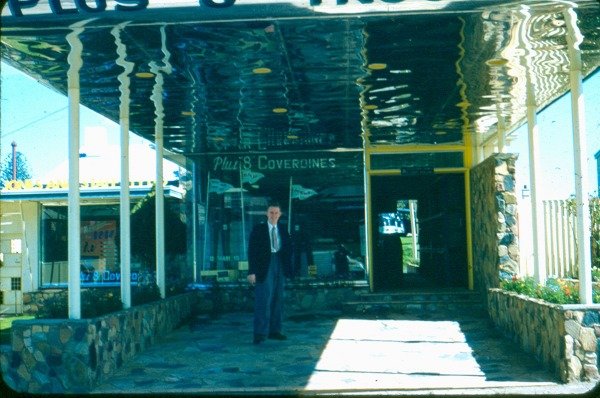
A man identified as Jack Grayson outside the former Fletcher Jones shop on Raglan Parade, Warrnambool. The stylish shop unfortunately no longer exists.

MC room 1948
Young migrants were among the earliest workers at the Fletcher Jones factory after it opened in 1948.

Xmas Part 1950 II
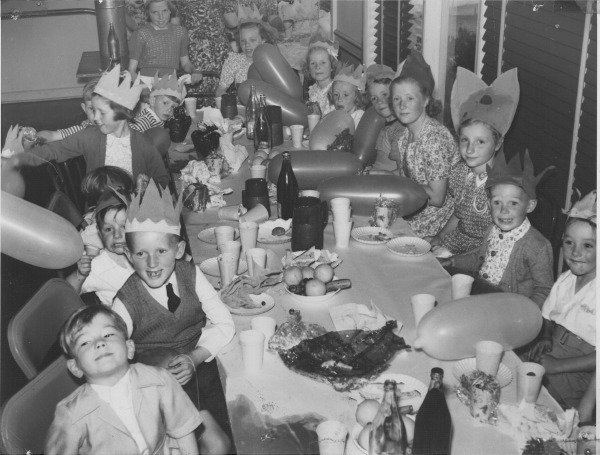
The annual Fletcher Jones’ Christmas party became legendary: here is a snap from the 1950 event. Do you recognise any of these faces? Most would now be aged in their 60s and 70s.

jones gardens
Picture perfect: the Fletcher Jones gardens, factory and silver ball looking at their best in the early 1970s. The ball is 50 years old next year.

[box]If you can help identify any of the people in these photos, please drop a comment in the comments box below and we can pass the information on to Glenn. [/box]


Rare Fletcher Jones images inspire top artist

[printfriendly]

MC room 1948
Just one of the wonderful images: Workers in the main sewing room at the then-newly opened Fletcher Jones factory at Pleasant Hill, Warrnambool, in 1948.

By Carol Altmann

[dropcap style=”font-size: 60px; color: #A02F2F;”] A[/dropcap] treasure trove of rare images capturing the lifespan of the Fletcher Jones story is poised to be the focus of a series of artworks by noted Warrnambool artist, Glenn Morgan.

More than 100 images are contained on three CDs given to Glenn by the late David Jones – son of Sir Fletcher – about eight years ago when the pair were sitting on the Warrnambool Art Gallery Advisory Board.

join us2

“I’d made a couple of pieces around the Fletcher Jones theme and so David turns up with these three discs of images that he said I could have, so I put them to one side thinking I would take a proper look one day,” Glenn explains.

[box]Subscribers can access more images from this extraordinary archive here.[/box]

“I have always been interested in doing a sculpture reflecting the Fletcher Jones’ floats in the Florado festival (an annual Warrnambool street festival that started in the late 1950s) and so I started browsing the images on the discs and thought, bloody hell, there is some good stuff in here!”

Parade 30s - 2
“A dash of Cold War spy”: a Fletcher Jones’ fashion parade in the 1930s, possibly staged at the Warrnambool Town Hall?

[dropcap style=”font-size: 60px; color: #A02F2F;”]G[/dropcap]lenn is not exaggerating.

The photographs provide a literal snapshot of the growth and the hey-day of the Fletcher Jones story, from Sir Fletcher’s humble beginnings as a hawker, to the beginning of the last great years of the Pleasant Hill factory the late 1980s.

There are images of window displays, fashion parades, staff parties, the legendary Christmas picnics, the construction and opening of the Pleasant Hill site, family shots, staff shots, FJ sports teams, samples of early advertising and some of the many social and community causes that the Jones’ family supported.

“There is some really interesting stuff and it takes in not only Warrnambool, but Fletcher Jones in Adelaide, in Hobart, in Collins St,” Glenn says.

“The more you delve into it, the story just gets richer and richer.”

B ball Team 1946
The Fletcher Jones basketball team from 1946. Do you recognise any of these faces? If so, let us know in the comments box below.

[dropcap style=”font-size: 60px; color: #A02F2F;”]G[/dropcap]lenn has already started to seek private and public funding to build a new body of work from a series of images he has selected from the 100-plus.

“I would, ideally, like to spend a couple of years just working purely on this project – an FJ project – leading up to an exhibition at the factory itself, and then touring to Melbourne and Sydney,” he says.

“Funding, of course, is always the issue but I am applying for grants as we speak and hope to get some funding on board.”

glenn_morgan
Artist Glenn Morgan, known for his quirky sculptures, hopes to produce a body of work around the rare Fletcher Jones images.

The art project would also sit alongside the ongoing Fletcher Jones community storytelling project, coordinated by Julie Eagles, and the archiving of the Fletcher Jones industrial story by Melbourne University Archives, led by Melinda Barrie.

“It is such a great story, a very Warrnambool story, and I would love to be able to tell a part of it,” Glenn says.

Glenn and fellow artists Barry Tate and Jenny Altmann all run individual art classes at the former Fletcher Jones factory, with Jenny and Barry recently launching the Outlaw Gallery in the same space.

[box]Read our earlier profile on Glenn Morgan here.[/box]

newsletter Eat And Drink StonesYou might also enjoy…


Rare images of the FJ silver ball

Uncovered: Rena Jones’ lovely letter to the people

W’bool losing its character brick by brick

Montgomery buys a slice of ‘Motang’ history


Uncovered: Rena Jones’ lovely letter to the people

rena jones truck
Rena Ellen Jones, wife of the late Sir Fletcher Jones, was a major support to Sir Fletcher as he slowly built his clothing and drapery business from the ground up, including learning how to drive the delivery truck. Image courtesy of The FJ Foundation.

By Carol Altmann

[dropcap style=”font-size: 60px; color: #A02F2F;”] A[/dropcap] little hidden gem has emerged from amid the thousands of items donated to the Melbourne University Archives by the family of the late Sir Fletcher Jones.

MUV archivist Melinda Barrie went searching among the substantial collection for evidence of the contents of a time capsule that is believed to have been installed in the Fletcher Jones factory at Pleasant Hill, Warrnambool, some time after it was officially opened in 1948.

fj invitation2
The official invitation to the opening of the FJ Trouser Unit at Pleasant Hill, Flaxman St, Warrnambool on June 21, 1948. Image reference: 2012.0031 Fletcher Jones Collection, Melbourne University Archives.

What Melinda found was a letter from the late Rena Jones, wife of Sir Fletcher, that she no doubt drafted and re-drafted and then tapped out on a typewriter, to be placed behind the foundation stone of the Pleasant Hill factory.

The letter, which was possibly accompanied by a series of photographs, was intended to capture a little of the ethics, spirit and philosophy of Sir Fletcher and his family as they slowly built their business from the humblest of beginnings.

join us2


What Rena didn’t know at that time, of course, was just how successful the Fletcher Jones company would become, how many people it would go on to employ in Warrnambool, Mt Gambier and Melbourne – and how strong the connection remains to Warrnambool through the revival of the Fletcher Jones site and the ongoing collection of personal stories about the site.

rena jones letter - smaller
The letter penned by the late Rena Jones, wife of Sir Fletcher Jones, and placed behind the foundation stone of the Fletcher Jones factory and gardens when they opened on June 21, 1948. Image courtesy of the Melbourne University Archives.

Here is the letter in full:

To those who follow:

‘This has been written by Rena Ellen Jones, the wife of David Fletcher Jones, to be placed behind the foundation stone of this building, June 21st, 1948.

This is written, feeling that some members of future generations succeeding us may be interested in these brief details and photographs of the life and work of my husband.

David Fletcher Jones, the son of Samuel Henry Jones and Mahala Jones (nee Johns), was born at Golden Square, Bendigo, on August 14, 1895, was a member of a family of seven children, and deprived of education beyond the age of 13 1/2 years.

His first calling was that of a tomato grower, until he enlisted in the 1914-18 war, where he served as an Infantryman. Being invalided home in 1917, he changed his profession to that of a soft goods merchant, with a two-horse waggon (sic). This enterprise led to that of a travelling draper. Photographs of the hawker’s wagon and other vehicles used until 18 months after we were married and settled in Warrnambool in 1923 are included in this history.

Mr Jones’ then specialised in boys’ wear, ladies’ wear and mens’ wear. Three years later, he concentrated on mens’ wear and, at the time of writing, he has a staff of around 200 employees, and is Chairman of Directors of the Warrnambool Woollen Mill Co, and a director of Leviathan Ltd.

Anxious to make a contribution to “peace in industry”, he has made the Warrnambool shop, Melbourne shop and Trousers factory into staff co-operatives, limiting the shares of the family to 48%; 52% having been made available, on easy terms, to the staff.

At the time of writing, there is considerable unrest in the industry. Mr Jones is happily spending himself, endeavouring to evolve a system of sharing all profits with his employees and the consumers of the goods he manufactures and sells. Our three children, Ralph Fletcher, Lois Ellen and David Fletcher Jr, and myself have all happily agreed on this thing and are all anxious to see this world a better and happier place because this family has been privileged to do this work.

We are persuaded that God’s plan is perfect, and that if we only ask Him to guide, teach, manage and strengthen us, and help us to witness humbly, that all will be well.”

rena jones signature

[dropcap style=”font-size: 60px; color: #A02F2F;”] T[/dropcap]he MUV Fletcher Jones collection includes more than 3000 photographs and artefacts – including many from the Warrnambool factory in the 70s, 80s and 90s – all of which will be cleaned and then 300 selected for digitalisation.

“We are on track to get that project well and truly underway this year, to select and digitise the 300 items that best capture the story of Fletcher Jones,” Melinda said.

rena ellen jones
The late Rena Ellen Jones, who died in 1970 at the age of 76. Image courtesy of the FJ Foundation.

newsletter Eat And Drink StonesYou can read more Fletcher Jones related stories here…


Priceless Fletcher Jones that fits us all

Rare images of FJ silver ball

Fletcher Jones cross will light up again

The Silver Ball under the silver ball

Motor Museum to revive Fletcher Jones site


Priceless Fletcher Jones coat that fits us all

jack with coat
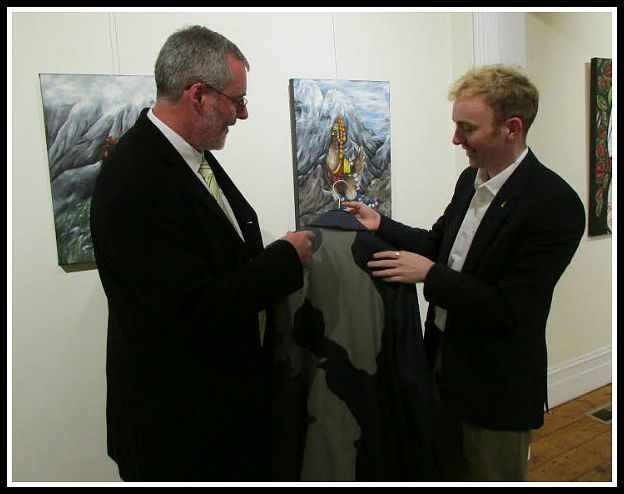
Designer Jack Hancock brings out his bespoke Fletcher Jones Memorial Coat as part of the fashion parade before the Fabrication II auction. Image: Kim Sargent-Wishart.

By Carol Altmann

[dropcap style=”font-size: 60px; color: #DC943C;”] M [/dropcap]oments of magic happen when they are least expected which is, of course, what makes them so special.

And such a moment happened Saturday night (19/9), under the stars, in the chilly breezeway next to The Artery, in Warrnambool, when a small group of people bought a coat for the community.

This was no ordinary coat.

Like all of the other items up for sale at the Fabrication II auction that night, the coat was made of unwanted offcuts of vintage Fletcher Jones fabrics that had been retrieved by members of the art collective, The F Project, after the Fletcher Jones factory closed.

subscribe button10

Except these offcuts were made of the finest cashmere and wool, designed and made in the United Kingdom exclusively for Fletcher Jones’ suiting when the company was at its heights and known for its clothing of enduring quality.

back of coat
The Merri and Hopkins rivers on the back of the coat: Image Jack Hancock.

[dropcap style=”font-size: 60px; color: #DC943C;”] Y [/dropcap]oung clothing designer Jack Hancock, who grew up in Warrnambool and is now finding his way in Melbourne, knew this fabric was special and the mere thought of it being destined for a dumpster made him almost weep.

Jack took these offcuts and created something exquisite: a single-button, double-breasted coat that fitted across the shoulders, but was deliberately “shapeless” across the hips so that it could be worn by either a man or a woman. The collar flipped up to reveal a splash of bright orange, a daring bolt of colour.

Turned, the back of the coat revealed an aerial view of the veins of Warrnambool – its waterways – the Merri and Hopkins rivers flowing toward the sea.

Each river was hand-sewn, stitch by gorgeous stitch, using silk thread.

This was a coat of fairytales, of fantasy and of Fletcher Jones.

[learn_more caption=”Read more about the coat here”] ….The internal structure of this wool/cashmere garment is supported by woven horsehair canvas, a traditional suiting canvas used to maintain form. Unlike contemporary suiting and coating construction, these breast plates were mounted against the wools by hand, using needle and thread. The lining is a combination of silk fabrics for the body and shirting for the sleeve. As part of my own process, I strive to maintain these traditional technqiues whilst experimenting with new themes. This coat could be worn casually on a day to day basis or kept as a special garment. It is intended to last for a long period of time and does not draw themes from fashion or trends. Investing in a coat like this could be likened to the purchase of a set of fine silver cutlery or a tea service of fine bone china. Both should be used and enjoyed, and with care, will one day be given to somebody else who will do the same. [/learn_more]

Jack, who is 24, stood nervously to the side, shifting from foot to foot, as he waited and waited and waited for his coat, the last item of the night, to go under the hammer. Would it sell?

young fj
A young Fletcher Jones in his days as a hawker. Image: Screen Australia.

[dropcap style=”font-size: 60px; color: #DC943C;”] A [/dropcap]t 24, Jack is one year older than Sir Fletcher was when he set out in a hawker’s van to sell his wares around Victoria, having been entranced by the world of the tailor.

“The first time I saw a tailor, tape around the neck, pin cushion clipped on his forearm, a chest full of tape and scissors and things, I was spellbound,” Sir Fletcher wrote in his memoir, Not by Myself.

To see Jack standing on the sidelines last night, doubting himself, wondering what would unfold, was to see a 2015 version of a young Fletcher Jones about to set forth on his destiny.

Auctioneer Gary Webb opened the bidding at $500. It then climbed to $800, $1000 and stalled, still below the reserve.

And then the magic happened.

coat
Roy Reekie, left, inspects the exquisite coat made by Jack that he helped purchase for the community. Image: Madeleine Peters.

[dropcap style=”font-size: 60px; color: #DC943C;”] W [/dropcap]arrnambool identity Roy Reekie, together with a bidder who would prefer to remain unnamed, and Bluestone Magazine, all decided there and then that this coat needed to be bought and it needed to be owned by the community.

The three of us all bid independently, but knowing we would all contribute to the final cost – $1400, $1500, $1800, $1900….$1995…sold!

And with the fall of the gavel Warrnambool now has a very special coat – the Fletcher Jones Memorial Coat – that personifies all that Sir Fletcher stood for: quality, care, community, endeavour and taking time.

Jack, it must be said, was shaking.

It is a coat that, both Jack and the buyers hope, will eventually be displayed at the former Fletcher Jones factory but, as Jack insists, in the meantime it “must be worn”.

And it will be worn.

But by whom? When, and where?

Wait and see.

[box]While Bluestone would love to say we made a major contribution to this coat, in reality we only made a small contribution. Roy Reekie and the other donor were the major contributors. The Fabrication II auction is a major fundraiser for The Artery and F Project.[/box]

[button link=”http://the-terrier.com.au/subscribe-2/” type=”icon” icon=”heart” newwindow=”yes”]Please click here to subscribe and support Bluestone Magazine.[/button]

newsletter Why Not StonesYou might also enjoy reading…

Fabrication II gives birth to new life: Delise Oldfield

No cutting corners: Jack Hancock joins Fabrication II

FJ studio proves to be a real plus: Danielle O’Brien

The twists and turns of textiles: Ruby Richardson