WA Museum rejects Abbott’s claims of lost items

Peter_Abbott
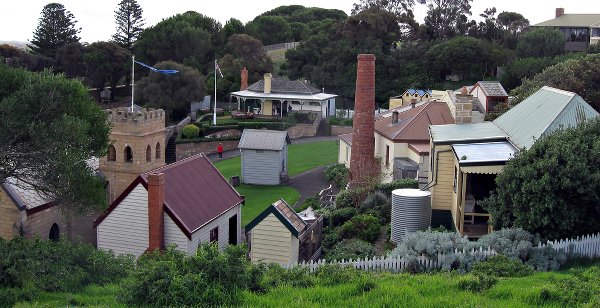
Flagstaff Hill Maritime Village director Peter Abbott, far right, has drawn the ire of the Western Australian Museum for incorrect claims he made about lost items from its collection. Image: Warrnambool City Council.

EXCLUSIVE – Carol Altmann

[dropcap style=”font-size: 60px; color: #DC943C;”] T [/dropcap]he Western Australian Museum has strongly rejected a claim by Flagstaff Hill Maritime Village director Peter Abbott that it could not locate more than 6600 items in its collection.

[box]See our update to this story here: WA Museum chief says claim came from “confusion”.[/box]

Mr Abbott made the claim in a January 10 letter to the Warrnambool Standard in which he used the Western Australian example to defend the fact that Flagstaff Hill cannot locate more than 130 items listed in its collection.

Mr Abbott wrote that museums around the world “go through random collection reviews” that often reveal items “have been moved or misplaced”.

“As an example…Western Australian Maritime Museum in 2009 found over 6680 (items) unaccounted for,” he wrote.

The Western Australian Museum covers six sites, including the WA Maritime Museum. Its chief executive officer, Alec Coles, tonight described the claim as simply erroneous.

“The Western Australian Museum rejects any suggestion that (it) could not locate more than 6680 items in 2009 or at any other time,” he said.

“The number is almost half of the Maritime History Department’s total collection, so any claim that WAMM could not locate more than 6680 items is clearly erroneous.”

wa museum

[dropcap style=”font-size: 60px; color: #DC943C;”] M [/dropcap]r Coles said the Maritime History Department had “occasionally found discrepancies involving three or four items as a result of loans or de-acquistions, or lists not being updated, but these issues have always been resolved”.

He also rejected Mr Abbott’s assertion that credible museums undertake “random collection reviews”.

“The Western Australian Museum does not conduct random collection reviews,” Mr Coles said.

“As a State Government agency, the Western Australian Museum is required to conduct regular audits of its collection for government reporting and accounting purposes and these are required to be approved by the office of the Auditor-General.

“The most recent of these was conducted last year.”

When asked where Mr Abbott may have found the information to make such a claim, Mr Coles said that was for Mr Abbott to explain.

“A thorough check of the WA records and with senior staff can’t find any source of the information that might have given rise to the claim,” he said.

[dropcap style=”font-size: 60px; color: #DC943C;”] M [/dropcap]r Cole’s comments come on the back of confirmation that Flagstaff Hill is under formal investigation by Heritage Victoria over the missing items from its collection and damage to relics from the wreck of the Loch Ard.

As recently reported in Bluestone Magazine, two of the 10 copper sheets from the Loch Ard (1878) that were loaned to Flagstaff Hill by the Federal Government have been cut.

The rejection of Mr Abbott’s claims also comes in light of a separate scandal, in which Mr Abbott was named by the local newspaper as the author of a string of anonymous comments made to its online forums. He often used the forums to make personal attacks against Warrnambool City councillors Cr Brian Kelson and Cr Peter Hulin.

Cr Hulin will move a motion of no confidence against CEO Bruce Anson at the first council meeting of the year on Monday (Feb 2), citing his handling of Mr Abbott’s behaviour as an example of why the Local Government Minister should be asked to intervene.

The same meeting will also discuss a proposed $3 million upgrade to Flagstaff Hill, which has suffered from a steady downturn in visitors in recent years.

[button link=”http://the-terrier.com.au/subscribe-2/” type=”icon” icon=”heart” newwindow=”yes”]Bluestone needs at least 500 subscribers in 2015. If you wish to support independent media, please click here to become one.[/button]

newsletter Why Not StonesYou might also enjoy…

Flagstaff Hill: a museum in transition, or a mess?

Are missing Loch Ard ingots the tip of the iceberg?

The changing landscape under Midfield Meats

Sucking the wind out of Portland’s sails

Granny’s Grave buried in bureaucracy

All words, no funding, for Fletcher Jones story


Are missing Loch Ard ingots the tip of the iceberg?

loch ard ingots_3
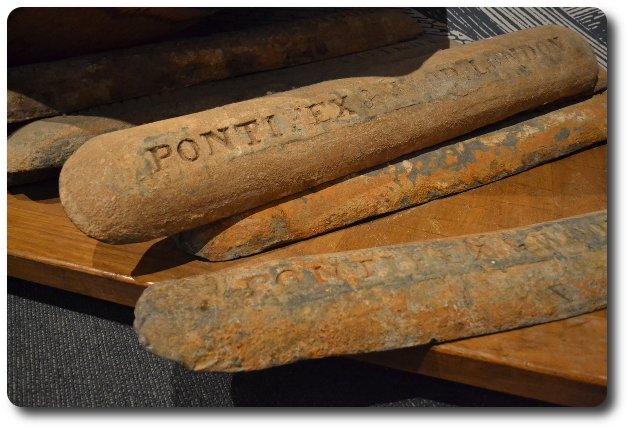
Ten of the original 872 lead ingot weights from the Loch Ard that were loaned to Flagstaff Hill by the Federal Government in 1984: more than 200 have since gone missing. Image: Bluestone Magazine


OPINION – Carol Altmann

[dropcap style=”font-size: 60px; color: #5C747D;”] H [/dropcap]ow did Warrnambool’s Flagstaff Hill Maritime Village lose track of more than 200 lead ingots that were part of the most famous shipwreck in Australia – the Loch Ard – given to it by the Federal Government for safe keeping?

This is a question that has the Warrnambool City Council scrambling for answers but – so far – the explanations have only raised even more questions about how the maritime collection has been managed and whether more irreplaceable items may have fallen through the gaps. (*Update: Flagstaff Hill has since confirmed more than 130 items are missing from its collection, including the Newfield bell from 1892.)

Cr Brian Kelson started asking about the location of all the Loch Ard (1878) ingots late last year and the information that has been provided since has been surprising, in terms of how loose the record keeping and storage has been around relics that should be considered precious.

In a written report to council at its December 1 meeting, the Flagstaff Hill advisory committee revealed that 872 lead ingots and 10 copper sheets from the Loch Ard were loaned to the village by the Federal Government in 1984.

They have a written agreement to prove it, but unfortunately it would be almost 30 years – yes, 30 years – before Flagstaff Hill did a full count of the ingots, each of which weighs around 60kg but, because of their French-stick shape, can be carried by two people.

That count was in 2012 and they could only find 728 of the 872, meaning 144 had somehow vanished, which is not surprising given there was no proper audit for almost three decades.

Some of the Loch Ard ingots stacked alongside the Flagstaff Hill lake.
Some of the Loch Ard ingots stacked alongside the lake at Flagstaff Hill in Warrnambool. Image: Bluestone Magazine

[dropcap style=”font-size: 60px; color: #5C747D;”] T [/dropcap]he advisory committee admits that this number – 728 – wasn’t cross-checked, but it was still added to the Flagstaff Hill database.

Another count was done in 2014 and could only locate 652 of the 728, meaning another 76 ingots were added to the already missing 144, bringing the total now missing to 220.

Oddly, however, Flagstaff Hill has brushed off the missing 144, saying it could have been an error in the original loan agreement, which I would say is unlikely, given it was an official government document that was dealing with maritime treasures. (Update: see former FHMV director Peter Ronald’s comment at the end of this piece, confirming the initial intake.)

There has also been no mention of the 10 copper sheets – does Flagstaff Hill still have them?

The copper sheets were listed as item no. 3078 on its public database – that was until last November, when the listing disappeared. (Update: the copper sheet listing has been reinstated, together with a copy of the federal loan agreement. You can see both here.)

The council’s focus has been narrowed to finding the 76 ingots missing from the 2012 count, and this is where things have become quite bizarre.

Flagstaff ingots_10
Some of the 286 ingots that are stored inside the Reginald M moored on the lake at Flagstaff Hill. Image: Bluestone Magazine

[dropcap style=”font-size: 60px; color: #5C747D;”] F [/dropcap]irst, at the same December 1 council meeting, council CEO Bruce Anson gave a verbal update to Cr Kelson in which he said that another count had been taken and 64 of the missing ingots had been found in a false floor of the Reginald M: one of two boats in the Flagstaff Hill lake.

A false floor? We took a look inside the Reginald M at the weekend and counted 286 ingots – the same number in the advisory committee report – and there were no signs of any ingots in a false floor (but, as an aside, plenty of signs of a rotting floor filling up with water).

Mr Anson went on to say that any remaining missing ingots were inside the hull of the nearby derelict Rowitta.

This reassurance was repeated in the local newspaper on December 23, although Flagstaff Hill manager Peter Abbott said it was too unsafe to actually count the ingots in the Rowitta, but his people could “peer in”.

Mr Abbott then revealed that some ingots could also be in the mud at the bottom of the lake, thrown there by night-time intruders. What? When did this happen and were police notified of a break-in at Flagstaff Hill?

More slivers of the puzzle came to light at the weekend when the local newspaper reported that some ingots were being used in Port Fairy while another, not necessarily from Flagstaff Hill, may have been sold at a local clearing sale.

A close-up of the Loch Ard ingots, each of which bear the maker's mark.
A close-up of the Loch Ard ingots, each of which bear the maker’s mark. These are among 10 on display in the Great Circle Gallery at Flagstaff Hill in Warrnambool. Image: Bluestone Magazine

[dropcap style=”font-size: 60px; color: #5C747D;”] S [/dropcap]o how many Loch Ard ingots have we actually got on display, in storage and in the mud at Flagstaff Hill?

I don’t know, I am lost, but I counted a total of 647 when I was there on Saturday.

To throw a final curve ball into the mix, the council’s director of city growth, Bill Millard, who sits on the Flagstaff Hill advisory committee, sent a memo to all councillors on December 10 saying that “the most recent count” identified the location of 802 ingots and he was “confident” that the ingot collection was intact.

Mr Millard may be confident, but the rest of us have a right to be utterly confused.

By any account, the audit of the Loch Ard ingots is an embarrassing mess caused by years of inaction to update the paper-based (yes, paper-based) collection system at Flagstaff Hill.

It is now being left to Peter Abbott – who, in what must be a vast role, is also head of council’s tourism services – and his team of largely volunteers to untangle it.

Perhaps most troubling, however, is how many more precious objects have “gone missing” from the thousands collected by or donated to Flagstaff Hill over the last 40 years?

There are already rumblings about items such as Newfield bell, which once hung in the Great Circle Gallery at Flagstaff Hill, but no longer even appears on its collection database.

While the analogy may be more suited to the Titanic  than the Loch Ard, I fear that the missing ingots may prove to be just the tip of the iceberg.

[button link=”http://the-terrier.com.au/subscribe-2/” type=”icon” icon=”heart” newwindow=”yes”]If you would like see Bluestone survive, please subscribe here for just $85 a year.[/button]

Stones Smile newsletterYou can find more Opinion here…


The changing landscape under Midfield Meats

Street artist secures W’bool mural project

Sucking the wind out of Portland’s sails

Granny’s Grave buried in bureaucracy

All words, no funding, for Fletcher Jones story


“Flaggy” at a $15 million crossroad

flagstaff-hill-8
Warrnambool’s Flagstaff Hill is at a crossroads and requires a long-term commitment of $15million to prosper. Image: letsgotravelaustralia.com

OPINION

With all the excitement around the sale of the Warrnambool Fletcher Jones site, important details on the future of another prominent site in the city – Flagstaff Hill Maritime Village – have slipped by virtually unnoticed.

But despite the distractions, we do need to talk about Flagstaff Hill – or “Flaggy” as it is called by those closest to the action – because unlike the FJ site, which was privately owned, this one is costing us money.

At the moment, the Warrnambool City Council is absorbing an annual deficit of around $500,000 for the 40-year-old Flagstaff Hill Maritime Museum due to falling visitor numbers that have tumbled from 80,000-plus a year to below 60,000. As I have written before, the village needs at least 80,000 visitors a year to break even.

While profit is not everything when it comes to community assets, something significant needs to be done to turn things around, or – it has now been confirmed – the site will cost the council (ie. ratepayers) almost $9 million in “losses” over the next 20 years.

It is crunch time and the crunch is that almost $15 million must be spent in the next three years on Flagstaff Hill to make any real difference to its future.

This is the conclusion reached by consultants, Coffey Sport and Leisure, who were paid $90,000 to prepare a masterplan that mapped out how to turn the site around and whose final report was recently made public.

flaghill-plan
The masterplan includes images of what a new interactive discovery centre might look like at Flagstaff Hill.

The masterplan set out a number of scenarios – from do nothing, which would eventually see the site close – through to an all bells-and-whistles affair that would cost almost $26 million.

The report ultimately recommended a middle ground that would cost $14.8 million over three years and, potentially, turn the site into a profitable venture by doubling the number of visitors over the next 20 years.

The “middle ground” plan includes broadening the whole theme of the centre to the Great Southern Ocean (which, to some extent, has already begun); building a new, sexy interactive discovery centre that captures the stories of the Great Southern Ocean (from indigenous history, to whales, to shipwrecks); upgrading the existing sound and light shows; giving free access to the colonial village; adding another cafe and introducing food/wine events; and linking the whole site up with Lake Pertobe and Cannon Hill.

To make it happen, the council would need to chip in 25% of the total cost – ie. around $4 million – and the remainder come from state and federal funds, which, given the harsh cuts within the last Federal Budget, would be difficult.

The most important point, however, is that the report makes it clear that this plan is the very least that is required if Flagstaff Hill is to remain relevant and viable.

In other words, unless we are able to find almost $15 million in combined ratepayer and taxpayer funds, we are pretty much wasting our time and delaying the inevitable.

flag-hillnew2
Another image from the masterplan report that shows how Flagstaff Hill might improve its displays which were described as “uninspiring and static”.

The council knows this, but it also knows that trying to find a spare million or two in its budget right now is almost impossible.

As a result, it recently agreed to contribute $500,000 in 2014-15, and another $500,000 the following financial year toward a $3 million upgrade of the very-dated Shipwrecked sound and laser night show, plus some other minor improvements. It hopes the state and federal governments will at least chip in another $2 million between them.

It is a Band-Aid on an oozing knee, but the council somewhat optimistically hopes that this will lift visitors to its night show by 30%.

I say optimistically, because sound and light shows were a big deal in 2002  – when Shipwrecked began – but people now have access to such technology in their own lounge rooms and will expect something pretty special.

Still, it is a start, but the conversation that still needs to be had is whether the community wishes to see up to $15 million spent on the site over the next three years.

dean montgomery
Cashed up private investors like Dean Montgomery, who recently bought the Fletcher Jones site, may prove critical to the long-term survival of Flagstaff Hill.

The council sought public feedback on the masterplan last year, and while the 145 people who responded said they wanted to see Flagstaff Hill continue, it is only now being laid out in black and white as to what funds will be required to make that happen in any robust way.

Indeed, the total cost of the long-term plan is rarely mentioned at all, but instead its is framed as a “staged development”. (There was certainly no mention of $14.8 million in the council’s most recent media release on the issue.)

There is also regular reference to the council seeking private investment for the site, in the hope that – once again – a cashed up white knight will come and save the day for Warrnambool.

Unfortunately a Dean Montgomery only comes along once in a blue moon and he has grabbed hold of the Fletcher Jones site where, unlike Flagstaff Hill, the conversation became very public, very frank and, ultimately, very productive.

So, do we spend $15 million on Flagstaff Hill in the next three years to turn its fortunes around, or not?

Over to you.


Flagstaff Hill in danger of missing the boat

flagstaff-hill-maritime-museum
What does the future hold for the Flagstaff Hill Maritime Village that turns 40 later this month?

OPINION

It’s two years since the Warrnambool City Council announced a review into the future of the Flagstaff Hill Maritime Village – which turns 40 later this month – but we are still none the wiser as to what its future holds.

The $90,000 masterplan, funded by the council and State Government, has resulted in a draft document that is yet to be released publicly and there is no indication as to when this will happen.

It is no secret that the colonial village and maritime museum is in trouble: it is struggling to find its place in a rapidly shifting world of tourism tastes that are vastly different to those of 1974 or even 1994.

The on-site accommodation at Flagstaff Hill has been popular, but overall visitor numbers have been falling and costing the council around $500,000 a year to meet the shortfall (a shortfall that would be much greater if it weren’t for volunteer staff).

Council CEO Bruce Anson recently told a media briefing that the village needs 80,000 visitors a year to break even, but is recording around 60,000: this is a lot of lost ground…and the competition is about to get a lot hotter.


comment-flagstaff
One of the images from the Shipwreck Coast Masterplan depicting what might be possible at Port Campbell or Peterborough.


I have written previously how I believe Flagstaff Hill has had its day and recreated colonial villages are out of step with the boom in eco-tourism, ‘experience’ tourism, and ‘indulgence’ tourism based around food, wine and luxury accommodation.

This is exactly the sort of tourism that is being talked about – and mapped out – just down the road under the dynamic Shipwreck Coast Masterplan.

I say dynamic, because while the Flagstaff Hill draft masterplan remains under wraps, the Shipwreck Coast Masterplan hit the ground running last year and will release its draft plan for public feedback in April.

The detailed Shipwreck Coast Masterplan is being developed by Parks Victoria, Tourism Victoria, the Moyne Shire Council and the Corangamite Shire Council and, last year, held a number of packed community forums to thrash out priorities and ideas.

Remarkably, the “Shipwreck Coast” at the centre of all this energy and excitement does not include Warrnambool – it is barely mentioned outside of the plan’s maps – and the Warrnambool City Council is not a formal partner.

Instead, the focus is firmly on managing and enhancing a 28km stretch of coast from Peterborough to Port Campbell and Princetown and the hinterland around these three towns, including places like Timboon and Simpson.

The WCC told me that its tourism manager, Peter Abbott, had provided input to the plan and would be speaking with Parks Victoria in coming weeks and that, overall, it supported any moves to improve the Great Ocean Road that would help bring tourists our way.

Despite this optimism that we will pick up tourists almost by default, when the masterplan does cast its eyes further afield, like in its suggestion of a first-class golfing circuit, it leap-frogs right over Warrnambool and suggests golfers visit Peterborough, Port Fairy and…Robe.


focus of plan
The portion of the Shipwreck Coast that is at the centre of a draft masterplan to be released next month.


This passing over of Warrnambool – which often happens when talking about the Great Ocean Road – is even more frustrating because of the potential for Warrnambool to be a hub of fine food, wine, eco-tourism and ‘experience’ tourism.

But let’s stick with Flagstaff Hill for the moment.

Aside from the focus and energy around Peterborough and Port Campbell in the Shipwreck Coast Masterplan, a potential knock-out blow for Flagstaff Hill is a proposed $100-$150 million interpretive and education centre at Loch Ard Gorge.

Such a centre would locate the Loch Ard story and a significant chunk of the shipwreck coast story at Loch Ard Gorge – there would be even less incentive to travel further down the coast to Warrnambool to see it recreated, hence the WCC has started to talk about Flagstaff Hill “telling the story of the Great Southern Ocean”, whatever that entails.

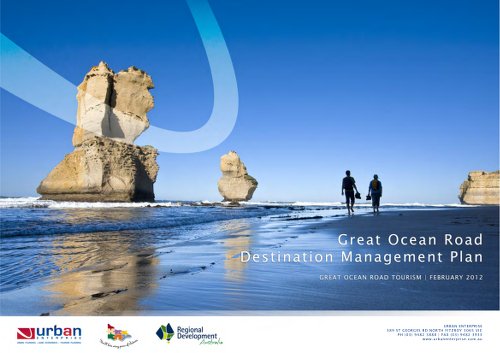
The idea of a first-class visitor centre at Loch Ard Gorge has been bubbling away since it was flagged in 2010. The Victorian Tourism Council listed it as a priority in 2011 and, in 2012, the Great Ocean Road Destination Management Plan (funded by the State and Federal Governments) gave it number one billing in its list of eight ‘game changer’ projects.


management plan


Parks Victoria told me last week that the centre remains a “proposal”, and perhaps we will know more when the Shipwreck Coast masterplan draft is released in April, but there is no doubt that improving visitor facilities at Loch Ard Gorge and the nearby 12 Apostles is a top priority at the highest levels.

Given the importance of the Great Ocean Road to national tourism, I would suggest it is not a matter of if the Loch Ard Gorge centre will be built, but when.

Flagstaff Hill is not naïve: it is aware of the threat from this potential development as one of many challenges it faces in trying to chart its new course against stiff winds of change.

Despite this, and despite Flagstaff Hill occupying one of Warrnambool’s most prominent locations, there is still no sense of urgency or real excitement about its future or how the site might look and operate in five, 10 or 15 years time.

If we want to remain a relevant and appealing part of the “Shipwreck Coast”, we need to start moving on Flagstaff Hill now and generate some of the same energy, excitement and forward thinking that is happening between Peterborough and Princetown.

To do otherwise is to risk missing the boat and watch Flagstaff Hill slowly sink into obscurity.

[Until last year, Warrnambool was the base for Shipwreck Coast Tourism, but this body has been wound up as part of a new Great Ocean Road Tourism Board that will cover Geelong to the SA border.]


Close Flagstaff Hill; save Fletcher Jones

fletcher-gardens_21
Our history: while all hands are on deck to revive the recreated village of Flagstaff Hill, the authentic Pleasant Hill is slowly rotting away.

Analysis – Carol Altmann

It is supremely ironic that so much time and effort is being devoted to reviving the flagging Flagstaff Hill Maritime Museum, when a critical slice of our authentic history is being left to rot.

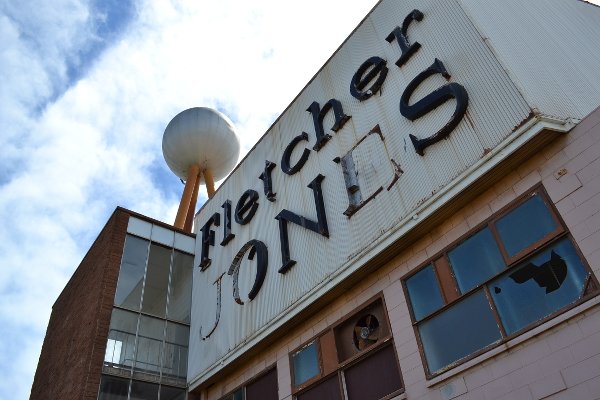
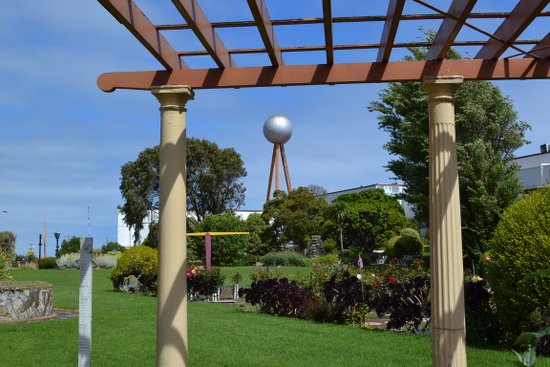
Unlike Flagstaff Hill, which was built in the 1970s as a pseudo-colonial tourist attraction popular in that era, the Fletcher Jones factory, silver ball water tower and spectacular gardens have occupied a special place in the hearts and minds of the people of Warrnambool for almost 70 years.

Sir Fletcher Jones was one of our greatest philanthropists and Pleasant Hill was his special gift to the city; a gift that, I am certain, he thought would remain in perpetuity.

But if he were alive to see the site today, his heart would break.

That’s because Pleasant Hill is being ‘preserved’ in the way that Warrnambool seems to do best: coat a run-down heritage property with complex planning conditions, wait for a cashed-up developer to buy the site and then watch as they slowly go broke – or lose interest – because of these same conditions, and, in the final act, see the neglected site bulldozed or burnt down in a mysterious fire.


fletcher-gardens_39
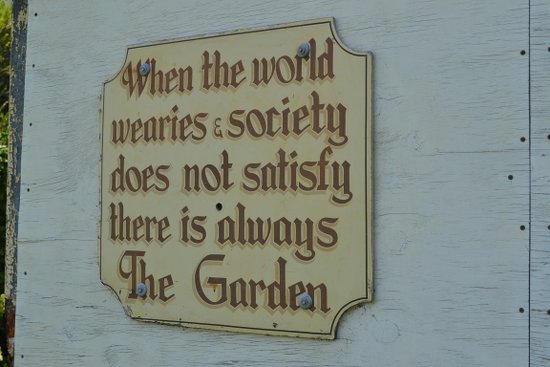
Some Fletcher Jones wisdom: if he could see his vision today, his heart would break.


We have seen this happen in recent years with the Criterion Hotel, the Grand Hotel, and the ill-fated cottage at 94 Merri St*, yet we still haven’t learnt that the only way to save our icons is to work together: for government bodies (including Heritage Victoria and the Warrnambool City Council), developers and the community to have a clear vision of what should happen with a site as precious as Pleasant Hill and to be prepared to share the cost of its preservation to make sure that it is, in fact, preserved.

And Pleasant Hill is precious because, unlike Flagstaff Hill, the Fletcher Jones story is our story.

As much as we would like to claim the sea-shanty tales captured in Flagstaff Hill as our own, Warrnambool was primarily a place of industry, farming and commerce.

The whaling story belongs to Portland and Port Fairy. The Loch Ard Gorge story belongs to Port Campbell and the entire shipwreck mythology is one that has been built around ships that, for the most part, were passing by Warrnambool on their way to somewhere else.

Hence we don’t have locals sharing tales of their sea-faring great grandfathers, but instead we talk about the Woollen Mill, Swintons, Crammond and Dicksons, Nestles, the cordial makers, millers and brewers, the dairy farmers, potato growers, butchers, bakers and bullock drivers and, of course, Fletcher Jones.


fletcher-gardens_40
The Fletcher Jones story is our story: generations have grown up under the ‘Silver Ball’.


This is why there is a disconnect between Flagstaff Hill and the local community who, it seems, have stopped visiting or who don’t visit nearly enough.

And tourist numbers are also falling. I suspect one problem is that reconstructed, theme-park style villages have lost their lustre, despite the valiant efforts of the many volunteers involved.

In the face of fading popularity, a review is being held into the future of Flagstaff Hill, with warnings that it could cost between $13-15 million to redevelop.

I have a better idea: close it down.


fletcher-gardens_29
This tribute to Fletcher Jones by Robert Ulmann sets the scene for what could be a magnificent sculpture garden.


The cold-shower moment is to accept that Flagstaff Hill has had its day and will only continue to chew up funds as it recreates itself to fit changing tourism tastes.

The site could be returned to open space and the $13-15 million directed toward restoring and preserving Pleasant Hill, but as what? The suggestions so far include – god forbid – more housing, retail, offices, or even an aged care facility. How boring.

What about this: transform Pleasant Hill into a combined Warrnambool Art Gallery and Museum. Given FJ’s support for the arts, it is a perfect fit.

The already-squeezed art gallery in Timor St could be relocated and stretch out, including into the gardens that would become an outdoor sculpture park.

The best of the Flagstaff Hill collection could be housed in the museum, which would also include a tribute to Fletcher Jones and artefacts from the factory (much of which, unbelievably, ended up in skip bins before being retrieved by art students).


fletcher-gardens_31
A table for two please: the ‘Round room’ could be converted into a restaurant or cafe.


The Tourist Information Centre would fit nicely, and the ‘Round Room’ – once part of the FJ canteen – would be perfect as a restaurant/cafe called Fletcher’s. The silver ball can just remain the silver ball: restored and shining.

There is more than ample – and completely unused – parking in the Raglan Parade median strip and a pedestrian overpass would solve the issue of crossing a busy highway.

It will take money, it will take vision and it will take commitment, but in 20 years time, which do you think will have the more enduring appeal: a “recreated” maritime village where people are strolling around in gingham caps and hooped dresses, or a dynamic art gallery and museum housed in one of our most iconic buildings?

We don’t need a crystal ball to predict the outcome: just a silver one.

*The Warrnambool Planning and Heritage Group wrote a report 18 months ago that warned Fletcher Jones faces the same fate as 94 Merri St, which was right across the road from Flagstaff Hill, unless action was taken now. The Warrnambool City Council’s response to the group’s 15 recommendations was tabled at its meeting last Monday: see pp 181-185 of agenda 9/12/13.  Or you can see a summary here.