Once-proud “Rowitta” is now an abandoned ship

rowitta 1999 fred
The century-old steamer, “Rowitta”, as it appeared at the Flagstaff Hill Maritime Village in 1999 when it was considered a prize exhibit. Image: FredV45 via Flickr.

By Carol Altmann

[dropcap style=”font-size: 60px; color: #A02F2F;”] T [/dropcap]his is a tale of two, century-old, sister ships with two very different fortunes: one is about to undergo a million dollar restoration in Tasmania, while the other is being scrapped at Flagstaff Hill in Warrnambool.

The Rowitta and the Cartela are both wooden steamer ferries built in Hobart by Purdon & Featherstone, with the Rowitta the older of the pair, being built in 1909, followed by the Cartela in 1912.

They are now among only a handful of river steamers left in Australia and generate the sort of excitement among wooden boat enthusiasts that befit their rarity.

In the case of the Cartela, which has been converted from steam to diesel but has never been out of service, that excitement is only building.

A dedicated band of volunteers formed the Cartela Restoration Project Trust that lobbied for years to secure funding to restore the ferry to its original state, including its original 1912 steam engine. The project has come to fruition and, as of August last year, the Cartela restoration has been the centrepiece of the revitalisation of the port of Franklin, in the Huon Valley, as the home of wooden boat building.

For the Rowitta however, despite being one of the oldest vessels in the collection at the Flagstaff Hill Maritime Village, it is the end of the road.

rowitta - 1922 museum victoria1
Full steam ahead: The Rowitta plying the Tamar River, Launceston, in 1922. Image: Museum Victoria.

[dropcap style=”font-size: 60px; color: #A02F2F;”] H [/dropcap]aving been brought to the fledgling Flagstaff Hill back in the early 1970s as a hull, the Rowitta – which has also been known over its life as the Sorrento and Tarkarri – was the focus of a major restoration in 1989 under master boat builder, the late Ron Stewart, who’s son, Garry Stewart, continues the craft in Port Fairy today.

The Rowitta became a jewel in Flagstaff Hill’s crown, both as a popular venue for weddings, an educational tool for students and as a historic tourist attraction.

Tasmanian Irene Atkins wrote about her visit to Flagstaff Hill in 1998 and the thrill of seeing the boat she remembered from her childhood in Launceston being fully restored and taking pride of place on the lake.

“The first thing I said was ‘You have got the right colours’. They replied that they had gone down several coats of paint to establish that information,” she wrote in ‘On the Tide‘.

One of the people to show Irene around that day was boat builder Jeff McMurrich who is still the main boat builder at Flagstaff Hill and who, in 2008, gave a prescient interview to the ABC’s Jeremy Lee in which he warned that the Rowitta was in need of significant restoration work within 10 years, or it may not survive.

Sitting permanently in fresh water rotted the hull and required the Rowitta to be drydocked for proper repairs, which was difficult because it was part of the village’s Shipwrecked sound and light show *.

Instead, as Jeff explained, he did what he could with the “shoestring” budget Flagstaff Hill had to spend on such things. It was, he said, a case of “patching” rather than preventative maintenance – and this could only work for so long.

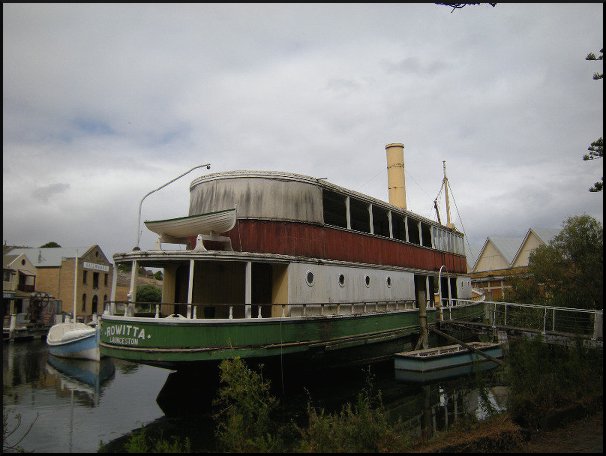
rowitta rotting
The rotting hull of the Rowitta, which has been off-limits to visitors to Flagstaff Hill Maritime Village for more than a year.

[dropcap style=”font-size: 60px; color: #A02F2F;”] D [/dropcap]espite these dire warnings, the 100th birthday of the Rowitta in 2009 was met with cheerful optimism by Flagstaff Hill, with manager Peter Abbott telling the local newspaper that the ship was still a popular drawcard.

“It’s a great venue for many types of functions and its also part of our sound and light show so the Rowitta’s definitely got plenty of years left in her yet,” he said.

In fact the boat would not see out another decade.

Faced with mounting losses at Flagstaff Hill, the Warrnambool City Council decided a couple of years ago to discontinue all maintenance of the Rowitta, which sealed her fate.

Alongside this decision has been a subtle reconfiguring of Rowitta’s place in the Flagstaff Hill story.

No longer is the ship historic, but referred to by Flagstaff Hill in its correspondence as a “replica”.

Similarly, the ship’s story is no longer considered relevant to the village, yet the South Australian built boat, the Reginald M, which arrived at Flagstaff Hill at about the same time, is.

The Rowitta’s transition from treasure to trash is perhaps best captured in this line from the council’s February 15 meeting:

Rowitta is a replica ship and deemed as surplus to the future of FHMV. Her removal will allow our limited wooden boat repair resources to focus on our real heritage vessels.”

Work on removing parts of the ship has already begun.

*The consolidation of the wooden boat fleet is part of a $3 million upgrade of Flagstaff Hill to start later this year, including a $2 million upgrade of the sound and light show.

[box]We asked former Flagstaff Hill director PETER RONALD, now living in Tasmania, for his view on the destruction of the Rowitta. Read his exclusive analysis piece here. Bluestone would also like to thank the Launceston Library for its assistance with the history of the Rowitta.[/box]

[button link=”http://the-terrier.com.au/subscribe-2/” type=”icon” icon=”heart” newwindow=”yes”]Bluestone needs at least 500 subscribers in 2015. Please support independent media, and subscribe here.[/button]

newsletter Why Not StonesYou might also enjoy…


 Little old shoe leads to a humble war hero

Unearthed: how the Warrnambool cemetery works
A fence full of happy souls at Tyrendarra: the ‘shoe fence’

Montgomery buys a slice of ‘Motang’ history


Peter Ronald on the destruction of 100-year-old ‘Rowitta’

rowitta-blog
Fading away: the 100-year-old wooden steamer, Rowitta, is being pulled apart after it was decided by Flagstaff Hill to discontinue all maintenance. Image: Amanda Turnidge-Jones.

Bluestone invited the former director of Flagstaff Hill, PETER RONALD, to write on the imminent destruction of the Rowitta, one of the oldest vessels at the Flagstaff Hill Maritime Village:

ANALYSIS – Peter Ronald

The Rowitta has involved some difficult decisions for Flagstaff Hill over the years, but it seems the vessel will soon no longer exist. (*The WCC has since announced the removal of the Rowitta began on April 20, 2015.)

The destruction of historic ships is an unusual pursuit for maritime museums and accordingly, I have been asked by Bluestone Magazine to contribute my opinion on the issue.

I do so with some reluctance, but perhaps it is timely to put some matters on the record. I have always sought to grace an honest question with an honest answer; that is simply my aim here. Anybody seeking my views on this issue would have received precisely this same answer.

The vessel’s hull was originally purchased and moved onto the site with the idea of creating the impression of a sailing ship as the centrepiece of the village. This initial concept was – without any disrespect to those responsible – primarily about creating atmosphere rather than the noble goals of maritime heritage conservation.

As I attempted to steer Flagstaff Hill from “maritime village” to “Maritime Museum”, it became essential to reassess the role and significance of this primary centrepiece: the Rowitta hull. Options for the hull were clear; to pursue the “atmospheric” notion, restore the vessel to its original configuration, return it to the ocean (for sale/use elsewhere), or just let it rot (a “caged” shipwreck on the Shipwreck Coast).

I suspect that these may have been the sorts of options reconsidered by current Flagstaff Hill management. The underlying question however is, why?

Why, some 20 years after the decision to restore and preserve the vessel, was the matter revisited? Why does total destruction of the Rowitta now seem like a good idea? The answers are clear, but it is not a pretty story.

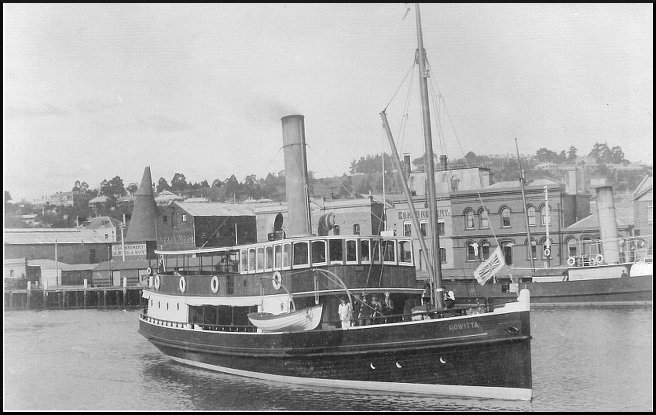
rowitta launceston
The Rowitta in her prime as a steamer on the Tamar River, Launceston, shortly after her launch in 1909. Image: On the Tide (Vol 1), reproduced courtesy of Launceston Reference Library.

Historic ship preservation is a well practised activity around the world and typically involves a period of extensive restoration, followed by meticulous maintenance. Through the research, hard work, and amazing skills of the late Ron Stewart, the hull was ultimately restored to its former glory as the historic steamer, Rowitta.

When I left Flagstaff Hill, the restoration was largely complete (the reconstructed aft cabin being used as an education centre/classroom) and maintenance was ongoing.

What happened next, in my view, is that Flagstaff Hill entered a “dark age” from which it is yet to recover.

Let’s be clear, under the planned and precise direction of the City’s then Administrators (and followed by subsequent Councils), the ethical constraints of the museum philosophy which had guided development for a decade, were abandoned in favour of a “tourist” focus.

The logic was that a change in emphasis from museum to tourist facility would herald even higher levels of economic success. Well, the scores are now on the board in relation to that failed experiment, and the Rowitta is symbolic of the collateral damage.

No longer an historic object in the care of a Maritime Museum, maintenance lapsed under the new direction. The high standard of restoration that had been achieved was simply eroded through neglect. That splendid work, so diligently accomplished by Ron Stewart, apparently deteriorated to the point that it was no longer even safe to enter the vessel.

rowitta rotting
The rotting Rowitta: the boat has been off-limits to Flagstaff Hill visitors for some time after it was considered unsafe to board. Image: Bluestone Magazine

The debate around “historic” ship or mere replica, raises a relevant and well studied aspect of historic ship preservation. It is true that any historic vessel preserved in an open-air environment will, as the result of basic maintenance, require the replacement of original fabric.

Over time, the percentage of original fabric present in any such vessel will therefore, effectively diminish: this is particularly true of timber vessels. In the Rowitta’s case, the hull is of completely original configuration and, I would argue, of primarily original fabric.

The deck has been renewed and the upper-works have been replicated. The end result of this equation, however, and by the standards of international maritime museum practise, is that the Rowitta was – and remains – an historic vessel.

To suggest otherwise is simply an argument of convenience used to justify a predetermined outcome.

Curiously, if the vessel was positioned just 350 metres to the south (ie. on the beach) it would now automatically be afforded the full protection of Historic Shipwreck legislation.

With the above background, I can only sympathise with present management. I believe the current manager is again pursuing museum goals for Flagstaff Hill, and for this I commend him, but the policy decisions of the past make the task a truly formidable one.

It should never have come to this: Flagstaff Hill’s “dark age” was unnecessary and, in any case, lasted far too long.

In the Rowitta example, the cost of the failed experiment will now be born by future generations through the loss of a piece of Australia’s maritime heritage: a 100-year-old historic ship.

I observe with sadness that Warrnambool’s maritime museum has been taken to the point of “burning the furniture”; one of it’s oldest and largest historic artefacts. Flagstaff Hill may never recover from the “dark age”, but there are foundational lessons to be learned from this current humiliating predicament.


Sovereign Hill strikes gold as ‘Flaggy’ struggles

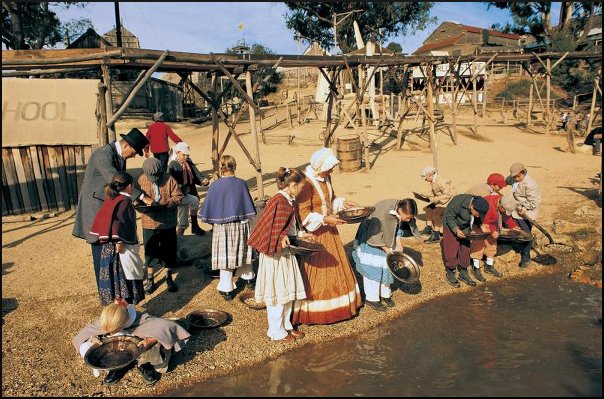
pan-for-gold-sovereign-hill-2880
Children dressed in period costume pan for gold at Sovereign Hill: just one of the many daily activities for visitors to the site. Image: Sovereign Hill.

Analysis: Carol Altmann

Why is Sovereign Hill in Ballarat still booming after 45 years and Flagstaff Hill in Warrnambool is struggling to survive?

Both are in regional Victoria, both opened in the early 70s and both rely on a mix of reality and fiction to capture our colonial past – yet their individual fortunes could not be more different.

The numbers for Sovereign Hill are simply staggering: in 2013-14 it recorded 731,000 visitors of which more than 100,000 came from overseas.

Flagstaff Hill recorded less than 60,000.

In 2013-14, Sovereign Hill turned over $24 million in revenue and recorded an operating profit of $775,000. It employs 360 staff and has 250 volunteers.

By contrast, Flagstaff Hill has gone from making a profit to running at loss of around $500,000 a year, it employs only 13.5 staff and has 135 volunteers.

The first response might be, oh, Sovereign Hill must receive more government funding. No, it relies on generating its own income to survive.

Oh, but it is only 90 mins from Melbourne! Yes, but Flagstaff Hill is only an hour from the 12 Apostles, one of the top tourist attractions in Australia.

Perhaps the entry fees are cheaper at Sovereign Hill? No, in fact they are more than double the entry fees to Flagstaff Hill at $49.50 adult/$22 child/$122 family.

To my mind, the difference comes down to two critical things: i) Sovereign Hill has aggressively and successfully gone after the lucrative Asian tourist market and ii) Sovereign Hill itself is full of life, characters and things to do.

Flagstaff hill
While Flagstaff Hill Maritime Village occupies one of the best spots in Warrnambool, it is a largely static museum whose fortunes are flagging. Image: Bluestone Magazine.

In his submission to a recent state parliamentary inquiry into heritage and eco tourism, Sovereign Hill Chief Executive Officer Jeremy Johnson laid out some startling facts.

Having sniffed the wind early on the growing Asian tourism market, Sovereign Hill now employs four staff in China to sell itself as a destination direct to the Chinese. (In January it hosted a hugely successful 1850 fashion show and competition in Shanghai. See here.)

It also hires 17 Mandarin and Cantonese speaking tour guides on site – and has used such guides for 20 years.

Incredibly, one in three Chinese tourists to Victoria now visit Sovereign Hill.

Of course Flagstaff Hill has known about the burgeoning Asian market too, but only now is it lumbering into life to do anything about it, with an upgrade of its sound and light show that will be multi-lingual.

When I visited Flagstaff Hill a few weeks ago, there were no multi-lingual maps or signage, and the introductory film shown to all visitors is in muffled and difficult “olde” English (being extracts from a colonial diary).

There were certainly no Mandarin-speaking guides about, in fact there were very few people (visitors or volunteers) about at all, despite it being the height of the school holidays.

Which brings me to the second point. Flagstaff Hill is more static now than it was 30 years ago.

Tourists love things to see, do, touch and listen to, and this is where Sovereign Hill leaves Flagstaff Hill in the shade.

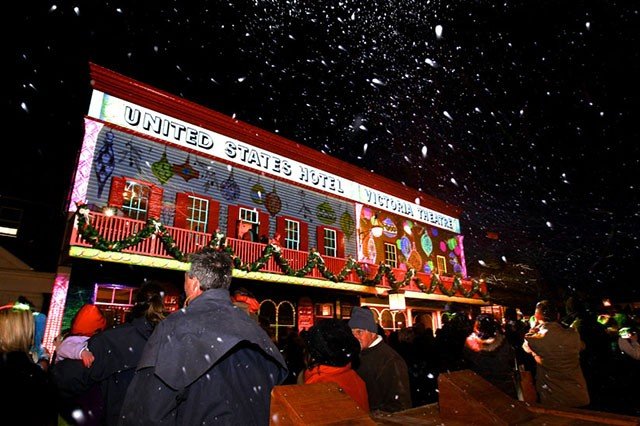
sovereign hill xmas july
The winter blues have been transformed into a tourism winner at Sovereign Hill with its “Christmas in July” event that taps into the White Melbourne light show theme. Image: Sovereign Hill.

It Sovereign Hill, visitors can pan for gold, have their name printed on a “Wanted” poster, buy some Raspberry drops from the boiled sweet shop, or watch a building “burn” down, and on it goes…

At Flagstaff Hill, the visitors walk into the re-created shops, bar and blacksmiths etc expecting to see someone doing something and – apart from one or two exceptions such as the boatbuilders – there is nobody doing anything.

One more example: Ballarat is freezing in winter, even colder than Warrnambool. But Sovereign Hill turned this down-time into an up-time by launching a two-week Christmas in July event across the school holidays.

Among other things, they light up buildings, create fake snow, run plays by the local theatre group and, last year, the crowds reached a record 42,000. In other words, almost as many people visited Sovereign Hill in those two weeks than for two-thirds of the year at Flagstaff Hill.

So what is Flagstaff Hill doing in response to its troubles?

Well, it is about to spend another $3 million (on top of the $5.7m spent in 2003) “refreshing” the sound and light show ($2m), adding a handful of holograms rather than real people to its buildings – which sounds like a maintenance nightmare – and upgrading the wharf and main entrance.

According to its own masterplan, a full makeover of the village will cost up to $15 million, so rather than throw $3 million into it for little impact, we could try to do more with what we already have.

For example, if the council is persisting with the Fun4Kids Festival, why not hold it at Flagstaff Hill, refocus it with a strong maritime theme (pirates, stowaways, shipwrecks…) move it to the early January school holidays when – compared to events in Port Fairy, Warrnambool is dead – and run special trains from Melbourne (The Shipwreck Express?) that deliver visitors virtually to the door.

And why not offer studio space at Flagstaff Hill to the many artists and crafts folk around the area who do metal work, wood work, glass work, textiles and so forth, so that they get exposure (and sales) and visitors can see people in action?

And why not consolidate all of our historical artefacts in one place, rather than have them spread between Flagstaff Hill and History House (that few visitors even know exists), so that people can see, touch and learn about them?

Flagstaff ingots_10
Despite having historic lead ingots from the Loch Ard on loan from the Federal Government, there is not one sign at Flagstaff Hill explaining what they are or where they come from. Image: Bluestone Magazine.

Lastly, and most importantly, why not make more of the treasures at Flagstaff Hill, such as the Loch Ard ingots which, according to a report in the local paper, Flagstaff Hill founding member John Lindsay thinks are no longer that important at all.

Despite having several hundred of these lead ingots on site, there is not one explanatory sign telling visitors what they are or where they came from.

During my last visit to Flagstaff Hill I was in the Reginald M, that houses some of these ingots, and a young boy asked his mother what they were. She didn’t know, so I said that they had come off the Loch Ard shipwreck and he should try and lift one to see how heavy it was.

His eyes opened wider and he tried to lift one end.

“Orrrrrr.”

History comes alive in those moments – and, as Sovereign Hill well knows, they don’t cost a fortune, but they are pure gold.


The Vault: Wilma Wright, FOI and more

[author] [author_image timthumb=’on’]http://the-terrier.com.au/wp-content/uploads/2015/11/vault3.jpg[/author_image]Welcome to The Vault – this is where Bluestone will place all sorts of subscriber-access-only material, including information on local politics that should be in the public domain, but isn’t. It is a place where you can also have a look behind the scenes of Bluestone, including our Freedom of Information applications, some email exchanges (where appropriate and when dealing with official spokespeople, not our private sources) and anything else we think you might find interesting. If you have something you would like to submit, please email us at editor@bluestonemagazine.com.au[author_info][/author_info] [/author]

———————-

[dropcap style=”font-size: 60px; color: #A5CECD;”] O [/dropcap]ne of the many things we do behind the scenes at Bluestone Magazine is lodge Freedom of Information applications with both the Warrnambool City Council – as the largest council, it is our main focus – and State Government.

The list below is some of those we have lodged in the past 18 months:

blue sticky note - FOI

[dropcap style=”font-size: 60px; color: #A5CECD;”] N [/dropcap]ot all of them are successful, by which we mean that the information we want is considered exempt under the FOI Act and is not released.

This happened with our application to the State Government for more details on the investigation conducted into the ‘Wilma Wright’ letter writing scandal, in which the son of Warrnambool City Council chief executive officer Bruce Anson revealed he was the author of a series of letters penned to the local newspaper under the pseudonym Wilma Wright – letters which were disparaging of some councillors.

join-us2

This application went all the way to the Freedom of Information Commissioner for review, resulting in 11 pages of “information” being released by the State Government.

I say “information” because it was useless. It was information that had already been made public, or was so redacted as to be unreadable. You can see two examples below.

wilma wright1

[dropcap style=”font-size: 60px; color: #A5CECD;”] S [/dropcap]imilarly, our request for more information into the State Government’s investigation into Flagstaff Hill and the missing Loch Ard lead ingots, the damaged Loch Ard copper sheets and assorted other missing items including the bell from the Newfield, was also denied.

This doesn’t mean the information isn’t out there – it simply means that the law says we can’t access it (and by default, neither can you).

We could keep challenging these rulings, but that takes a lot of time and money and we have to spend both wisely.

Instead, we focus on the successes and just keep moving.

Those successes include finding out more about the controversial traders levy proposed for Warrnambool, a breakdown of the costings of the council’s Hidden Histories project and upgrade of Patloch Lane, and more details of the Warrnambool Council CEO’s salary package.

We can tell you that Bluestone is the only media organisation in Warrnambool lodging FOI applications with the Warrnambool City Council.

wilma wright2

[dropcap style=”font-size: 60px; color: #A5CECD;”] I [/dropcap]n fact when we lodged our first one about 18 months ago, the friendly customer service staff were unsure what to do with it, or how much to charge, because they had not seen one before.

Now we are on a first-name basis with some of the helpful staff at the front counter.

We lodged another FOI which we will tell you more about in a couple of weeks. Once again, it has taken weeks to get information that is not forthcoming simply by asking.

Unfortunately accessing information now costs money, but the impact can be invaluable.

[box]If you would like to chip in to our FOI fund – it costs $27 per application – let us know or simply make a donation at the link below.[/box]

[stripe name=”Bluestone Magazine” description=”Make a difference.”]
[stripe_amount label=”Donation Amount:”]
[/stripe]


WA Museum chief says claim from “confusion”

maritime-museum-of-western-australia14
The contemporary WA Maritime Museum at the centre of the original, incorrect claim of missing items. Image: Articlesweb.

UPDATE – Carol Altmann

[dropcap style=”font-size: 60px; color: #DC943C;”] T [/dropcap]he Western Australian Museum has further investigated an incorrect claim by Flagstaff Hill director Peter Abbott that more than 6680 items from its collection were unaccounted for and believes the damaging claim was a result of “confusion”.

As first reported by Bluestone yesterday, the museum strongly rejected a statement by Mr Abbott in a January 10 letter to the Warrnambool Standard in which he used the example of the Western Australian Maritime Museum to defend the fact that Flagstaff Hill cannot locate more than 130 items listed in its collection.

Mr Abbott wrote that museums around the world “go through random collection reviews” that often reveal “items have been moved or misplaced”.

“As an example…Western Australian Maritime Museum in 2009 found over 6680 (items) unaccounted for,” he wrote.

The Western Australian Museum covers six sites, including the WA Maritime Museum.

alec coles
WA Museum Chief Executive Alec Coles OBE. Image: Council of Australasian Museum Directors.

[dropcap style=”font-size: 60px; color: #DC943C;”] I [/dropcap]n a statement to Bluestone today, WA Museum Chief Executive Officer Alec Coles reiterated that 6680 items “are not missing from its collection nor ever were”.

He said, however, that further investigations revealed an internal report was commissioned in 2008 to “improve and harmonise the documentation and storage of the WA Museum’s extensive maritime archeology collection, as well as those collections from Western Australian wrecks held in private collections”.

Mr Coles said the report was separate to the operations of the WA Maritime Museum, which deals with contemporary material.

“(The WA Maritime Museum) was not the subject of this internal report, the purpose of which was to demonstrate the need for improved document and storage systems which have since been achieved,” he said.

“The report states that a number of items at the time were either not audited as part of the process, or that there were inconsistencies between database and object entries, not least because a number of different databases were in use at the time leading to conflicting numbers,” he said.

Mr Coles said the total of items either not audited or with inconsistent entries was “the number cited – 6680 – but does not represent missing items”.

“In fact, the museum conducts regular audits of its collections including two full collection audits for reporting and accounting purposes in 2009 and 2014 and in both cases there were no anomalies,” he said.

Mr Coles said the museum now understood the source of the information and “can also understand where the confusion may have arisen”.

[button link=”http://the-terrier.com.au/subscribe-2/” type=”icon” icon=”heart” newwindow=”yes”]Bluestone needs at least 500 subscribers in 2015. If you wish to support independent media, please click here to become one.[/button]

newsletter Why Not StonesYou might also enjoy…

Flagstaff Hill: a museum in transition, or a mess?

Are missing Loch Ard ingots the tip of the iceberg?

The changing landscape under Midfield Meats

Sucking the wind out of Portland’s sails

Granny’s Grave buried in bureaucracy

All words, no funding, for Fletcher Jones story