No cutting corners: Jack Hancock joins Fabrication II

By Carol Altmann
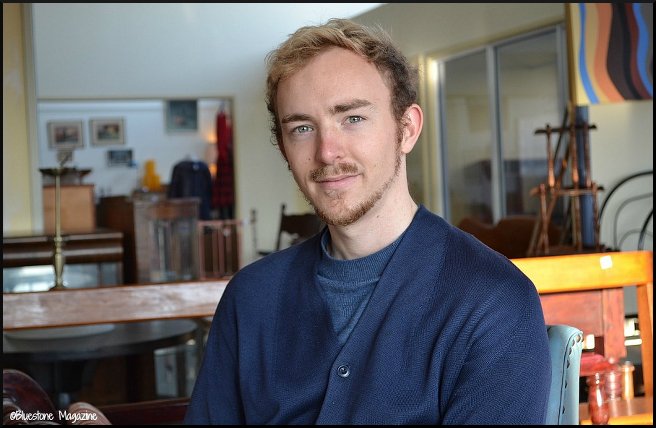
[dropcap style=”font-size: 60px; color: #DC943C;”] A [/dropcap]mong the remarkable array of items being created from Fletcher Jones fabric for this year’s Fabrication II auction will be something truly special: a hand-crafted garment by emerging Melbourne designer Jack Hancock.
The supremely talented 25-year-old, who grew up – and first learnt to sew – in Warrnambool, was encouraged by a friend and member of the F Project arts collective, Madeleine Peters, to enter a piece for the September event which serves as a major fundraiser for The Artery.
The auction, now in its second year, involves creators making something from pieces of old but unused Fletcher Jones fabric salvaged by the F Project after the closure of the Fletcher Jones factory in 2009.
Jack used a recent visit back home to rummage through the many boxes of fabric and was stunned to find offcuts of top quality, pure wool fabric made by British company, Dormeuil.
“It is beautiful, even after all this time, and too good to be just thrown away, as it was once going to be,” Jack says.
[dropcap style=”font-size: 60px; color: #DC943C;”] T [/dropcap]his Dormeuil material, among others, will be used by Jack to create a unique jacket featuring different panels of fabric, with the rivers of Warrnambool superimposed in contrasting materials across the back.
Some people are already dubbing it “A jacket for Dean Montgomery” – in honour of the man who has revived the fortunes of the former Fletcher Jones site – but Jack is keeping it a little more generic.
The pattern will be based on a Gerber pattern, which was cutting edge, computer-based technology introduced to the Fletcher Jones company in its later years.
“I have managed to get hold of the Gerber pattern for a Fletcher Jones coat thanks to the F Project, so even though I am calling my piece a jacket, it will be from that coat design,” Jack explains.
“Actually it was the Gerber patterns that in a way led to the demise of Fletcher Jones as it was forced to compete in a world of cheap, mass produced clothing, so there is some irony there.”

[dropcap style=”font-size: 60px; color: #DC943C;”] T [/dropcap]he global shift from producing and buying clothes that lasted for years, to mass-produced items that barely see out a season, is one that Jack rails against daily.
Indeed he doesn’t particularly like “fashion” – and its built-in expiry dates – but instead likes to talk about “clothing”: quality garments carefully designed and made from quality materials.
“I am fascinated by how textiles are produced and have been produced through history…and the structure and integrity of a particular garment,” he says.
“It is also, for me, about creating sustainable clothing, not just in terms of where the fabric has come from and how it is produced, but that it will last and not be thrown away, just as a pair of Fletcher Jones’s trousers would last a lifetime.”

[dropcap style=”font-size: 60px; color: #DC943C;”] W [/dropcap]hile Jack doesn’t consider himself an artist, but “someone who just makes clothes”, his eye for design emerged at a young age.
Former Warrnambool College art teacher Ollie Morgan was an early influence while he was at school and, as a teenager, he completed a two-year Certificate in Clothing Production through South-West TAFE that at that time held classes in the former Fletcher Jones factory.
“I did work experience with Hemden tailors, in Melbourne, and worked next to the guy who tailored the Fletcher Jones trousers, so there are all sorts of connections to Fletchers,” Jack says, smiling.
Jack’s impressive portfolio of work led to him being accepted into RMIT to study a Bachelor of Design (Fashion), from where he graduated with first class honours and was invited to show his work in the national graduate showcase at Melbourne Fashion Week.
It was to be the first of many such endorsements for his work.

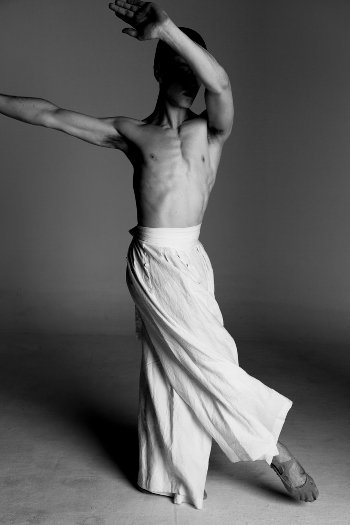
[dropcap style=”font-size: 60px; color: #DC943C;”] S [/dropcap]ince graduating, Jack has been developing his own label, Tack Jancock, and has worked with the Melbourne dance outfit, Chunky Move.
His work for Chunky Move dancer and choreographer Benjamin Hancock (no relation) was this year recognised with a prestigious Green Room Award for best visual design for the show, Princess.
And when we meet, Jack is recovering from what sounds like a marathon effort to produce costumes for wait staff at the spectacular Dark MOFO festival, held in Hobart each winter.
“It was a fantastic opportunity, but I think I am still recovering!” he says, rubbing his eyes.
While much of Jack’s work to date might be described as theatrical – particularly that he designed for his RMIT graduate year – he is moving toward a collaboration with fellow designer, Domenic Coloca, to create clothes for the everyperson.

[dropcap style=”font-size: 60px; color: #DC943C;”] T[/dropcap]hese are clothes that will be less theatrical and more about people feeling like themselves. The starting point is the human body, and how it moves in the world,” he explains.
Again, however, the focus is on creating unique, durable, distinctive clothing that could even be considered collectable.
“Just as people collect pottery or work by particular crafts people, I see clothing can be a part of that, where you look for a particular designer who has created a one-off piece,” Jack says.
With this in mind, the bidding for Jack’s Fabrication II entry is sure to be spirited – and lead to someone sporting one of the best jacket’s in town.
[box]You can see more of Jack’s exquisite work at the Tack Jancock website here. Fabrication II will be exhibited and auctioned at The Artery, 224 Timor St, Warrnambool on Saturday Sept 19 from 6pm. For full details about the event and how to be involved, please email f4u@fproject.org.au[/box]
[button link=”http://the-terrier.com.au/subscribe-2/” type=”icon” icon=”heart” newwindow=”yes”]Bluestone needs at least 500 subscribers in 2015. If you wish to support independent media, please click here to become one.[/button]
 You might also enjoy reading…
Stitch Up: Fabulous Fabrication on again
Powerful family ties behind every stitch: Sue Ferrari


