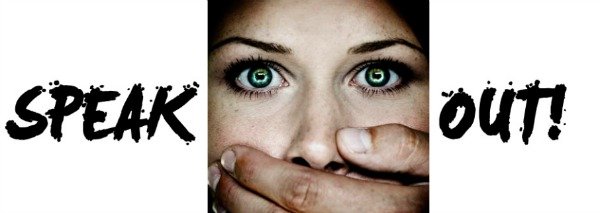
How we get from topless bars to abuse

By Carol Altmann

[dropcap style=”font-size: 35px; color: #8cc7d0;”] A [/dropcap]fter I published this piece, a reader wrote to me, asking how I “joined the dots” between a strip show and domestic violence.

I was really glad she emailed me, because not only did it mean that she was thinking and talking about this critical issue – along with her work colleagues who, she said, had talked about it in the tearoom – but it also made me write down, for the first time really, what has been swirling around my head.

This was my (slightly edited) response:

“The bottom line to my thinking is that it comes from the perspective of tackling domestic violence well before the first punch, rape or other act of violence occurs.

Lots has been written about this, by much greater feminist writers (and researchers) than myself.

But in this sense, it is all about how women/girls are perceived and how they come from an entirely different position (ie. far less powerful) than men/boys, simply by being born girls in the first place.

This is why so much emphasis in the battle to end domestic violence is on empowering women/girls and, at the same time, educating boys/men to respect women.

So, to the strippers.

I have no problem with women choosing to strip for whatever reasons they may decide to strip, which I would argue are mainly economic reasons and there is another whole discussion around that. (Indeed the woman who wrote this piece that I just published said she applied to work in a men’s club in Melbourne, purely for the money when she was a struggling student, but in retrospect she was so glad that she never got the job.)

I certainly didn’t judge the women at Last Break for what they were doing, but was angry at the fact that there remains a market for that kind of “entertainment” which I thought had been left behind in the 80s.

The issue is that stripping, topless work, private dancing all reinforce the entrenched power imbalance between genders and, in so doing, reinforce women as something to be objectified, oggled, highly sexualised and valued for their ability to appeal to men.

This is why male strippers are not on the same scale.

They don’t start from the same place as women in terms of power and, even when taking their clothes off in a strip show, they retain that power as part of the dominant gender.

(To use a really simple analogy about how they retain this power in the real world, would a male stripper ever feel afraid if he was confronted, alone, by a group of women? Would a female stripper ever feel afraid if she was confronted, alone, by a group of men?)

I don’t think that every man who goes to a strip show is going to beat his partner – of course not – but these shows do not empower women and girls and negates the message that we hope to educate the next generation with: that women/girls are not simply sexualised objects.

It is this devaluing of women that is the hardest thing to turn around in our culture and I am really dismayed that at a time when we are working to turn this thinking around, that we still have this form of “entertainment” on offer in Warrnambool.

My thinking around this has taken time to develop and there are times when I am still not sure how I can best explain that in no way do I want to shame/patronise the women involved in stripping/topless barwork/private dancing, while at the same time hating the industry in which they work.

I had a conversation with an escort the other day about this very thing: she once ran a brothel. I asked her how she felt about strip clubs and she summarised my thoughts so much better than me.

She explained the difference between how it felt to be involved in a private, quiet, one-on-one business transaction between a sex worker and a client, and women stripping or shaking their breasts, or lap dancing in front of “the mob” (as she termed it).

I certainly don’t come at this argument from a place of superiority – I am the last person to judge a woman on how she chooses or has to make a living – but I am saddened, truly saddened, that at a time when our domestic violence rates are astronomical, women are still valued for their ability to strip for men.

Again, these are not my thoughts alone, but based on years of trying to make sense of it all by reading and thinking and talking to others.

One of the best pieces on “false empowerment” I have read recently was by the feminist writer Clementine Ford, you may enjoy it too: here is the link.

I am sure you will have your own views on what I have written, and perhaps disagree with most of it, but I appreciate you asking and hopefully at least something I have written here helps to flesh out the connections.”

Carol


The power of a single, anonymous note

This piece was submitted by a reader. I will keep her name anonymous.

[dropcap style=”font-size: 35px; color: #8cc7d0;”] I [/dropcap]t was with a heavy heart that I read the angry backlash to a Facebook post by Bluestone Magazine* on topless dancers performing in Warrnambool during what was also 16 days of activism against gender violence.

Reading the stream of comments, it became very clear to me that we have such a long way to go in educating people about the link between the objectification of women, gender inequality, and domestic violence.

Increasingly, I have felt a deep sense of powerlessness about the social and political issues currently plaguing our world. While there seems to be collective outrage on social media, there also seems to be a corresponding amount of despair.

Donate

With the far right increasingly gaining momentum and power, and with basic human rights being used as a political pawn, I often feel the problems are just too enormous and insurmountable for any individual to effect any positive change. Perhaps we also feel this way about domestic violence: what can we do, as an individual, to make a difference?

When I reflect on what was personally a game changer for me in domestic violence, it was actually a small and individual act of kindness and bravery from a stranger. 

In my early 20s I was at a pub with my new boyfriend. He was drunk, abusive and out of control, flinging insults at anyone who crossed his path and throwing himself around like a human grenade.

Although the relationship was only new, a series of abusive relationships beforehand had me feel responsible for his behaviour. During the night, however, a woman came up to, looked me in the eye and asked, kindly but firmly, “what are you doing with him? He is a dickhead and you are beautiful.” I laughed in her face and turned away, but those words were like a tiny seed planted in my heart.

The night ended with me climbing through a laundry window to escape my wonderful new boyfriend. Earlier in the night, backing up to me in the street, he had tried to piggyback me, but instead I was thrown straight over his head and face planted the concrete.

In terror, I had made a run for it, with him trailing behind shouting my name. I remember frantically banging on the locked front door of a house party I had left, trying to get someone to hear me over the loud music.

Over the coming months something changed in me.

I slowly came to believe the stranger’s words. I was beautiful, and although I still wasn’t sure I deserved better, I was also resolved not to put up with any more crap. The decision was finally in my own hands, not in the hands of an abusive partner. Quite rapidly my life choices began to change. While it felt awkward and unfamiliar, I eventually let myself fall in love with a man who treated me with kindness, respect and adoration. We are still together to this day.

Recently I tried to plant a similar seed in another young woman’s heart.

I had just witnessed a raging fight between her and her partner in a caravan park. He had taken her mobile phone and refused to give it back. She had eventually barricaded herself in the camp kitchen when his anger reached a terrifying peak. After the police attended, a fragile silence enveloped the campground, but I knew this was far from the end of it for her.

Too scared to intervene, I left a note for her under the passenger side door handle of their car. I told her that she was young and beautiful and that her partner was abusive. I told her that I struggled to leave a similar relationship, but did not regret it for one second. I told her that she may think she can be the one to change him, but that he will never change enough for her to live a happy and healthy life. I told her to get out while she could and not look back.

I often wonder what happened to that young woman. Where was she now? Was she able to escape the toxic cycle of abusive relationships and diminishing self-esteem?

A common strategy in psychology when someone is feeling overwhelmed with an issue is to break it up into smaller, more achievable goals.  Indeed, the lesson I learnt from my kind and brave stranger is that seemingly small acts can have a huge impact.

While we have a long way to go in ending domestic violence, we all have the power to make a difference.

Tell the females in your life that they are beautiful, strong and worth it. Not just young girls, but women of all ages: we all need to hear it.

Plant the seed of hope in someone who needs to hear it. Do small things and do them often. Because you just never know when your ‘small’ may be someone else’s ‘big’.

[box]*The Facebook post was in November last year when, on the same day as the 2016 White Ribbon campaign launch, a local bar hosted a fundraiser around topless women, lap dancing and private dances. The response to the post was vitriolic, with accusations of women shaming, demeaning professional dancers and undermining an attempt to raise funds for a good cause. As it happens, the manager of the bar and I had a correspondence and agreed that the timing was poor, even if we had differing views on the event itself. That is open to a much bigger discussion. – Carol[/box]

Follow up piece: How we get from topless bars to abuse


The polarising force that is Cr Peter Hulin

peter hulin_7
Warrnambool City Councillor Peter Hulin, holding an upholstery ruler, with this faithful companion, Boris, a 68kg Rottweiler.

Words and images by Carol Altmann

[dropcap style=”font-size: 60px; color: #DC943C;”] I [/dropcap]f it’s true that people subconsciously choose a pet dog that mirrors themselves, it is appropriate that Warrnambool City Councillor Peter Hulin owns a 68kg Rottweiler called Boris.

Big Boris, who Peter jokingly refers to as a Chihuahua cross, is – like his owner – from strong German stock, intensely loyal to those he respects and not one to take any crap when provoked.

“Does Boris reflect you?” I ask Peter during our conversation at his Koroit St upholstery business, where a stretched-out Boris looks like a couch blocking the doorway.

“In many ways, yes. He is as placid as can be and would not hurt a fly when he is out here, hanging around, but come to my place after dark and try and take something and see how you go then,” Peter says, laughing.

“It was like when I grabbed a guy who had hurt my son,” he adds, referring to an incident from 2008 when he attacked a man in Port Fairy, who, Peter argued, was part of an ongoing campaign of harassment against his son, John.

Peter was fined, but no conviction was recorded, after being charged with recklessly causing injury and unlawful assault.

Peter has similarly been accused of being too aggressive in his role as councillor since being elected in 2008, but others – like the steady stream of ratepayers who visit his shop to seek advice or a listening ear – consider him a hero of the common person.

Perhaps more than any other councillor, he is either loved or loathed, with not much space in between.

“It’s not personal to me and I don’t take it personally. I just believe there is a better way,” Peter says of the criticism he receives from those who would prefer he remain quiet.

“We need people elected to council with the ability to move this city toward the place it should be, and could easily be: we are not elected to be puppets.”

peter hulin_chair
Peter Hulin grew up the son of an upholsterer, John Hulin, who shaped his life in ways that went well beyond the usual father-son relationship.

[dropcap style=”font-size: 60px; color: #DC943C;”] P [/dropcap]eter grew up the son of an upholsterer and World War II veteran who, Peter says, could be extremely violent as a result of the mental trauma he suffered after fighting on the Russian front line for the Germans.

It was an often traumatic childhood, but one that Peter says has given him a strong survival instinct.

As a teenager, Peter was apprenticed to his father and, during this time, witnessed an event that shaped him for life. As Peter tells it, his father had complained to the council for years about an unsafe auto engine business at the back of his shop in Kepler St (at what is now Day Kitty), warning it was a major fire hazard.

The inevitable happened and a fire from the engine business swept through a number of buildings, including a garage that housed the Hulin’s new car. Peter, who was then 17, and his father attempted to retrieve the vehicle but such was the shock and strain, his father suffered a heart attack and died in front of him.

Peter saw the tragedy as an avoidable problem that, because of the council’s ineptitude, had catastrophic consequences.

“I understood then that if you had a problem, you sort it out: you don’t pretend that it is not happening,” he says.

“When someone comes to me with a problem now, I try and sort it out for them and get something done, and I cannot see why that is considered being radical.”

peter hulin main
Away from the council chambers, Peter Hulin – and Boris – fields a string of visits from ratepayers and supporters to his Koroit St shop.

[dropcap style=”font-size: 60px; color: #DC943C;”]T [/dropcap]he difficult and ultimately tragic relationship with his father saw Peter seek out his own role models and he has several older mentors who continue to guide his thinking.

He also absorbs information like a sponge, listening to ABC 774 rather than 3AW and reading biographies on inspiring leaders such as Abraham Lincoln.

“I want to know what I don’t know,” he says.

A passionate, rather than a passive, approach has always been Peter Hulin’s style. Before being elected to council (it took two attempts), he wrote copious letters to the local paper, outlining where Warrnambool could do and be much better.

“Those same issues are the ones I am still fighting for today – CBD renewal, pedestrian safety, the environment,” he says.

“I fix things for a living. I can see the potential in someone’s old piece of furniture and what can be done with it. And I can see Warrnambool bursting with potential, but it is being held back.”

With council elections to be held next year, Peter Hulin will again be among the candidates and, if re-elected, has no intention of pulling his head in.

“Making the right decisions can be hard: it is easy to just blob along and not rock the boat, but I am not like that,” he says.

“I know who I am and what I am made of and not many people can say that. If you stand up for what you believe in, it can be very difficult, but nobody can question your integrity in being prepared to do it.”

[button link=”http://the-terrier.com.au/subscribe-2/” type=”icon” icon=”heart” newwindow=”yes”]Bluestone needs at least 500 subscribers in 2015. If you wish to support independent media, please click here to become one.[/button]

newsletter Why Not StonesYou might also enjoy….


Ginger Kitchen, council and the French connection: Kylie Gaston

‘Dysfunctional’ council beats a rubber stamp

Re-visiting the activism of the 80s and 90s

Rates, races and rubbery figures