Ignore Shaw and focus on the real issues

m_geoff_shaw
The actions of Frankston MP Geoff Shaw could lead to the unravelling of the State Government. Image: www.womensagenda.com.au

OPINION  – ROY REEKIE

[dropcap style=”color: #A02F2F;”] A [/dropcap]s someone with a keen interest in politics and a local political profile, I’ve recently been asked my thoughts on Geoff Shaw, State Member for Frankston and parliamentary recalcitrant.

Ex-Liberal Shaw holds the balance of power in State Parliament and seems to hold something of Premier Denis Napthine’s political destiny in his hands. Personally, I think that we – the people of the South West – should decide Dr Napthine’s political destiny.

What are my thoughts on Shaw? Precious little as it happens. My thoughts are focused on more substantial, positive and progressive things, about our region, community and its future, rather than the fate of a parliamentary representative of an outer suburban seat.

However, I do have some thoughts about the process that seems to be unfolding around him.

This Tuesday (10/6), Opposition Leader Daniel Andrews and his Labor parliamentary colleagues are likely to present a motion that might result in Shaw being expelled from Parliament. The pressure will then be on Denis Napthine and his coalition colleagues to either support that rather moral motion or oppose it and save Shaw’s bacon.

Liberal member and ex-Speaker of the Assembly, Ken Smith, may cross the floor to vote with the Labor Opposition. In this case, the motion would succeed and Shaw would be tossed out, perhaps heading immediately to the Supreme Court to lodge a writ challenging his expulsion.

Crikey recently published an excellent analysis and critique of the situation. I tend to agree with Crikey’s William Bowe’s view that Parliament voting to expel a member, even one as scurrilous as Shaw, creates a dangerous precedent on a slippery downhill slope towards a potential political cesspool.


ambos
The focus on the future of the Member for Frankston is detracting from the real issues facing Victorians, such as health care, jobs and emergency services. Image: aeavic.com.au

[dropcap style=”color: #A02F2F;”] T [/dropcap]he Geoff Shaw situation mirrors that in Federal Parliament recently when the Coalition Government attempted to use its parliamentary majority (and an accommodating Speaker) to have comments made by an Opposition member excised from Hansard and replaced with words that the Government saw as more acceptable.

Here was a Government that espouses free speech as an inalienable right seeking to exploit its numerical advantage on the floor of parliament to put words into an Opposition member’s mouth in place of her real views.

Meanwhile, in Victoria, the State Government may join with the Opposition to form a super-majority to expel a member, someone from their side of politics no less. This is a government that decided to drop criminal charges against that member, most probably for political expediency and survival. So, Shaw’s future will now be decided by a parliamentary vote. Criminal charges remain a genuine alternative to this intensely political process.

This is my point: it is dangerous – and morally murky – to use a parliamentary political process to solve what is arguably a criminal issue and inarguably a moral question that society, rather than Parliament, should judge.

If anyone of us committed a serious fraud against our employer, we’d most likely face two consequences – criminal charges and dismissal by our employer.

napthine2
Surely the people of the South-West should decide the future of their local member, Denis Napthine, not an MP from a seat in Melbourne. Image: Angela Wylie, The Age.

[dropcap style=”color: #a02f2f;”] S [/dropcap]haw’s employer is not the Parliament, but the people; in this case, the people of Frankston.

One genuine option now might be for Daniel Andrews’ motion to be re-framed so that Geoff Shaw’s fraudulent actions are the subject of criminal charges, rather than seeking to expel Shaw from Parliament.

Let the courts decide on his criminality.

Let the people of Frankston judge him in November.

Ignore Shaw.

Focus our politics on the most meaningful issues that impact on our communities – jobs and training for our young people, health services for our ill and aged, emergency services to keep us all safe – rather than on the criminality and morality of individuals. Lift our political discourse to the intellectual and moral heights that the issues our society faces deserve.

Let’s realign our political compass.

While Spring Street sorts itself out, I’m going to continue to try to realign the politics of the South West. Frankston electors can sort out their own member.

[box] Warrnambool lawyer Roy Reekie is a member of the ALP and stood for the now-defunct seat of Warrnambool in 1999. He then contested the new seat of South West Coast against Denis Napthine in 2002, coming within a few hundred votes of victory. Reekie last ran against Dr Napthine in 2006.[/box]

[button link=”http://the-terrier.com.au/subscribe-2/” type=”icon” icon=”heart” newwindow=”yes”] Did you enjoy this story? Please subscribe here to help Bluestone thrive.[/button]

newsletter Eat And Drink Stones Find more Opinion pieces here…


Scrap trader levy and start over

Motor museum to revive Fletcher Jones

Traders are right to be asking questions

Be all things, or stick to the basics?

What is holding Portland back?
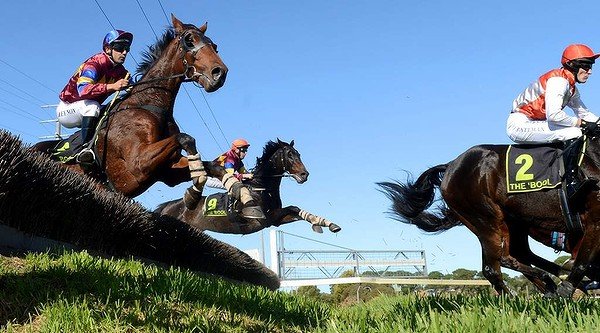


We still have jumps racing? Can’t get over it

the age
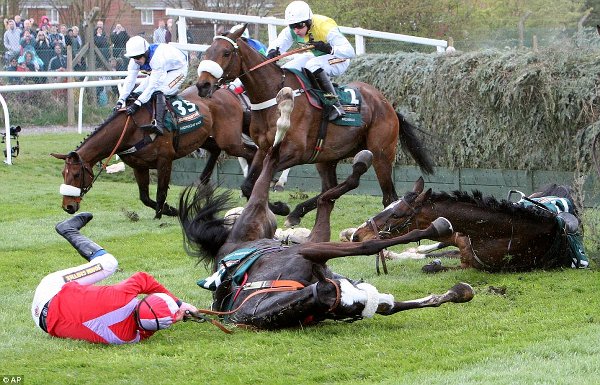
Regardless of the spectacle, the harsh reality is racehorses are continuing to die as a result of jumps racing in Victoria.  Image courtesy of The Age.

As Victoria continues to buck the trend on placing a ban on jumps racing, we ask if steeplechasing really is integral to the success of the Warrnambool May Racing Carnival.

OPINION – Carol Altmann

Here we are at that awkward time of year again in Warrnambool when the city’s biggest local sporting event – the May Racing Carnival featuring the Grand Annual Steeplechase – is also the most difficult to embrace.

For no matter how we dress it up, the reality is that jumps racing is on the nose and has been for many years.

Despite this, the powerful figures that surround the “sport” continue to tell us that horses love jumping, that the local economy would wilt without the jumps races, and that those campaigning to have jumps racing stopped are just a bunch of lefty loopies without a sense of fun.

One of the most vocal “lefty loopies” is, of course, that highly radical and subversive organisation, the RSPCA, which has an ongoing campaign against the practice on the grounds of animal cruelty.

It appears that the RSPCA is welcome to tackle battery hens, sow stalls, duck shooting, puppy farms and run the cheerful Million Paws Walk, but if it dares to go near the sanctity of the steeplechase, it is accused of being “grandstanding hypocrites,” guilty of euthanasing thousands of unwanted cats and dogs each year.

That is how the former head of the Australian Jumps Racing Association, Rodney Rae, described the RSPCA president Dr Hugh Wirth in 2011, disregarding the fact that the RSPCA is the group that mops up the sad mess left behind by irresponsible pet owners around Australia.


grand national
The Grand National Steeplechase in the United Kingdom remains one of the most controversial races in the world due to a high number of horse fatalities. Image courtesy of The Huffington Post.


But let’s return to jumps racing.

As most people know, this is a sport that no longer exists in any other states except for Victoria and South Australia. Jumps racing finished in Queensland more than 100 years ago. It stopped in WA in 1941 and in NSW in 1997. Tasmania joined their ranks in 2007.

A Senate committee in 1991 suggested it be phased out across Australia over a three-year period and, in 2010, this is exactly where things were headed for Victoria – until the state election prompted local MP Dr Denis Napthine to pledge $2 million to assist the racing industry if the Coalition won office.

The Coalition won and Dr Napthine, who part-owns a racehorse with local Federal MP Dan Tehan*, would be not only the Minister for Racing but also, eventually, Premier. Talk about friends in high places.

Despite the $2 million having surely being spent by now, horses still die in jumps racing.

It is a nasty, unavoidable truth of the “sport”, even if we try and disguise it behind the green curtain that is hastily erected around the broken horses before they are euthanased on the track.

According to the RSPCA, four horses died in jumps racing last year and there is no doubt that this week, many punters will be watching the three main jumps events at Warrnambool with their hearts in their mouths, hoping all the horses (and riders) make it home, while feeling a deep sense of unease that the horses are being made to perform this way in the first place.


spinthebottle
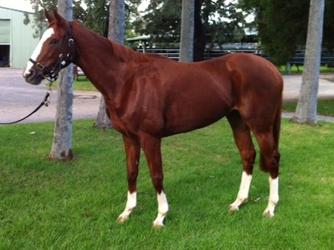
Spin the Bottle, part-owned by Premier Dr Denis Napthine and local Federal MP Dan Tehan. He is not a jumps racer.


The Warrnambool Grand Annual Steeplechase is 5.5 kilometres long – the Melbourne Cup is 2km shorter – and includes 33 jumps: the most of any steeplechase event anywhere in the world. That is a lot of running and a heck of a lot of jumping, even for a horse that “enjoys” it.

And for all of their Herculean efforts, hardly anyone remembers who wins. Can you name one winner of the Grand Annual Steeplechase? Or the Brierly Steeplechase? Or the Galleywood Hurdle?

At the end of the day, it all seems so cruel and so unnecessary, especially when such a small group of people has any significant investment in jumps racing and its immediate spoils.

The average punter, I believe, would be just as happy to go along to a three-day racing carnival at the beautiful Warrnambool racecourse and not see horses jump.

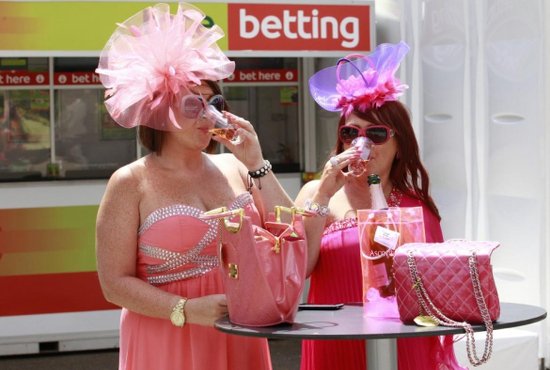
Some of the most popular – and charming – race carnivals in Victoria (think Dunkeld, Hanging Rock) attract thousands of people not because of the actual racing, but because of the atmosphere, and the chance to dress up and drink champagne for brunch.

Given the increasing awareness and activism around animal rights, especially among young people, it is only a matter of time until jumps racing is banned across Australia.

So why not cancel the jumps at Warrnambool, just for a year? Or maybe for three years, as happened during World War II when the Grand Annual Steeplechase was suspended because of more pressing matters than horse racing.

Then will we know whether the May Racing Carnival can truly stand on its own two legs, rather than relying on horses to stand on all four: despite all that is thrown at them.

*Since writing this piece, The Age has questioned the connections between Dr Napthine and Midfield Meats managing director Colin McKenna, another part-owner of Spin the Bottle.


royal ascot
Wouldn’t punters be just as happy wearing fancy clothes and sipping champagne trackside without the need for jumps racing?


Who will step up for Fletcher Jones?

fletcherjones
Sir Fletcher Jones: a man who helped to put Warrnambool on the map, but whose most visual legacy is being destroyed by neglect.

Analysis – Carol Altmann

In December last year, we first published an opinion piece about the future of the iconic Fletcher Jones Pleasant Hill site in Warrnambool that questions why it is being left to rot as our civic leaders stand by and, it seems, wait for a white knight to show up and make a decision about its future.

At the same time, we also questioned why the Flagstaff Hill Maritime Village – having been invented as a tourist village in the 1970s – continued to be a priority in terms of concern about its future and its funding, despite its flagging popularity.

We suggested closing Flagstaff Hill and creating a combined Warrnambool Art Gallery and Museum (with a strong maritime history presence) at Pleasant Hill.

Whether people agreed with this idea or not, the piece has been our most popular story.

It had more than 1600 page views and almost 500 people shared it on Facebook. We received almost 40 comments on our site and the same amount again on our Facebook page. Almost two months after it was first published, it is still attracting attention.

Fletcher Jones matters to Warrnambool and to Warrnambool people. This message is being sent loud and clear, but I doubt that it is being heard by the people that can actually determine its future.

napthine2
Will Premier and local Member Denis Napthine step up for Fletcher Jones? Has he even been asked? (Image: www.portnews.com.au)

After writing this piece, I sought out a copy of an extensive review into the Fletcher Jones site that was commissioned by the Warrnambool City Council in 2002: that is 12 years ago.

At that time, the council spent what was no doubt a considerable chunk of your money ($10,000? $15,000?) to hire an international consultancy firm Sinclair, Knight, Metz (SKM) to conduct a fulsome investigation into the Pleasant Hill site. SKM spoke to anyone and everyone. They held focus groups and they set up a steering committee made up of existing and former staff, members of the community and council.

And at the end of all this talking and consulting and investigating, SKM wrote a 100-page report with the not very gripping title of “Investigation into future economic opportunities for the Fletcher Jones site” that was presented to the Warrnambool City Council on July 8, 2003.

A copy of this report is now kept under lock and key, literally, at the Warrnambool City Library where a cheerful librarian retrieved it for me and I had the sense that I was the first person to ask for it in a very, very long time.

neoh1
Will Mayor Michael Neoh or Councillors Rob Askew, Kylie Gaston, Jacinta Ermacora, Peter Sycopoulis, Peter Hulin or Brian Kelson step up? Image: ABC.

 
The report outlines a number of potential recommendations for the future use of the FJ site – for retail, housing, aged care – and also suggested the council, who owned the site at the time, to sell it to a willing private developer. This did not mean, however, that the council simply walk away.

Instead, SKM made a key recommendation that there be “continuous consultation and communication between the council, developers and the community” about the site’s future.

The council sold the site in 2005.

And it walked away.

It has been more than a decade since this report was commissioned and the council has done nothing concrete to ensure the preservation of this site. There has certainly been no “continuous communication” about its future.

The council’s apathy is shameful.

All of that time, all of that energy and all of that money – and for what?

Pleasant Hill is recognised by Heritage Victoria as having historical, social and aesthetic significance to the state. So perhaps the state should be contributing to its upkeep?

If so, why isn’t the council lobbying Premier Denis Napthine for this to happen? The Premier is our local MPwhat better opportunity and access could you ask for? But has anybody from the council even asked for state support? I don’t think so.

The Standard editor Steve Kelly. (Image: TheCitizen.org.au)
What about the The Standard and its editor Steve Kelly? Will the paper step up? (Image: TheCitizen.org.au)

And what is our local daily newspaper, The Warrnambool Standard, doing to take up the cause? From what I can see, nothing.

In the middle of last year, the editor of The Standard, Steve Kelly, told a forum here in Warrnambool that he believed print was “still king” in the regions and that his paper firmly set the agenda for this city and that other media outlets (the ABC, regional TV) followed.

“Do we have an absolute monopoly on setting the agenda in this district? Well, my answer to that would be ‘Yes’.  I think the radio station follows our lead. I think to a large extent [the ABC] follows our lead and I think to a large extent [WIN TV] follows our lead,” Mr Kelly is quoted as saying.

Surely it is time, then, for The Standard to take the lead – to set the agenda – on saving Fletcher Jones.

As a new, still growing forum, Bluestone Magazine can only do so much and we are thrilled to have reignited the conversation, but it takes more than conversation: it takes pressure, and it takes action.

Who, I wonder, will step up for Fletcher Jones?

If we care about the Fletcher Jones site, and I believe we do, then we need to make our leaders accountable and ensure it is preserved before all we have are memories, vintage postcards and a dusty report under lock and key to remind us of our failure.

[Since this piece was written, a grassroots supporters group has started to try and save the most important parts of this site. You can join the Save the Silver Ball and Fletcher Jones Gardens group on Facebook here. Read more about the FJ site here.]

fletcher-gardens_26
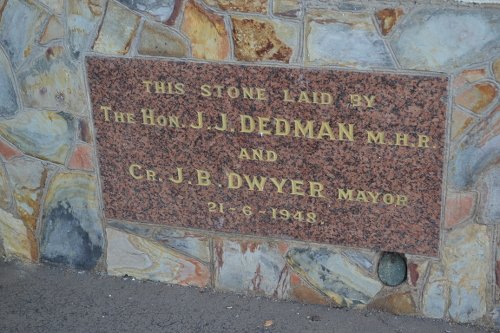
Friends in high places: it was a different story of support when Fletcher Jones opened at Pleasant Hill in 1948.