What impact will Wannon Water upgrade have on Lady Bay?
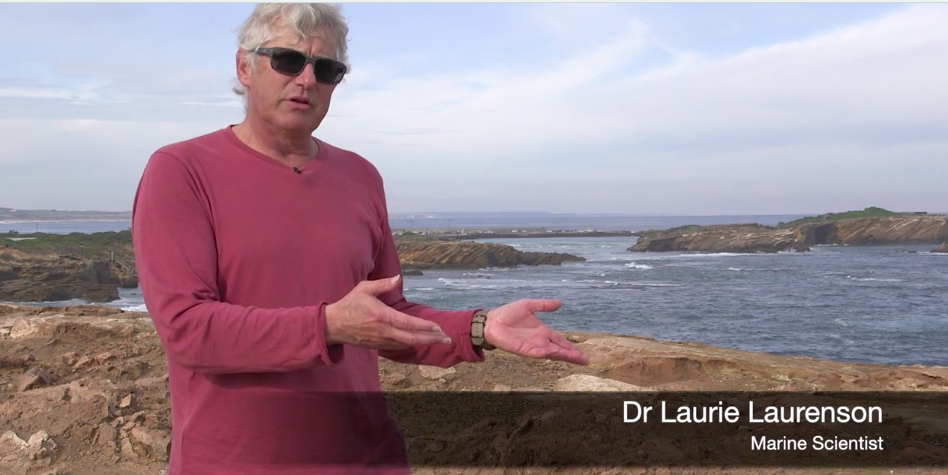
By Associate Professor Laurie Laurenson
[Dr Laurenson is a retired Deakin University academic with research expertise in fish and fisheries biology. He has published more than 70 scientific research papers since the 1980s on various aspects of shark biology, fish biology and remote sensing.]
I wanted to get a better understanding of where Wannon Water got its idea that discharging partially treated water into Thunder Point was a good idea.
So I did a search on the internet and found the “Wannon Water Warrnambool STP Upgrade Mixing Zone Modelling And Outfall Assessment” document.
It’s really quite a long document but essentially looks at what biological (E. coli, Enterococci) and chemical (forms of phosphorus and nitrogen) contaminants are being discharged into the ocean and whether Wannon Water is following the rules, and will they be able into the future.
The report says “all is good” and that EPA regulations which stipulate that the contaminants should disperse within 300m of the outfall will be met.
I thought, “well that’s good” and I expected to see the three critical things that would influence dispersal of contaminants nicely organised and documented in the report. The three things being swell, winds and currents. Well, one of them was there!
I’ll digress here, because this is important.
Winds are the main driver of swell and have an extremely well documented history of inducing currents.
We all know the effect that a few days of SE winds have on the water temperature in Warrnambool (it’s freezing!). This is caused by wind-induced currents travelling from the SE to the NW and then the Coreolis Effect turning the current left, and offshore, and cold water coming up from the bottom.
Now when we have winds coming from the other directions (NW to SE) the reverse happens, currents follow the wind and the surface water turns in towards the coast, so it stays warm.
Back to the report…
The mixing of contaminants in the report relies on a circular (300m specified by the EPA) radius to disperse contaminants to acceptable levels (50 per cent of the time) based entirely on the capacity of oceanic swells to achieve the dispersal – not wind and currents.
A cursory look at where Warrnambool’s wind comes from across the year shows that they come from the SW quadrant 50 per cent or more of the time across each year.
This means discharge at Shelly Beach will be blown towards the Warrnambool beaches at least one out of every two days.
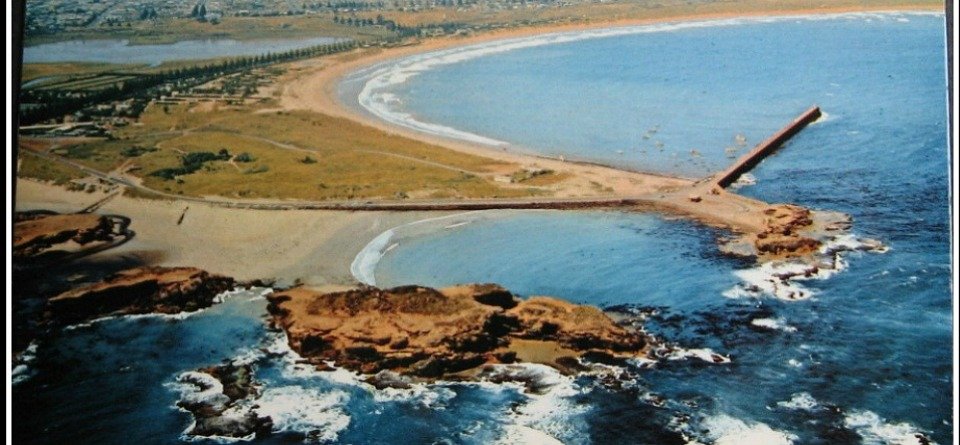
The impact assessment report says that this is okay, since the closest high use beach in the area is the Flume roughly 3km away.
In fact the closest beach is Stingray Bay which is 1300m.
So here’s the problem.
On page 69 of the Wannon Water Report, it provides an “adopted minimum dilution rate” graphic which tells us how far the contaminants can spread.
This graphic is based on samples collected at a distance from the outfall of 400m (and less) with just a single sample taken at 750m.
Their predictions are based on three samples (presumably a few days in 2009, 2015 and 2016) that are assumed to be representative of the weather conditions across the entire year.
Their predictions are highly extrapolated outside their data range and based on simple linear regressions which are unlikely to be statistically significant (the significance has not been tested).
The science is poor at best.
The problem is that the degree of dispersal of contaminants beyond the 300m radius of the Wannon Water outfall has not been addressed in any meaningful way in that it excludes wind and currents, and further, the data that they have collected extrapolates well beyond the bounds of existing data.
It means that the report simply does not address the impact of the pollutants released from the outfall on the main recreational beaches of Warrnambool.
To be fair, the report states that it essentially focuses on the EPA stipulated boundary of 300m and that the pollutants do not exceed critical levels specified by the EPA for 50 per cent of the time.
However, the pollutant levels really need to be assessed at Stingray Bay and Lady Bay during wind and current conditions that will result in them being transported into these high use areas.
Given the prevailing wind conditions, this will happen at least every second day across every year.
And it’s not just the chemical and biological contaminants that will disperse in this way, it’s also the plastics that have repeatedly been released by the facility over many years.
You can find out more about the proposed treatment plant upgrade here and sign up for the online forum this Wednesday August 5 at 7pm.


