Opinion: Deakin Uni can afford to stay

[printfriendly]
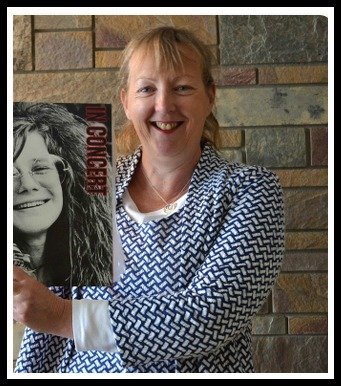
toni jenkins
Education campaigner Toni Jenkins, CEO of the South West Local Learning and Employment Network. File image.

OPINION

With Deakin University still to decide its long-term future in Warrnambool, TONI JENKINS* asks whether its priority should be making a profit, or serving the people:

[dropcap style=”font-size: 60px; color: #A02F2F;”] D[/dropcap]uring the recent Federal election I watched many political interviews and began to wonder if I lived on a different planet to the politicians.

In particular, I was and still am most concerned about the state of education in Australia.

Donate $10 here.
Donate

According to the OECD, we are slipping globally from a well-regarded, high-ranking country to a very mediocre, middle-ranking country with falling results in literacy, numeracy and the sciences.

By the end of the election – after the results rolled in – I was left with the question I started with. It’s a vexing question and one that I know I don’t ask alone: is education a service, or are our educational institutes corporate profit making entities?

Jane-Den Hollander
Deakin University Vice Chancellor Jane Den Hollander. Image: Deakin University.

[dropcap style=”font-size: 60px; color: #A02F2F;”] M[/dropcap]y work for the past 13 years has been focused on improving education outcomes for the young people of our region.

It is thankless and goes largely unnoticed as we work behind the scenes brokering changes, developing projects, highlighting trends and in many cases, cajoling other service providers to change what they do to better address the needs of young people.

There are very few wins in this work, so when we recently scrambled to develop a partnership to keep Deakin as the university provider in Warrnambool, I couldn’t believe the audacity or the attitude of Deakin Vice Chancellor Jane Den Hollander telling our community that we ‘had no appetite for higher degrees’.

What rubbish.

To top it off, we had a look at Deakin’s balance sheet and there it was, with millions upon millions of dollars derived from providing education services at a handsome profit. Putting it nicely, they’re rolling in it.

Our community, so it seems, is no longer a community which ‘suits the Deakin business model’.

No, they can’t make enough profit down this way: in fact we cost the corporation money. Imagine that…… an education service costing money!!! WOW!

warrnambool deakin campus
While the Deakin Warrnambool campus is struggling, the university overall is making significant profits. Image: Deakin University.

[dropcap style=”font-size: 60px; color: #A02F2F;”] I[/dropcap]n 2014, the Victorian Auditor General produced a report about the Department of Education’s ability to meet the needs of rural and regional Victorians.

It cited many instances where the department had failed to understand and respond correctly to the needs of rural and regional Victorians. It went further still, to say that policy needed to be developed that reflected the real needs of rural and regional communities. Spot on!

They’ve just discovered what we have known for a very long time: the proliferation of policy, structural adjustment initiatives and bureaucratic edicts that purport to support education in our communities but in fact do more damage than good is staggering.

Even good policy, by the time it trickles down to the local level, has little chance of being implemented before it is changed OR altered along the way to suit the bureaucracy of the day.

So how about we simplify things here and now? How about we draw a line in the sand?

Here’s the deal: we get State and Federal Departments of Education to agree to a few basic rules:

1.     Offer and provide the same level of education service to ALL young people regardless of postcode;

2.     Give ALL young people the opportunity to access education across the breadth of provision in a mode that suits their needs;

3.     Make sure that education is affordable to everyone;

4.     Provide value for money for the tax payer by ensuring that education services paid for by the government are spent on education services and not accumulated like a corporation. Caps on equity and assets, over the cap is reinvested into EDUCATION SERVICES;

5.     Make sure that NO SCHOOL is operating in deficit and stop punishing them for having too many senior teachers on their payrolls – a ridiculous imposition. Either give them real autonomy and stop regulating every breath they take OR go back to the State run system that didn’t burden the local balance sheets of these individual schools.

Then Deakin University, or any other University who cares to act with humanity, can put education provision above profit.

They can develop and thrive in the south west, leveraging off a community that highly values ‘learning for life’ and its young people with an economy that feeds the nation a good portion of its protein, leads the way in renewable energy, and promises to thrive in a future where water is scarce and land, a non-renewable commodity.

Just imagine all the schools developing programs and services out of educational need rather than the need to balance the books.

How about a systemic approach, making sure that every young person, at every step along the way is supported as needed?

To quote John Lennon, yes, I’m a dreamer, but I’m not the only one. In fact Finland, Norway and Sweden are living the dream by providing free education to every citizen from pre-school to higher education.

In the words of scientist Karl Kruszelnicki, “education is not an intolerable burden upon a society, but rather an investment in the future”.

[box]Toni Jenkins cares deeply about country students having the same opportunities in education as city students. As CEO of the South West Local Learning and Employment Network, Toni has campaigned on this critical issue for many years. You can visit the SWLLEN website here. [/box]

newsletter Eat And Drink StonesYou might also enjoy:


Lack of schooling a ticking bomb

Sucking the wind right out of Portland’s sails

Community vision should extend city-wide


Behind the spin, W’bool business is losing heart

city centre_6
The former Sam’s Warehouse store at Bayside Plaza is one of many shops lying empty in Warrnambool’s CBD and beyond, reflecting the steady decline in business confidence.

OPINION

[dropcap style=”font-size: 60px; color:#A02F2F;”] Q [/dropcap]uite a bit has been written about the latest Warrnambool Business Confidence Survey that tests the pulse of local businesses, but nobody has been prepared to say that it reflects a city in deepening trouble.

The spin put on the 2014 results by the Warrnambool City Council is that business confidence has “stabilised”, in that the steady decline since 2011 has levelled out and while things are not good, at least they are no worse than last year.

And while nobody wants to be the bearer of bad news, this is a bit like saying that the Titanic is still sinking, but it’s going down more slowly.

Statistics are hard to make sexy, but the number crunchers at Deakin University who analysed the results of the 344 respondents don’t mince words.

They found what they call “a highly statistically significant difference” between how Warrnambool businesses feel about the future compared to those in other Victorian regional cities like Ballarat, Bendigo and Geelong.

The difference was this: in 2011, 63% of local businesses felt they were either faring ‘good’ or ‘excellent’ compared to other cities, but in 2014 only 49% felt this way, which was a further slide from 55% in 2013 and 58% in 2012.

The researchers consider this “a continual and significant decline” but us lesser mortals might just call it terrible.

city centre_3
The latest business survey reflects a lack of confidence in Warrnambool’s outlook compared to other regional cities.

[dropcap style=”font-size: 60px; color: #A02F2F;”] A [/dropcap]t the same time, in 2011 only 11% of businesses described their future as looking fair or poor. This year, that figure has almost doubled to 21%.

Again, this is not good news.

The survey also revealed “a significantly worsening trend” when it came to business owners looking at opportunities for further investment in their business in the next 12 months. More than half (51%) said that their prospects were low to very low.

Then there was the sobering response to this very simple question:

“What is your confidence in Warrnambool’s business environment over the next twelve months?”

In 2011, 43% of people said high to very high. This year, that number had almost halved to only 24% and another 26% said “low to very low”, with the rest feeling pretty average.

Is this what we aspire to for our beautiful city? To have business confidence levels that are low to very low, or average?

city centre_9
Sails flapping in the wind: the struggling Bayview Plaza reflects a much larger problem facing the city.

[dropcap style=”font-size: 60px; color: #A02F2F;”] T [/dropcap]he sense of melancholy is not just confined to retailers – the business professional and commercial services industry is as equally distressed.

In 2011, a cheerful 77% of people working in this field felt either “good” or “excellent” compared to their regional counterparts, but this has since tumbled to just below 50%.

But even they look upbeat compared to the service, electricity, gas, construction and wholesale sector. Again, in 2011, a healthy 71% of respondents said they felt “good” or “excellent” – today that has plummeted to only 30%.

All of these figures might be interpreted by spin doctors as signs of “stability”, but they can be more truthfully described as pretty shocking.

And this is where we get to the troublesome part, because when the council refuses to name up the reality of the sentiment out there in the wider businesses community – as revealed by their own surveys – then nothing is done to confront it and change it.

Instead, the issue is reduced to fact sheets and media releases that tell us things are “stable” and we all breathe a sigh of relief and move on, because to point out the problems leaves you exposed to claims of being negative, or “only making it worse”.

Yet none of us can avoid the obvious signs of decline: like the ‘for lease’ signs all over town, the loss of locally owned businesses that have been around for decades, the vacuous arcades that cannot be filled, the depressing state of Bayside Plaza with its vandalised toilets, and its torn shade sails flapping in the wind over Merri St.

head-in-the-sand

[dropcap style=”font-size: 60px; color: #A02F2F;”] W [/dropcap]hat is needed is not a head in the sand approach, hoping things might just right themselves, but a wide-ranging, open, community discussion on what is not working, why and how we can all work to improve it.

It is not as simple, unfortunately, as whacking traders with a new promotional levy or sprucing up two blocks of Liebig St.

While the Liebig St upgrade is a welcome rejuvenation of at least one part of the main street, it is a little like reupholstering the lounge chairs on the Titanic.

The harder questions to ask and to answer are those like these:

* what sort of retail mix do we want in the CBD and how can we encourage this mix?

* are commercial rents too high compared to other regions?

* what can be done to assist more small business start-ups?

* would more people shop in the CBD if there was free, timed parking?

* do the almost-empty arcades need to be remodelled or removed?

* how can local businesses be assisted to sell online? (Only 46% do and this has not changed in four years.)

I would like to see the council host a Warrnambool 2020 forum where we map out, as a community, a vision for our CBD by 2020 and how we can all work together (business operators, landlords, the council, thinkers, artists) to start turning the boat around before even more passengers jump ship.

[box]You can download the full Warrnambool Business Confidence Survey here (2mb) and the council’s media release here.[/box]

[button link=”http://the-terrier.com.au/subscribe-2/” type=”icon” icon=”heart” newwindow=”yes”]If you would like early access to Opinion pieces, please subscribe to Bluestone.[/button]

newsletter Why Not Stones You can find earlier Opinion pieces here…

Sucking the wind out of Portland’s sails

Fun4Kids: the missing bits

Fun4Kids faces axe after cost blowout

We reveal the ‘mystery man’ behind $20m apartments

Granny’s Grave buried in bureaucracy

All words, no funding, for Fletcher Jones story

Grappling with the work of a predator

Unravelling the mystery of art commissions


End of the line for fine art at Sherwood Park

rashleigh
Last man standing: Graphic design and illustration lecturer Mark Rashleigh is the only staff member remaining in the former School of Art and Design at Sherwood Park, Warrnambool. (Artwork: Untitled (landscape), Martin Jones).

[dropcap style=”font-size: 60px; color: #A5CECD;”] M [/dropcap]ark Rashleigh is the last man standing at what was once a flourishing School of Art and Design at Sherwood Park, Warrnambool, and, come mid next year, he too will be gone.

It is indicative of how much things have changed that Mark, a lecturer in graphic designer and illustration, now has an office in the Faculty of Business and Law at the Deakin University campus because the former visual arts studios are closed due to various structural concerns.

A similar, if metaphorical, corrosion has also claimed the art school that will officially end next year after starting life under the former Warrnambool Institute of Advanced Education in Timor St (now South-West TAFE) in the late ’60s, before relocating to the Sherwood Park campus in the 1980s. There, as a university degree, it became part of the Deakin merger.

“When I first started here, in 1985, there were about 13 staff teaching a very broad visual arts degree that included painting, sculpture, art history, photography, print making, graphic design and ceramics,” Mark, who will retire in June, said.

At that time, the teachers – most of whom were established artists – would mount joint exhibitions, maintaining a tradition that began when the school first started.

A document held by the National Libraries of Australia, for example, records some of the names in a joint staff/student exhibition held at the City of Hamilton Art Gallery in November 1970 and it reads as a virtual who’s who of the early South-West Victorian arts scene: Ken Daniel** (lecturer), Ron Quick (lecturer), Graeme Birt (lecturer), David Wormald, John Elphick, Jill Fitzgerald, Jennifer McConnell, Christine Taylor, Ken Saddler, John Rogers, Trevor Morrison, Peter Bond, Lilian Baxter, Alan Murdoch, Frank O’Brien, Chris Carroll, Gary Sparks, Judith Lovell, Gary Heath, Lorrain Callow, Michele Hill.


altmanngraeme
Beginnings; A teenage Graeme Altmann surrounded by some of his early paintings created in the former School of Art and Design studios at Sherwood Park. Photo: John (Jack) Wilkins.


[dropcap style=”font-size: 60px; color: #A5CECD;”] I [/dropcap]n its prime, the airy studio space at Sherwood Park was alive with the sound, movement and colour of artists in action and gave the campus its energetic heart, usually to the beat of a paint-splattered cassette player set up in a corner.

Students pursuing somewhat more subdued degrees in economics, marine biology or primary school teaching could wander over and see what the “hippies” of the campus were up to.

The halcyon days of the 70s, 80s and 90s, however, crashed into the economic rationalism of the 2000’s when university degrees around Australia were no longer about providing knowledge and skills, but also a financial return.

In this new climate, art schools were in a hopeless position.

And while Mark can’t speak about Deakin directly, he can reflect on the challenge facing all visual art degrees.

“A visual arts degree is a quasi-industrial process: they cost a lot to run. There is the high cost of the studio spaces, and the high cost of running courses for small groups of students, because that is how the learning happens, in small groups, not in a large lecture theatre,” he said.

Skilled staff who leave or retire are not replaced, and, suddenly, painting is no longer available, or sculpture, or perhaps print making, and the degree is reduced to a husk.


barbara fulton
Room to move: Artist Barbara Fulton with some of her large canvases in the painting studio in the 1980s. Image: John (Jack) Wilkins.


[dropcap style=”font-size: 60px; color: #A5CECD;”] A [/dropcap]t the same time, Australians love art: according to the ABS, more than a quarter of us visit a gallery or museum at least once a year.

“The returns on the investment in art schools and courses cannot be measured in dollars, but in what we get back – as a culture – from the artist,” Mark said.

Yet Mark remains optimistic. As he closes the door on his career, and that of the school, South-West TAFE is refocussing its visual arts courses at its new location in the Timor St complex.

The wheel has turned full circle.

“Art changes its address, but it’s not going away,” Mark said.

** Ken Daniel established the art school at WIAE in 1970. When the school amalgamated with Deakin University around 1985, he was appointed Dean of the fine arts across all Deakin campuses.

 Logo Smile newsletter If you enjoyed this story, you might enjoy:


Emerging artists make colourful impression

A spotlight on creators this Christmas

Hot glass melts hearts: Robert Gatt and Freya Marriott

Finding inspiration in the natural world: Jill Edwards

No time limit on this wearable art: Helen Bunyon

Immersed in Meg’s magic: Limestone Gallery, Port Fairy