Wannon Water fails to address concerns on plant upgrade
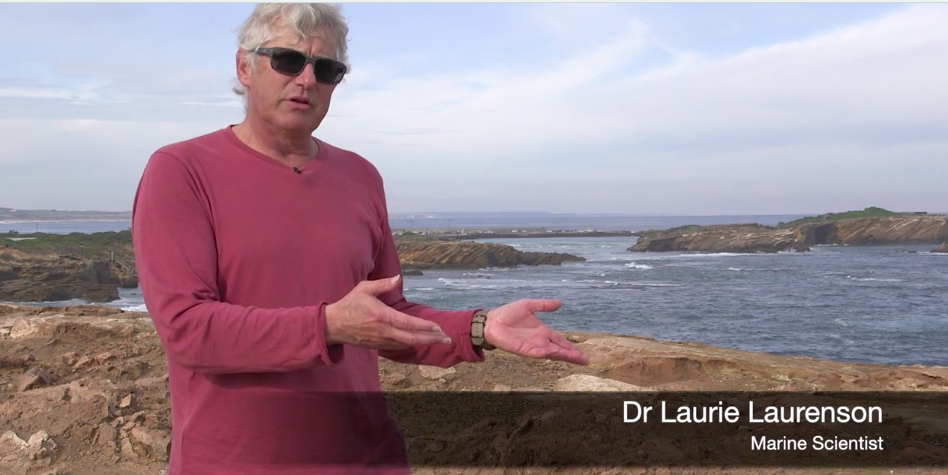
Dr Laurenson has been part of a community pushback against the the proposed Wannon Water treatment plant upgrade. Screenshot: Good Will Nurdle Hunting.

By Associate Professor Laurie Laurenson

[Dr Laurenson is a retired Deakin University academic with research expertise in fish and fisheries biology. He has published more than 70 scientific research papers since the 1980s on various aspects of shark biology, fish biology and remote sensing.]

It’s been a few months since we heard from Wannon Water regarding the sewage outfall upgrade, but recently the EPA released their responses to the public consultation program and we also heard from the Managing Director, Andrew Jeffers.

After reading what the Director had to say and reading through WW’s response to questions posed by the public consultation, I can summarise the situation pretty succinctly: WW’s response doesn’t represent new information nor significant changes to their initial proposal.

They have simply repackaged the original position, with one or two minor tweaks.

Why have I concluded this?

There’s lots of reasons, but I’ll give a few here starting with the pollution that they are discharging into the marine environments and how it mixes and disperses.

We asked WW why winds and currents were not included in their dispersal models (just waves were included) and also why they confined their study largely to 300m from the outfall.

None of these questions have been answered.

In fact, WW has simply stated that they conducted 3D modelling in the mixing zone and that the outcomes were acceptable.

This simply ignores the questions, and provides far less detail about what, where, why and how things were done.

The questions that WW were asked were very specific and the answers were fundamentally intended to lead into community health risk assessment. This is something that should have been done initially, but still is absent.

WW mentions using drones to help with assessing pollution in the mixing zone; this means focusing on the 300m area around the sewage outfall.  Newer drone technology can collect water samples and aerial imagery, but only in good weather.

Regardless, WW is only intending to trial drones, not actually committing to anything with respect to micro-plastic, chemical or biological pollution, and no mention of how often or how widespread the drones would be used.

One of the biggest criticisms we had of WW was the lack of consistent sampling of water quality and the marine ecosystem over time on the wider area towards Lady Bay.

This is likewise still absent in my view.

WW state they have historical data that they can use to answer these questions, but based on their initial upgrade proposal, no they don’t, otherwise they would have – or should have – used it.

Which gets me to community health.

WW have not shown any advances on their understanding of the potential impact of pollutants on the Warrnambool community.

It was pointed out to them that infectious biological contaminants, from their outfall, exceeded World Health Organisation standards under certain environmental conditions.

A reasonable response to this is also missing, but is critically important to us.

To be fair, WW’s response is an advance on their previous position, inasmuch as they are prepared to acknowledge that tertiary water treatment and bio-reactors, which will allow safe oceanic discharged or reuse, should be considered.

But their statements are promises into the future, with no timelines, and certainly a much greater cost burden on the community if left for some future date.

So what can I conclude?

WW is the polluting outlier in Australia, nobody else does what they do, and we should expect more of them.

Its disposal processes represent a clear and present danger to the health of the community that they serve and to the environment that we take for granted.

The response of WW to the public consultation does not represent new information, nor a significant change of position on their part, they have simply repackaged the original proposal, with one or two minor tweaks.

The EPA will make its decision on the Wannon Water proposal on 12 March.

LINKS:

 https://www.wannonwater.com.au/2021/january/updated-proposal-for-warrnambool-sewage-treatment-plant-upgrade.aspx).

Full Wannon Water docs: https://engage.vic.gov.au/epa-works-approvals/wannon-water


Biologist Prof Rob Wallis recruited to Lyndoch board

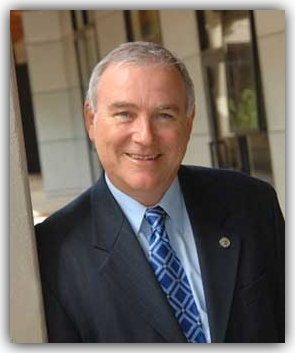
Prof Rob Wallis. Image: Scotch College alumni.

Carol Altmann – The Terrier

Apologies for the delayed post about the unveiling of Lyndoch’s newest board member, biologist Prof Rob Wallis, which was reported in the local paper on Wednesday and announced to staff yesterday (Thursday).

Prof Wallis, we now know, was approached (by someone) last September to join Lyndoch as a member and board member, which has proven to be harder than getting into the Freemasons.

But Prof Wallis made the cut and accepted the post in February. (ASIC was notified on 2 March.)

Prof Wallis already knows at least a couple of the faces on the board well – W’bool City Councillor Sue Cassidy and City Growth manager Andrew Paton – as he chairs the council’s Audit and Risk Committee.

Cr Cassidy is on that committee which is now looking into the council’s credit card usage.

You might recall that one of the transactions which sparked some interest was a $700 dinner at Myrtle Bar & Grill, attended by Mr Paton and Cr Cassidy and paid for with Mr Paton’s corporate credit card.

Ah, the tangled web….

But back to Prof Wallis. He told the paper he has been immersing himself in all things Lyndoch, which must mean:

a) he is reading The Terrier very closely and;

b) he has inquired into the status and results of the independent staff survey held a couple of months ago. What did it say? How did it turn out? Have the full results gone to the board yet?

I wait with bated breath to see what changes or influence Prof Wallis might bring.


Hot off the presses: Deakin plan

[box]This is the media release in full just issued by Deakin University:[/box]

warrnambool deakin campus
Warrnmabool Deakin Campus: Image, Deakin University.

DEAKIN WARRNAMBOOL HERE TO STAY

 Monday, 3 October 2016

[dropcap style=”color: #a5cecd;”]D[/dropcap]eakin University has today announced a proposed ongoing, long-term and more sustainable model for its Warrnambool Campus that will see it continue its role as the region’s higher education provider.

Vice-Chancellor Professor Jane den Hollander said it was not possible for Deakin to remain in Warrnambool on a business as usual basis, in the face of declining enrolments and increasing annual losses.

“If something does not change these losses are predicted to rise and the campus is increasingly unsustainable,” Professor den Hollander said.

Professor den Hollander today met with Warrnambool Campus staff and students to confirm the University’s commitment to the region and discuss proposed key changes to the current Campus model which will:

  • ensure a student experience at Warrnambool consistent with Deakin’s LIVE the future strategy and equivalent in quality to student learning outcomes at other Deakin campuses;
  • fulfil Deakin’s public purpose; and
  • address the financial losses of the Campus.

Deakin will continue to explore opportunities to grow and sustain the campus into the future, including the consideration of a new Bachelor of Agribusiness unique to the Warrnambool Campus.

Professor den Hollander said Agribusiness could be an exciting new course that plays to the region’s agricultural strengths.

“We will work with the community to explore whether there is sufficient demand to get this new Bachelor of Agribusiness up and running,” she said.

Jane-Den Hollander
Deakin Pro Vice Chancellor Jane Den Hollander. Image: Deakin University.

Deakin will continue to identify other opportunities and create strategies for new and expanded offerings at the Warrnambool Campus, including increased work integrated learning and internships, expanded use of Trimester 3, exploring the international markets, both for in-bound students and on campus international programs, potential expansion of Associate Degrees, maximisation of pathways with South-West TAFE, VCE extension studies and potential opportunities for development of Deakin’s Institute of Koorie Education programs.

“Deakin will further consult with the Victorian Government, SW TAFE and regional schools to ensure community and industry support for higher education and Deakin University in South West Victoria,” Professor den Hollander said.

“We will focus on the courses for which there is demonstrated demand and strong graduate employment outcomes,” Professor den Hollander said.

Under the proposal, Deakin will continue to offer Nursing, Midwifery, Health Sciences, Psychological Sciences, Education (Primary), Commerce, Environmental Science (Marine Biology), Law and Commerce/Law at the Warrnambool Campus. Deakin will also continue to offer the Associate Degree of Education and several PhD courses.

Professor den Hollander emphasised that all students currently enrolled in non-ongoing courses at the Warrnambool Campus will be able to complete their studies at the Campus.

”A reduction in staff numbers as a result of the proposed decreased course offering would be necessary, but this will be worked through compassionately and via a period of consultation with staff, beginning today, Professor den Hollander said.

The consultation process will help to determine how the reduction in staff numbers will occur, including the option for a voluntary separation process.

Other aspects of the proposed model include closure of the Warrnambool Corporate Centre and rezoning of parts of the Campus that the University does not require. Professor den Hollander said Deakin acknowledged the State Government for its support of the proposed rezoning.

In addition to its Warrnambool Campus, Deakin’s strong presence in the South West region will continue, including through the School of Medicine’s Clinical School at South West Healthcare, Deakin Rural Health’s integrated program of research, education, the Centre for Farmer Health and the Centre for Rural Emergency Medicine.

Professor den Hollander acknowledged the financial support promised by the Federal Government to support Deakin’s transition to the proposed new Campus model.

“Deakin appreciates the work of the Member for Wannon, the Hon Dan Tehan, who has facilitated this support,” she said.

“We look forward to the active support of local industry, education institutions and the community in general to help ensure the success of the proposed new Campus model. Support will hopefully include provision of student work placements, internships and scholarships.

We look forward to working with the community to grow a new model that better suits the current era and the growing knowledge economy. This model will include both face to face and digital learning experiences so that those who study at Warrnambool receive an education that enables them for the jobs of the future. That is our focus.”


Deakin: Phillpot discreet amid leadership vacuum

deakin-council-01
Former Warrnambool mayor Glenys Phillpot OAM, third from right, was one of 16 Deakin University council members until her recent resignation. Image: Deakin University.

Opinion – Carol Altmann

[dropcap style=”font-size: 60px; color: #DC943C;”] A[/dropcap]s the long-term future of Deakin University, Warrnambool, remains in the balance, there is one person who has had a ring-side seat to the action, former Warrnambool mayor Glenys Phillpot OAM.

Until it was drawn to my attention recently, I didn’t know Ms Phillpot was a long-standing member of the Deakin University Council, which is effectively the “board” for a university and has the power to do all manner of things, including appointing a Vice Chancellor and overseeing the finances, university performance and overall direction.

Donate $10 here.
Love Bluestone?Make a donation!

Ms Phillpot served on the 16-member council from 1 January, 2013 and was reappointed in January this year, but for some reason resigned on 30 June. When I asked why she had stepped down, Ms Phillpot said it was not appropriate to comment.

Given Ms Phillpot has been so close to the heart of the discussion and is no longer a council member, I had hoped she might be in a position to be able to shed some more light on what Deakin planned to do about the troubled Warrnambool campus, which has only 872 enrolments and, according to Deakin, needs at least 2000 to be viable.

But Ms Phillpot has opted for discretion, declining to comment beyond saying: “I just hope that there is an outcome that brings benefit to all of our community”.

warrnambool deakin campus
The sprawling Deakin-Warrnambool campus has less than 900 students enrolled. Image: Deakin University.

[dropcap style=”font-size: 60px; color: #DC943C;”] T[/dropcap]he absence of Ms Phillpot’s voice from the public discussion is a pity, because as former local Liberal MP Adam Kempton recently wrote in his opinion piece for Bluestone, the demise of Deakin-Warrnambool can be sheeted home to a lack of leadership on multiple levels.

For my mind, Ms Phillpot could help to fill that void by adding a reasoned, informed view on what needs to happen next if Deakin is to stay or go. God knows we need strong local leadership at this critical time.

As has already been reported, but somehow easily forgiven, local federal Liberal MP Dan Tehan said he was shocked to learn of Deakin considering pulling out of Warrnambool. Former local Liberal member and Premier Denis Napthine was equally as outraged when the news broke earlier this year.

Surely both men, as long-standing local MPs, should have had their finger on the pulse well before it got to this? (For the record, Ms Phillpot is also a member of the Liberal Party.)

Why did nobody apparently see this coming, especially when people like Toni Jenkins, who also wrote an Opinion piece for Bluestone on the issue, have been shouting from the rooftops for years about the poor educational standards in the south-west?

school_kids
Many south-west students are either failing to complete Year 12 or achieving only low ATAR scores. Image: eStock

[dropcap style=”font-size: 60px; color: #DC943C;”] O[/dropcap]ne of the biggest problems for Deakin-Warrnambool is that it relies heavily on local enrolments and yet we have the lowest Year 12 completion rate in the state.

And of those who do finish year 12, many are struggling to reach an ATAR of 50.

In other words, many of our students are not qualified to go to university.

As it happens, I was working at Monash University Gippsland when exactly the same scenario played out there in 2012-13.

In the wake of falling enrolments and local school students from the Latrobe Valley failing to reach university entry scores, Monash sold the campus to Ballarat/Federation University.

The loss of the prestigious Monash “brand” was significant to the Gippsland academics, some international students and no doubt some local students, but the campus is still alive and growing again by returning more to its roots (Gippsland started as the Gippsland Institute of Advanced Education).

Love Bluestone?Make a donation!

In my view, Warrnambool would be best served by a TAFE/Deakin university hybrid, based out of the TAFE complex in Timor St, with the Sherwood campus land sold off and used for eco-friendly housing or a conference centre.

Can it be done? Is it possible or feasible? I don’t know, but we all need to be a part of this critical conversation.

newsletter Eat And Drink StonesMore Opinion here:


Analysis: The ‘pruning’ of the police station pines

Analysis: The wrecking of the Warrnibald

Lack of schooling a ticking bomb

Sucking the wind right out of Portland’s sails

Community vision should extend city-wide


Opinion: Deakin a casualty of poor leadership

deakin in city
While Deakin has a presence in the Warrnambool CBD, the city has not fully capitalised on the potential of becoming a university town. Image: Deakin University.

OPINION

If Warrnambool wants Deakin to stay, it needs visionary and strong leaders prepared to make it a true university town, argues a former State MP for the south-west, ADAM KEMPTON:

[dropcap style=”font-size: 60px; color: #A02F2F;”] I[/dropcap]t is disappointing that the local leadership are confusing the need for improving educational opportunities with the need to preserve Deakin, Warrnambool campus. These are separate issues.

Clearly educational opportunities need to be improved for all students irrespective of location, economic background, or social circumstances, however that is quite separate from saving Deakin, Warrnambool. The former issue is of great concern to the broader Australian community and the latter is, of course, more parochially of concern to south-west Victoria.

Donate $10 here.
Donate!

To intermingle all these issues is to confuse the situation and distract from achieving outcomes. The debate about the future of Deakin has been far too focused on governance and procedure and not enough on outcomes.

Deakin, Warrnambool grew out of the Warrnambool Institute of Advanced Education, which was elevated to university status. Some question whether these reforms were appropriate. It has since become an important educational, cultural and economic provider in this area.

The significance of each of these components is not to be understated or underestimated. The whole community has benefitted. It has enhanced significantly the local area and contributed much to uplift our community. The question remains whether this has ever been sufficiently capitalised upon.

warrnambool deakin campus
The future of the Warrnambool campus should not just be about serving local students, but students from everywhere. Image: Deakin University.

[dropcap style=”font-size: 60px; color: #A02F2F;”] S[/dropcap]adly, Australia has lagged behind the British and American traditions of encouraging students to study at tertiary institutions away from where they live. We have no tradition of university towns and certainly this has not been viewed as a priority in Warrnambool.

It appears that once established, little has been done to rigorously promote the relationship between Deakin and the city of Warrnambool and Western Victoria. It has been an approach of set and forget: entirely foolhardy.

In recent times there has been a real attitude of “Deakin is here and therefore it will continue along”.

There was no view that the City of Warrnambool had to continuously develop a dynamic and changing relationship with Deakin to assist Deakin and ensure that it prospered in a changing environment from which the city and the community would benefit.

A progressive view would be to enhance Deakin such that it would maximise its attractiveness to non western-Victorian students, interstate students and international students. Courses need to be targeted to service areas not covered otherwise at any other universities.

Unfortunately there is a certain local complacency, where students attend Warrnambool schools, and rather than attend tertiary institutions appropriate to their attainment levels, go to the local Deakin campus and then remain in Warrnambool for careers.

This does not optimise the situation for all and has become a default position. It has also helped deflect from need to address education disadvantage issues.

Deakin Warrnambool does not exist for Warrnambool: it is a tertiary institution that is part of the national, if not international tertiary sector and needs to be sustainable on that basis. Anything less is not sustainable and is short-sighted and foolhardy.

It is further confusing to talk about profit motive and education.

Tertiary institutions are not charities. They need to be sustainable; they need to attract students; they need to offer skills, training and the experiences that students want. They must recognise a clear demand and act to meet it. Some seem to suggest Deakin should remain in Warrnambool with diminishing student numbers – clearly ridiculous.

DanTehan
Federal MP for Wannon, Dan Tehan, was quoted as saying the uncertain future of Deakin in Warrnambool came as a “complete shock”. Image: Office of Dan Tehan.

[dropcap style=”font-size: 60px; color: #A02F2F;”] A[/dropcap]ll this comes at a time when there are huge shifts in the delivery of learning, largely driven by technology. Many argue there is really no need for bricks and mortar institutions. If there is a need for them – and there needs to be if Deakin Warrnambool is to continue to exist – then they must deliver something that warrants the huge cost of providing them.

It seems there has been a real lack of recognition of this to justify a physical campus in Warrnambool. The advantage of the physical locale of universities is not just what is provided by the university, but relates to the whole living environment around the university.

Government and the community have a responsibility here. It is insufficient for the community not to engage and accommodate and enhance this experience. A real vacuum exists locally in adding to this enhancement.

There is a lazy attitude that south-west Victoria always continues on no matter what immediate crisis occurs and that the south-west always bounces back. That view is complacent and inadequate.

All of this can be summed up in a lack of leadership.

The community entrusts its leaders to be close to community and important sectors, to have a clear vision and strategically act to deal with change and act to mitigate harmful impacts of this change.

The leadership is broad: tiers of government, regional representative groups, education interest groups, business groups, to name a few. There is commonality in membership of such groups.

But worse, the potential loss of Deakin Warrnambool campus is the result of lack of effective leadership across this region.

chapel hill
Chapel Hill, North Carolina, is a typical example of a university town in the United States where the university is central to its existence. Image: University of North Carolina.

[dropcap style=”font-size: 60px; color: #A02F2F;”] T[/dropcap]he leadership needs to be ahead of the game. That means having informed and constructive consultation with the appropriate players in the sector. This must be meaningful and regular. The hands-off approach is simply not good enough.

There should be no surprises if the consultation is effective. Lip service consultation is not enough. The consultation needs to be in-confidence and those being consulted need to have confidence in those to which they are talking.

This whole saga reveals a lack of that confidence and is effectively a vote of no confidence.

The Deakin issue also reveals a scary scenario. It is insightful for similar situations and shows that the leadership is only geared to be reactive. That is not leadership.

The lack of leadership and lack of engagement across the local community means that when crises arise, there is little opportunity to address them strategically in advance. This weakness risks the horse having already bolted.

The community needs to learn lessons from what has happened here: the leadership has been vacant from the field. The next Warrnambool City Council election provides some opportunity to fix the leadership vacuum, but it needs not to stop there: all of the mentioned leadership groups need a radical overhaul.

And the whole community needs to be more the demanding of this leadership to avoid this parlous situation continuing.

newsletter Eat And Drink StonesSee an earlier Opinion piece by Toni Jenkins here: ‘Deakin can afford to stay’


Analysis: The ‘pruning’ of the police station pines

Analysis: The wrecking of the Warrnibald

Lack of schooling a ticking bomb

Sucking the wind right out of Portland’s sails

Community vision should extend city-wide