Sucking the wind right out of Portland’s sails

portland-july14_83
Portland is still waiting for its economic ship to come in. Street art on the side of the Julia St Creative Space, Portland.

OPINION

What is the long-term future for the beautiful seaside town of Portland and, moreover, does anybody care?

It appears that even when you have the Premier as your local member, it’s hard to get people to sit up and take notice that Portland – Victoria’s birthplace – is not growing, but going backwards.

The town’s population has failed to grow beyond 11,000 and, in 2001, it slipped below 10,000. It currently sits at around 10,700.

The harsh reality for this proud and robust community is that house prices are stagnant, the Year 12 attainment level is among the lowest in the state (49 per cent of students in the Glenelg area don’t complete Yr 12) and unemployment is consistently higher than for the rest of the south-west.

And while it cannot be declared to be dying, Portland’s hopes of building a strong future on the back of one bright hope – the renewable energy industry – are eroding.

Wind tower manufacturer Keppel Prince Engineering, which is the town’s second biggest employer after Alcoa, has been forced to rip 100 people from its 360-strong workforce because of changes to the federal Government policy on the Renewable Energy Target (RET).

The RET, in a nutshell, is the carrot to urge energy companies to invest in renewable energy rather than fossil fuels. Such a carrot means that companies like Keppel Prince, who make wind turbines, can attract more customers and therefore employ more workers.

But judging by what is happening in Canberra, the RET is about to be slashed, making the carrot far less carroty.  As a result, Keppel Prince (as it has been warning for months) has had to lay people off.

house prices
House price growth in Portland (green line) has been on a downward trend for the past 8 years. Source: Australian Property Monitors.

One hundred job losses out of a population of 10,700 is huge, especially when there are not a lot of options to find other work in the town.

It is not unreasonable to suggest that a fair portion of these 100 – and their families – will leave Portland to find jobs elsewhere.

The good people of Portland have known for many years that, if they hope to have a strong future, they need to reinvent themselves and broaden their horizons from the “old” industries of aluminium smeltering and forestry.

Last year’s closure of Alcoa’s Port Henry aluminium smelter  provided a reality check on Portland’s vulnerability if it continues to rely on Alcoa as its largest employer, no matter how good it has been for the town in the past, or how important it remains.

Renewable energy was seen as a potential goldmine for the town, with even the Committee for Portland describing it as a “big kicker”, but now the momentum is being lost.

The loss of 100 jobs just weeks out from a state election would normally leave a local member rushing to explain what he or she was going to do about it, for fear they would face an electoral backlash.

Yet despite facing an election on November 29, local member and Premier Denis Napthine has emerged from the news unscathed, apart from impassioned words from locals like Neville Dennert, a Keppel Prince worker who will lose his job and who took to Facebook to air his spleen.

portland-july14_75
Portland had been hoping for a significant role in the renewable energy industry, but the loss of 100 jobs at Keppel Prince is a major setback.

Dr Napthine holds his seat by an almost 12 per cent margin and one of the great disadvantages of living in such a safe seat is that your local MP doesn’t have to fight too hard for your vote: this applies whether the seat is held by Liberal, Labor or anybody else.

So Dr Napthine was able to manage the Keppel Prince disaster by firstly blaming others – in particular, wind energy companies – for buying their wind turbines from China, rather than shopping local. He then suggested Keppel Prince might do well out of other infrastructure projects that the Coalition has promised, such as the East-West link.

Sorry, but surely Portland deserves more certainty than that.

The state government, for example, could commit to introducing a state RET which was one of the ideas pushed at the renewable energy forum held in Portland in August. That idea was supported by none other than former federal Liberal leader Dr John Hewson, who was a guest speaker.

The Member for Wannon, Dan Tehan, has also avoided any serious backlash, despite his party being the one messing around with the RET.

Mr Tehan says he is hoping for a “middle ground outcome” where both “old” industry – such as aluminium smelting, which soaks up enormous amounts of electricity –  and “new” renewable energies can both thrive.

The reality so far, however, is that renewable energy projects are collapsing before they even get off the ground because of the uncertainty around the RET. Just last week,  it was reported that wind projects for Ararat and Penshurst are also under a cloud for the same reason.

Portland is being told to keep the faith, but for those 100 workers who have already been ‘let go’, it must sound like a load of hot air.

[box]Note: The Labor candidate for the seat of South-West Coast, Roy Reekie, penned an open letter to Keppel Prince workers after the announcement of the 100 job cuts. You can download it here. You can also find The Greens candidate Thomas Campbell’s updates on the issue via his Facebook page here. The Australian Wind Alliance website is here. [/box]

newsletter Eat And Drink StonesYou can read more Opinion here…


What is holding Portland back?

Granny’s Grave buried in bureaucracy

All words, no funding, for Fletcher Jones story

Grappling with the work of a predator
Unravelling the mystery of art commissions

Lack of schooling a ticking bomb in south-west


We still have jumps racing? Can’t get over it

the age
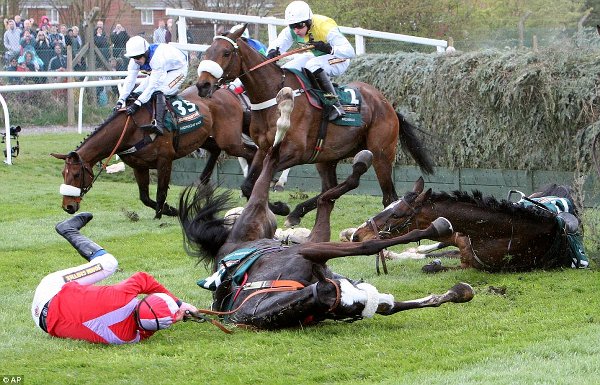
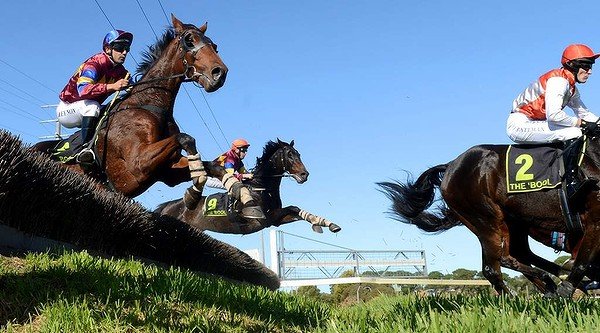
Regardless of the spectacle, the harsh reality is racehorses are continuing to die as a result of jumps racing in Victoria.  Image courtesy of The Age.

As Victoria continues to buck the trend on placing a ban on jumps racing, we ask if steeplechasing really is integral to the success of the Warrnambool May Racing Carnival.

OPINION – Carol Altmann

Here we are at that awkward time of year again in Warrnambool when the city’s biggest local sporting event – the May Racing Carnival featuring the Grand Annual Steeplechase – is also the most difficult to embrace.

For no matter how we dress it up, the reality is that jumps racing is on the nose and has been for many years.

Despite this, the powerful figures that surround the “sport” continue to tell us that horses love jumping, that the local economy would wilt without the jumps races, and that those campaigning to have jumps racing stopped are just a bunch of lefty loopies without a sense of fun.

One of the most vocal “lefty loopies” is, of course, that highly radical and subversive organisation, the RSPCA, which has an ongoing campaign against the practice on the grounds of animal cruelty.

It appears that the RSPCA is welcome to tackle battery hens, sow stalls, duck shooting, puppy farms and run the cheerful Million Paws Walk, but if it dares to go near the sanctity of the steeplechase, it is accused of being “grandstanding hypocrites,” guilty of euthanasing thousands of unwanted cats and dogs each year.

That is how the former head of the Australian Jumps Racing Association, Rodney Rae, described the RSPCA president Dr Hugh Wirth in 2011, disregarding the fact that the RSPCA is the group that mops up the sad mess left behind by irresponsible pet owners around Australia.


grand national
The Grand National Steeplechase in the United Kingdom remains one of the most controversial races in the world due to a high number of horse fatalities. Image courtesy of The Huffington Post.


But let’s return to jumps racing.

As most people know, this is a sport that no longer exists in any other states except for Victoria and South Australia. Jumps racing finished in Queensland more than 100 years ago. It stopped in WA in 1941 and in NSW in 1997. Tasmania joined their ranks in 2007.

A Senate committee in 1991 suggested it be phased out across Australia over a three-year period and, in 2010, this is exactly where things were headed for Victoria – until the state election prompted local MP Dr Denis Napthine to pledge $2 million to assist the racing industry if the Coalition won office.

The Coalition won and Dr Napthine, who part-owns a racehorse with local Federal MP Dan Tehan*, would be not only the Minister for Racing but also, eventually, Premier. Talk about friends in high places.

Despite the $2 million having surely being spent by now, horses still die in jumps racing.

It is a nasty, unavoidable truth of the “sport”, even if we try and disguise it behind the green curtain that is hastily erected around the broken horses before they are euthanased on the track.

According to the RSPCA, four horses died in jumps racing last year and there is no doubt that this week, many punters will be watching the three main jumps events at Warrnambool with their hearts in their mouths, hoping all the horses (and riders) make it home, while feeling a deep sense of unease that the horses are being made to perform this way in the first place.


spinthebottle
Spin the Bottle, part-owned by Premier Dr Denis Napthine and local Federal MP Dan Tehan. He is not a jumps racer.


The Warrnambool Grand Annual Steeplechase is 5.5 kilometres long – the Melbourne Cup is 2km shorter – and includes 33 jumps: the most of any steeplechase event anywhere in the world. That is a lot of running and a heck of a lot of jumping, even for a horse that “enjoys” it.

And for all of their Herculean efforts, hardly anyone remembers who wins. Can you name one winner of the Grand Annual Steeplechase? Or the Brierly Steeplechase? Or the Galleywood Hurdle?

At the end of the day, it all seems so cruel and so unnecessary, especially when such a small group of people has any significant investment in jumps racing and its immediate spoils.

The average punter, I believe, would be just as happy to go along to a three-day racing carnival at the beautiful Warrnambool racecourse and not see horses jump.

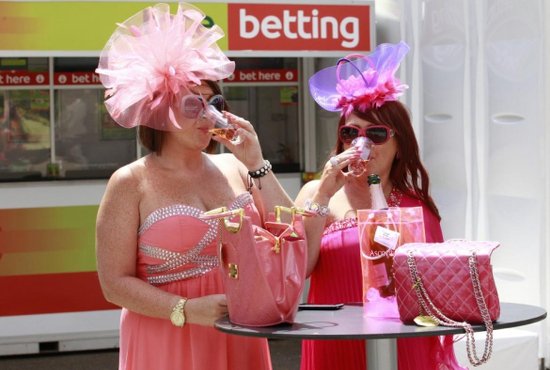
Some of the most popular – and charming – race carnivals in Victoria (think Dunkeld, Hanging Rock) attract thousands of people not because of the actual racing, but because of the atmosphere, and the chance to dress up and drink champagne for brunch.

Given the increasing awareness and activism around animal rights, especially among young people, it is only a matter of time until jumps racing is banned across Australia.

So why not cancel the jumps at Warrnambool, just for a year? Or maybe for three years, as happened during World War II when the Grand Annual Steeplechase was suspended because of more pressing matters than horse racing.

Then will we know whether the May Racing Carnival can truly stand on its own two legs, rather than relying on horses to stand on all four: despite all that is thrown at them.

*Since writing this piece, The Age has questioned the connections between Dr Napthine and Midfield Meats managing director Colin McKenna, another part-owner of Spin the Bottle.


royal ascot
Wouldn’t punters be just as happy wearing fancy clothes and sipping champagne trackside without the need for jumps racing?


When scrutiny is sub-standard, democracy suffers

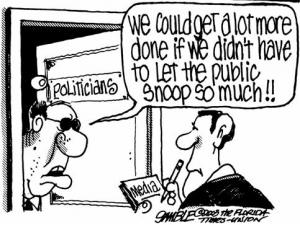
Image: The Florida Times-Union.

Something very troubling is happening in our community when it comes to the local media’s scrutiny of those in power.

Since returning to Warrnambool in January, I have watched with growing disbelief at the apparent reticence of our once-proud local newspaper, The Standard, to go in hard and ask the tough questions of our leaders.

This is what journalists do. This is the role of the so-called ‘Fourth Estate’ – to be the watchdog of the powerful and give voice to the powerless.

It is an essential part of our democracy and ensures that we retain an open, transparent and accountable government – on all levels.

dantehanpic

This past week, we saw national scrutiny of MPs’ spending, sparked by revelations that Prime Minister Abbott had claimed allowances for trips to weddings, triathlons and cycling events.

Was our local federal MP Dan Tehan asked by our paper to detail the $873,992.35 that he spent from 2010-12? No, instead this figure was not even mentioned, but rather the paper’s story (10/10) reassured us that he had claimed $321,000 in ‘legitimate government entitlements’. End of story.

There is no suggestion that Mr Tehan used his allowance improperly, but nor is it improper for a journalist to forensically examine this spending. This is exactly what independent journalist Margot Kingston did when she broke the story about Tony Abbott claiming more than $9000 in taxpayer funds to promote his book.

It is only by drilling down into the detail that all the facts can come to light.

Mayor Michael Neoh. Image: ABC.

Earlier this year, Warrnambool Mayor Michael Neoh visited China as part of a Sister City relationship with Changchun. Shortly after his return, The Standard ran a story (29/6) about Mr Neoh visiting his ancestral home in China and catching up with relatives.

Was this part of the official tour for which ratepayers paid $3500 for both Mr Neoh and Council CEO Bruce Anson?

Did Mr Neoh pay for this portion of the trip himself? Again, there is no suggestion of impropriety by Mr Neoh, but we don’t know the answer to these questions because, it appears, they weren’t asked.*

And when others do ask the prickly, difficult questions, the response is sometimes extraordinary.

Last month, Cr Peter Sycopoulis and several council colleagues questioned whether Mayor Neoh and Mr Anson needed to attend a Sister City function in Japan – expected to cost ratepayers $4000 – given they had just been to China.

For this, the councillors were chastised by the newspaper as being ‘party poopers’ (11/11). What?

And let’s not forget the infamous ‘Wilma Wright’ letters to the editor. These were published by The Standard for four years – four years – without anybody apparently checking the identity of the author, who was revealed as Mr Anson’s son and who at one point used the cover of his pseudonym to openly attack several councillors, including Cr Sycopoulis, in the lead up to a council election.

(Mr Anson, it must be noted, was cleared of any involvement in his son’s activities).

peter syc
Cr Peter Sycopoulis

The names in this column – Mr Tehan, Mayor Neoh, Mr Anson – are irrelevant: it is the public, important positions that they hold that makes them open to scrutiny and a higher standard of accountability.

This is the hard work of journalism.

It is much harder, more time consuming and nerve-wrecking than writing story after story about courts and crime (ie. the powerless) where all of the leg work has been done, yet it is critical if we are to have faith in our media as the watchdog it is intended to be.

If it fails in this task, it is nothing less than our democracy which suffers.

*  The Warrnambool City Council has since confirmed to Bluestone that Mayor Neoh did fund this portion of his travel.

Disclosures:

  • I began my journalism career as a cadet at The Standard in 1989.
  • I was an open supporter of ALP candidate Michael Barling during the last federal election because I thought he was the best option for Wannon. It was the first time I voted Labor in many years: I normally vote Green.
  • I know Cr Sycopoulis through his family: his older sisters and I went to school together.

subscribe


Time for Dan to deliver

[Image: australiavotes.org]
[Image: australiavotes.org]
 

[dropcap style=”font-size: 60px; color:#A5CECD;”] T [/dropcap]he Liberal Party will be well satisfied with its thumping victory in Wannon at the weekend as part of the national swing against Labor, but now it is time for Dan Tehan to deliver.

To date, Dan has been in the luxurious position of being able to make significant promises that have yet to be tested, but the people of Wannon will now apply a very different yardstick to that which he has enjoyed as a member of the Opposition.

For the first time as the Member for Wannon, he will be expected to not only stand by his promises, but to also defend the decisions of his entire Government: decisions which, more often than not, will be well beyond his control.

This is what Dan’s opponent in Labor’s Michael Barling faced as a mere candidate: an expectation that he, personally, should be held accountable for decisions that were being made much higher up the political chain.

[box] Given the announcements in the lead-up to the election, Wannon will be waiting expectantly to see how long it takes for Dan to come good on his word as part of Coalition Government.[/box]

First cab off the rank is the $10 million promised for the Peter’s Project cancer treatment centre. Once the new Government is installed, that should surely be signed off without delay.

Next will be a reduction in mobile phone blackspots across the electorate, plus the rollout of the Coalition’s cheaper, copper-based broadband scheme which promises, by the end of 2016, five times the speed we have now in places like Naringal and Nullawarre and Dunkeld and Maryborough.


dantehanpic


The potholed roads around western Victoria should be a thing of the past by the next election, and the Princes Highway between Warrnambool and Melbourne will be well in the throes of transforming itself into a true national road that is a pleasure to drive with its smooth surface, multiple overtaking lanes and dual carriageways.

The Coalition promised that the scrapping of the carbon tax would mean more funds for this sort of spending and would also reduce our cost of living.

[box] This week, make a note of your electricity bill, grocery bill and mortgage repayments, because we have been assured that they will all tumble without the carbon tax and an improved economy.[/box]

And so, to the economy. We have been told it was a basket case and modern times have rarely been so grim. Dan – and the Coalition – has promised more jobs, although I doubt they will be in renewable energy, and more opportunities for young people seeking training, a higher education or employment. The national unemployment rate currently sits at around 5.7 per cent; please make a note of that too.

Come 2016, we can retrieve our notes and be in a position to see if the landslide was deserved.

For the sake of a now super-safe seat like Wannon, I hope that it is.