Clinic buyer revealed, exposing holes in $1.3m Lyndoch deal
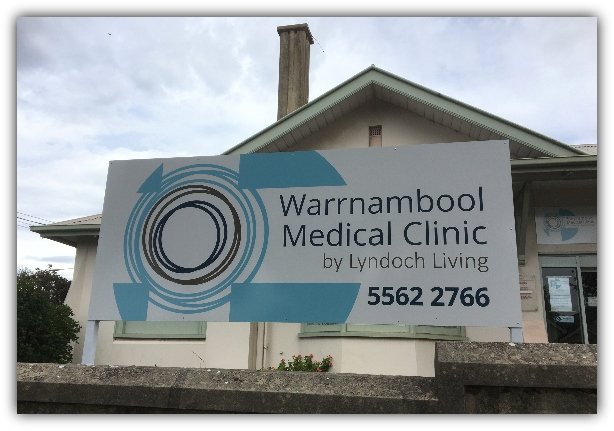
With the WMC building poised to remain a clinic under its new owner, Dr Phil Hall, the new $22m Lyndoch clinic is even more vulnerable.

The Terrier – Carol Altmann

Just when the whole saga of Lyndoch Living buying the Warrnambool Medical Clinic practice could not get any weirder, it has.

Lyndoch paid $1.3 million in 2019 for the practice, owned by well-respected GP Dr Phil Hall – but it did not buy the building.

The Liebig St building was sold on 29 July for upwards of $1.4m to an anonymous “local investor” who I can tonight reveal is none other than Dr Phil Hall.

(Land Title documents show Dr Hall was already a co-owner of the building, and bought out his partners.)

This means Dr Hall not only works for Lyndoch under contract, but he will be its landlord ($120k a year + GST) until the lease expires next July.

But that’s not the bomb.

The bomb is that the “local investor” (aka Dr Hall) reportedly wants to see the Liebig St building leased as a medical clinic after Lyndoch leaves.

“Their intent is that it remain a medical clinic beyond the current tenant’s stay,” real estate agent Danny Harris told the local paper at the time of the sale.

A medical clinic!

It’s this prospect that exposes a gaping hole in Lyndoch paying $1.3 million to buy the medical practice in the first place.

What did it actually buy?

It bought “goodwill”, which means doctors on contract and the patients who follow them.

But it appears the deal failed to include a crucial clause that the former owner of that practice could not lease a building to a competitor.

Oops.

This failure exposes the fragility of Lyndoch’s decision to wade into medical practice.

As we know, Lyndoch is spending $22 million on a brand new, three-storey, 6761 sq/m complex on Hopkins Rd that it hopes to fill with 20 GPs and other health workers.

Those 20 GPs are the backbone of the whole clinic plan.

They will each pay a substantial fee – around 35 per cent of their annual earnings – in return for a space in the clinic and support services.

But there are no guarantees the GPs will come, or will stay, because GPs are contractors: they decide where they will work, and for how long.

If a GP working for Lyndoch/Warrnambool Medical Clinic wants to leave, they simply give 30 days notice.

My sources tell me the contracts signed between the GPs and Lyndoch expire next April.

This means all bets are off until new contracts are negotiated.

As of next April, Lyndoch could – in a worst case scenario – find itself with less doctors, not more.

Lyndoch was already in a vulnerable position, but that position will become a razor edge if Dr Hall follows through on his reported plan and offers his prime slice of real estate to a new medical clinic.

Who will take up the offer, and how many GPs from Lyndoch/WMC and elsewhere (will Dr Hall be among them?) will join its ranks?

I asked Dr Hall for a comment for this piece, but he declined.



Bruising Supreme Court battle will leave lasting scars on city

After three days of hearings in the Supreme Court, the fate of former W’bool City Council chief Peter Schneider comes down to three options. Image: Forbes.com

Carol Altmann – The Terrier

After a three-day hearing in the Victorian Supreme Court, the fate of sacked Warrnambool City Council CEO Peter Schneider now comes down to three options:

First, he loses his case.

Second, he wins his case and accepts an untold amount of damages that are yet to be decided.

Third, Mr Schneider wins his case, his termination is quashed, and the new WCC councillors are left to decide whether they would like to keep him or replace him.

Any move by the new council to sack Mr Schneider would require a fresh motion and – no doubt – the opportunity for him to defend his record: an opportunity which his lawyers say he was denied on 13 July last year when the axe fell by way of a 4/3 vote. (Mr Schneider’s contract was due to expire in Feb 2023.)

The presiding judge Justice Michael McDonald says he hopes to hand down his judgment by 28 June and my word, it can’t come soon enough.

Because regardless of the outcome, this bruising court battle has done our city no favours.

By the time this is settled, our city will have been left sitting in grid lock for almost a year, unable to move ahead with a permanent leader.

Just as bruising is the spotlight on the tribalism within the old council.

By way of the written affidavits and evidence lodged with the court, the factionalism, infighting and petty nastiness within the previous council has been put on display outside of the Liebig St bubble.

We might have become used to it as part of our Stockholm Syndrome (since cured), but those exposed to it for the first time must have been astonished.

It’s perhaps not surprising that Justice McDonald dismissed most of the “he-said, she-said” evidence with one swipe on day one of the hearing on Tuesday, saying he wasn’t interested – “for heaven’s sake” – in the inner workings of the WCC.

He was attuned, however, to the implications of allowing a senior public official to be “caught in the cross-fire of factional warfare between councillors”.

As Justice McDonald said with punch yesterday, any CEO caught in this crossfire could be “figuratively get taken out the back and shot”.

He repeated this theme today, saying there were specific laws to protect a public official, like a council CEO, from “the capricious and whimsical actions” of others.

“Because of the close contact between a CEO and a council, this is the very example of (an officer) needing that protection.”

As I wrote last night, the case hinges on whether Mr Schneider’s individual contract and its “no reason” clause holds more sway than section 94 (c) of the Local Government Act, which, by law, says all council workers must be treated fairly.

As Justice McDonald outlined yesterday, it is a case with potential implications for every council CEO across Victoria.

In fact we learned in the final day of the hearing today that this is the first time in 28 years that the Local Government Act (1993) has been challenged in this way.

No other council in Victoria – in recent history at least – has had a legal battle between a sacked CEO and a council make its way to the Supreme Court.

So Warrnambool will make history and Schneider v Warrnambool City Council will probably find its way into the text books of the next generation of civil lawyers.

But no doubt ratepayers, who one way or the other are paying for this battle and the fallout, would prefer this chapter had never been written.


Court case may set brutal precedent for all council CEOs

A legal challenge by sacked Warrnambool City Council chief Peter Schneider could have implications for councils around Victoria. Image: ABC

Carol Altmann – The Terrier

If you think the Supreme Court battle between the Warrnambool City Council and dumped CEO Peter Schneider is just a local bunfight, think again.

The potential implications of this case for council’s right across Victoria was made clear by the presiding judge today.

The Honourable Justice Michael McDonald said if Mr Schneider loses his legal fight on the grounds argued by the WCC, every council CEO across Victoria was at risk of “figuratively (being) taken out the back and shot”.

If you are successful, then any local government within Victoria would then have the power to terminate a contract for no reason at all,” Justice McDonald told counsel for the WCC, Ragu Appudurai.

Justice McDonald said, “looking at the very broad, non-legalistic picture”, the outcome of this case had wide-reaching implications for councils far beyond Warrnambool.

One is the “no reason” clause – like that used to dismiss Mr Schneider – left all council CEOs vulnerable to tribalism of councillors.

“A CEO could be caught in the cross-fire of factional warfare between councillors and figuratively get taken out the back and shot,” Justice McDonald said.

Justice McDonald said the CEO position was “an extremely important position” and if the WCC was found to be able to sack Mr Schneider without reason or fairness, the impact on good governance would be devastating.

“That would be an extraordinary outcome and extraordinarily destructive for good governance,” he said.

“(It would be) quite an extraordinary outcome …a council can simply employ someone on a contract which permits the council to (dismiss them) for no reason at all.”

The nub of the case is whether Mr Schneider’s individual contract holds more sway than section 94 (c) of the Local Government Act, which guarantees all council workers will be treated fairly.

Mr Appudurai today spent several hours outlining the council’s argument that Mr Schneider is not a regular council employee, but a senior employee on a specific contract.

As such, the council could sack him using the “no reason” clause in this contract and had no obligation to treat him “fairly”.

This lack of fairness included the four ex-councillors not giving Mr Schneider a chance to defend himself on the night of his sacking.

Lawyers for Mr Schneider, however, argue that no individual contract can over-ride the Act, which is the law.

They say that Mr Schneider was sacked unlawfully and so is – technically – still the CEO of the Warrnambool City Council.

This is part of what Justice McDonald will have to determine in his judgment that he hopes to hand down by 28 June.

In the meantime, an interesting question raised by the Justice today was, if Mr Schneider wins his case, what happens to the $200,000 payout he received last year?

Would it need to be repaid?

Not according to Mr Schneider’s lawyer David Grace QC, who argued that because Mr Schneider was sacked illegally, this money (after tax) was the wages he would be entitled to keep from the day he was sacked to the day he is reinstated.

In other words, Mr Schneider is still – technically – the CEO.

The WCC, however, saw this payout as “the price it had to pay” to sack Mr Schneider without reason.

To quote Justice McDonald: “there are plenty of curly questions being thrown up by this case”.

That might be the understatement of the year.

Final submissions will be heard in the Supreme Court tomorrow.


Supreme Court hearing opens into WCC chief’s sacking

Former W’bool City Council CEO Peter Schneider is now challenging his sacking.

Carol Altmann – The Terrier

Lawyers for sacked Warrnambool City Council CEO Peter Schneider today argued in the Supreme Court that he was a victim of “subterfuge” and a “concerted plan” by four former councillors to get rid of him.

Today (23/3) was the opening of a two-day hearing into whether Mr Schneider was denied natural justice when he was sacked on 13 July last year on a 4/3 vote of the then-councillors.

The day started with a surprise move from the council’s lawyer, Ragu Appadurari (Russell Kennedy lawyers), suggesting witnesses could be called to give evidence and cross-examined, rather than the court relying solely on written affidavits already lodged.

This move would have potentially blown out the length of the hearing and delayed the delivery of a judgment until the end of the year: making it impossible for the WCC to appoint a CEO until late 2021.

The Honourable Justice Michael McDonald said, if witnesses were called, he could no longer aim to meet a 26 June deadline that he set after last week’s injunction hearing.

Perhaps not surprisingly, this move to call witnesses was dropped by the WCC after a short adjournment.

The rest of the day was spent by Mr Schneider’s counsel, David Grace QC, outlining the key points of his case, including the seeking of legal advice by then Councillors Kylie Gaston, Michael Neoh, David Owen and Sue Cassidy.

Mr Grace argued this legal advice from Maddocks lawyers was not approved by the full council, was not shared with the other three councillors and was used to map out “the easiest way” to get rid of Mr Schneider with less risk of court action, or public outrage.

That “easiest way” outlined by Maddocks was to sack Mr Schneider using the “no reason” clause in his contract, rather than sack him for poor performance, Mr Grace said.

The case hinges on whether this “no reason” clause holds more weight than the protections of the Local Government Act.

The court also heard that former Mayor Tony Herbert, having learned of the move to sack Mr Schneider on 13 July, prepared 31 questions to ask at the meeting.

These questions included whether the councillors would give Mr Schneider a chance to defend himself.

The four councillors, however, “stayed mute” to all 31 questions, having received legal advice not to respond.

If they did respond, they would then have to justify the “causes” for sacking the CEO, Mr Grace said.

Justice McDonald earlier in the day indicated he had had some taste of the dysfunctional relationships within the former WCC from the affidavits lodged by the four councillors, Mr Herbert, the acting CEO and Mr Schneider.

“I will not be having any regard to any of the material about so-and-so had an unprofessional relationship with so-and-so…for heaven’s sake,” Justice McDonald said.

“I don’t have any enthusiasm at all for hearing evidence on the inner workings of the WCC…(and) it is of no legal bearing on the legal questions which will determine the case.”

The hearing continues tomorrow with Mr Grace, followed by Mr Appadurari for the defence.


Legal action presses pause button on WCC hiring new CEO

Former Warrnambool City Council CEO Peter Schneider. Image: WCC

JUST IN: Warrnambool City Council sacked CEO Peter Schneider has successfully stopped the WCC from hiring a replacement until a judgment is handed down in his Supreme Court challenge.

The Supreme Court hopes to hand down its decision by 1 June 2021, with the hearing scheduled for March 23 and 24.

Mr Schneider had applied for an injunction in the Supreme Court to stop the council going ahead with hiring a new CEO.

The injunction hearing was held in the Melbourne Supreme Court this morning before the Honourable Justice Michael McDonald.

The injunction application was dismissed, however, when the WCC agreed to suspend the hiring process.

It was revealed during the hearing that the WCC was due to meet next Monday, March 15, to make a decision on the new CEO.

Justice McDonald today expressed his concern several times about the recruitment process underway, saying it didn’t “sit very well with the administration of justice”, given Mr Schneider’s case is yet to be heard.

Justice McDonald also raised concerns several times about whether applicants for the CEO job had been told about Mr Schneider’s court action.

Justice McDonald said he doubted any applicant who was “fully appraised” of the situation would be likely to “relocate their family from interstate, resigning from their job or whatever, if Peter Schneider could walk back in the door and take up his position”.

“I can’t understand why anyone properly advised would do so,” he said.

Today’s hearing gave some fascinating insights into what we can expect from the full hearing.

One was that Mr Schneider, if successful, is seeking to be reinstated immediately or, as it was put today, “walk back into the door to take up his position”.

Based on what was said in the hearing today, this is entirely possible.

Justice McDonald indicated that the nub of the argument was whether the council was legally able to sack Mr Schneider for “no reason or any reason”, or whether this part of his contract is over-ridden by the Local Govt Act which says all employees must be treated fairly.

The March 23-24 hearing will also examine whether Mr Schneider, as a CEO, had protections under the council’s Enterprise Bargaining Agreement (EBA).

From the arguments put forward by lawyers for both sides this morning, Mr Schneider’s court action is shaping up as a test case on just how far a “no reason or any reason” clause can stretch.

It has also exposed the decision by four of the seven former city councillors to dump Mr Schneider is not as cut and dried as they hoped it would be.