Union action sees scabies outbreak confirmed at Lyndoch

Lyndoch Living has a confirmed outbreak of scabies in its Audrey Prider Centre.

Exclusive

Carol Altmann – The Terrier

I am technically taking a break, but some stories can’t wait until the new year, and this is one of them – a confirmed outbreak of scabies in the Audrey Prider Centre at Lyndoch Living.

What a Christmas gift to residents in APC, which is a high-care dementia wing and home to some of the most vulnerable people in Lyndoch aged care.

The scabies diagnosis confirms what Lyndoch nursing staff and some residents’ families have long suspected, with a nasty rash coming and going through APC for months and months.

Lyndoch management finally brought in skin specialist Dr Werner Sinclair on 5 December and he has since issued a formal diagnosis of scabies for at least two residents.

I understand that up to eight residents are now potentially affected by what is a highly contagious infestation.

But this diagnosis by Dr Sinclair didn’t just happen.

It followed an intervention by the Australian Nursing and Midwifery Federation on behalf of nursing staff who were sick to death of being fobbed off.

As reported by The Terrier, the union wrote a letter to Lyndoch on 27 November demanding answers on whether there had been any suspected or confirmed cases of scabies in APC in the past six months and, if so, what had been done about it.

Some of its members, the union wrote, had been “actively treated” for suspected scabies, as had some residents, but nursing staff were “of the view” that they were not to talk about it with residents’ families, or each other.

The ANMF was also told by its members that “minimal infection control measures” had been put in place.

If what the union says is correct, this is pure damage control, if not a cover up.

One thing is certain, and that is that it took the union to put a rocket up the backside of Lyndoch about this outbreak and to bring in the experts.

This begs the bigger and more important question of why?

Why must it take the intervention of a union to see the immediate welfare of residents and staff in Audrey Prider Centre shoot to the very top of Lyndoch’s priorities?

And if the union had not intervened, would the outbreak have ever been formally diagnosed and responded to? Or would the itch just go on?

The families of some of those infected are absolutely furious by what has unfolded.

Their stories are ones of confusion and misinformation.

One woman said she learned of her mother’s scabies via a phone call from Lyndoch last Monday – December 14 – by which time her family had been to visit her mother several times and been potentially exposed.

In another case, a family member of an APC resident who is being treated for scabies, has scabies.

While scabies is not deadly, it causes an intense, almost maddening itch from tiny, burrowing mites that get under the victim’s skin.

Treatment is via either oral medication or an external lotion applied all over the body.

According to a document sent to me, Lyndoch is using the services of an infection control consultant – Victorian Infection Prevention Services – to help manage its outbreak.

Bulk supplies of one lotion, Benzemul, have been brought it to protect APC nursing staff, who were urged to start applying the lotion to themselves as of last Monday, 14 December.

It’s understood residents are also being treated with a lotion.

To contain the outbreak, APC staff must also wear long sleeves and gloves when dealing with infected residents, wash their hands after every resident contact, and dispose of all used linen immediately into a laundry skip rather than carrying it.

Scabies, to put it bluntly, is a bastard of a thing to catch, and to contain.

And all of this comes to light as the Lyndoch Living executive gathers tonight for its Christmas break up. I hope they are having a good time, because those with the scabies are certainly not.

I emailed the Lyndoch CEO Doreen Power, chair Susan Cassidy, and the Lyndoch media unit at 11am this morning for comment. I will update this piece if any comment is provided.



“Undesirable” result was the exact opposite: Jim Burke

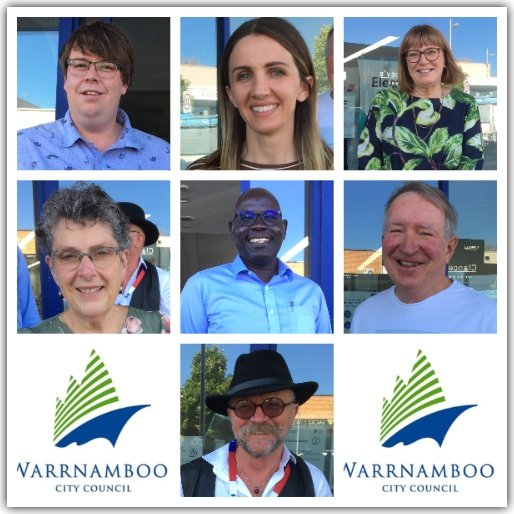
The seven new Warrnambool City Councillors elected in a clean sweep in 2020: Ben Blain, Angie Paspaliaris, Debbie Arnott, Vicki Jellie, Otha Akoch, Max Taylor and Richard Ziegeler.

Terrier guest writer – Jim Burke*

This week the local newspaper reported that three former councillors thought that the outcome of the recent council election was “undesirable” and that a ward system with three councillors in each ward would prevent “undesirable” results in the future.

Really!  Well let’s unpack that.

Firstly, just how was this election result “undesirable”?

The election was a well-run, open, democratic process conducted independently by the Victorian Electoral Commission. The candidates all campaigned in good will and the community seemed to be fully engaged.

The election results were overwhelming, the community wanted a clean sweep: that is what they voted for and that is what they achieved.

It seems clear that the voters understood that they could likely end up with seven councillors who would come to the job with no previous experience.

Is that what happened? Well, actually, no.

The seven new councillors bring a wealth of skills and experience to the table and they have had the benefit of observing their predecessors and an understanding of just what is at stake.

The result of this election was not “undesirable”: it was the exact opposite. It was clearly the result the community desired.

Now, would a system of three wards, electing three councillors each, have changed the election results?

In the case of the 2020 election, I doubt that a ward system would have changed the outcome. There was a strong mood for change, and this can be seen in the voter turnout.

More were enrolled to vote in 2020 than in 2016, and of these, more people actually voted in 2020 as a proportion of those enrolled than was the case in 2016.

The proportion of informal votes also went down, not up, as implied by the former councillors in the newspaper article.

If we had three wards electing three councillors each in 2020, the outcome may have been different, if only because it might have caused a different range of candidates to nominate.

For instance, all of the sitting councillors who sought re-election in 2020 lived and/or worked within a short walk of Liebig Street; do you think that any of them would have been accepted in a ward that included, say, Allansford?

We had no candidate running from Allansford (or Woodford) in 2020, so perhaps under a system of wards, we would see such a candidate.

I would argue that such was the mood for change, the outcome would have been much the same, whether it was a single electorate, or an electorate divided into wards.

The retired councillors also made some further observations that I would like to challenge:

First, that a ward system would have reduced the informal vote from nine per cent to two per cent.

I am not sure what they base this on, or how they arrived at the figure of two per cent, but in any case the assertion is misleading.

If the 2020 election had been held over three wards, the informal vote (nine per cent) divided among three wards would have been three per cent per ward.

Perhaps with fewer candidates per ward, then the informal vote may have been lower. But a whole percentage point?

Secondly, these retired councillors harked back 30 years when there was a ward system, elections were held annually, and one third of the councillors retired each year. The idea being that this would have avoided the “undesirable” outcome of the 2020 election, by reverting to an enforced system of “old and new faces” at the council table.

This is a bogus argument that needs to be debunked right now.

Whatever the merits of the idea, it will not happen now or ever. We would have to endure three months of election activity every year, and the costs to candidates and councils – in cash and personal and professional disruption – would be unacceptable.

In any case, no State Government would ever commit the resources or pay the huge cost of an election in all 79 councils in Victoria every year. It just will not happen.

But change is in the air for the next election in 2024, with Warrnambool set to return to wards in response to a State Government review.

How many wards, their boundaries, names and the total number of councillors (the review recommended nine), will be decided in the coming months.

For now, however, all eyes are on this new council and the fresh start that Warrnambool desired and achieved.

*Jim Burke, a retired naval officer, ran for the WCC election for the first time and finished 11th after preferences. He is a regular fixture in the public gallery at council meetings and continues to run a Facebook page with commentary on civic affairs.


Deakin: Phillpot discreet amid leadership vacuum

deakin-council-01
Former Warrnambool mayor Glenys Phillpot OAM, third from right, was one of 16 Deakin University council members until her recent resignation. Image: Deakin University.

Opinion – Carol Altmann

[dropcap style=”font-size: 60px; color: #DC943C;”] A[/dropcap]s the long-term future of Deakin University, Warrnambool, remains in the balance, there is one person who has had a ring-side seat to the action, former Warrnambool mayor Glenys Phillpot OAM.

Until it was drawn to my attention recently, I didn’t know Ms Phillpot was a long-standing member of the Deakin University Council, which is effectively the “board” for a university and has the power to do all manner of things, including appointing a Vice Chancellor and overseeing the finances, university performance and overall direction.

Donate $10 here.
Love Bluestone?Make a donation!

Ms Phillpot served on the 16-member council from 1 January, 2013 and was reappointed in January this year, but for some reason resigned on 30 June. When I asked why she had stepped down, Ms Phillpot said it was not appropriate to comment.

Given Ms Phillpot has been so close to the heart of the discussion and is no longer a council member, I had hoped she might be in a position to be able to shed some more light on what Deakin planned to do about the troubled Warrnambool campus, which has only 872 enrolments and, according to Deakin, needs at least 2000 to be viable.

But Ms Phillpot has opted for discretion, declining to comment beyond saying: “I just hope that there is an outcome that brings benefit to all of our community”.

warrnambool deakin campus
The sprawling Deakin-Warrnambool campus has less than 900 students enrolled. Image: Deakin University.

[dropcap style=”font-size: 60px; color: #DC943C;”] T[/dropcap]he absence of Ms Phillpot’s voice from the public discussion is a pity, because as former local Liberal MP Adam Kempton recently wrote in his opinion piece for Bluestone, the demise of Deakin-Warrnambool can be sheeted home to a lack of leadership on multiple levels.

For my mind, Ms Phillpot could help to fill that void by adding a reasoned, informed view on what needs to happen next if Deakin is to stay or go. God knows we need strong local leadership at this critical time.

As has already been reported, but somehow easily forgiven, local federal Liberal MP Dan Tehan said he was shocked to learn of Deakin considering pulling out of Warrnambool. Former local Liberal member and Premier Denis Napthine was equally as outraged when the news broke earlier this year.

Surely both men, as long-standing local MPs, should have had their finger on the pulse well before it got to this? (For the record, Ms Phillpot is also a member of the Liberal Party.)

Why did nobody apparently see this coming, especially when people like Toni Jenkins, who also wrote an Opinion piece for Bluestone on the issue, have been shouting from the rooftops for years about the poor educational standards in the south-west?

school_kids
Many south-west students are either failing to complete Year 12 or achieving only low ATAR scores. Image: eStock

[dropcap style=”font-size: 60px; color: #DC943C;”] O[/dropcap]ne of the biggest problems for Deakin-Warrnambool is that it relies heavily on local enrolments and yet we have the lowest Year 12 completion rate in the state.

And of those who do finish year 12, many are struggling to reach an ATAR of 50.

In other words, many of our students are not qualified to go to university.

As it happens, I was working at Monash University Gippsland when exactly the same scenario played out there in 2012-13.

In the wake of falling enrolments and local school students from the Latrobe Valley failing to reach university entry scores, Monash sold the campus to Ballarat/Federation University.

The loss of the prestigious Monash “brand” was significant to the Gippsland academics, some international students and no doubt some local students, but the campus is still alive and growing again by returning more to its roots (Gippsland started as the Gippsland Institute of Advanced Education).

Love Bluestone?Make a donation!

In my view, Warrnambool would be best served by a TAFE/Deakin university hybrid, based out of the TAFE complex in Timor St, with the Sherwood campus land sold off and used for eco-friendly housing or a conference centre.

Can it be done? Is it possible or feasible? I don’t know, but we all need to be a part of this critical conversation.

newsletter Eat And Drink StonesMore Opinion here:


Analysis: The ‘pruning’ of the police station pines

Analysis: The wrecking of the Warrnibald

Lack of schooling a ticking bomb

Sucking the wind right out of Portland’s sails

Community vision should extend city-wide


Be all things or stick to the basics?

council plan
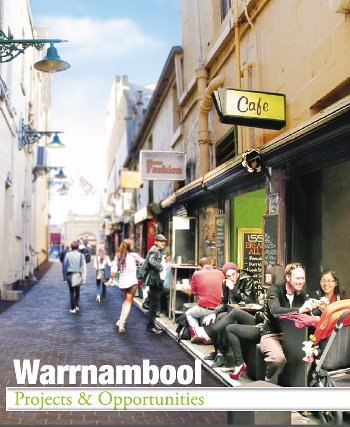
The dream: an image of bustling cafes built into the sides of Warrnambool’s laneways graces the cover of the council’s recently released priority ‘wish list’.


[dropcap style=”font-size: 60px; color: #A5CECD;”] C [/dropcap]ouncils were once primarily responsible for rates, roads and rubbish: my, how times have changed.

The 16-point list of advocacy priorities released by the Warrnambool City Council suggests that the council must now be all things to all people, fixing everything from school retention rates, to unemployment, to developing the region’s food export industry…right down to upgrading the stormwater drains. But is this what ratepayers really want or expect?

Sixteen points is a lot of priorities for a council covering only 32,000 people and they can’t possibly all be met, especially when we struggle to get the public toilets right.

I say this because as I was walking back from a media briefing on the plan last week, I wandered past the vandalised portable toilet box on Gilles St, across the road from the heritage precinct of the former police station and court house.

Having only been back in Warrnambool a relatively short time, I thought these toilets must have been installed for the comfort of the workmen repairing the former post office nearby.

A google search, however, revealed the eyesore is considered a public toilet and has been sitting there since 2011 while the council finalises its public toilet strategy.

My heart sank. If it takes more than three years to sort out the public lavatories, what hope is there of achieving the bulk of the 16 priorities that had just been outlined to the media by Mayor Michael Neoh and CEO Bruce Anson?

Moreover, do we need to have 16 priorities? What about focussing on five, securing the funding for these, and doing them really, really well? (We will list our top five later).

toilet_19
The reality: the ‘temporary’ toilet block on Gilles St indicates that making progress on some projects can take years.


[dropcap style=”font-size: 60px; color: #A5CECD;”] W [/dropcap]hile there is nothing wrong with thinking big and aiming high, we have three levels of government for the simple reason that each one looks after different levels of responsibility.

Ratepayers, I suspect, want a local council to focus on maintaining and improving their local amenities, to ensure that their city is a good looking and vibrant place where people want to live, work or visit for an unforgettable holiday.

Given this, it was heartening to hear Mr Anson list the revitalisation of the CBD as the number one priority, but there was scant detail on how this would be done, and by when. (*Since this piece was written, WCC has announced it is seeking an architect to redesign the portion of Liebig St between Koroit St and Raglan Parade).

The gradual rejuvenation of some of the city’s laneways – a wonderful council project –  is an example of what can happen, yet the F Project artists behind all of this hard work are scrimping and scraping to develop their art space down at The Artery, in Timor St.

The Artery has the potential to utterly transform what was a bland part of the CBD and to draw tourists in droves, but unfortunately this simple project has received very little council money.

At the same time, the council says in its latest document that it hopes to secure $100,000 for a “comprehensive study” into food production in south-west Victoria and potential export markets. Why? Isn’t this the domain of the State Government and, more particularly the local member, Denis Napthine? Or perhaps it is even better suited to the Federal Government, and our local member, Dan Tehan?

bluestone2_29
The Artery artists’ hub in Timor St has the potential to be a magnet for tourists and locals alike.


[dropcap style=”font-size: 60px; color: #A5CECD;”] L[/dropcap]obbying the other two tiers of government is part of what local councils do, but do we really want to secure and spend $100,000 on another study in the process?

Even a portion of this money would go a long way toward, for example, The Artery being able to open its retail space, gallery and studios – heck, they might even be able to get their signwriting done.

To be fair, the council’s priority list does contain some good, grassroots project such as upgrading the dated public swimming pool and working on a plan to improve the equally dated and tiny library, but it also contains a chunk of ‘priorities’ that have been around for so long now, most of us have forgotten when they were first announced, such as sorting out the future of the Fletcher Jones site, Flagstaff Hill and the railway station precinct.


bluestone2_25
Warrnambool will receive a longer airport runway, but the trains will still be slow, unreliable and crowded.

[dropcap style=”font-size: 60px; color: #A5CECD;”] S[/dropcap]peaking of the railway, improving the inadequate train service to Melbourne has been another, long-standing priority that has again been wish-listed by the council, yet it is the extension of the Warrnambool airport runway that is taking precedence for $4.5 million in state and federal funding.

The number of people who use this runway will be minuscule compared to the number of train commuters who already struggle to find a seat on a service that operates only three times a day and lumbers along at a Cobb-and-Co-like speed of 74 kph.

We should be outraged, especially as our compatriots in Bendigo, Ballarat and even Traralgon each have more than a dozen services a day, including a number of express trains.

A fast, reliable commuter service between Warrnambool and Melbourne is also critical to tourism, yet there is no indication that the service will receive another cent from either the state or federal governments.

The council has developed an enormous amount of strategic plans and strategies – the latest one brings the total to 32 in the past 10 years – but my fear is that it is spreading itself too thin, that it expends too much time and money reaching for the stars rather than dealing with the basics, and that, like the toilet box in Gilles St, it will ultimately struggle to be flush with success.

[box] Below are Bluestone’s five funding priorities (what are yours?):[/box]

  • Secure and save the best of the Fletcher Jones site and gardens and lobby for state funds to make it happen. This site is critical to creating a sense of ‘arrival’ to Warrnambool and has the potential to be something very special.
  • Fix the train service with more frequent, faster and reliable trains that include express services.
  • Revitalise the CBD by, for example, offering incentives to restore and repair the heritage buildings, remove the parking meters and create a true restaurant precinct.
  • Finish the sensational foreshore bike path by, as previously suggested by the council, linking it back through Lake Pertobe to the railway station. People would travel to Warrnambool (on a fast train) just to ride this path – I have already met some.
  • Upgrade the whale watching precinct into the world-class attraction that it should be.

Logo Smile newsletter More opinion pieces…


Who will step up for Fletcher Jones?

Time for a fresh start with Australia Day

Broken link for Artlink

Losing sleep over a lot of rubbish

Close Flagstaff Hill; save Fletcher Jones

When scrutiny is sub-standard, democracy suffers


Sister cities or business brothers?

sisters-opinion


[dropcap style=”font-size: 60px; color: #DDCE8D;”] A [/dropcap]mid all the arguing about whether Warrnambool City Council should send a delegation to Miura, Japan, for Sister City celebrations, a simple question is yet to be answered: what do we gain from our two Sister City connections?

And, more importantly, what do we expect?

Trying to answer the first question is harder than you think, as there is no single, easily accessible reporting mechanism that documents the achievements of the Miura link that dates back more than 20 years (our Sister City link with Changchun, China, began last year).

Instead, you have to trawl through two decades of council minutes and newspaper archives to discover that our Sister City relationship with Miura has pretty much done what it set out to do, which was to build “friendship, cooperation and understanding” between two very different cultures.

[dropcap style=”font-size: 60px; color: #DDCE8D;”] I [/dropcap]n a pre-Internet world, it was considered money well spent to invest ratepayer dollars in building harmonious relationships with cultures so unlike our own as to be exotic. School kids have a chance to visit another country, and to host international students in return. We have a lovely, if hidden, Japanese friendship garden, and Miura has some Norfolk pine seedlings. Funds have been used to host and attend civic functions, both here and in Miura.

That’s what a Sister City relationship used to be about and what ratepayers’ money has been spent on, although whether – in the wired, highly mobile world of 2013 – it is still money well spent, is open to debate.

Which brings us to the second question: what do we expect?

This is where things have shifted.

c2c july


[dropcap style=”font-size: 60px; color: #DDCE8D;”] T [/dropcap]he July edition of the Council’s newsletter, C2C, was almost breathless in its description of our newest Sister City, Changchun, as a place of 7.5 million people, spread across 20,571sq/km, and pumping out 2.8 million and 2500 train carriages a year. Who wouldn’t want a piece of that action?

Indeed, the newsletter cover gave a tantalising taste of what we might look forward to, with a mock image of a Chinese bullet train speeding into Warrnambool railway station. Wow, this would be so much better than the current V-Line service that is one of the poorest performing in the state because of its breakdowns and delays.

This new Sister City relationship is not only about friendship and goodwill, but promoting “common prosperity and development” – in other words, business – and this takes a lot of time, and we can expect, a lot more money before we see any concrete results.

The council minutes of September 9 make this clear:

“If the Council and the Great South Coast elect to use the relationship with Changchun to leverage business opportunities, further costs will accrue in hosting visits to Warrnambool from Changchun and staff resources in preparing and supporting business and projects to the benefit of the region, matching funding with state government grants etc. These are unknown at this stage.”

changchun


[dropcap style=”font-size: 60px; color: #DDCE8D;”] W [/dropcap]hile we might be flattered by the intentions of a major city, we certainly don’t have Changchun all to ourselves. Changchun has 19 other Sister Cities: Warrnambool is number 20. In this regard, it is a bit like being married to a polygamist – you have a seat at the table, but the love is being shared around.

Still, the recent business delegation to Changchun, led by Mayor Michael Neoh and CEO Bruce Anson, reported that they found the trip invaluable as an entrée to potential new markets.

No doubt their efforts to build on this introduction will dovetail with the work of the Great South Coast Exporters Group, and similar state and federal bodies that work to build international trade relations.

But is this what our Sister City relationships should be about?

And should ratepayers’ money be directed to this purpose, or could it be better used to fund, for example, more tangible and immediate projects such as improving the restaurant end of Liebig St, installing more public art, or buying more books for the library?

The little sister has grown up: now is the time for an open discussion on where she fits into the family.

newsletter People Stones

 If you enjoyed this, you might enjoy…


When scrutiny is sub-standard, democracy suffers