Sovereign Hill strikes gold as ‘Flaggy’ struggles
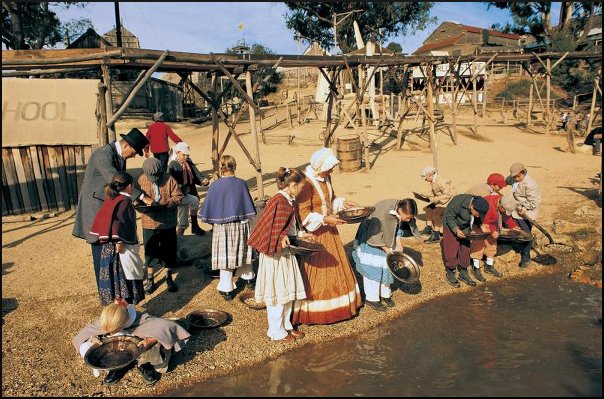
pan-for-gold-sovereign-hill-2880
Children dressed in period costume pan for gold at Sovereign Hill: just one of the many daily activities for visitors to the site. Image: Sovereign Hill.

Analysis: Carol Altmann

Why is Sovereign Hill in Ballarat still booming after 45 years and Flagstaff Hill in Warrnambool is struggling to survive?

Both are in regional Victoria, both opened in the early 70s and both rely on a mix of reality and fiction to capture our colonial past – yet their individual fortunes could not be more different.

The numbers for Sovereign Hill are simply staggering: in 2013-14 it recorded 731,000 visitors of which more than 100,000 came from overseas.

Flagstaff Hill recorded less than 60,000.

In 2013-14, Sovereign Hill turned over $24 million in revenue and recorded an operating profit of $775,000. It employs 360 staff and has 250 volunteers.

By contrast, Flagstaff Hill has gone from making a profit to running at loss of around $500,000 a year, it employs only 13.5 staff and has 135 volunteers.

The first response might be, oh, Sovereign Hill must receive more government funding. No, it relies on generating its own income to survive.

Oh, but it is only 90 mins from Melbourne! Yes, but Flagstaff Hill is only an hour from the 12 Apostles, one of the top tourist attractions in Australia.

Perhaps the entry fees are cheaper at Sovereign Hill? No, in fact they are more than double the entry fees to Flagstaff Hill at $49.50 adult/$22 child/$122 family.

To my mind, the difference comes down to two critical things: i) Sovereign Hill has aggressively and successfully gone after the lucrative Asian tourist market and ii) Sovereign Hill itself is full of life, characters and things to do.

Flagstaff hill
While Flagstaff Hill Maritime Village occupies one of the best spots in Warrnambool, it is a largely static museum whose fortunes are flagging. Image: Bluestone Magazine.

In his submission to a recent state parliamentary inquiry into heritage and eco tourism, Sovereign Hill Chief Executive Officer Jeremy Johnson laid out some startling facts.

Having sniffed the wind early on the growing Asian tourism market, Sovereign Hill now employs four staff in China to sell itself as a destination direct to the Chinese. (In January it hosted a hugely successful 1850 fashion show and competition in Shanghai. See here.)

It also hires 17 Mandarin and Cantonese speaking tour guides on site – and has used such guides for 20 years.

Incredibly, one in three Chinese tourists to Victoria now visit Sovereign Hill.

Of course Flagstaff Hill has known about the burgeoning Asian market too, but only now is it lumbering into life to do anything about it, with an upgrade of its sound and light show that will be multi-lingual.

When I visited Flagstaff Hill a few weeks ago, there were no multi-lingual maps or signage, and the introductory film shown to all visitors is in muffled and difficult “olde” English (being extracts from a colonial diary).

There were certainly no Mandarin-speaking guides about, in fact there were very few people (visitors or volunteers) about at all, despite it being the height of the school holidays.

Which brings me to the second point. Flagstaff Hill is more static now than it was 30 years ago.

Tourists love things to see, do, touch and listen to, and this is where Sovereign Hill leaves Flagstaff Hill in the shade.
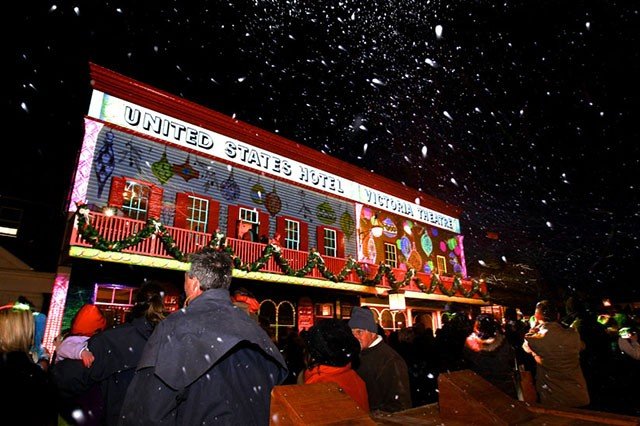
sovereign hill xmas july
The winter blues have been transformed into a tourism winner at Sovereign Hill with its “Christmas in July” event that taps into the White Melbourne light show theme. Image: Sovereign Hill.

It Sovereign Hill, visitors can pan for gold, have their name printed on a “Wanted” poster, buy some Raspberry drops from the boiled sweet shop, or watch a building “burn” down, and on it goes…

At Flagstaff Hill, the visitors walk into the re-created shops, bar and blacksmiths etc expecting to see someone doing something and – apart from one or two exceptions such as the boatbuilders – there is nobody doing anything.

One more example: Ballarat is freezing in winter, even colder than Warrnambool. But Sovereign Hill turned this down-time into an up-time by launching a two-week Christmas in July event across the school holidays.

Among other things, they light up buildings, create fake snow, run plays by the local theatre group and, last year, the crowds reached a record 42,000. In other words, almost as many people visited Sovereign Hill in those two weeks than for two-thirds of the year at Flagstaff Hill.

So what is Flagstaff Hill doing in response to its troubles?

Well, it is about to spend another $3 million (on top of the $5.7m spent in 2003) “refreshing” the sound and light show ($2m), adding a handful of holograms rather than real people to its buildings – which sounds like a maintenance nightmare – and upgrading the wharf and main entrance.

According to its own masterplan, a full makeover of the village will cost up to $15 million, so rather than throw $3 million into it for little impact, we could try to do more with what we already have.

For example, if the council is persisting with the Fun4Kids Festival, why not hold it at Flagstaff Hill, refocus it with a strong maritime theme (pirates, stowaways, shipwrecks…) move it to the early January school holidays when – compared to events in Port Fairy, Warrnambool is dead – and run special trains from Melbourne (The Shipwreck Express?) that deliver visitors virtually to the door.

And why not offer studio space at Flagstaff Hill to the many artists and crafts folk around the area who do metal work, wood work, glass work, textiles and so forth, so that they get exposure (and sales) and visitors can see people in action?

And why not consolidate all of our historical artefacts in one place, rather than have them spread between Flagstaff Hill and History House (that few visitors even know exists), so that people can see, touch and learn about them?

Flagstaff ingots_10
Despite having historic lead ingots from the Loch Ard on loan from the Federal Government, there is not one sign at Flagstaff Hill explaining what they are or where they come from. Image: Bluestone Magazine.

Lastly, and most importantly, why not make more of the treasures at Flagstaff Hill, such as the Loch Ard ingots which, according to a report in the local paper, Flagstaff Hill founding member John Lindsay thinks are no longer that important at all.

Despite having several hundred of these lead ingots on site, there is not one explanatory sign telling visitors what they are or where they came from.

During my last visit to Flagstaff Hill I was in the Reginald M, that houses some of these ingots, and a young boy asked his mother what they were. She didn’t know, so I said that they had come off the Loch Ard shipwreck and he should try and lift one to see how heavy it was.

His eyes opened wider and he tried to lift one end.

“Orrrrrr.”

History comes alive in those moments – and, as Sovereign Hill well knows, they don’t cost a fortune, but they are pure gold.


Flagstaff Hill: a museum in transition or a mess?

Flagstaff hill
The cracks in Flagstaff Hill’s museum collection are being revealed as a result of persistent questioning by those concerned about missing items. Image: Bluestone Magazine.

OPINION – Carol Altmann

[dropcap style=”font-size: 60px; color: #A5CECD;”] W [/dropcap]arrnambool’s Flagstaff Hill Maritime Village has finally admitted that it has lost more than 100 items from its collection in what is a clear indication that all is not well down on the hill.

Privately, people who have had a long association with the village either as former staff members, volunteers, or long-term supporters are questioning how has it all gone so wrong and, more importantly, can it be fixed?

In response to my piece last weekend in which I asked if the missing Loch Ard ingots were the tip of the iceberg (they were), FHMV manager Peter Abbott wrote a letter to the local newspaper in which he confirmed that at least 129 items donated to the museum could no longer be accounted for.

This is not about a clerical error on a database, this is about losing irreplaceable items that were given to Flagstaff Hill for protection. Put simply, despite being an accredited museum, Flagstaff Hill has no idea where these objects are because of years of poor record keeping and poor storage.

As to be expected, Mr Abbott used his letter to downplay the issue, referring to a missing bar of soap and a “small tin”, but even a single button can be valuable depending on who wore it: that’s what museums are about.

The 129 missing objects are not a comprehensive list.

Bluestone has since learned, for example, that the very first items donated to Flagstaff Hill back in 1973 are also missing. They are a lamp that is believed to have come from the Loch Ard, and a police lamp, believed to have been used in the search for survivors from the Loch Ard.

These are not insignificant items.

Copper Sheets-2
Copper sheets salvaged from the wreck of the Loch Ard have been damaged since coming into the possession of Flagstaff Hill, including a large cut to one sheet in the Bond Store.

[dropcap style=”font-size: 60px; color: #A5CECD;”] I [/dropcap]t should also come as a shock to learn that while the copper sheets from the Loch Ard (1878) are not missing, some have been cut up.

As I wrote last week, these 10 sheets were given to the village by the Federal Government in 1984 and were supposed to be housed under a loan agreement that, until recently, had been forgotten about.

The online listing for the copper sheets confirms: “One sheet appears cut or severed in a diagonal line downwards from its top left hand corner. One sheet has a 10cm X 10cm square cut out of its top right hand corner.”

The sheet that has been virtually sliced in half can be found inside the Bond Store.

When asked about these two sheets, Mr Abbott referred me to a third sheet, now housed at the Port Campbell Tourist Information Centre, that had a small drill hole added so that it could be secured to the wall (the people responsible apologised to Flagstaff Hill in 1993 for their mistake.)

Mr Abbott didn’t explain why these more recent and much larger cuts were made, but it has been suggested that at least one piece was used to create a copper sculpture.

FHMV also considers it acceptable to store some of the remaining sheets – those twisted by the blast during their salvage – outside in the weeds near the Barracks, as if they were storing bits from Bunnings, rather than relics from the Loch Ard.

loch ard copper
Buckled copper sheets (centre) from the wreck of the Loch Ard are “stored” among the weeds and an assortment of other items outside the Barracks. Image: Bluestone Magazine

[dropcap style=”font-size: 60px; color: #A5CECD;”] M [/dropcap]r Abbott also used his letter to confirm that the brass bell from the wreck of the Newfield (1892) has disappeared after being removed during renovations in 2002 – 13 years ago.

Bluestone has been told that Flagstaff Hill was alerted to the missing bell back in 2009, but did nothing: there was certainly no public call for its return.

In fact the whistleblower who first raised concerns about the security and integrity of the collection management process has since left Flagstaff Hill in frustration.

None of this, it must be said, is the fault of the volunteers who provide countless hours of unpaid labour to try and fix problems that have been years in the making. They are doing their best and I saw that first-hand during a visit last Friday.

The volunteers, however, are history enthusiasts, not experts. Mr Abbott, similarly, comes from a tourism management background rather than a curatorial one.

Indeed one of the few people on staff who had a qualification in cultural heritage management, Helen Sheedy, has this year left Flagstaff Hill to work elsewhere in the council.

It is hard to imagine the Warrnambool Art Gallery being managed with so few expert hands and I can just imagine the outcry if it lost more than 100 artworks along the way.

In the meantime, Flagstaff Hill has gone from being a profitable venture – where it made money for the council – to one that now loses about half a million dollars a year.

Whether Flagstaff Hill is given the resources it needs to operate a well-oiled museum like it did in the 70s, 80s and 90s remains to be seen, but the cracks are starting to show and, for those who donated their items in good faith, the revelations of the past few days will be shocking.

[box]If you would like to do a Flagstaff Hill back-of-house tour of your own, you can join the free tour this Wednesday Jan 14 at 11.30am and 6pm. [/box]

[button link=”http://the-terrier.com.au/subscribe-2/” type=”icon” icon=”heart” newwindow=”yes”]To help Bluestone continue its work with Opinion, please subscribe here for just $85 a year.[/button]

Stones Smile newsletterYou can find more Opinion here…


Are missing Loch Ard ingots the tip of the iceberg?

The changing landscape under Midfield Meats

Street artist secures W’bool mural project

Sucking the wind out of Portland’s sails

Granny’s Grave buried in bureaucracy

All words, no funding, for Fletcher Jones story


Tony’s collection is top drawer

Former second-hand dealer TONY DRYLIE is a natural collector of unique and interesting objects, but when it comes to choosing a particularly special collection, he couldn’t go past his set of small drawers:


tony drylie1
Tony Drylie, of Warrnambool, has been collecting small drawers for 30 years and loves the unique character of each piece.


[dropcap style=”font-size: 60px; color: #ABCCAB;”] T [/dropcap]hey say necessity is the mother of all invention and a collection of small drawers and cabinets demonstrates how “storage needs” were dealt with well before Bunnings or Mitre 10.

Former Warrnambool second-hand dealer Tony Drylie has been collecting unique miniature drawers and cabinets for about 30 years and has more than a dozen, one-off pieces that span more than a century.

“The first one I bought was a birthday present for my wife, Claire, and it went from there,” he said, pointing to the beautiful kauri pine miniature wardrobe that remains one of the most striking pieces in his collection.

The wardrobe is not a functional piece, but perhaps a practice item for an apprentice. Others in the collection, however, were built purely for utilitarian purposes.

A series of steel sardine cans (remember them?) have been recycled into a series of small drawers for nails and screws, another was built as a rustic first aid kit and medicine cabinet, while another, much more refined-looking cabinet was designed to contain smoking pipes and tobacco: it even comes with a lock and key.

tony drylie_14
A selection from Tony’s collection, including the recycled sardine can drawers and the more upmarket pipe and tobacco storage cabinet.


[dropcap style=”font-size: 60px; color: #ABCCAB;”] T [/dropcap]ony believes the oldest pieces date back to the late 1800s, while others reflect the Great Depression, when everything was re-used and recycled, including old industrial crates and boxes that were turned into furniture.

“I really like the fact that someone has sat down and gone to the effort of making it, usually out of second-hand timber, or whatever they had lying around, like the old steel sardine cans,” Tony said.

The collection unites Tony’s interest in the skill of fine woodcraft and his love of history.

“It would be really great to know the story behind each one: to know who built it and why,” he said.


tony drylie_20
Tony with the kauri pine miniature wardrobe that he bought for his wife, Claire, and which started his collection.

[dropcap style=”font-size: 60px; color: #ABCCAB;”] O [/dropcap]ne of his most precious pieces, however, is from his own family and is a wooden money box with moving parts that his grandfather made for Tony’s late father, Bill. While it is showing signs of age, Tony intends to make only minor repairs, as he does with all of the pieces.

“Most of them are in original condition, which is how I like to keep them, rather than lose their authenticity,” he said.

While Tony is no longer officially in the second-hand business, he hasn’t given up scouring clearing sales, auctions and garage sales for the occasional treasure.

When asked if his collection of miniature drawers was complete, he gave the reply that any true collector will give: “Oh no! Not by a long shot!”

[box] Do you have a treasure? It might be sentimental, it might be valuable, it might be part of a collection, or it might be something you just can’t live without. If you have a treasure that we can feature here, let us know! Email us at editor@bluestonemagazine.com.au[/box]

[button link=”http://the-terrier.com.au/subscribe-2/” type=”icon” icon=”heart” newwindow=”yes”] Did you enjoy this story? Please subscribe here to help Bluestone thrive.[/button]

newsletter Art Music Stones You might also enjoy…


Old Holden that just keeps rollin’ 

Nothing minor about this Mini

T-shirt captures the infamous ‘Cri

A coat of many memories: Di Clanchy

The smallest violin in Warrnambool