After Budj Bim, how will we justify racehorses at Levy’s?
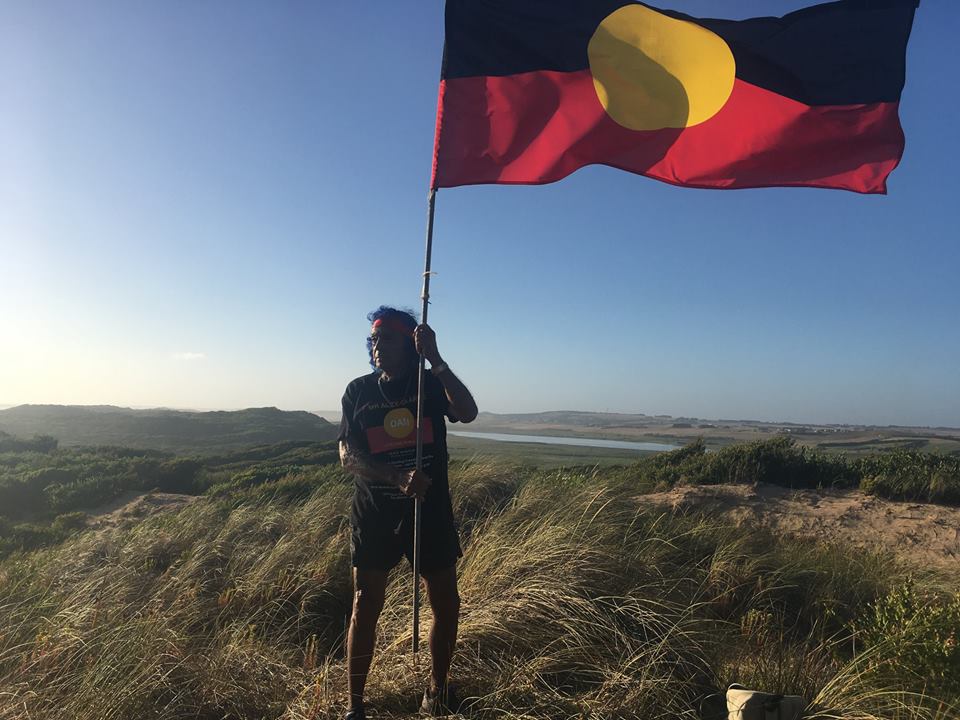
Uncle Alby Clarke, an 83-year-old marathon runner and well-known Warrnambool identity, is among the traditional owners fighting to protect Levy’s Point from racehorse training. Image: Belfast Coastal Reserve Action Group.

Carol Altmann – The Terrier

Once Budj Bim is declared a UNESCO World Heritage site, as is expected in July, how on earth will we justify large-scale racehorse training at Levy’s Beach?

What will we tell visitors from around the world who will travel – and believe me, they will come – to see our wild coastline and its incredible indigenous history, about racehorse training in a coastal reserve, as is due to happen from November?

“Oh,” they will ask quizzically, “so the traditional owners are okay with it?”

Actually, no, the traditional owners are not okay with it. They have never been okay with it, but we went ahead with it anyway.


Actually, we shall have to add, the Gunditjmara people said from day one that they did not want large-scale racehorse training at Levy’s Beach and Aboriginal elders are still fighting with all their might against it, but their voices were not enough.

In fact, we shall have to confess, the traditional owners were told they will just have to move their artefacts out of the way, as if they were a neat stack of objects lying on the surface like grandma’s best china.
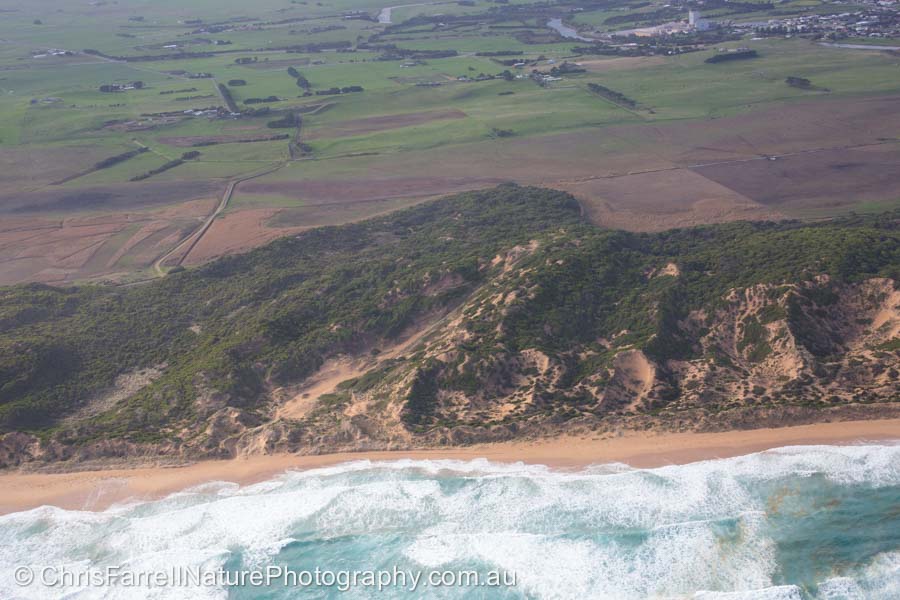
The stretch of Levy’s Beach on the Tarerer coast/Belfast Coastal Reserve, that will be open to large-scale racehorse training. This image was taken by Chris Farrell yesterday, May 25, 2019.

“Oh, but what about the spiritual and cultural connections that indigenous people have to this stretch of coast?” the curious will ask.

Well, we shall explain, they have been told to “share”, because the beach “belongs to everyone” and “sharing” has always worked so well for indigenous people in the past…

Honestly, how will we justify it? I can already feel the shame.

I am astonished that the resistance of the traditional owners to having up to 160 racehorses a day at Levy’s beach, five days a week, from this November was not enough to stop this plan dead in its tracks.


It is particularly astonishing given the Warrnambool City Council has embraced the significance of Moyjil/Point Richie, and is acutely aware of including indigenous stories in the future management of Lake Pertobe/Pirtup Killingk.

All fabulous stuff.

The WCC is also involved in developing a masterplan for the future of Tower Hill, which is yet another jewel in the rich indigenous history of our southern coastline that stretches from Moyjil, to Levy’s, to the Crags, to Deen Maar, around to Portland and the battlefields of the Eumerella wars, up to Budj Bim and Lake Condah.

We are sitting on a tourism mecca.

Make no mistake, indigenous and environmental tourism is the way of the future.
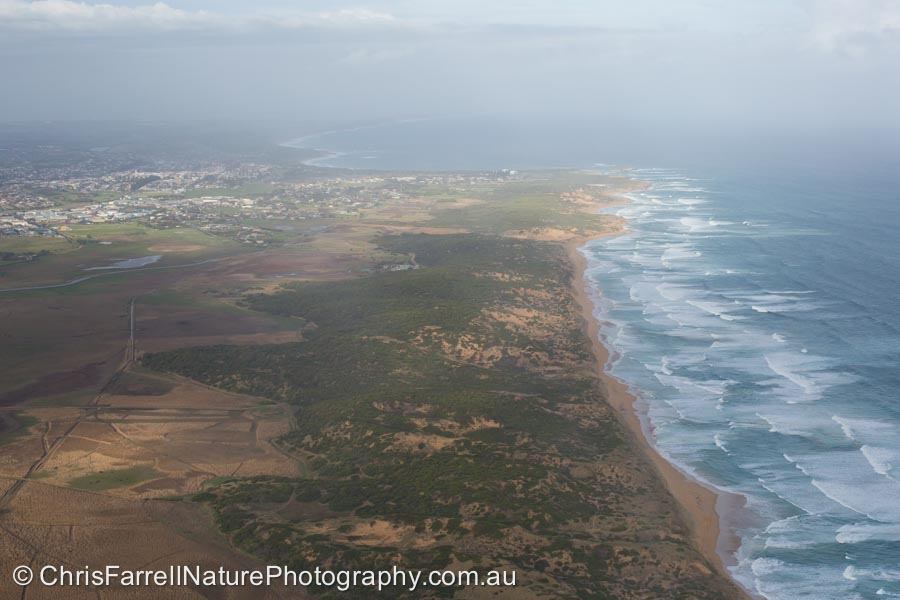
The stretch of wild Tarerer coastline that forms part of the Gunditjamra/ Eastern Maar story now receiving public recognition. Image taken yesterday, 25 May 2019, by Chris Farrell.

The UNESCO listing of Budj Bim/Mt Eccles will be a gamechanger and the State Government knows it, having allocated $5 million toward the next step before the listing is even final.

When it is confirmed, it will put Budj Bim up there with Kakadu, the Great Barrier Reef and Uluru.

And next month, coincidentally, globally celebrated indigenous opera singer and composer Deborah Cheetham will premiere a new work around the resistance wars that happened right here.

It will be Australia’s first indigenous requiem and it has been inspired by the terrible and tragic events during the colonial settlement of south-west Victoria that we are only now coming to understand.

All of this is unfolding around us in Warrnambool and yet, in Warrnambool, we are about to plonk large-scale racehorse training right in the middle, just a few miles from a beautifully kitted out racecourse and, of course, Lady Bay beach, where racehorses are already allowed.


Why?

Jobs? Really?

If that is the only justification (leaving aside the argument about the mental health benefits to the racehorses which, to me, must be the ultimate insult to traditional owners), then it is ridiculously short-sighted.

You can see racehorses and racetracks in dozens of countries around the world, but there is only one Tarerer coastline, one Levy’s, one Crags, one Deen Maar, one Moyjil.

These places are precious and irreplaceable and we are so fortunate to have them right here. They are a part of our future and what a wonderful future it could be.

The good news is that it is not too late to turn things around.

We can still ask our civic leaders to step back from making what will be a terrible mistake.


There is still time for our council, the State Government, and those in the racing industry who are pushing hard for access to Levy’s to respect the wishes of the traditional owners, to acknowledge that racehorse training can happen elsewhere, and to all work toward protecting this precious piece of coastline from further harm.

We can then hold our heads high as a part of the Budj Bim to Moyjil story – a story that goes back tens of thousands of years and is of global significance – rather than fumble for answers when we are asked to justify the unjustifiable.

So which path will we choose? Pride or shame? I know which path I want to be on.

Would you like to support The Terrier? Why not throw something into the tip jar? It all helps!
Terrier Tip Jar


Tourism? We are missing out big time

Moyjil/Point Richie is one of three rich cultural and environmental sites in the south-west that could be maximised to form a major tourist attraction at the end of the Great Ocean Road.

The Terrier

A little statistic popped out of Parks Victoria about six weeks ago that should have had us all gasping and wondering what we are doing wrong in Warrnambool.

Here it is:

“A record daily peak of 11,000 national and international visitors made the trip to the Twelve Apostles during Chinese New Year celebrations”.

Please read that again, because it took me at least three reads to believe what I was reading: a record daily peak of 11,000 national and international visitors visited the Twelve Apostles during Chinese New Year (between January 28 and February 15) this year.

This was a 30% increase on last year. Thirty per cent!

And this is all happening less than an hour from Warrnambool – 72.7km down the road – yet we are seeing so little of the action here.

Why??

This is not a new question.

Over the years there has been much head-scratching, hours of discussion and piles of reports on how to encourage this lucrative market of cashed-up, eager travellers to travel just one more hour down the road to Warrnambool where, we would hope, they stay for more than 24 hours rather than passing through on their way to somewhere else, or turning around and travelling back to Melbourne.

To me, the answer starts here: give them something irresistible, something that they haven’t already seen or heard during their trek down the most popular coastal road in Australia.

And what might that be?

To me, the answer starts here: our incredible indigenous story.

I don’t know about you, but whenever I travel overseas, I can’t wait to immerse myself in the indigenous history, to read about it, see it and experience it through a tour, a trek, a talk, a meal or a spontaneous, random encounter.

Here in the south-west, and right here in Warrnambool, we are sitting on some of the richest indigenous stories in Australia, creating a natural ‘trail’ from Moyjil/Point Richie, to Tower Hill and out to Budj Bim (Mt Eccles/Lake Condah) near Heywood.

Budj Bim is on the cusp of a UNESCO World Heritage listing partly because of its stone eel traps that are 1500 years older than the Pyramids or Stonehenge.

And Moyjil, apart from being a geological wonder, has been a site of human occupation for at least 35,000 years and, pending the results of ongoing tests, could also be the oldest site of human habitation anywhere on the planet, dating back 80,000 years.

Why are we not celebrating and promoting this far and wide?

December 2016: The western walkway from Moyjil down to the beach.

Tower Hill, meanwhile, is where Great Ocean Roaders can see a koala, emu or a kangaroo while also learning about indigenous culture, but its full potential as a tourist attraction is far from realised, starting with the poorly signposted, pot-holed and dangerous entrance that must be the worst of any tourism attraction in Victoria.

To be fair, progress is being made at each of these sites to promote its significance (especially Budj Bim) and plans have been drawn up to manage their futures, but I cannot find any coordinated effort to promote the three locations as a not-to-be-missed tourism experience that would, in turn, create jobs and boost our local economy.

There is no single, one-stop-shop to find out about what should be a cultural and environmental gem of a self-guided tour: there is no one map, brochure, website, or app.

Try it yourself: visit the Visit Warrnambool website, click on “what to see and do” and see what you find.

The top listings alternate, but when I clicked, the first item was mini golf.

But back to Moyjil for a moment.

A 24-page conservation and management plan for this area was published in 2013, setting out how it should be cared for by the State Government (which owns it) and Warrnambool City Council (which manages it) but, four years on, there are worrying signs about the financial commitment needed to look after this precious piece of coast.

The western walkway from the carpark fell apart in early December last year, just before the start of the peak tourism season, and access to the beach was blocked.

It is now late April and the walkway is still busted although now, of course, there has been five months’ of people making their own path down the side of the walkway, as we do, and the erosion is obvious.

When it will be fixed, nobody knows.

April 2017: The western walkway from Moyjil down to the beach.

I contacted the state Environment Minister Lily D’Ambrosio and her spokesman said the council had applied last year for a slice of $730,000 in funding to fix the walkway as one of several work projects it had planned for the site.

It was not successful. (The $730,000 fund received applications totalling more than $3.1 million).

“DELWP is willing to look at how it can support Warrnambool City Council in fixing this walkway, and will discuss with Council how the department can assist,” he wrote.

I asked the council for its take on the situation and its spokesman said: “We will continue to seek funding from the State Government for maintenance. It will also be part of Council’s upcoming budget deliberations.”

And that was it. No passion. No prioritising. No real sense of urgency.

I can only wonder when a wooden walkway – a walkway – can’t be fixed (Triton woodworkers + youth unemployment project?), what the long-term future really holds for this magnificent site.

And in the meantime, the vast majority of the tens of thousands of tourists who are travelling to the Twelve Apostles each summer just turn around – or keep driving….