Forget cover ups: roll right over Rolf

Rolf Harris
Convicted pedophile Rolf Harris happens to paint: does this mean his art is worth more than sending a strong message to sexual abuse survivors? Image: The Guardian.

OPINION

[dropcap style=”color: #a5cecd;”] T [/dropcap] wo very unsettling things have emerged from the debate over whether a mural by convicted pedophile Rolf Harris should be kept in Warrnambool’s Lighthouse Theatre, and neither offer any comfort to victims of sexual abuse.

The first was a comment by Warrnambool City Council chief executive officer Bruce Anson in which he compared Harris’s systemic abuse of minors to an artistic “foible” – a weakness, a blemish on his character, a minor flaw.

Here is the quote in full, as taken from the Warrnambool Standard report of July 2:

“I’m not justifying in any way what has happened (but) I don’t think we should destroy art as a result of inappropriate behaviour.

“Many of our great artists had foibles.”

A dirty old man in a rain coat who sexually abuses children is seen as the predatory pervert that he is, whereas an entertainer who fooled the world with his charm and natty dress sense –  and who also sexually abuses children – is considered to have a “foible”?

I waited for the torrent of outrage against Mr Anson’s comments, but there was barely a trickle, despite Mr Anson holding one of the most influential positions in our city.


bruce anson abc
Warrnambool City Council CEO Bruce Anson earlier this week described Harris’s behaviour as a “foible”, but the outrage was saved for the Rolf Harris mural. Image: ABC Radio


[dropcap style=”color: #a5cecd;”] T [/dropcap]he outrage was instead saved in response to calls by some – including Bluestone Magazine via our Facebook page – that the Rolf Harris mural be painted over. Bluestone supports this move in order to send a clear message that the work of a convicted pedophile should not be honoured via public display in a public building.

If the Rolf Harris work was on a canvas, instead of a wall, it would be removed immediately (as is happening elsewhere in Australia), but because it is on a wall, we need to be even braver and bolder in our response and this is where we have become weak-kneed.

Despite Harris painting this mural in the very same year as he was actively abusing minors, the artwork is seen by some as separate to the artist, as if one Rolf Harris is the jocular painter, and “another” Rolf Harris is the pedophile.

This is a false comfort, as the hand that held the brush that created this mural is the same hand that could not keep itself off children – the art and the artist are inseparable.

There is also an argument that because Harris happens to be a visual artist, his “work” immediately deserves higher status and preservation than, say, the work of a pedophile priest, teacher or judge who – once exposed for their crimes – are stripped of all public honour.

Imagine if the Lighthouse Theatre decided to stage a musical tribute to pedophile and Harris associate, Jimmy Savile? Would we be as forgiving of the need to preserve his talents as an entertainer?


Jimmy Savile
Would we tolerate a musical tribute at the Lighthouse Theatre to the late entertainer, and pedophile, Jimmy Savile? Image: The Guardian.


[dropcap style=”color: #a5cecd;”] B[/dropcap]y keeping the Harris mural in place, we are sending a message to every victim of sexual abuse that a piece of art is worth more than them: that we, as a community, value the work of a convicted, systemic abuser more than we value them.

We can argue around it, through it and over it, but that is is the bottom line.

If we keep the mural, we must also be prepared to argue that a recent work by a convicted pedophile is more precious to our collective community consciousness than standing up for the one in three girls and one in six boys who are sexually abused in Australia.

But wait, some say, the history of art is littered with examples of child abusers having their work celebrated in public, such as Caravaggio’s erotic paintings of young boys painted in the 17th Century.

I would like to think we have come a long way as a society in four centuries and understand – fully and painfully – the lifelong ramifications of child sexual abuse that, in the case of Harris, is clear cut.

I am also still struggling to find an artist who is a convicted pedophile and is still feted by the public – Caravaggio included.


child-sex-abuse
In Australia, one in three girls and one in six boys are sexually abused before they turn 18. Image: Courier Mail.


[dropcap style=”color: #a5cecd;”] S[/dropcap]o why not just cover the mural up, as has been suggested?

Because that, to me, is a cop out. It says we are frightened to make the tough call and that one day, when we all “get over it”, the cover will come down again. Otherwise, what is the point?

Collectors can keep all of their Rolf Harris’s in their private collections and galleries – although it appears that the Queen has disposed of her portrait – but there is only one thing to do with our Harris mural: run a paint roller right over it.

Gather a group of women who have suffered sexual abuse (you won’t have to look far) and invite them to reinterpret the mural as a work of defiance: a work that says, loudly, we will not tolerate or condone this man’s disgraceful behaviour, no matter how well he paints.

With this work, we have the opportunity to make a very clear statement about a living, breathing sexual predator who happens to be an artist, and we at Bluestone are dumbfounded as to why it is proving so hard.

[button link=”http://the-terrier.com.au/subscribe-2/” type=”icon” icon=”heart” newwindow=”yes”] Did you enjoy this piece? Please subscribe here to help Bluestone thrive.[/button]

Stones Smile newsletterRead more Opinion pieces here…

Community vision should extend city wide: Julie Eagles

Flagstaff Hill at $15 million crossroad

Scrap trader levy and start over

Motor museum to revive Fletcher Jones

Traders are right to be asking questions

Be all things, or stick to the basics?


Be all things or stick to the basics?

council plan
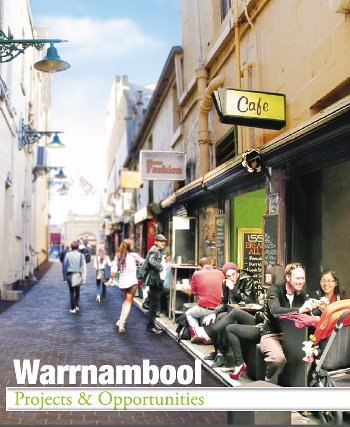
The dream: an image of bustling cafes built into the sides of Warrnambool’s laneways graces the cover of the council’s recently released priority ‘wish list’.


[dropcap style=”font-size: 60px; color: #A5CECD;”] C [/dropcap]ouncils were once primarily responsible for rates, roads and rubbish: my, how times have changed.

The 16-point list of advocacy priorities released by the Warrnambool City Council suggests that the council must now be all things to all people, fixing everything from school retention rates, to unemployment, to developing the region’s food export industry…right down to upgrading the stormwater drains. But is this what ratepayers really want or expect?

Sixteen points is a lot of priorities for a council covering only 32,000 people and they can’t possibly all be met, especially when we struggle to get the public toilets right.

I say this because as I was walking back from a media briefing on the plan last week, I wandered past the vandalised portable toilet box on Gilles St, across the road from the heritage precinct of the former police station and court house.

Having only been back in Warrnambool a relatively short time, I thought these toilets must have been installed for the comfort of the workmen repairing the former post office nearby.

A google search, however, revealed the eyesore is considered a public toilet and has been sitting there since 2011 while the council finalises its public toilet strategy.

My heart sank. If it takes more than three years to sort out the public lavatories, what hope is there of achieving the bulk of the 16 priorities that had just been outlined to the media by Mayor Michael Neoh and CEO Bruce Anson?

Moreover, do we need to have 16 priorities? What about focussing on five, securing the funding for these, and doing them really, really well? (We will list our top five later).

toilet_19
The reality: the ‘temporary’ toilet block on Gilles St indicates that making progress on some projects can take years.


[dropcap style=”font-size: 60px; color: #A5CECD;”] W [/dropcap]hile there is nothing wrong with thinking big and aiming high, we have three levels of government for the simple reason that each one looks after different levels of responsibility.

Ratepayers, I suspect, want a local council to focus on maintaining and improving their local amenities, to ensure that their city is a good looking and vibrant place where people want to live, work or visit for an unforgettable holiday.

Given this, it was heartening to hear Mr Anson list the revitalisation of the CBD as the number one priority, but there was scant detail on how this would be done, and by when. (*Since this piece was written, WCC has announced it is seeking an architect to redesign the portion of Liebig St between Koroit St and Raglan Parade).

The gradual rejuvenation of some of the city’s laneways – a wonderful council project –  is an example of what can happen, yet the F Project artists behind all of this hard work are scrimping and scraping to develop their art space down at The Artery, in Timor St.

The Artery has the potential to utterly transform what was a bland part of the CBD and to draw tourists in droves, but unfortunately this simple project has received very little council money.

At the same time, the council says in its latest document that it hopes to secure $100,000 for a “comprehensive study” into food production in south-west Victoria and potential export markets. Why? Isn’t this the domain of the State Government and, more particularly the local member, Denis Napthine? Or perhaps it is even better suited to the Federal Government, and our local member, Dan Tehan?

bluestone2_29
The Artery artists’ hub in Timor St has the potential to be a magnet for tourists and locals alike.


[dropcap style=”font-size: 60px; color: #A5CECD;”] L[/dropcap]obbying the other two tiers of government is part of what local councils do, but do we really want to secure and spend $100,000 on another study in the process?

Even a portion of this money would go a long way toward, for example, The Artery being able to open its retail space, gallery and studios – heck, they might even be able to get their signwriting done.

To be fair, the council’s priority list does contain some good, grassroots project such as upgrading the dated public swimming pool and working on a plan to improve the equally dated and tiny library, but it also contains a chunk of ‘priorities’ that have been around for so long now, most of us have forgotten when they were first announced, such as sorting out the future of the Fletcher Jones site, Flagstaff Hill and the railway station precinct.


bluestone2_25
Warrnambool will receive a longer airport runway, but the trains will still be slow, unreliable and crowded.

[dropcap style=”font-size: 60px; color: #A5CECD;”] S[/dropcap]peaking of the railway, improving the inadequate train service to Melbourne has been another, long-standing priority that has again been wish-listed by the council, yet it is the extension of the Warrnambool airport runway that is taking precedence for $4.5 million in state and federal funding.

The number of people who use this runway will be minuscule compared to the number of train commuters who already struggle to find a seat on a service that operates only three times a day and lumbers along at a Cobb-and-Co-like speed of 74 kph.

We should be outraged, especially as our compatriots in Bendigo, Ballarat and even Traralgon each have more than a dozen services a day, including a number of express trains.

A fast, reliable commuter service between Warrnambool and Melbourne is also critical to tourism, yet there is no indication that the service will receive another cent from either the state or federal governments.

The council has developed an enormous amount of strategic plans and strategies – the latest one brings the total to 32 in the past 10 years – but my fear is that it is spreading itself too thin, that it expends too much time and money reaching for the stars rather than dealing with the basics, and that, like the toilet box in Gilles St, it will ultimately struggle to be flush with success.

[box] Below are Bluestone’s five funding priorities (what are yours?):[/box]

  • Secure and save the best of the Fletcher Jones site and gardens and lobby for state funds to make it happen. This site is critical to creating a sense of ‘arrival’ to Warrnambool and has the potential to be something very special.
  • Fix the train service with more frequent, faster and reliable trains that include express services.
  • Revitalise the CBD by, for example, offering incentives to restore and repair the heritage buildings, remove the parking meters and create a true restaurant precinct.
  • Finish the sensational foreshore bike path by, as previously suggested by the council, linking it back through Lake Pertobe to the railway station. People would travel to Warrnambool (on a fast train) just to ride this path – I have already met some.
  • Upgrade the whale watching precinct into the world-class attraction that it should be.

Logo Smile newsletter More opinion pieces…


Who will step up for Fletcher Jones?

Time for a fresh start with Australia Day

Broken link for Artlink

Losing sleep over a lot of rubbish

Close Flagstaff Hill; save Fletcher Jones

When scrutiny is sub-standard, democracy suffers