Racehorses: respecting Country and a crucial council vote
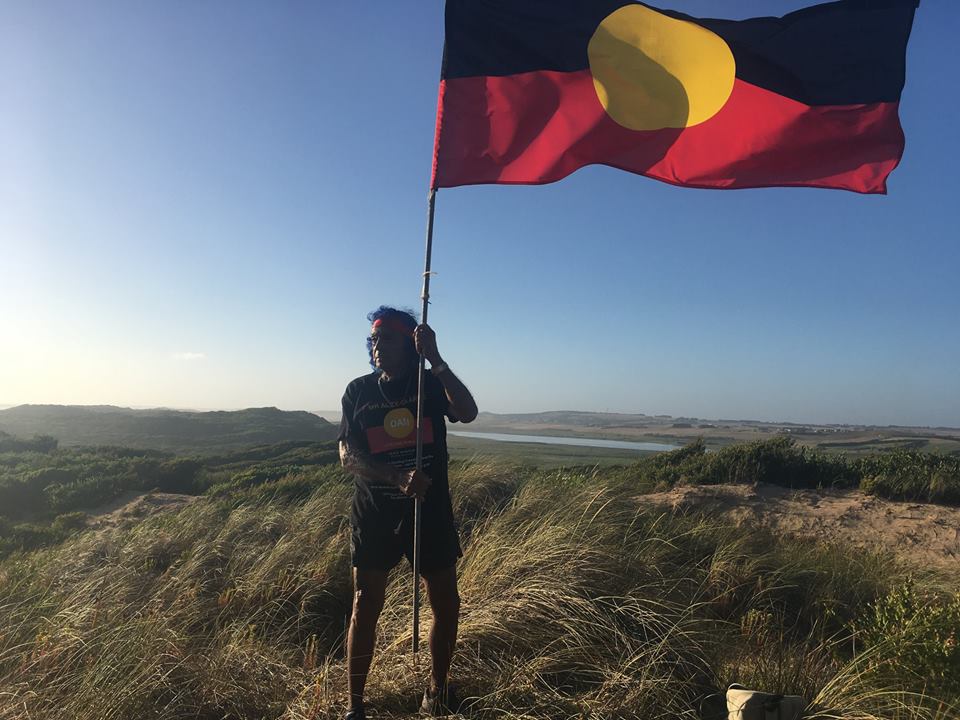
Uncle Alby Clarke is among the traditional owners who are fighting to stop large-scale racehorse training on the Tarerer coast (Levy’s Beach). Image: Shane Howard.

Carol Altmann – The Terrier

The push to allow large-scale racehorse training at Levy’s Beach will return to the Warrnambool City Council again next Monday night (3/2) for a crucial vote that goes far beyond horse racing.

It is, instead, a line in the sand: a time to decide whether Warrnambool is prepared to step into a new way of thinking – a bold Warrnambool – or to remain stuck in the past, as an old Warrnambool.

On the surface, the seven councillors will effectively be asked again whether they support or reject large numbers of racehorses – up to 120 a day on the beach and 40 on a dune – being able to train in the coastal reserve at Levy’s Beach/Spookies Beach all year-round. (This would be in addition to training at Lady Bay for nine months of the year.)

But this vote is also a test of whether, in 2020, we, as a city, are prepared to continue to ignore the wishes of the traditional custodians, the Eastern Maar peoples, for whom the coast around Levy’s is known as Tarerer.

I find it incomprehensible that the council would even consider such a move when traditional custodians are against it, as was first made clear when the consultation process began more than two years ago.

We are all living on Aboriginal land and yet we still find this concept discomforting, rather than a privilege.

Indeed one of the arguments used by Racing Victoria is that horse training on Warrnambool’s beaches goes back to the 1800s – and this is supposed to be a persuasive argument – yet the indigenous connection to this coast stretches back at least 60,000 years and possibly 120,000 years.

Think about that for one second.


Despite this incredible history, it is the European connection through racehorses, a mere speck of sand by comparison, that is held up as evidence of a rich tradition, a deep heritage and a right of passage.

How demeaning this is to the traditional custodians; how gutting.

Like so much of south-west Victoria, Warrnambool has a shocking history around the treatment of indigenous peoples and the destruction of an ancient culture, none of which we learnt about at school, and which contributed to local, white kids like me growing up with a fear and suspicion of Aboriginal people.

I knew nothing until I was old enough to read this history for myself and to learn about the full impact of dispossession and discrimination.
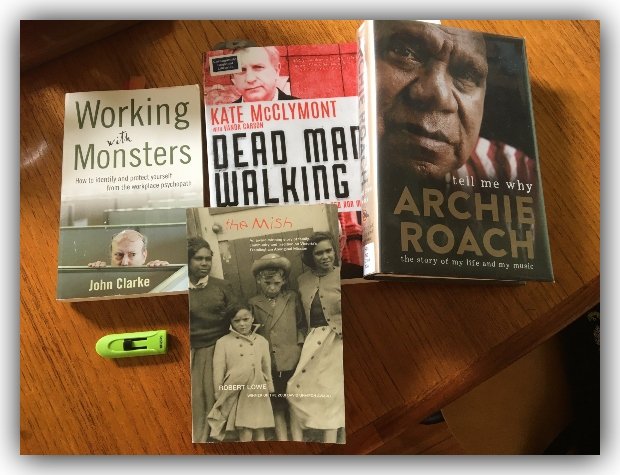
Part of the summer reading list included unforgettable books by Archie Roach and Robbie Lowe Snr.

I am still reading. Over the Christmas holidays I devoured Archie Roach’s magnificent autobiography, Tell Me Why, and Robbie Lowe Snr’s book, The Mish, which spoke of a Warrnambool where I grew up, but barely recognised, because as a middle-class, white kid, I had no idea how life was for those living in Framlingham, just 20kms from Warrnambool, but as far away from my daily life as Mars.

We can no longer use the excuse of ignorance and say that we don’t know, or don’t understand, the indigenous connections to Country.

Times are changing.


Indeed our council includes a Welcome to Country at civic events, and a smoking ceremony at its Australia Day function, and takes great pride in paying its respects to indigenous elders (“past and present”) at the start of each council meeting.

How can our councillors accept all of the above, yet fail to listen to the elders trying to protect and restore a precious slice of Tarerer coast that, even under council laws, is classed as a coastal reserve?

It’s not enough to fly the Aboriginal flag outside the council chambers in Liebig St, or to have a striking Adnate mural of Bernice Clarke and Rylan Miller on the side of South-West TAFE.

These are all important, symbolic gestures that make us feel good, but unless we are prepared to change our thinking around our decision-making, that is all they will be: symbolic.


The Eastern Maar have been fighting to be heard and surely now is the time to listen and to act or we will remain stuck under the heavy shadow of colonialism that has burdened Warrnambool for so long.

Monday night will be a critical test of where we stand as a city and where we are headed, and I, for one, am not going to miss it.

The meeting is at the WCC chambers, 25 Liebig St, starting at 5.45pm.

This article is part of an ongoing series supported by the Walkley Foundation, including funding Freedom of Information applications and other research tools.
If you would like to support the Terrier, you can throw something in the tip jar below. 
The Tip Jar


From artist to children’s author: Fiona Clarke

fiona clarke-jack wilkins
“When I was growing up, the only children’s books were fairytales or stories about a big ship and a fella called Captain Cook”. Portrait of Fiona Clarke by Warrnambool photographer John (Jack Wilkins).

By Carol Altmann

[dropcap style=”color: #a5cecd;”] W[/dropcap]hen Fiona Clarke was a little girl growing up in the 60s, most picture books were either British, based on fairytales, or about “a big ship and a fella called Captain Cook”.

“And Dr Seuss – he was good, I liked him,” Fiona says, laughing.

There were certainly very few children’s books that told stories from Aboriginal culture and none that reflected Fiona’s heritage as part of the Kirrae Whurrong clan in South-West Victoria.

In the second half of her life, Fiona has found herself at the forefront of changing all that, having published her first children’s book in late 2012 and starting work on a second.

smiley-face-small
DONATE 

As an established visual artist, Fiona, who lives in Merrivale, is best known for her paintings, sculptures and tapestries, but she is now bringing her storytelling and fine artistic ability together through books.

“It was something that I always wanted to do, but I didn’t know where to start, like how to find a publisher when they all say ‘no’,” she says.

fiona clarke_10
Fiona in her studio (aka the kitchen table) with copies of her first book, Minkgill Chases the Rainbow, and the blank canvas for her second book that is based around the rainbow serpent.

[dropcap style=”color: #a5cecd;”] E [/dropcap]arly-childhood educator Claire Jennings became the bridge between Fiona’s talent and the publishing world and persuaded her to write and illustrate Minkgill Chases the Rainbow, published by One Day Hill (which has also published work by Derek Guille, Shane Howard and Archie Roach).

Minkgill is the Kirrae Whurrong word for “star” which she discovered after Shane Howard and her late brother, Ian, individually insisted that she read the classic book about Aboriginal culture in South-West Victoria by James Dawson, first published in 1881.

Shortly after the book was published, Fiona embarked on a series of storytelling workshops around Warrnambool and Melbourne, where she was met with a rapturous response by her young audience.

At the end of one storytelling session, a little girl approached Fiona and, with her hands across her heart, declared it was “the best story I’ve heard in my whole life!”

fiona- culture victoria
The artist becomes the subject: a portrait of Fiona by the late Brian Dunlop (1938-2009), Sundown, Sunrise, 1993. Image: Culture Victoria and the Warrnambool Art Gallery.

[dropcap style=”color: #a5cecd;”] T [/dropcap]his time, the inspiration for Fiona’s second book has come from her great-niece, Meekah Merriman, who is just starting to read. Fiona tells a story about how Meekah walked up to her mother, lifted her shirt to show her rainbow-coloured Dora the Explorer belt, and said “the rainbow serpent is coming”.

That simple sentence settled in Fiona’s mind and she began to pen a story around the title.

The Rainbow Serpent is Coming has come out as an environmental story, about the land and how we are treating the land,” she says.

With the writing almost finished, Fiona is turning her mind to the illustrations that need to be painted for each page. A blank canvas – literally – is spread out on her kitchen table, which she uses as a studio.

It is a space she shares with her teenage daughter, Patricia, who is a keen artist, and her husband Ken McKean, whom she first met as a five or six year old after talking about the “walking fish” in his parent’s pet shop; they have been married more than 30 years.

fiona clarke_2
Fiona’s father, the late Banjo (Henry) Clarke as a young man. He continues to inspire Fiona’s creative work, including her decision to write books for children.

[dropcap style=”color: #a5cecd;”] F [/dropcap]iona’s birth family also continues to have a pervasive influence on her work.

As the youngest of six children born to the late Audrey and “Banjo” (Henry) Clarke, a respected elder of the Kirrae Whurrong, Fiona grew up surrounded by the energy and chatter of a large family.

“My father loved children,” she says.

“He always loved to hear the sound of the children’s laughter and said how much he missed hearing that when they were gone, grown up and moved away.”

Fiona tells how Banjo often described children’s laughter as “bringing colour to the world”.

“They bring brightness to the world and Dad always talked about that, right up until the day he died, actually.

“This is why the pictures in my books are always bright – not too much earthy brown stuff,” she laughs.

[box] Fiona recently completed a mural, with Bronwyn Ferguson, at the entrance to Warrnambool College. You can find out more about Fiona’s artwork on her website here and see her talk about her work hereMinkgill Chases the Rainbow is available through Warrnambool Books. [/box]

[button link=”http://the-terrier.com.au/subscribe-2/” type=”icon” icon=”heart” newwindow=”yes”] Did you enjoy this story? Please subscribe here to help Bluestone thrive.[/button]

Stones Smile newsletterYou might also enjoy…


Writing from the heart about ADHD: Wendy Coyle

A love story built on literary lives: Wendy and Allan Scarfe

Bool Belles Review: Mullumbimby, Melissa Lucashenko

Bool Belles Review: A Question of Travel, Michelle De Krester


Writing from the heart about ADHD

wendy coyle_1
South-West author Wendy Coyle has so far produced two books for children based on her own, often challenging, experiences of raising three sons.

[dropcap style=”color: #a02f2f;”] W [/dropcap]hen author Wendy Coyle was growing up, there was no such thing as Attention Deficit Disorder or the like, instead some school kids were just classed as “naughty” and in need of a firm hand.

A generation later, ADD and its close cousin, Attention Deficit Hyperactive Disorder, are diagnosable conditions that often require medical intervention, but that hasn’t stopped children who suffer from the condition being dismissed as “uncontrollable” or “naughty”.

“What a lot of people still don’t understand is that kids with ADHD don’t want to be like they are, but it is how their brain fires off,” Wendy says.

Wendy, who lives on two acres in Mepunga with her husband, Ian, and their three sons, speaks from first-hand experience, with her eldest child, Jack, diagnosed with ADHD during Grade 1 in 2005.

The family was living in Melbourne at the time and Wendy “began to write down notes on scraps of paper” about how Jack’s ADHD affected himself and those around him.

By 2008, the scraps of paper began to take shape in Wendy’s mind as a children’s book that could help others – children, teachers and parents – to see ADHD from the perspective of the young sufferer.

The Naughty Kid, featuring a seven-year-old main character called Jack, was self-published in 2012.

“This labelling of a child as ‘the naughty kid’ is really powerful because once they have that title, it is very hard to lose it, no matter how hard they might be trying to change,” Wendy says.

“My kid was that ‘naughty kid’ and I know how terribly hard that was for Jack.”

wendy jack coyle
Wendy with son Jack, now 15, whose battle with ADHD spurred her to write her first book, ‘The Naughty Kid’, so that others might better understand the condition.

[dropcap style=”color: #a02f2f;”] T [/dropcap]he book hit a nerve with other parents of ADHD children, with one mother writing to Wendy to tell her that she cried when reading “Jack’s” story, as it mirrored that of her own child.

Jack is now 15 and no longer on the medication that was required to stabilise his impulsive behaviour. But just as Jack was emerging from the worst of his symptoms, Wendy youngest child, Ryan, was diagnosed with ADD – “no H this time” – again in Grade 1.

“That seems to be when it starts to become a problem, because while the other kids are all settling into school and routines, these kids are going the other way,” Wendy explains.

Raising three “gorgeous but often challenging boys” has been at times exhausting, but Wendy says it also fuelled her creativity.

Since The Naughty Kid – which Wendy is reproducing as an e-book – she has published a chunky, almost indestructible book, My Very Own Alphabet Book, which has large cut-outs for personal photographs to be inserted for each letter.

“This is how I taught my boys the alphabet: through familiarity and consistency,” Wendy says.

Earlier this year, Wendy launched a My Very Own Alphabet app and, when we meet, she is finalising the manufacture of a plush toy, Angus the ant, who features in the book.

wendy coyle_15
Wendy admits she is rarely not thinking about more book ideas or ways of extending the reach of those she has already written.

[dropcap style=”color: #a02f2f;”] W [/dropcap]endy laughs as she admits that her own mind, much to the frustration of partner Ian, “doesn’t stop sparking with ideas” now that she has been bitten by the book bug.

“I really like writing and I am always thinking of something…I also really like writing for boys, because it gets them interested in reading,” she says.

Her next project is a series called Billy And Max about two adventurous farm boys who are always narrowly avoiding trouble…or meeting it head on.

Despite being born in Melbourne and having lived there for most of her life, Wendy has embraced the country since moving to South-West Victoria – “just for two years” – in 2010.

When she is not writing, or mucking about on the land, Wendy works as an administrative assistant at Warrnambool College and Noorat Primary School.

“Writing is a risk, especially a financial one, but you have to take a risk to do something interesting with your life,” she says.

“There is always an element of uncertainty about whether it will work, but you still have to take that chance.”

[box] The Naughty Kid and My Very Own Alphabet Book are available locally through Warrnambool Books. To find our more about Wendy’s work, visit her website and find her on Facebook.[/box]

[button link=”http://the-terrier.com.au/subscribe-2/” type=”icon” icon=”heart” newwindow=”yes”] Did you enjoy this story? Please subscribe here to help Bluestone thrive.[/button]

newsletter Eat And Drink StonesYou might also enjoy…


A love story built on literary lives: Wendy and Allan Scarfe

Bool Belles Review: A Question of Travel, Michelle De Krester

Bool Belles Review: Burial Rites, Hannah Kent

What I am reading: Jodie Honan

Second hand bookstore opens in Koroit


Charming bookshop starts new chapter

portland april_24
Megan Langdon first dreamt of running her own bookshop 30 years ago and now operates the gorgeous The Little Bookshop, in Portland.

[box] Unfortunately The Little Bookshop closed in late July 2014. We wish Megan well for whatever she does next – she deserves every success.[/box]

[dropcap style=”font-size: 60px; color: #ABCCAB;”] B [/dropcap]outique bookshops are making a comeback and they don’t come any cuter than the charming The Little Bookshop in Portland.

Anybody who loves books (and we know that because you are reading Bluestone, that this includes you), will find that their heart slows and they breathe a bit more deeply when they walk into the quiet, stylish haven that Megan Langdon has created in the historic town.

To be accurate, we should say re-created, because The Little Bookshop is in its second incarnation.

The original bookshop started three years ago in Percy St, which is one block away from its present Bentick St location, but the high overheads that came from being in the main street of Portland eventually proved too much and, earlier this year, Megan made the tough decision to close.

“It was such a huge, emotional decision,” Megan said.

“I got my son, Matthew, to announce it on my Facebook page for me, because he looked after all that side of things, and then I got to work on closing it down,” she said.

There was only one hitch: Megan’s supporters, customers and book fans from around the South-West were not having a bar of it. They responded to the Facebook post by the hundreds, saying that Megan couldn’t possibly close such a lovely shop that had made books into something special again.

“It sent me on an emotional rollercoaster, to be honest, because having made the very hard decision to close, I had to question all over again whether it was the right decision,” Megan said.


megan langdon
Megan stood at the crossroads earlier this year, having decided to close – then relocate – her bookshop: “I knew that I hadn’t finished being a bookseller.”


[dropcap style=”font-size: 60px; color: #ABCCAB;”] A [/dropcap]s fate would have it, one of Megan’s friends, Milly Cameron, had a small shop available right on the waterfront that she had been using as a pop-up gallery to exhibit work by her sisters-in-law, Pat Cameron and Anne Langdon. Megan was invited to take on the lease for her bookshop and to keep the gallery going.

If only it were that simple.

In the interim, Megan had also been offered several jobs, based on her previous career in adult education, and had to choose between the stability and regular income of a teaching position…or still running her own little bookshop.

“Every time I thought about it, the books kept winning. I knew that I hadn’t finished being a bookseller,” she said.


little bookshop2
Beautiful antique French items are also for sale, reflecting Megan’s love of Paris that she visited for her 50th birthday.


[dropcap style=”font-size: 60px; color: #ABCCAB;”] T [/dropcap]he Little Bookshop was a 30-year-dream in the making for Megan, who has devoured books since growing up as a child in Ballarat. She remembers moving from Ballarat to Melbourne as a 17-year-old and being so deeply lonely that it was only books that saved her.

She also remembers walking into a bookshop in Echuca more than three decades ago – “The Tangled Garden, I think it was called” – and being completely enchanted by the surroundings. It was then Megan decided that, one day, she would run her own bookshop.

Being a single parent, however, made it almost impossible for Megan to pursue her dream until many years later when, armed with her superannuation, she moved to Portland from Geelong after visiting it several times to see her son, Ben, who is a school teacher.


little bookshop book
And then there are the books: wrapped to take home in paper and brown string.


[dropcap style=”font-size: 60px; color: #ABCCAB;”] I [/dropcap]n keeping with her dream, Megan’s bookshop sells only quality fiction and specialises in promoting Australian authors. She also sells a select range of beautiful French antique items, including French linen, that reflects her love of Paris, which she visited for her 50th birthday.

This specialisation means that Megan works in with Portland’s other booksellers – there are five in total – who all have their own areas of expertise.

“We send customers to each other, because we all do things a little differently,” she said.

[box] You can find The Little Bookshop at 51 Bentick St, Portland. Ph: (03) 5523 1440. Visit The Little Bookshop Facebook page here. [/box]

[button link=”http://the-terrier.com.au/subscribe-2/” type=”icon” icon=”heart” newwindow=”yes”] Did you enjoy this story? Please subscribe here to help Bluestone thrive.[/button]

newsletter Art Music StonesYou might also enjoy…


The Bool Belles review Burial Rites

Books take on a twist for Biblio award

What I am reading: Jodie Honan

Roger Hoe and the Biblio Art Award – fighting artist’s block

What I am reading: Portland arts identity Jan Colliver

New bookshop opens in Koroit – Dennis Melbourne


Different life stages for pages

joe logan1

[dropcap style=”font-size: 60px; color: #A5CECD;”] G [/dropcap]iven Joe Logan is a reader, an English teacher and a bibliophile, what she does to used and old books can only be described as tough love.

In order to create her craft as an upcycler of pre-loved books, she first needs to pull them apart or, at the very least, remove several pages, fiddle with the spines, or redecorate the covers with an assortment of creative twists.

“The first hard cover book I had to pull apart was very hard, but it does get easier: you do get over the desecration,” Joe, from Portland, laughs.

During the working week, Joe teaches senior English classes at Portland Secondary School, but in her spare time she works as one half of luciandjoe (pronounced Luci and Joe) creating new-from-old pieces using bookbinding and papercraft techniques.

joeloganbooks

[dropcap style=”font-size: 60px; color: #A5CECD;”] W [/dropcap]hile Joe enrolled in several workshops to learn the traditional methods of bookbinding/restoration and papercraft, she has since turned those techniques on their head to create her own style.

“Basically I learned how to do things the proper way and then butchered those techniques to create something very individual, but which still maintains the integrity of the original book,” she says.

Joe scours op-shops, tip-shops and secondhand stores for pre-loved books that may be a bit crusty, but still have a certain charm or character: perhaps an interesting cover, for example, or some lovely illustrations.

The books are then transformed into something useful and beautiful by having fresh, blank pages added, some old pages removed, and a freshening up of their covers through beading, or stitching, or by adding a special trinket.

joe logan book

[dropcap style=”font-size: 60px; color: #A5CECD;”] T [/dropcap]hrough this technique, an old encyclopaedia starts a new life as a funky travel journal, a cookbook can become a photo album, or a long-forgotten adventure book is reborn as a diary.

“Every book I select has its own character and I keep that character, because that is also what makes each piece individual and appealing,” Joe explains.

Like most creators, Joe started out making gifts for her friends about 10 years ago, before Megan Langdon, from The Little Bookshop, in Portland, saw the potential in the unique products and began to stock a few pieces. The response prompted Joe to “go public” and, in the past three years, she has started a market stall that visits Warrnambool, Ballarat, Port Fairy and Geelong, while also setting up a shop online.

“People still really love books – they love the tactile nature of a book,” she says.

“And, at the same time, there is a resurgence in crafts and people are more appreciative of hand-made, quality possessions.”

port fairy card

[dropcap style=”font-size: 60px; color: #A5CECD;”] A [/dropcap]side from upcycling books, Joe creates a range of cards using her own photographs (such as those taken during a trip to Paris), or screenprinting her own designs.

“I am enjoying exploring the papercraft side of things a bit more and seeing what can be done with screenprinting and embroidery, for example, which brings together my love of paper and fabric,” she says.

People can also commission Joe for a one-off piece of work – perhaps using a book they have chosen – but she has had to knock back customers looking for a book restorer.

“When people ask me if I can restore one of their treasured books, I say ‘you might want to take a closer look at what I do to books!”’

Now we did mention earlier in this story that Joe is one half of luciandjoe, which means there is another half: Joe’s silent partner, Luci.

Luci is 11, white-haired and, despite having four paws, is not particularly dextrous. She is, however, Joe’s beloved Maltese Shih tzu and loves nothing more than a dog-eared book.

luci

[box type=”bio”] Joe Logan will run a series of workshops at the Julia Street Creative Space, Portland, in March. Contact the space (03 5523 6566) for more details. Visit the luciandjoe online store here or find them on Facebook here.[/box]

Logo Smile newsletter If you enjoyed this story, you might enjoy…


Happiness is a home full of pins and needles: Kristi Packham

Hot glass melts hearts: Robert Gatt and Freya Marriott

A long way from Pomonal to Pip: Kate Bouman 

Finding inspiration in the natural world: Jill Edwards

No time limit on this wearable art: Helen Bunyon