Remembering Eva: an arts matriarch
eva gaspar-bunyon
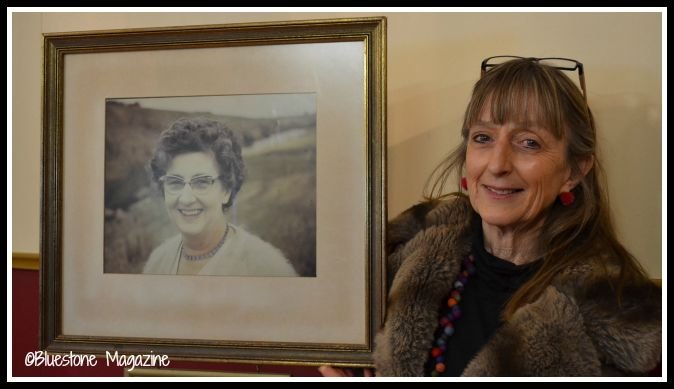
Helen Bunyon, from The F Project and The Artery, with a portrait of the late Eva Gaspar who, like Helen, devoted her life to helping the local arts scene while also being an artist herself.

By Carol Altmann

There is nothing like a tour of the local cemetery to crystallise the mind about how quickly we can forget trailblazers of their time, like Warrnambool musician, photographer and artist Eva Gaspar.

It was during one of family historian Ray Welsford’s gold-coin tours of the Warrnambool Cemetery that I heard Eva’s name raised as one that is slowly vanishing from the landscape since her death in 1978.

Yes, there is a road named in her honour, but perhaps because she was not a sporting hero, never married and never had any children, there are few public memorials to commemorate her enormous – and generous – contribution to developing Warrnambool’s cultural scene in the 50s, 60s and 70s.

eva gaspar_bowes
Warrnambool Art Gallery Acting Director Murray Bowes with a hand-tinted photograph, “Wollaston Bridge”, taken by Eva Gaspar in 1976 and purchased by the gallery in 1977.

It wasn’t always this way.

The original Performing Arts Centre in Warrnambool had the Eva Gaspar Theatre as its centrepiece when it opened in 1983, but the name was dropped when the complex was redeveloped as the Lighthouse Theatre in 2012.

Eva’s portrait is still in the building, but you have to walk to the southern wing to find it, alongside some magnificent tapestries and an assortment of other historic photos.

So who was Eva?
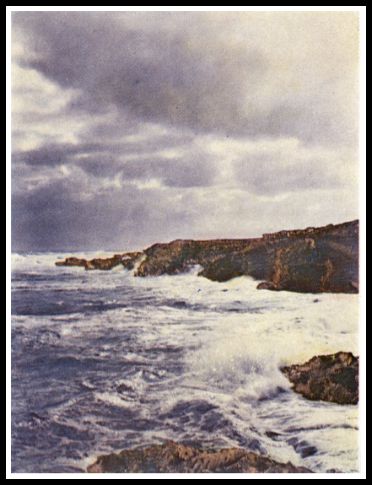
thunder point
“Thunder Point”, photograph coloured with oils, Eva Gaspar. Reproduced from the catalogue “Exhibiton by Eva Gaspar: Drawings, Photography, Warrnambool Art Gallery, April 1977,” with permission from the Warrnambool Art Gallery and National Library, Canberra.

In contemporary terms, apart from her devout Catholicism and serious perm, she is perhaps best described as the equivalent of today’s Helen Bunyon, from The Artery/F Project: a long-term, tireless and generous volunteer to the arts, who was also an artist herself in music, drawing and photography.

“Eva loved photography – she was part of the very big and very passionate photography scene in Warrnambool in the 1950s and 60s,” recalls photographer John (“Jack”) Wilkins.

That scene, as Jack explains, included his own father, Alex Wilkins and Ralph Illidge who, between them, not only photographed just about every wedding and child born in Warrnambool during that time, but also built an impressive social history archive through photography and film.

eva portrait
A portrait of Eva Gaspar – a copy of which hangs in the Lighthouse Theatre and Mozart Hall.

Eva, Alex and Ralph were all founding members of the City of Warrnambool Camera Club, with Eva holding the presidency from 1954 to 1977, during which time the club hosted the most extraordinary competition of international photography.

“That was in 1964 – it is hard to imagine it now, but they had this whole thing going on in little old Warrnambool and it attracted entries from around the world,” says Jack, in his usual gregarious style.

(Remarkably, some footage from the event is part of the Alex Wilkins’ archive which Jack is now slowly converting to digital and uploading to the internet – he has kindly agreed to us including it here. See below.)

Eva, who later became part of Collett, Bain & Gaspar printers, at one stage worked upstairs in Alex Wilkin’s photography studio in Liebig St (now the office of local MP Denis Napthine), where she would hand-colour the images.

Like any artist, however, she no doubt aspired to holding her own exhibition and through her close connection to the then director of the Warrnambool Art Gallery, John (‘Jack’) Welsh, she finally did so in 1977 – just a year before her death at the age of 65.

The exhibition catalogue (printed by Collett, Bain & Gaspar) lists 39 photographs “coloured with oils”, mostly of local scenes, together with 13 monochromes, again of local scenes, and 10 drawings inspired by religious icons and even Shakespeare.
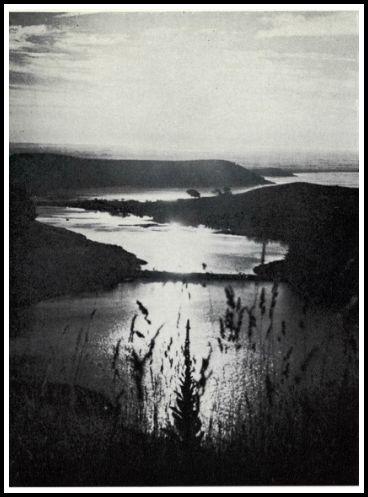
tower hill
“Tower Hill”, monochrome, Eva Gaspar. Reproduced from the catalogue “Exhibiton by Eva Gaspar: Drawings, Photography, Warrnambool Art Gallery, April 1977,” with permission from the Warrnambool Art Gallery and National Library, Canberra.

Eva was a deeply religious woman from a religious family, with a nun and two priests among her siblings, and she was the organist at the St Joseph’s Catholic Church in Warrnambool for almost 30 years.

It is through her music that Eva Gaspar is most recognised.

According to the Warrnambool Historical Society, she formed her own choir and junior orchestra in 1948 to commemorate the birth of Mozart, and this group not only staged elaborate annual performances of Mozart operas, but went on to become the Mozart Choral Society that still operates from Warrnambool’s cute Mozart Hall today (where you will find another portrait of Eva).

Somewhere in between all of this activity, Eva still found time to teach music to young people for free.

For more than 40 years she taught music, singing, wind and string instruments to a legion of young musicians for whom a keyboard had nothing to do with a computer.

What a generous, creative soul was Eva Gaspar.

eva gaspar_photo
A closer look at the hand-tinted photograph, “Wollaston Bridge” taken by Eva Gaspar in 1976 and purchased by the Warrnambool Art Gallery in 1977.

[box]Bluestone would like to thank Ray Welsford, Jack Wilkins, the Warrnambool Art Gallery and the National Library for their assistance with this story.[/box]

newsletter Why Not StonesYou might also enjoy…


A life behind the lens: Jack Wilkins

Revealing the eye of the tiger: Peter Clayfield

Who is the ‘Granny’ behind Granny’s Grave?

Capturing W’bool’s diverse heart: James Mepham


A life behind the lens: Jack Wilkins

1-jack wilkins_8
Photographer and artist Jack Wilkins in his Warrnambool studio with a treasured Mamiya 23 press camera, one of the many he has collected – and used – throughout a career spanning almost 50 years.

By Carol Altmann

I last saw Warrnambool photographer and painter Jack Wilkins about 25 years ago when he had long hair, a moustache and an inimitable sense of humour.

Today, he is balding, clean shaven and riding the rollercoaster that comes with a recent diagnosis of prostate cancer – but the sense of humour is still very much intact.

Exhibit A:

(Me): “You have spent a lot of your life documenting your fellow artists, haven’t you?”

(Him): “Yeah, all the freaks, art students, art lecturers and weirdos – actually they’re all weirdos – all of those weirdos I have been hanging out with for years.”

Jack, whose name is actually John but nobody calls him that, is a hybrid of the late gonzo journalist Hunter S Thompson and Vogue photographer Annie Leibovitz, with a spritz of Ricky Gervais thrown in for good measure: a heady mix of story telling, mimicry, sardonic humour and huge artistic talent.

jack wilkins young
A much younger Jack Wilkins during his time at Deakin University, Warrnambool, where he taught photography for 16 years. Image courtesy Graeme Altmann.

For almost 50 years Jack has been capturing the faces and places of the Warrnambool art scene – from its infancy in the late 1960s, when a two-year art certificate was offered at the technical college that would become the Warrnambool Institute of Advanced Education and later TAFE, through to the heady days of the 80s and 90s based around the School of Art & Design at Deakin University – and into its current, some might say, more subdued phase.

“I was very interested in the strong personalities and the social scene of Warrnambool at the time, which was huge and based around places like the Western (Hotel), and the Lady Bay hotel,” Jack says.

“It was a very big scene; there were about 300 young people around Warrnambool who all hung out together, who all knew each other, made art, had sex, played pool.

“We would all pile into the Western (across the road from South-West TAFE) and when that closed at 10pm, someone would yell out ‘where’s the party?’ and we’d all move on to someone’s house, or head down to the beach and light a fire.”

Jack then launches into two or three side stories about some of the big personalities of the time, complete with gestures and voices that make you laugh out loud.

“That’s all gone now. We still have artists doing their thing, and young people doing their thing, but it’s very fragmented. Student life is a very different life.”

art hills d
One of the highly theatrical images from the early days of Art Land, when Jack captured the early art scene of the south-west. Image: John Wilkins Photographic Art Warrnambool.

Jack’s images of this time and now, which he collectively calls Art Land, have always been theatrical.

In the early days, he and his art colleagues would create scenarios, complete with costumes, that were part spaghetti western, part Woodstock and part colonial Australia.

“We would have a lot of fun, staging gun fights and all sorts of weird scenarios, just for the hell of it,” Jack explains.

Today, the theatrics are more in establishing the “set” for a portrait, using settings or objects to capture the essence of the individual.

To date, Jack has self-published two books, each of 100+ pages, featuring special friends like Jenny Claven, Peter Clayfield and Mick Sirriani, with one copy held by the Warrnambool Art Gallery.

He is now working on two special projects that, he says, will draw a line under a photographic career that started when his father, the late photographer Alex Wilkins, gave him his first camera.

The first is a book of 28 portraits of artists with strong connections to South-West Victoria, with words by WAG director John Cunningham.

At the time of our meeting, Jack had photographed 26.

“It’s been intriguing and absolutely fascinating.

“What a privilege to be able to meet artists in their private spaces, their homes and studios, talking and photographing what they are on about. It has been very rewarding,” he said.

(Slideshow: a sample of Jack’s Art Land portraits from across the years.)


[slideshow_deploy id=’12254′]

Alongside the book is a survey exhibition at WAG scheduled for later this year, which is a retrospective of sorts, capturing the different themes in Jack’s work over the years.

While Jack has embraced the technological changes in photography and some of his latest work is an overt display of digital manipulation, he believes modern photography has lost its magic.

“Nearly everyone has a camera now and the quality of images is getting better and better, so it has made it easy for Mr Average to – at times – do some amazing work because the technology allows it to happen.

“You can be a great photographer today without knowing much about photography at all,” he said.

It is perhaps not surprising then to see Jack turning his attention back to his first love: painting.

“My photography is coming to an end as I come to the end of my life, so I am devoting the time I have left to painting.

“I have always loved painting. It is hands on. At this stage of my life I find it very enjoyable and very therapeutic.

“I have always got more out of painting than photography, so much more. There are no pixels, just paint.”

1-jack wilkins_14
As health issues bring life into sharp focus, Jack is returning to his first love of painting, which he describes as very therapeutic, working with paint, rather than pixels.