Animal faeces among EPA concerns for Wannon Water plant
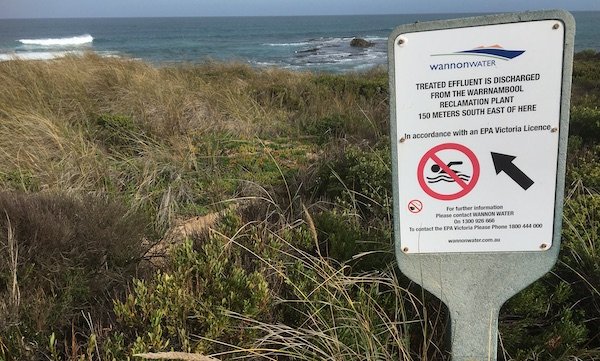
A decision on the Wannon Water treatment plant expansion has been delayed further while the EPA seeks more information on what will end up in the ocean near Thunder Point.

Carol Altmann – The Terrier

If you’re wondering what’s happening with Wannon Water’s $40 million Warrnambool treatment plant upgrade, here it is – a decision has been delayed amid concerns that waste collected from the abattoirs and saleyards contains animal faeces that could cause disease.

Charming, huh?

The Environmental Protection Authority (EPA) was due to make a decision on the controversial plant expansion by 12 March, but is now asking Wannon Water for more information.

According to the EPA notice issued on 26 February, Wannon Water denied that effluent collected from the abattoir would contain animal faeces, but the EPA was on to it:

“In contrast with what was claimed in the (Wannon Water) report, it is also to be noted that abattoir effluents do contain slurries and animal faeces”, the notice says.

The EPA sent Wannon Water back to the drawing board for a “deeper assessment of the pathogens that may be present in the wastewater” which – remember – will continue to be discharged into the ocean off Thunder Point.

This is a spot where, despite the warnings, people still fish and dive and collect shellfish, as you do, when at a beach.

The EPA is rightly worried about humans coming into contact with animal waste.

“Specifically, we believe that the report (from Wannon Water) does not consider the pathogens most likely to be present in the trade wastewater from the saleyards and the abattoirs.

“Rather than having a dilution effect, these wastewaters will add protozoa and bacterial pathogens.”

Pathogens = disease causing microbes.

Lovely.

Wannon Water no longer tests for micro-organisms such as E.coli, coliforms and enterococci within the so-called “mixing zone” off Thunder Point. As such, its planning submission quotes figures from 2018 and 2015 to estimate what levels can be expected after the upgrade.

Wannon Water must now re-evaluate these risks and, the EPA says, take into “proper account the risks posed by animal wastes” including from different types of animals.

Animal waste, however, is just one issue raised by the EPA in what is called a Section 22 notice.

The EPA has also asked Wannon Water to explain how adding an extra two processing tanks – from four to six – will cope with an almost doubling of the amount of effluent coming into the plant to 27.9 megalitres a day when it barely copes already.

As the EPA confirms and as has been captured on video by Good Will Nurdle Hunting, the plant “has failed multiple times”.

“Currently the plant is hardly rated at 16.4 megalitres a day as the plant has failed multiple times (dirty decants, failed nutrients discharge limits),” the notice says.

The EPA wants to know how much waste the expanded plant could reliably handle, and how it will cope if a tank breaks down, or is offline for repair, or – heaven forbid – both.

In that last, worse-case scenario, four tanks – the same as now – will be handling almost double the volume of sewage and trade waste.

No wonder the EPA is drilling into that detail.

In addition, the EPA wants more information on how much phosphorous and nitrogen will be coming in from (mostly) the dairy industry each year, and discharged into the ocean, and how these annual loads will be measured.

Lastly, the EPA has asked for a concise summary of exactly what Wannon Water has planned for the upgrade, given the many changes, public comments and back-and-forths that have happened since the project was first unveiled in 2017.

If the EPA is confused with the final proposal, no wonder the rest of us are.

I am, however, grateful to the EPA for making sure that Wannon Water nails all of this detail, as this upgrade is intended to last for the next 20 years.

Wannon Water had until 1 March to respond to the EPA notice but has not yet done so.

You can read all of the documentation on this upgrade and keep track of its progress through the EPA here.


Wannon Water fails to address concerns on plant upgrade

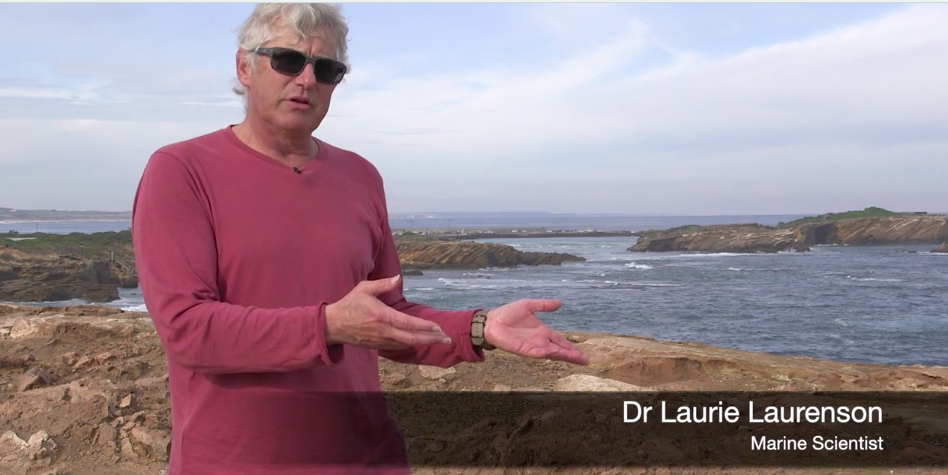
Dr Laurenson has been part of a community pushback against the the proposed Wannon Water treatment plant upgrade. Screenshot: Good Will Nurdle Hunting.

By Associate Professor Laurie Laurenson

[Dr Laurenson is a retired Deakin University academic with research expertise in fish and fisheries biology. He has published more than 70 scientific research papers since the 1980s on various aspects of shark biology, fish biology and remote sensing.]

It’s been a few months since we heard from Wannon Water regarding the sewage outfall upgrade, but recently the EPA released their responses to the public consultation program and we also heard from the Managing Director, Andrew Jeffers.

After reading what the Director had to say and reading through WW’s response to questions posed by the public consultation, I can summarise the situation pretty succinctly: WW’s response doesn’t represent new information nor significant changes to their initial proposal.

They have simply repackaged the original position, with one or two minor tweaks.

Why have I concluded this?

There’s lots of reasons, but I’ll give a few here starting with the pollution that they are discharging into the marine environments and how it mixes and disperses.

We asked WW why winds and currents were not included in their dispersal models (just waves were included) and also why they confined their study largely to 300m from the outfall.

None of these questions have been answered.

In fact, WW has simply stated that they conducted 3D modelling in the mixing zone and that the outcomes were acceptable.

This simply ignores the questions, and provides far less detail about what, where, why and how things were done.

The questions that WW were asked were very specific and the answers were fundamentally intended to lead into community health risk assessment. This is something that should have been done initially, but still is absent.

WW mentions using drones to help with assessing pollution in the mixing zone; this means focusing on the 300m area around the sewage outfall.  Newer drone technology can collect water samples and aerial imagery, but only in good weather.

Regardless, WW is only intending to trial drones, not actually committing to anything with respect to micro-plastic, chemical or biological pollution, and no mention of how often or how widespread the drones would be used.

One of the biggest criticisms we had of WW was the lack of consistent sampling of water quality and the marine ecosystem over time on the wider area towards Lady Bay.

This is likewise still absent in my view.

WW state they have historical data that they can use to answer these questions, but based on their initial upgrade proposal, no they don’t, otherwise they would have – or should have – used it.

Which gets me to community health.

WW have not shown any advances on their understanding of the potential impact of pollutants on the Warrnambool community.

It was pointed out to them that infectious biological contaminants, from their outfall, exceeded World Health Organisation standards under certain environmental conditions.

A reasonable response to this is also missing, but is critically important to us.

To be fair, WW’s response is an advance on their previous position, inasmuch as they are prepared to acknowledge that tertiary water treatment and bio-reactors, which will allow safe oceanic discharged or reuse, should be considered.

But their statements are promises into the future, with no timelines, and certainly a much greater cost burden on the community if left for some future date.

So what can I conclude?

WW is the polluting outlier in Australia, nobody else does what they do, and we should expect more of them.

Its disposal processes represent a clear and present danger to the health of the community that they serve and to the environment that we take for granted.

The response of WW to the public consultation does not represent new information, nor a significant change of position on their part, they have simply repackaged the original proposal, with one or two minor tweaks.

The EPA will make its decision on the Wannon Water proposal on 12 March.

LINKS:

 https://www.wannonwater.com.au/2021/january/updated-proposal-for-warrnambool-sewage-treatment-plant-upgrade.aspx).

Full Wannon Water docs: https://engage.vic.gov.au/epa-works-approvals/wannon-water


Pressure mounts on Wannon Water to end ocean outfall

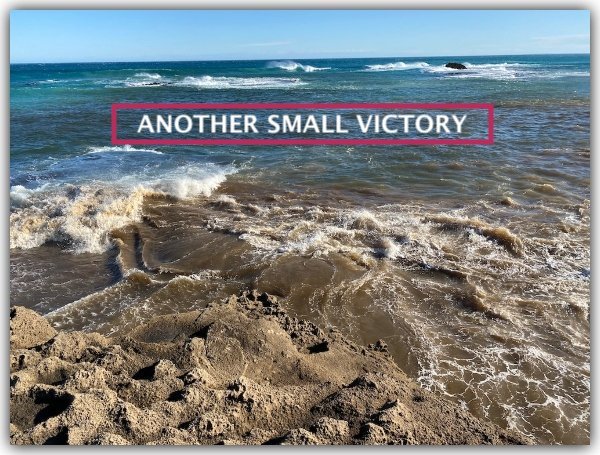
Dirty effluent water off Thunder Point, from the Wannon Water treatment plant. Image: Goodwill Nurdle Hunting.

Carol Altmann – The Terrier

Big news is filtering out of the EPA today which could see Wannon Water forced to lift its game so these “dirty decants” into the ocean off Thunder Point are soon a thing of the past.

The push is to produce only what is called “Class A” water which is not piped into the ocean but – wait for it – reused and recycled.

The fabulous news is that the independent consultant hired by the EPA to look at the public response to the $40m WW plant upgrade agrees!

Agrees!

The consultant is recommending that the EPA requires Wannon Water to move to a Class A/tertiary system within five years.

Five years!

Sorry for the exclamation marks, but I am genuinely excited, because this is a major breakthrough in what has been a very long battle, by some very dedicated people, to bring our city into the 21st century.

If the W’bool City Council is serious about its 2040 Plan, then it needs to demand this requirement too.

I have learned that Class A water is good for just about everything other than a refreshing drink.

It is safe for human contact.

You can wash your clothes in it, water your vegies with it, irrigate your lawn with it….

How very modern and forward thinking, given we are the driest continent on the entire frying pan of the planet.

As it sits, Wannon Water plans to spend $40m expanding the treatment plant so that it can do more of the same for the next 20 years – ie. just keep pumping effluent into the ocean.

To go for Class A will cost another $30m to $40m, which for something which will set us up for the next 20 years, sounds like a good deal to me.

Wannon Water has already put the heebies into people by saying it would also cost an extra $2m to $3m each year to run and customer bills might rise.

When I see the sort of money swishing around the big dairy and meat companies that use our treatment plant, that sounds like small change.

They can afford it and they should pay most of it.

There are 19 recommendations in the report which has dropped onto the EPA website, and I am yet to fully digest them all, but boy, this one – #7 in the 19 – is a ripper.

People power is working and that is why I love, through the Terrier, being a part of it.

By the way, thankyou SO MUCH to everyone who has tipped into the tip jar. I will have an update on all days that have a T in them…..which means, tomorrow!

[You can find the full report here]