No small irony: Large posters promoting the #16Days of Activism to end violence against women on prominent display at the Lighthouse Theatre, Warrnambool, which also houses a Rolf Harris mural.
I met two unforgettable people last week while collecting signatures to erase the mural by sexual predator Rolf Harris at the Lighthouse Theatre in Warrnambool.
Both of them, one a man, the other a woman, were survivors of child sexual abuse and were, as they described it, “finding their voice” to talk about such a personal atrocity and do everything they could to ensure that no other child would suffer what they had.
They talked quietly, often looking into the middle distance, because the middle distance is a safe space when re-visiting a place of such hurt, such confusion and such silence.
The silence. The being told – constantly – that you must not say anything, that you must not cause trouble, that you must not ruin things, or make things uncomfortable for others by speaking up and out.
But as the man said to me, “you just want to be heard and for someone to do something”.
He was doing something.
That very day as he signed the petition on a wobbly card table on the Civic Green, the Royal Commission into Institutional Responses to Child Sexual Abuse delivered its final report.
This was a devastating report that has been five years in the making and to which this man had given hours of evidence.
Despite having made a contribution to this highest level of investigation, this man still turned up during his lunch hour to sign a little petition to remove a small mural in Warrnambool because he is not done yet.
None of us should be done yet.
And this was how the woman who told me her story, a story she is only now starting to fully articulate, went from talking to me about why removing the Rolf Harris mural didn’t really make a difference, to deciding that it did.
She had come to the Civic Green not to sign the petition, but to explain why she felt covering it up was enough.
We talked about the symbolism of covering things up, about the hard-to-hear argument of separating the sexual abuser from the person, and about this mural – this mural – being a chance for our council to follow the lead of others who painted over their Harris murals right after his conviction two years ago.
After 20 minutes or so she said “I am going to sign”, and she did.
These are the strong faces I see in my mind when people roll out the arguments as to why the mural must stay.
“But Carol, where will it end?” they say.
Apparently if we erase a Rolf Harris mural in Warrnambool, soon we will be pulling down churches and trashing Caravaggios and banning people from watching films and throwing all manner of books, artworks and music onto a giant pyre, because if we don’t, well, we are being insincere and inconsistent.
Ironically, this fear-mongering and muddying of the waters is what the “yes” voters endured during the same-sex marriage debate.
A simple question – can two people of the same sex marry – descended into a frenzy about ending freedom of speech, people marrying goats, and children being taught in primary school how to use sex toys.
If you said yes to same sex marriage, you were saying yes to all these things too – get it?
Fortunately most of us in Warrnambool were smarter than that.
But we, as a city, own a Rolf Harris mural and it is through this mural we can again make and take a stand. We must make a choice. We either own it fully, and pull down that Perspex, or we roll over it as a symbolic gesture that we stand with survivors 100 per cent: not 50 per cent or 20 per cent.
“But Carol, where will it end?”
Well, I can tell you that for the survivors of predators like Rolf Harris, who use their power and position to abuse children, it never does.
And as the women and men now speaking out around the globe have shown, we are not done yet.
In fact we are just getting started.
The physical petition has closed with more than 100 signatures in five days, which was my goal. The online petition also closed on Wednesday 13/12 at 9am.
The petition will go to Warrnambool City Council for consideration at its first meeting for 2018 in February.
After Don and Harvey, can we stick with Rolf Harris?
Mixed messages: rather than get rid of a mural painted by sexual abuser Rolf Harris, the W’bool City Council opted to cover it up. Image: ABC South-West.
What message does this black perspex send to women and girls in Warrnambool?
To me, it screams hypocrisy.
At a time when sexual predators – who also happen to be famous – are finally being outed for the scum that they are, surely Warrnambool can no longer hold on to this.
For those not familiar with this piece of black perspex, it is covering a kitschy mural painted spontaneously by Rolf Harris on a wall behind the scenes at the Lighthouse Theatre, way back in 1986.
A lot has changed since 1986.
We now know that Rolf Harris is a sexual abuser, down there with the likes of Harvey Weinstein, Don Burke, Lewis CK, Kevin Spacey, Bill Cosby and others who have finally been outed as the grubs so many people knew them to be.
In Harris’s case, his disgusting crimes – for which he has been jailed – were against young girls. Kids.
And yet Warrnambool is sticking with Rolf.
We are still making excuses.
We have not yet had the courage, it seems, to actually paint over this work but to let it remain covered up, like a dirty little secret for somebody else to deal with down the track.
In the light of what is coming out now about Weinstein and Burke, does that “nothing to see here” approach sound familiar?
That decision was made on our behalf by a majority of the Warrnambool City councillors in 2015 who, using logic I still can’t understand, saw the covering up – rather than complete removal – as a sign of support for victims of sexual violence.
The main argument was that this mural was ART! and all ART! – even a slap-dash mural by a convicted child molester – is worth preserving at all costs.
Really?
Would we seriously consider hosting a gardening talk by Don Burke at the Lighthouse Theatre? Or a film night in honour of Harvey Weinstein, because, hey, their talents are quite separate to their being sexual abusers?
Fortunately a lot has changed since 2015.
We now have a new council. And we have now entered a time – AT LAST – when the powerful and the famous are no longer being given social immunity because of their particular talents, personality, wealth or likeability.
And right this minute, the council itself has the perfect opportunity to correct its mistake of hiding this mural and instead make a strong, symbolic gesture that we, as a city, do not tolerate sexual abusers – no matter who they are.
How?
Well, I saw on Facebook this morning that Connect Warrnambool (which is run by the WCC) is proudly supporting 16 Days of Action to support Gender Equality (#16days) and it talks about things like promoting respect for women and increasing women’s safety and well-being.
All very stirring stuff, but such words, without action, are as hollow as Peter Dutton’s heart.
So here is my idea for Connect Warrnambool, and it is one that I have been pushing since 2015:
borrow a Makita drill and remove the screws that are holding up the perspex on the Harris mural;
ask for willing volunteers to come and run a paint roller right over the space (you will be inundated, Connect Warrnambool, I promise);
invite a young woman artist to paint a fresh mural and;
lastly, install the black perspex on the stage at the W’bool Civic Green and let little kids draw their art all over it.
What a message to say that we are absolutely serious about respect for women and girls.
I have my painting overalls ready…
Jackie Carruthers and I are ready to roll!
Embracing the winds of change in Warrnambool
Bill Abrahams: “It’s 2:20am, I’m wearing my pearls out in Warrnambool and I haven’t even been gay bashed!”
I am so glad that the postal vote on same-sex marriage happened while I was living here in Warrnambool, because I needed to make peace with this town.
Growing up here in the 70s, 80 and 90s was not easy for those who knew they didn’t fit the mainstream, but couldn’t articulate why, other than knowing to talk about it would lead to trouble.
Even for those of us who had long family ties here, there was a pervasive sense of not belonging to the main tribe, of being an outsider.
I used my humour to get through my years at Warrnambool High School when I knew I had an attraction to girls, but didn’t know what that meant, or what it was, or how it would be, and it scared me and I knew I had to hide by fumbling my way through a string of boyfriends and side-stepping the deb ball.
I have since learned that we were all hiding – all of us – Glenn, David, Michelle, Julie, Damien, me – there are probably many others, because to not hide was to face exclusion, to feel ashamed, to be hurt by those who were stronger and more powerful.
Most of us had to run away from Warrnambool to find out who we were. I was gone for 25 years.
This is why the postal vote on same-sex marriage penetrated so deep into the psyche and the skin of those who were at the centre of the poll: we have been there before, except this time it wasn’t just a small country town judging us, but the entire nation, as to whether we were worthy of the same rights as everybody else.
And that is why the significance of this vote went well beyond the right to marry, which is something many LGBTQI people still feel ambivalent about. This was a vote on equality and whether, at last, we could stop feeling ashamed and excluded.
Last Wednesday at 10am, we all held our breath.
And then came the sweet release of a YES.
YES. YES. YES. YES.
Two thirds of our corner of the world voted YES.
YES pulls up windows and let’s the breeze blow in.
YES opens the doors on our hearts.
YES turns down the volume on hate and ramps up the volume on kindness.
No wonder most of us spontaneously cried when the result came through – including warhorses like Senator Penny Wong and writer David Marr – because a “NO” vote would have been unbearable.
The temptation for many of us living in Warrnambool was to head to Melbourne and await the results on the steps of the State Library together with thousands of others, then – we hoped – party long into the night.
But as my friend Bill Abrahams said later, “it was important to be here” and he was right.
Heading out to the YES party in Warrnambool.
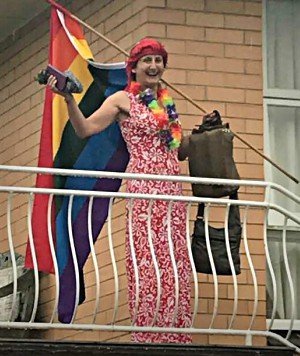
It was important on Wednesday night to be able to stand in what was, when I was growing up, Brebner’s Paint Shop – now the Dart and Marlin bar – and wave a huge rainbow flag while people from all walks of life in Warrnambool joined in the celebration.
Twenty years ago, maybe even ten, this would have been inconceivable. Somebody would have been hurt.
As horrific as the postal vote process was, I am glad it happened, because it gave Warrnambool a chance to grow in ways that I suspect will become even more apparent over time. From the rainbow flag flying above the Warrnambool City Council, to the extraordinary events at the temporary Haven space within the Warrnambool Art Gallery, to the ongoing presence of Yumcha at Brophy, we have shown we were ready for this.
A few days after the vote was announced, Bill posted a photo on Facebook of him sitting in a Warrnambool bar just after 2am. His hair is in an Elvis coiff and he is wearing pearls and a fake fox fur while, behind him, a bouncer dressed in black leans on the bar, gazing off into the middle distance.
“Donna please take a photo. It’s 2:20am, I’m wearing my pearls out in Warrnambool and I haven’t even been gay bashed!” he wrote.
This is the new Warrnambool – a better Warrnambool – and we can all live with that.
Edna Jones’ baby: a story of shame, secrets and setting things right
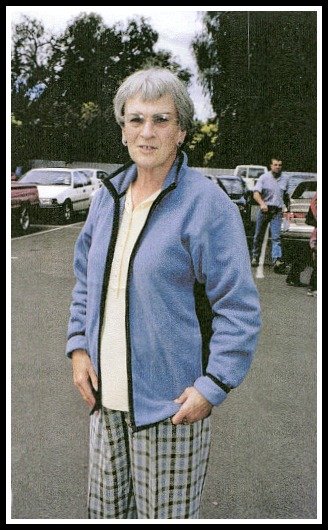
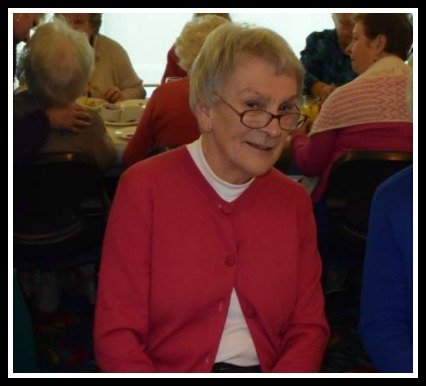
Marilla Lenne, the daughter of Edna Jones, who was adopted out after her birth in 1940. Image: supplied.
By Carol Altmann
Meet Marilla Lenne, the “secret” daughter of Edna Jones, one of the two “Jones Girls” who for decades owned and operated one of south-west Victoria’s most desirable grazing properties, The Union Station, at Woolsthorpe, and who left a legacy worth millions.
Until now, only a small group of people – among them some well-known names in our community – have known of Marilla’s existence, with both Edna and her older sister, Gwen Jones, widely thought to have died unmarried and childless.
Indeed The Gwen and Edna JonesFoundation was established as a private charity to handle the sisters’ multi-million dollar estate because, according to its website, “neither sister (had) an heir to whom they could bequeath their considerable assets”.
The Foundation, which in 2016 had assets worth more than $15 million, was launched after Gwen’s death in 2000.
It has since donated hundreds of thousands of dollars to local projects and made significant contributions to the Presbyterian Church, particularly in its support of Warrnambool’s King’s College and, most recently, its purchase of several church buildings in Warrnambool.
But Edna, who died in 1995, did have a child at the age of 30.
The baby was a girl, born in a Melbourne hospital on 28 October 1940 and given up immediately for private adoption.
The fact Edna had a baby may be a surprise, but the adoption less so. While the circumstances of Edna’s pregnancy remain unknown, the moral standards of the time stood in harsh judgement of women and girls who had babies out of wedlock.
It is worth remembering that this was an era when family skeletons were tucked firmly into closets.
What is harder to understand more than 70 years later – in 2017 – is the apparent reluctance of the Gwen and Edna Jones Foundation to formally acknowledge Marilla’s existence, despite some of its board members knowing about her for more than 20 years.
Some members, including Foundation chairman and high-profile Warrnambool lawyer James Tait, have even met her personally.
To the Foundation board, Marilla is no longer a skeleton in the closet but, for some inexplicable reason, her place in the Jones family story has remained untold.
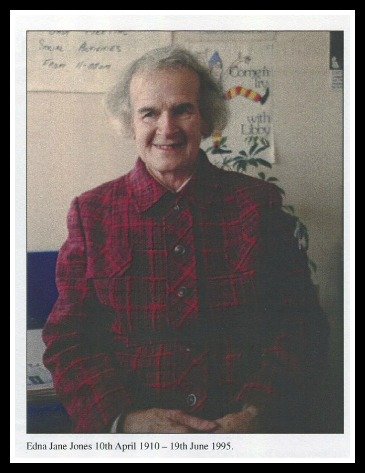
Edna Jones in her senior years, taken from Janet Paisley’s book, The Jones Girls’ Bounty. Copyright: Janet M Paisley.
I first learned of Edna’s baby through a casual remark in an email from a former foster carer,which I then repeated to another ex-Warrnambool friend, Bruce Macrae, who I knew was familiar with the history of the Jones’ girls.
“Apparently Edna Jones had a child,” I asked him. “Could that be true?”
“Oh yes,” Bruce said, “I have met her”.
“What!”
And so began my quest to find Marilla, and to talk to her myself.
Bruce pointed me in the direction of Barwon Heads author Janet Paisley, who is a cousin of the Jones’ girls and who was commissioned by the Foundation board to write the Jones’ story, The Jones Girls’ Bounty. Her book was published in 2005.
Talking to Janet revealed the full extent of an unresolved story about social class, loss and grief for Edna, but also the quiet determination of Marilla who, having confirmed her mother’s identity in 1995, set out to remove all the shadows of guilt and shame around her birth.
By the time Janet and Marilla connected, Janet was deep into the research for her book which, of course, provided the perfect opportunity to acknowledge Edna’s “secret” child.
To be part of the official family story would connect Marilla back to her birth family in a way that was both dignified and healing.
But the Foundation decided that there would be no mention of Marilla in the 2005 book and, instead, a chapter might be published in later editions as an epilogue.
With this in mind, Janet interviewed Marilla and has since written an entire chapter about Edna’s baby.
But despite the book being printed 12 years ago and numerous follow-up inquiries by both Janet and Marilla since, they are still waiting for this missing chapter to be published.
As it stands, The Jones Girls’ Bounty contains just 22 words that refer to Edna being involved in “an incident” when she was a young woman.
“I am the incident,” Marilla, who is now in her 70s, tells me by phone, somewhat sardonically.
Gwen and Edna Foundation chairman and lawyer James Tait. Image: Tait’s Legal, Warrnambool.
The stonewalling by the Foundation is one thing, but then there is this: an inexplicable sentence in the book’s foreword, written by James Tait in February 2005:
“They (Gwen and Edna Jones) had no one within a close degree of relationship,” he writes (my emphasis).
When this was written, the board had known of Marilla for years and James had had several contacts with her, including sending her a catalogue for the auction of The Union Station and Gwen and Edna’s possessions in late 2001.
(The Union was sold to Midfield Meats founder and racing identity, Colin McKenna, in November 2001 for more than $7 million.)
Given the board knew of Marilla, why, in early 2005, would its chairman write such a sentence?
I asked James this, together with several other questions that relate to his role as Foundation chair, but have had no reply.
Taits were the Jones’ family lawyers for years, they documented the rules for the Foundation and prepared both Gwen and Edna’s wills, and James has been chair of the Foundation since it began.
He joins other long-serving directors, retired accountant John Hunt, from Coffey Hunt and Co, who were the Jones’ accountants, and retired bank manager and former Warrnambool Citizen of the Year Eric Williams. Thefourth, and most recently appointed director isformer head of the Warrnambool Racing Club, Margaret Lucas.
This is the group that, for reasons unknown, have so far refused to offer any public acknowledgment of Marilla.
“That recognition is really important to Marilla,” Janet says, “it would offer a closure, of sorts, and it is what she has been waiting for, for many years”.
It is not known if the Foundation directors have even read Janet’s “missing” chapter about Edna’s baby.
They did, however, send Marilla a complimentary copy of the book when it was published.
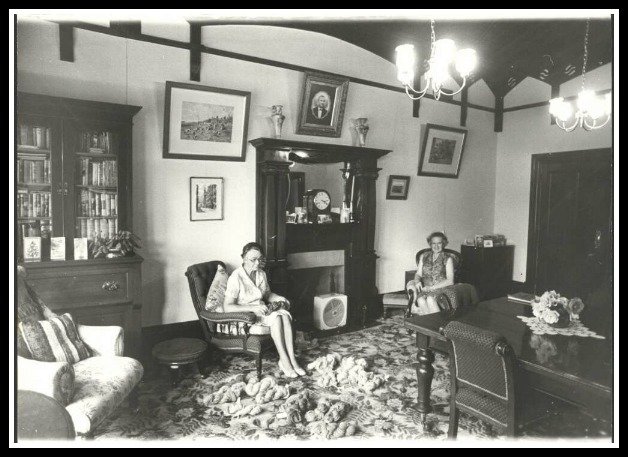
Gwen, left, and Edna Jones in the lounge and dining room of The Union Station, Woolsthorpe, circa 1975. Image: Copyright National Library of Australia. Object No: 147727624.
It is partly because of Marilla’s quiet patience and good humour, no doubt, that the Foundation board has been able to continue its stonewalling.
Having spoken to her several times now, Marilla strikes me as someone who has enjoyed a simple, hard-working life (she pursued a nursing career) and is not interested in engaging lawyers, publicly challenging authority, or making a fuss.
She lost her partner early, to cancer, and never had children, so her retired life is one of community work, golf and travelling with friends.
As the years tick past, however, neither Marilla nor Janet, who is now in her 80s, can afford to show endless patience.
“Here we are, 22 years on from when all of this came to light, and we are no closer to a resolution, really,” Marilla says.
“I am experiencing what a lot of adopted people experience when they find their birth parents…but what every adopted person really wants to know is that at least they were wanted”.
As Janet’s chapter outlines, Marilla was denied the opportunity to reconnect with Edna, even though she was alive when Marilla had confirmation that Edna was her birth mother.
Marilla Lenne pictured at a Legacy social lunch in 2015. Image: Merimbula News Weekly.
Shortly after tracking down her birth certificate in early 1995, Marilla wrote Edna a letter c/o The Union, Woolsthorpe.
Gwen Jones replied on her sister’s behalf, saying it was best if Marilla did not see her mother, who by then was in the late stages of dementia, saying it would be upsetting. She enclosed an earlier photograph of Edna.
“I got the sense that Gwen did not want to have any involvement whatsoever,” Marilla said.
Edna died in June 1995.
“If I had been able to see her, I would have just thanked her for my life and set her free,” Marilla tells me.
Reading Janet’s book about the Jones’, there is a pervading sense that the fun-loving Edna got to make very few decisions about her life, but was instead guided by her older sister who promised their father, Robert, that she would always take care of her.
And so it makes sense that even though Edna may have gone along with the decision to give up her baby in 1940, she never forgot her.
As Edna developed dementia in the years before her death at the age of 85, those long-buried emotions around Marilla’s birth were no longer constrained.
She was sometimes seen searching the shelves of Swinton’s supermarket for “the baby”, or would follow a mother pushing a young child in a supermarket trolley, or, as one woman told me, she would “come alive” when talking about babies or if a baby was brought into the room.
Despite these very public displays of grief and confusion, Edna’s “baby” was thought by most people to be purely imaginary.
Even Janet, a relative of the family, didn’t know the truth about Marilla until after Gwen’s death in 2000.
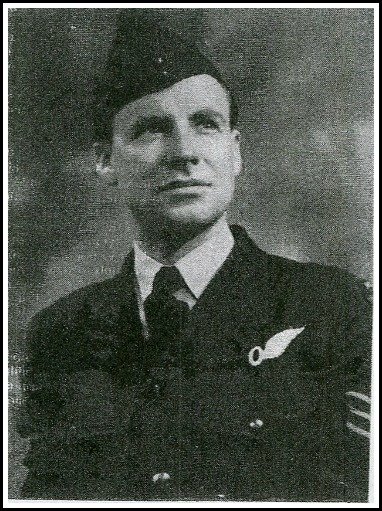
The formerly “unknown” father of Marilla Lenne: his identity and the story behind how Marilla met his family is contained in Janet Paisley’s chapter. Image: Grasmere Presbyterian Church newsletter, supplied.
It is since Gwen’s death that Marilla has been given certain access into the Jones’ world, but still not a seat at the main table, so to speak.
In 2001, Marilla was invited by the Foundation to look over The Union before the sale of its contents which were, at the time, being sorted and packed by staff from Coffey Hunt in preparation for one of the most highly anticipated auctions in years.
A few small items that belonged to her mother have since been passed on to Marilla – a cup, saucer and plate – and connections made to lost cousins.
Another particularly poignant moment came in 2011 when Marilla was invited to visit The Unionfor afternoon tea by Colin McKenna and his partner, Janice, who, Marilla says, “was delightful and very welcoming”. How strange it must have been, however, for Marilla to sit in the historic, blue-chip property that was once half-owned by her birth mother, but to which she had no claim.
In Australia, adopted children have no legal right to the estates of their birth parents, but for Marilla, it has never been about estates.
Instead, her gentle persistence has been driven by the desire to be recognised and have her story – and therefore Edna’s story – brought out of the shadows and into the light.
There was to be no more shame.
Until now, such a wish depended on the decisions of the Foundation, but both Janet and Marilla have now given me permission to publish the draft chapter here, see the link at the end of this story.
This “missing chapter” also reveals the identity of Marilla’s father and the incredible story about how she connected to his family in the south-west.
I thank Janet and Marilla for trusting me with their story and words.
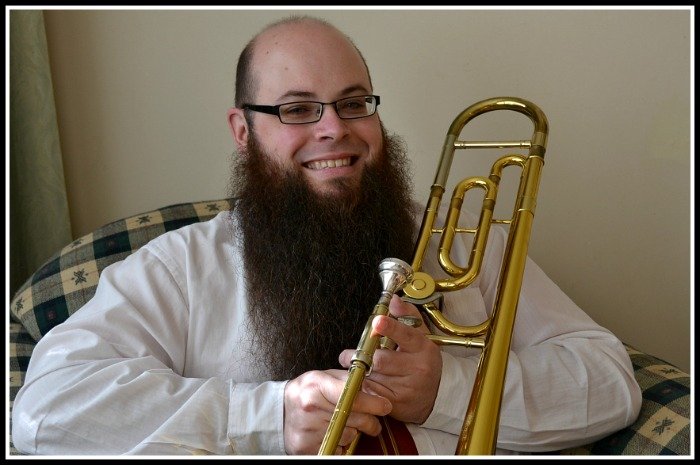
What do you get when you cross a big beard and a slide trombone? The answer is Paul Howlett, accountant, musician and proud owner of a substantial length of chin hair.
By Carol Altmann
The beard is back and there is no more lustrous, free-flowing, eye-catching example than Paul Howlett’s in full flight as he strides down Koroit St.
I first saw Paul’s beard before I saw Paul, its full form divided directly down the middle, two halves happily united at the chin, but separating at the chest as they momentarily caught the breeze.
“It tends to do that,” Paul tells me later.
The whole, heart-warming spectacle was enhanced by the fact that Paul, 33, has very little hair on his head, as if the beard, in its sheer bulk, was making fun of the follicles that occupy the top floor.
There was also something delightfully defiant about the fact that when I spotted Paul, he was walking into the conservatively decked out establishment of Coffey Hunt, chartered accountants and tax specialists.
(I find out later that Paul works as an accountant for the opposition, Sinclair & Wilson, and that this was merely a visit.)
Even when he is wearing the muted professional uniform of a crisp white shirt and dark pants, Paul’s beard gives the game away: there is more to this guy than meets the eye.
And I was right. He also plays the slide trombone.
Paul works his slide trombone with the Warrnambool City Band, of which he has been a member for 20 years. Image: Bethany Gillie.
[dropcap style=”font-size: 35px; color: #8cc7d0;”] B [/dropcap]
ut let’s stick with the beard for the moment.
“I really didn’t think I could actually grow a beard this long,” Paul says, “but I really like the length now and I really like the feel of it”.
The beard began as a bit of teenage bum-fluff that Paul grew for a high school production of Peter Pan (“I was playing a pirate…”) when he was a year 12 student at Warrnambool College.
From there it morphed into a goatee that extended itself occasionally for Movember, but it wasn’t until December 2013 when Paul had three weeks holiday from his job at Sinclair & Wilson that he let it grow…and grow…and grow.
“The guys at work were a little surprised when I came back, but (my bosses) are okay with it,” he laughs.
“A few people have suggested I should trim it right up, but I’m happy with it.”
Paul Howlett, sporting his trombone tie, with his gorgeous golden slide trombone that he found on ebay.
So how does Paul manage a beard that falls to his heart line when playing a slide trombone?
Surely it is a recipe for a painful pinch during a performance with the Warrnambool City Band, of which Paul has been a member for 20 years.
“Actually it’s not too bad,” he says,”except for when it occasionally catches in the trigger”.
A trigger, I learn, is a little device at the top of the trombone that can be pressed to help push the sliding arm, making it less strenuous for the musician.
“It can be a bit painful when you realise the trigger is also pulling the hair on your face,” Paul says with a slight wince at the memory.
But Paul is not about to give up his favourite instrument, which he was encouraged to learn while at high school and has played pretty much ever since.
“The trombone I have at the moment, I actually found it on ebay,” he says, proving that it really is possible to buy just about anything online.
Aside from regular performances with the City Band in both its concert band and jazz band ensembles, Paul also plays with a Hamilton-based big band, Trax, together with some blues work and the occasional trip into the orchestra pit for live theatre productions.
It is clear that talented trombonists stand out from the crowd in the south-west.
“There are not many of us in town, that is true,” says Paul, before rattling off the names of two others and a young man who is still learning.
I think it is also fair to assume that, among this group of four, Paul is the only one with such a distinctive appearance.