How life goes: the very day my Mum left this world was the very day I was chosen as one of only 11 journalists to share in a $75,000 Walkley Foundation Grant fund, out of more than 110 applicants from across Australia.
The judging panel was full of my journalism heroes and I am still in a bit of shock.
What does this mean? Well, it means The Terrier has been awarded a grant for an investigative piece that I am doing this year and it will be published not only on The Terrier, but by the Walkley Foundation: the top journalism outfit in Australia.
I am all over the shop with my emotions right now, but this made me feel absolutely ecstatic and so validated.
I had booked tickets to Sydney for the presentation last Friday night, but unfortunately that was not to be. So later this week I will raise a glass to my Mum’s long life and the growing success of a little thing called The Terrier.
Thankyou to every single one of you who follow, support and read The Terrier for giving it strength.
And thankyou to the Walkley Foundation and the Judith Neilson Institute for Journalism and Ideas for supporting journalism in all kinds of places, including Warrnambool.
I have been and will be under the radar for a bit as I farewell my dear old Mum. Mum was the original terrier, although she was born in a time when few women were able to become journalists.
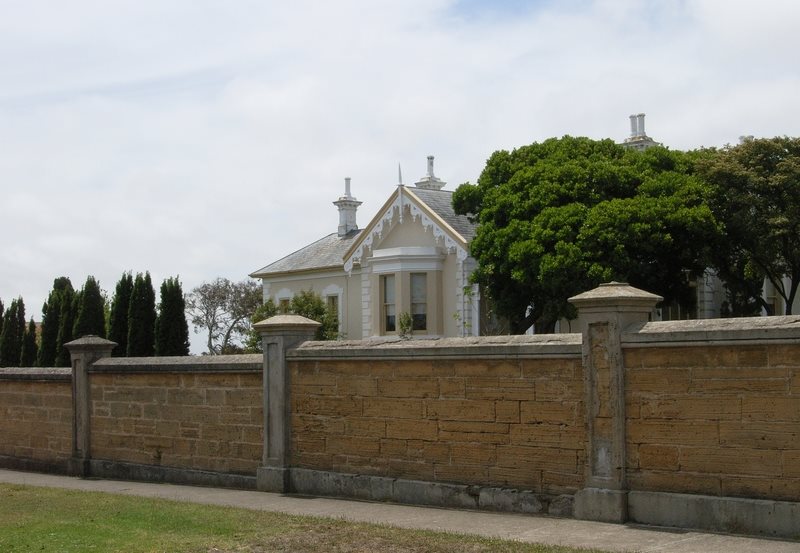
Mum, instead, wrote letters to the editor of the Standard, read all of my university text books and protested long and hard with others to save “Murweh”, the mansion at the top of Liebig St that was – incredibly – destined for the bulldozers in the 1980s.
Murweh is still there. Mum, after almost 95 years, is no longer, but her love and care for Warrnambool lives in me.
On we go, Mum. On we go.
Snow White, the Seven Dwarfs and the city of WooBoo
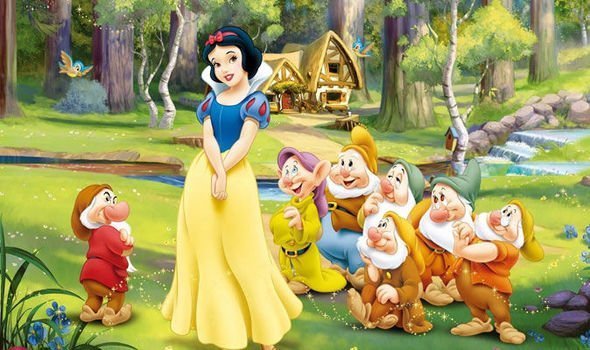
Snow White and the seven elected members of WooBoo, including Grumpy, all working to make life better for its citizens.
Carol Altmann – The Terrier
This is a budgetary fairytale based on fact. The numbers are real, the names are not.
Once upon a time, in the town of WooBoo, there was a town leader, Snow White, who was paid more than $310,000 a year to work for the seven dwarfs who had been elected by the people of WooBoo to look after WooBoo and help it prosper.
Exciting things were happening in WooBoo under Snow White’s leadership.
There was a big, money-losing festival for children, there was a maritime museum with few boats but a new $3 million sound-and-light show that promised to lure carloads of tourists, there were parties at the racecourse, new public toilets, new parking meters, pretty roundabouts and still lots of money left over for the WooBoo Council to spend on consultants, credit cards, conferences and staff development.
Most of the seven dwarfs were ecstatic, except for Grumpy. Every council has a Grumpy, and Grumpy was seen as a troublemaker.
“Can we afford all this?” Grumpy would ask. “Does this all add up? Why don’t some of these figures make sense?”
“Of course we can,” said Doc and Happy in unison. Unlike some of the other dwarfs, they had represented the Town of WooBoo for many years and had grown fond of Snow White and her team of highly paid helpers.
Mayor Sneezy was equally as enthusiastic: “WooBoo is aspirational, sophisticated and cosmopolitan and I wish people would stop being so negative!”
The spending went on. Sometimes it was on necessary but boring things, like $5.5 million for a drainage system to avoid parts of WooBoo flooding.
The glittering, shiny upgrade of Justice von Liebig St started at $15 million…..
And sometimes it was for sparkly things, and the biggest of all was the $15 million upgrade of the main street of WooBoo, with shiny new pavements, new trees, new lights, drinking fountains, more flowers and planter boxes and a much narrower road with so many pedestrian crossings that WooBoo drivers could no longer take their eyes off the road for a second.
The people of WooBoo were happy to see their tired main street being given the full Ritz treatment, even if they privately wondered what was going to happen to the other town streets with their peeling buildings and broken footpaths.
Don’t worry, they were told, celebrate the rise of wonderful Justice Von Liebig St!
Meanwhile, in the MelBoo office of the chief money watcher, the Victorian Auditor-General, a little red light was flashing.
It had been flashing quietly every year since 2014-15 and it warned a “high risk” situation was developing. This high risk was that the Town of WooBoo did not have enough money of its own to fund its operations, once it removed all the one-off gifts and grants from Grandma and Grandpa Government.
In particular, the Auditor General found WooBoo might have trouble paying to repair and replace things once they wore out, like footpaths and playgrounds and bridges.
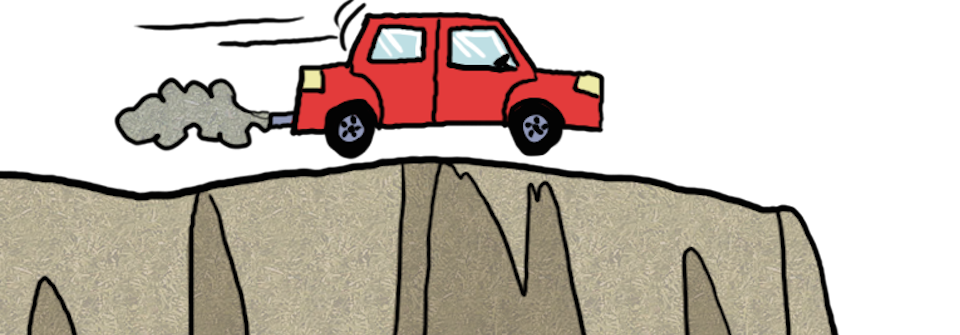
Excuse me, is that a cliff? No, surely not?
The red light blinked, but in the town chambers of WooBoo the party went on until, one day in late 2018, it stopped.
By then, Grandma Government had put her foot down and capped rates so councils could not just keep asking ratepayers for more. Instead, annual rate rises would be capped at between 2% and 2.5%.
By then, the money-losing WooBoo children’s festival had been axed abruptly. By then, it was becoming clear that the carloads of tourists were not going to the maritime museum.
The seven dwarfs had to absorb some hard truths.
One of these was that the WooBoo capital works budget for 2017-18 had blown out by a whopping $6 million from $17.6 million to $24.6 million.
A big part of this was dressing up Justice Von Liebig St, the cost of which had grown from $15 million to around $19 million, including $8 million that would need to come from the citizens of WooBoo.
The big drainage project had also been in trouble, with the first contractor going broke and the final cost still not known until it is all finished.
On top of this, recycling fees had skyrocketed, the cost of keeping a pet had shot up, parking in WooBoo was more expensive, rates would still rise, and there was still not enough money for all the old roads, pavements and playgrounds to be repaired.
Things were suddenly not so good.
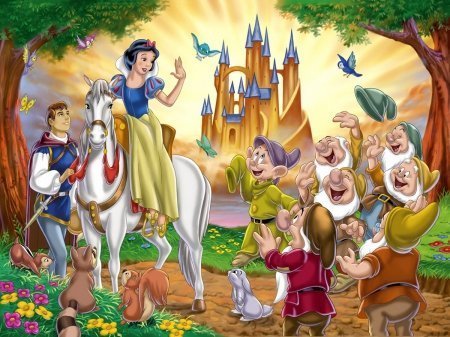
Snow White at her farewell function before taking early retirement and moving to her seaside castle.
Grumpy thumped the table and yelled “I told you so!” and this time Mayor Sneezy agreed with him.
Happy and Doc, being astute in the art of public relations, told the people of WooBoo that they were committed to tackling a crisis that they had “inherited” and the only way to do this was to ask the people what they thought, ignore that, and then seek to bust the rate cap anyway.
The three other dwarfs, who were still trying to get their heads around it all, nodded in agreement.
And so, dear reader, hi-ho, hi-ho, off to the Essential Services Commission we go.
And what of Snow White?
Ah, she sensibly retired early to her castle by the seaside, from where she watches the hard-working people of WooBoo rise up and prepare to march past the empty grounds of the maritime museum, and down the glittering, gridlocked avenue of Justice Von Liebig St, named, as it so happens, for the German industrial chemist who invented fertiliser to replace cow dung.
The End.
[For those who want to go deeper, you can find the Auditor-General’s red light here on the WCC’s adjusted underlying result, page 79. The WCC 2018-19 budget is here. You can find the capital works details at item 4.5.1 on page 45.]
Adam Kempton: 12 reasons why not to break the rate cap
By Adam Kempton
Lawyer, former Liberal MLA for Warrnambool, provocateur, West Highland Terrier
1. Unfair burden: Rates are in essence a regressive tax. That means they affect people with lower incomes greater than high income earners . If you are a pensioner and the rate cost to you increases by one dollar, then the impact on you is greater than the millionaire whose rate increases by one dollar. This means the rate increase imposes a disproportionate tax penalty on low income people.
Does the council want to be a council for the rich?
This, in essence, is stealing from the poor to give to the rich.
2. There has been no increase in pensions or wages for many years, so why should council increase its revenue way ahead of the community?
3. Local council ( and other tiers of govt ) more or less have a guaranteed flow of revenue ( taxes/rates) , unlike other people and sectors of the economy.
4. The new Chief Executive needs to be given a go in finding savings in reforming council so no increase is necessary.
5. The results of the community consultation poll, which strongly opposed the rate increase, were discarded.
6. There is a federal election in May. The council does not know the positive or negative impacts of a change in Federal Government on its rate/revenue position.
7. It will be a massive embarrassment if the Minister or Essential Services Commission – to which the council applies for the increase – rejects your application for the increase.
8. The rate increase sends a bad signal to the community that says the council will always take the soft and easy approach by increasing its revenue, rather than seeking to find efficiencies.
9. Opposing a rate increase signals the council is applying the same principles that the private sector and households impose upon themselves in the same situation.
10. Is there, or has there been, a long-term (say 10 years ) strategy in which this rate increase would fit?
11. What consideration has this proposed rate rise being given in the context of the massive infrastructure proposed spend for this area? And what consideration has been given in the event that infrastructure spend does not occur?
12. What account has been taken of the economic downward pressure on the area through the milk price and cost pressure in the important dairy economy? This has serious effects right through all sectors of the local economy.
The Terrier is taking a closer look at how we went from budget stability to a budget emergency. It is a slog through some pretty dry data, but worth it. Stay tuned for updates.
WCC ignores public opinion and pushes to break rate cap
The Terrier – Carol Altmann
LAST DRINKS: Tonight (25/2/19) the W’Bool City Council voted 5/2 to try and raise rates above the cap because we are apparently in deep financial do-do.
It is just three months since W’bool City Council CEO Bruce Anson retired – he spent 11 years at the helm, passing each performance review with flying colours, and earning a salary package that toward the end was close to $320,000 a year.
You earn this kind of money for a reason – to keep the ship in shape.
We are now being told we can’t afford to renew our infrastructure, basic things like bridges and footpaths. We are being told we might need to cut services, because we are ‘aspirational’ and want things like a new library and a better sports oval.
There has been so, so much waste and it has happened on Mr Anson’s watch.
Loud applause to Cr Peter Hulin and Mayor Tony Herbert for voting against this rate rise, in favour of a forensic audit of council spending and costs.
An audit is so long overdue.
I hope the Essential Services Commission – which has to approve the rate rise above the cap – sends this strong message to the council too: you can’t keep asking ratepayers for more, when you have wasted so much along the way.
The time for reckoning has come.
The Terrier is taking a closer look at how we went from budget stability to a budget emergency. It is a slog through some pretty dry data, but worth it. Stay tuned for updates.