The power of a single, anonymous note
This piece was submitted by a reader. I will keep her name anonymous.

[dropcap style=”font-size: 35px; color: #8cc7d0;”] I [/dropcap]t was with a heavy heart that I read the angry backlash to a Facebook post by Bluestone Magazine* on topless dancers performing in Warrnambool during what was also 16 days of activism against gender violence.

Reading the stream of comments, it became very clear to me that we have such a long way to go in educating people about the link between the objectification of women, gender inequality, and domestic violence.

Increasingly, I have felt a deep sense of powerlessness about the social and political issues currently plaguing our world. While there seems to be collective outrage on social media, there also seems to be a corresponding amount of despair.

Donate

With the far right increasingly gaining momentum and power, and with basic human rights being used as a political pawn, I often feel the problems are just too enormous and insurmountable for any individual to effect any positive change. Perhaps we also feel this way about domestic violence: what can we do, as an individual, to make a difference?

When I reflect on what was personally a game changer for me in domestic violence, it was actually a small and individual act of kindness and bravery from a stranger. 

In my early 20s I was at a pub with my new boyfriend. He was drunk, abusive and out of control, flinging insults at anyone who crossed his path and throwing himself around like a human grenade.

Although the relationship was only new, a series of abusive relationships beforehand had me feel responsible for his behaviour. During the night, however, a woman came up to, looked me in the eye and asked, kindly but firmly, “what are you doing with him? He is a dickhead and you are beautiful.” I laughed in her face and turned away, but those words were like a tiny seed planted in my heart.

The night ended with me climbing through a laundry window to escape my wonderful new boyfriend. Earlier in the night, backing up to me in the street, he had tried to piggyback me, but instead I was thrown straight over his head and face planted the concrete.

In terror, I had made a run for it, with him trailing behind shouting my name. I remember frantically banging on the locked front door of a house party I had left, trying to get someone to hear me over the loud music.

Over the coming months something changed in me.

I slowly came to believe the stranger’s words. I was beautiful, and although I still wasn’t sure I deserved better, I was also resolved not to put up with any more crap. The decision was finally in my own hands, not in the hands of an abusive partner. Quite rapidly my life choices began to change. While it felt awkward and unfamiliar, I eventually let myself fall in love with a man who treated me with kindness, respect and adoration. We are still together to this day.

Recently I tried to plant a similar seed in another young woman’s heart.

I had just witnessed a raging fight between her and her partner in a caravan park. He had taken her mobile phone and refused to give it back. She had eventually barricaded herself in the camp kitchen when his anger reached a terrifying peak. After the police attended, a fragile silence enveloped the campground, but I knew this was far from the end of it for her.

Too scared to intervene, I left a note for her under the passenger side door handle of their car. I told her that she was young and beautiful and that her partner was abusive. I told her that I struggled to leave a similar relationship, but did not regret it for one second. I told her that she may think she can be the one to change him, but that he will never change enough for her to live a happy and healthy life. I told her to get out while she could and not look back.

I often wonder what happened to that young woman. Where was she now? Was she able to escape the toxic cycle of abusive relationships and diminishing self-esteem?

A common strategy in psychology when someone is feeling overwhelmed with an issue is to break it up into smaller, more achievable goals.  Indeed, the lesson I learnt from my kind and brave stranger is that seemingly small acts can have a huge impact.

While we have a long way to go in ending domestic violence, we all have the power to make a difference.

Tell the females in your life that they are beautiful, strong and worth it. Not just young girls, but women of all ages: we all need to hear it.

Plant the seed of hope in someone who needs to hear it. Do small things and do them often. Because you just never know when your ‘small’ may be someone else’s ‘big’.

[box]*The Facebook post was in November last year when, on the same day as the 2016 White Ribbon campaign launch, a local bar hosted a fundraiser around topless women, lap dancing and private dances. The response to the post was vitriolic, with accusations of women shaming, demeaning professional dancers and undermining an attempt to raise funds for a good cause. As it happens, the manager of the bar and I had a correspondence and agreed that the timing was poor, even if we had differing views on the event itself. That is open to a much bigger discussion. – Carol[/box]

Follow up piece: How we get from topless bars to abuse


When the heart hardens, the community hurts

Severe cuts by Fairfax to its regional newsrooms has seen the loss of experienced hands like Peter Collins and Peter Fletcher who, between them, had 80 years’ experience at The Standard.


By Jim Clarke, former editor and general manager of The Standard.

[dropcap style=”font-size: 35px; color: #8cc7d0;”] A [/dropcap]s Australia’s two major publishers continue along their death-by-a-thousand-cuts policies in the bush, it was heartening that the ABC announced it would create 80 new positions in regional areas within 18 months.

ABC regional editor for Victoria and Tasmania Mark DeBono told me most of the regional positions would be for reporters and there would be a small number of digital producers. ABC managing director Michelle Guthrie said the appointments would increase the ABC’s digital and video output from rural and regional Australia.

In making this commitment, our national broadcaster has recognised that communities beyond the metropolitan borders have particular needs and also represent significant markets; a recognition that has long escaped News Limited and Fairfax Media.

The two publishing giants bought their way into the regions and, despite many talented staff’s commitment and empathy with their communities, their presence always was a matter of dollars – and never more so than today.

Newspapers were considered to be essential for the communities born of our earliest settlers. The first Australian newspaper, Sydney Gazette and New South Wales Advertiser, was printed in 1803.

The oldest newspaper in Victoria is the Geelong Advertiser, which was founded in 1840 and also is the second oldest in Australia. In the south-west, the Portland Observer was launched in 1842 as the Portland Guardian, while its now-partner the Hamilton Spectator was established in 1859 as the Hamilton Courier.

Along the track, the Colac Observer appeared in 1866 and later became the Colac Herald. The Standard began informing the Warrnambool community in 1872 and the Camperdown Chronicle began publication in 1874.

Each of these newspapers has made a major contribution to their communities. Indeed, to varying degrees they have become an active part in the community, some more positively than others.

The future: ABC South-West journalist Brigid Judd was last Friday named Young Journalist of the Year by the Melbourne Press Club.

[dropcap style=”font-size: 35px; color: #8cc7d0;”] K [/dropcap]

athryn Bowd, of the University of South Australia, summed up their role in a 2003 study: “Australian country newspapers demonstrate a focus of their local community or communities which appears to be much stronger than that of their metropolitan counterparts,” she wrote.

“This focus is generally reflected in an emphasis on local news and the promotion of local concerns, individuals and achievements.”

Bowd’s research involved non-daily papers. It excluded newspapers such as The Standard and the Ballarat Courier, but her conclusions can be equally applied to the regional dailies.

“Country newspapers are a central part of the news and information network in towns and regions,” Bowd concluded.

“Not only are they a key, and sometimes the only, source of local news, they also provide a wide range of local information, from birth notices to weather reports and sports results. This local focus raises questions about whether such newspapers fulfil the same roles as their metropolitan counterparts or whether they are different in some fundamental way.”

And of course they are different.

With restructuring and cutbacks at The Standard and reduced local coverage by 3YB and regional television, the Warrnambool community is being short-changed.

Fairfax Media closed its Melbourne printing plant and moved production of several publications to Ballarat. Now, The Standard is slotted into a daily production schedule that includes The Age, Ballarat Courier, Bendigo Advertiser, Australian Financial Review and a host of other titles.

This means The Standard’s daily production deadline has been brought back to about 10.45pm. I understand that if an event such as the Grand Annual Sprintcar Classic is pencilled in in advance, then The Standard can arrange a swap with another publication to secure a later deadline to allow fuller coverage.

But staff cuts and other cost savings have a more profound impact on The Standard’s ability to serve its community.

No longer are there sub-editors – those pedantic journalists who check, correct and tweak reporters’ copy and compose headlines – so there are more errors appearing in print and online.

Broadcaster Jeremy Lee, left, does what he does best on the ABC Morning Show in Warrnambool. Image: TimeTwins/ABC

[dropcap style=”font-size: 35px; color: #8cc7d0;”] W [/dropcap]

ith repeated redundancies, the depth of the newsroom has diminished. In last year’s round, The Standard farewelled many veterans, including Peter Fletcher and Peter Collins, who must have shared 80 years’ experience at the paper.

Fletch and PC were local encyclopaedias, involved in their community and were just a call across the desk when a reporter needed a gap filled or a point clarified. I am sure the current team is dedicated and skilled, but nothing can replace the knowledge and the understanding of community nuances that Fletch, PC and a host of other experienced locals gave The Standard over the years.

I requested a discussion with Fairfax Media but my approach was declined.

Meanwhile, as News and Fairfax closed and integrated newspapers across the country, the ABC put new money into regional centres.

The people of Warrnambool and the Southwest were beneficiaries. Over the years, the ABC’s presence in the region has expanded. Jeremy Lee presents the daily 6.30-7.45am Breakfast program from the Warrnambool studio he shares with award-winning reporter Bridget Judd*.

Interestingly and a sign that not only newspapers are evolving with more sophisticated technology, Mark DeBono does not refer to ABC regional journalists. They are reporters.

“Most are graduates and are switched on technically,” he said. “They come to us this way and we adapt their skills. They do much more than write.”

So, what can regional communities expect of their traditional, mainstream media in the future? Sadly, not much I am afraid, except for the ABC. (Which leaves a gap for nimble, grassroots websites like what you are reading now.)

That is not because of lack of effort, skills or commitment of staff in Warrnambool and elsewhere, but because of cash/profit driven senior executives in Sydney.

The community heart of the likes of Bruce Morris in Warrnambool, the Beks in Hamilton and the Gannon family in Colac has long faded in the corporate headquarters.

It is unfortunate that those executives in Pyrmont and Surry Hills do not understand that their decisions are transportable and will have an impact well beyond the bush.

* Bridget Judd was named Young Journalist of the Year last Friday by the Melbourne Press Club. Her prize is return flights to the US, accommodation and registration at this year’s Investigative Reporters and Editors conference in Phoenix, Arizona.

[author] [author_image timthumb=’on’]http://www.the-terrier.com.au/wp-content/uploads/2017/03/jim-clarke-1.jpg[/author_image] [author_info]Jim Clarke is a former senior journalist at Fairfax Media. He was editor of The Standard 1980-85 and returned as general manager for another three. Jim later became chief executive of Fairfax’s BRW Media. He won a Walkley Award for a follow-up of the 1983 Ash Wednesday fires he wrote for The Age and The Standard. Together with a dozen Standard journalists, Jim was highly commended in the 1983 Graham Perkin Australian Journalist of the Year Award. [/author_info] [/author]


The Sleevehearts: putting it out there

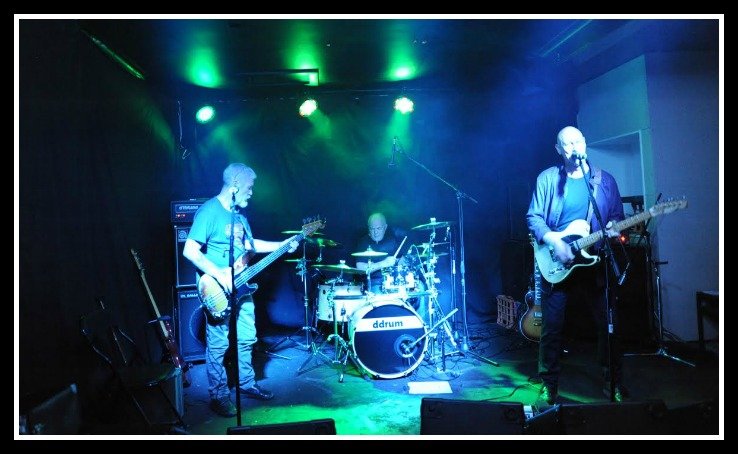
The Sleevehearts are a combination of old friends and talented musicians who now play music for the love of it. Photo: David Owen.

[author] [author_image timthumb=’on’]http://www.the-terrier.com.au/wp-content/uploads/2017/03/lee-nicholson-smaller.jpg[/author_image] [author_info]Welcome to Soundcheck: a look at the local live music scene with Lee Nicholson.
You can contact Lee at editor@the-terrier.com.au[/author_info] [/author]

[dropcap style=”font-size: 35px; color: #8cc7d0;”] E [/dropcap]

very album has the essence of personal experience, but for one of Warrnambool’s newest trios, The Sleevehearts, it’s an intimate journey that has reunited these experienced musicians.

The Sleevehearts – Charles Leslie Box (aka Bryan Keillor-Reed guitar, vocals), Tony Peel (bass, vocals) and Martin Lemmens (drums) – is a product of very recent events.

“A couple of years ago I lost my life partner (Jennifer),” Box says.

“Some dark days came hot on the heels of that and about two months after she died, these songs started trickling up.

“During this process, this guy came along called Charles who – at the time – was a better part of me who tended to orchestrate the songs.

“They became a flow and I had to put a tap on it because they just wouldn’t stop, it was great.”

Charles Leslie Box (aka Bryan Keillor-Reed), Tony Peel and Martin Lemmens pulling their scary, serious faces, but behind the look is a lot of fun making good music together. Photo: Tal Lemmens.

Some 60 songs in 60 days later, Box had more than enough material to lay down an album.

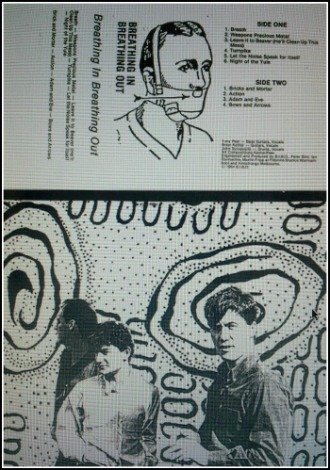
Enter Peel and Lemmens who had played with Box, as Keillor-Reed, in some legendary Warrnambool bands such as The Feelers, Breathing In, Breathing Out, Liberty Theatre and Hot Tamale Baby.

“It’s a process,” adds Lemmens.

“Tony and I ended up mucking around on projects for the past five years or so with another guy and it just petered out a bit and then Brian just popped up and it was just a natural progression.”

And what this trio has forgotten about gigging in and around Warrnambool and district is more than some people can remember.

“It really is liberating to play with two guys that I feel totally comfortable with,” says Peel.

“There’s no pop star aspirations or anything like that, it’s about us and if people like it that’s a bonus and if they don’t, well it doesn’t really matter to us because we’re doing it for us.”

Says Box: “It was really good because I felt really supported, there’s a real musical future here and I was a bit excited.

“The songs were part A of getting through (bereavement). Part B was linking up with these two guys and that’s an absolute joy.

“Coming together with these guys, they’re like brothers (to me).”

When we all had dark hair: Remember Breathing In, Breathing Out? Image supplied by John Sycopoulis.

That ease in which all three gel is evident and is easily heard in their clutch of new songs released under The Sleevehearts title.

“We call ourselves The Sleevehearts: we must be honest and we wear our hearts on our sleeve,” says Box.

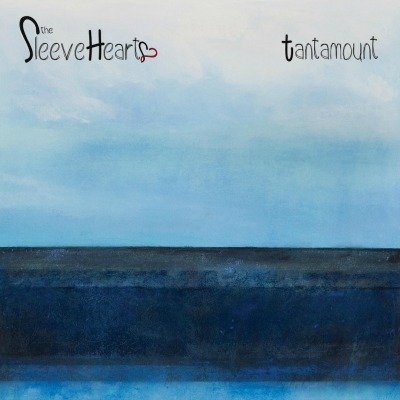
The three return to The Loft this Friday night (24/3) six weeks after the launch of The Sleevehearts’ first album, Tantamount, recorded at Peel’s Motherlode Studios.

“It comes together really quickly,” Box says.

“The recording part of it was easy.

“What I find fascinating is people who comment on it like to say I like this song or that song, and it’s always a different one.”

Adds Lemmens: “We’re a bit more relaxed.”

So how does the album sound?

With a strong rock beat throughout, I think Tantamount is the perfect antidote to re-energise the evening or to slip into the car stereo to keep you perky on a long road trip.

Tantamount has given an old sound – which will be familiar to large chunk of the “mature” Warrnambool audiences – a bit of maturity.

All written by Box and arranged by Keillor-Reed, Peel and Lemmens, the songs on Tantamount are very much autobiographical, even raw, and I kept harking back to the trio’s previous material under different ensembles, but this album has overlaid a 21st-century edge to it.

The album has been recorded and produced with a fullness and final sound that appear to give the music a lot more layers than from just three individuals.

Of all the tracks, I keep coming back to The Other Hand (track 5 of eight songs), somewhat surprising as the song has been built around Box’s lyrics spawned by anxiety and depression.

But that is the juxtaposition of this album which touches on some deep issues, but eases the pain by being backed with some good solid rock.

Tantamount tracks:

  1. Tantamount
  1. EBCar
  1. Inside of U
  1. When Amy Sings
  1. The Other Hand
  1. On My Watch
  1. 2 Fixed Points
  1. Melt the Guns

[box]The Sleevehearts, supported by Blackbelts, will perform at The Loft, Liebig St, Warrnambool, Friday evening, March 24.[/box]