Time for a fresh start with Australia Day

flag cape

Analysis – Carol Altmann

[dropcap style=”font-size: 60px; color: #A5CECD;”] S[/dropcap]omething ugly happened in a Warrnambool supermarket last week.

A young woman wearing what she no doubt thought was a “patriotic” t-shirt for Australia Day, hurled abuse at another couple of women for speaking in Italian.

“Why don’t you speak f*&*%ing English!” she yelled, among other things.

Shortly after hearing about this incident, I was driving into town and noticed the tradesman’s van in front of me proudly displaying a bumper sticker: “Like it, or leave!!”

These might not be earth-shattering incidents on their own, but more and more people are finding it deeply troubling that some Australians now feel it is acceptable – even patriotic – to behave in this way.

Since One Nation leader Pauline Hanson wrapped herself in an Australian flag 16 years ago and signalled a shift in the political landscape, Australia Day has taken on a different tone.

Flag waving and overt displays of nationalism were once something we poked fun at in others, especially when it came to highly patriotic Americans, and Australia Day was once little more than a lazy long weekend that may – or may not – have actually fallen on January 26. (It was only agreed in 1994 to hold Australia Day on January 26 regardless of what day of the week it fell).

For a younger generation, in particular, Australia Day all seemed pretty boring and and rather than wave the flag, they preferred to wave the green-and-gold colours of our sporting teams and sing “Come on Aussie, Come on, Come on.”

Then came a series of pivotal events in the late 90s and early 2000s which turned things on their head and Australia’s nationalism began to turn nasty.

 be-alert-but-not-alarmed


[dropcap style=”font-size: 60px; color: #A5CECD;”] A [/dropcap]s a result of this changing political landscape – the launch of One Nation, the 9/11 terrorist attacks, a hard line on refugees – Australians learned to become fearful and defensive.

Some of us began to mis-trust people who didn’t look like “us”, or talk like “us” or behave like “us”, because they were out to “get us”. Remember the post 9/11 fridge magnets that encouraged us to be alert not alarmed and to report any suspicious activity on a special hotline?

In the years shortly after, bumper stickers and t-shirts began to appear with a picture of the Australian flag and slogans like “F**k off, we’re full”, “Like it or Leave” or “100% Aussie”.

And instead of waving the flag, we began to wrap ourselves in it, like a shield. For me, this was one of the most memorable images of the Cronulla riots in 2005: angry young men and women draped in Australian flags, hurling abuse.

An influx of cheap, imported patriotic merchandise means that everyone can now cover themselves – and their cars – in the Australian flag on Australia Day, except it no longer feels like Australia Day.

To me, it has increasingly felt like Us and Them Day.

tshirts

[dropcap style=”font-size: 60px; color: #A5CECD;”] O [/dropcap]f course Australia Day has always been “Us and Them Day” for Australia’s indigenous population. I find it bizarre that we still expect Indigenous Australians to join the party and not be so hung up about January 26 as marking the beginning of the end for their ancient culture. (Australian of the Year Adam Goodes emphasised this point at the weekend.)

Yet at the same time, Aldi recalled a range of Australia Day t-shirts because the slogan “Australia: Est 1788” was considered offensive – and it is – but isn’t the choice of January 26 underpinned by this very same sentiment?

Perhaps the best way to celebrate our nation as a welcoming, multicultural and tolerant country with a rich indigenous heritage is to recall the whole day and start afresh.

After all, it has only been since 1994 that all the states and territories have, as one, marked January 26 as a public holiday. Various alternative dates have since been proposed – the anniversary of the Eureka Stockade, the anniversary of the Mabo Native Title decision – but each comes loaded with its own politics.

So I would suggest picking a date that is already a glorious, relaxed and apolitical public holiday: Boxing Day.
 

HillsHoist


[dropcap style=”font-size: 60px; color: #A5CECD;”] A [/dropcap]side from South Australia, where Boxing Day is Proclamation Day, Boxing Day now has little symbolic meaning in Australia. Ask anyone under 45 what Boxing Day is about and they will probably suggest it is the day the kids starting fighting over their Christmas toys or the first day of a big cricket match.

The origins of Boxing Day, however, are steeped in the tradition of giving, of kindness, of showing respect for those less fortunate.

How perfect, then, that December 26 become Unity Day.

A day when we unite as a nation: be it at the MCG watching the Ashes and reviving “Come on Aussie, Come On” (which is so much gentler than “Aussie, Aussie, Aussie Oi, Oi Oi”) , or watching the yachts set sail for Hobart, or simply enjoying the calm that comes after Christmas.

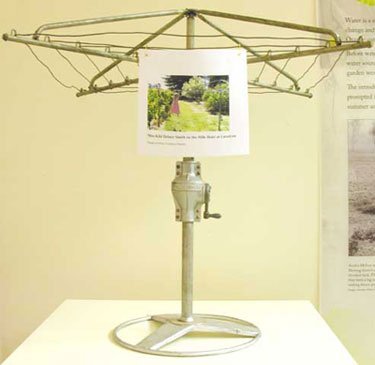
And instead of wrapping ourselves in the Australian flag, maybe on December 26 we peg out a flag on a Hill’s Hoist, together with every other flag that we feel represents who we are, so that we are a nation covered in flags – all with the sunshine and breeze blowing through.

“Happy Unity Day”…I like it.


flag designs2

Logo Smile newsletter For more opinion pieces…


Broken link for Artlink

Losing sleep over a lot of rubbish

Close Flagstaff Hill; save Fletcher Jones

 A little less conversation, a little more action

When scrutiny is sub-standard, democracy suffers


Moooove over cows, the goats are coming!

melissa lewis kids
A house full of happy kids: Melissa Lewis with Mason, 2, Paddy, 4, and one of the 50 goats she is raising for milk production in her venture, Buddy Goat.

[dropcap style=”font-size: 60px; color: #8F9F59;”] G [/dropcap]iven Allansford is deep in cow country, Melissa Lewis is somewhat of a black sheep by using her 20-acre Allansford property to breed and milk goats.

Melissa, who grew up on a dairy farm near Mortlake and is a qualified animal nutritionist, has spent the past 18 months building up a herd of about 50 goats with a mix of Toggenburg (brown and white in colour), Saanens (all white) and British Alpine (black and white) that are all known for their high levels of milk production.

And it is the raw goat’s milk – and byproducts including cheese, yoghurt and icecream – that Melissa is most interested in developing through her Buddy Goat brand, rather than the more conventional path of using the milk to create soaps and cosmetics.

Despite there reportedly being 19 goats on board the First Fleet in 1788, Australia has never really embraced the idea of enjoying a chilled glass of fresh goat’s milk in the morning.

“It’s funny, but the thought of drinking goat’s milk puts a lot of people off and they are far more comfortable with goat’s cheese, yet there are so many health benefits to goat’s milk,” Melissa explains.

melissa lewis2
Melissa Lewis with the former cow dairy that last September was converted to suit the much smaller goats.

[dropcap style=”font-size: 60px; color: #8F9F59;”] M [/dropcap]elissa experienced these benefits first hand when her first son, Paddy, 4, developed asthma several years ago and she changed his diet from cow’s to goat’s milk. The asthma attacks stopped.

“We forget that goat’s milk is actually consumed more than any other milk around the world. It is easier to digest and a lot of people who can’t handle cow’s milk can drink goat’s milk,” Melissa says.

She tells the story of one man who was intolerant to cows milk but tried her goats milk and, for the first time in many years, was able to eat a bowl of breakfast cereal with milk. Another woman uses Melissa’s raw goat’s milk to bathe her young daughter who suffers severe eczema.

Most of Melissa’s raw goat’s milk is sold by a distributor into Melbourne and Geelong where there is a big demand among particularly the Greek and Italian communities for goat’s milk with which to make cheese.

milking goat
Paddy takes an udderly different view of where milk comes from, having been raised on goat’s milk.

[dropcap style=”font-size: 60px; color: #8F9F59;”] D [/dropcap]ue to stringent food regulations, Melissa is currently only permitted to sell her products marked for “cosmetic use only” and “not for human consumption”, but how customers choose to use the milk is ultimately their decision.

Having spent the past couple of years proving there is a growing market for goat’s milk, Melissa is planning to move into the next stage of commercial production.

Last September she and her husband Darcy, a fencing contractor, converted a cow dairy into a goat milking dairy where her girls line up each day – or twice a day when the milk production is high. They also plan to transform part of a large shed on their property into a commercial kitchen.

It is a significant investment, with a pasteuriser costing around $25,000 alone.

For Melissa, however, it is all about diversification. Apart from her own property, Melissa and her sister Nicole Ritchie run a 200-acre farm at Mortlake, across the road from their parent’s 1000-acre property where the sisters also agist cattle.

Two young sons and another baby on the way have also made life a little busier for Melissa, but she still has plenty of energy and enthusiasm for her new venture.

“It’s about trying new things, seeing where they go and diversifying, because you can’t survive off farming alone any more.”

[box type=”bio”] For more information on Buddy Goat, you can contact Melissa at goatsmilk@live.com.au or find her on Facebook here. [/box]

newsletter Art Music StonesYou might also enjoy…


Lana’s garden of Eden

Organic food idea grows and grows

Gorge-ous taste of chocolate

Spread: spreading the love of food

Buffalo cheese a Shaw thing

Small is beautiful at Newton’s Ridge

Thriving on flower power at Naringal


Books pave new road for Melbourne

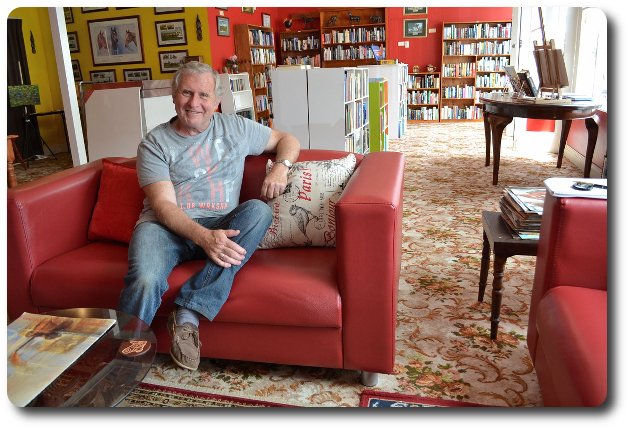
dennis round
After 27 years working in disability services around south-west Victoria, Dennis Melbourne has taken a new path and opened a secondhand bookshop in Koroit.

[dropcap style=”font-size: 60px; color: #A02F2F;”] M [/dropcap]any public servants, at some point in their lives, have sat at their desk and dreamt of opening a coffee shop, or a bookshop, or maybe both and Dennis Melbourne was no exception.

Dreaming and doing, however, are two very different things, and Dennis has only had the opportunity to pursue his life-long interest in books since retiring from the Department of Human Services last year.

Dennis, who lives in Koroit, has spent the early part of the summer setting up his second-hand bookstore, The Bookworm Gallery, in what was an empty shopfront at 133A Commercial Rd, Koroit, and has since had a “soft” opening while adding the finishing touches.

“I have always been a reader and loved books. Whenever I have moved, there has always been three or four bookshelves of books that have had to come with me,” he laughs.

After 27 years in disability services, including his most recent position as manager of disability accommodation across the south and western parts of Victoria, Dennis is ready to put his heart into a venture that may not make a lot of money, but which he does for the joy of it.

“I am opening gentleman’s hours – 10am to 4pm – and if I have a quiet day, I have a quiet day. I am just enjoying it,” he says.

The first few weeks, however, have been surprisingly busy, particularly during the recent Lake School of Celtic Song and Dance Festival at Koroit when “the shop filled up with Irish people looking for books”.

“Another woman wandered in and looked around and said she hadn’t seen an ‘old-fashioned’ book shop like this for ages,” Dennis adds.

dennis bookshop
Fresh start: Dennis has retained much the building’s character that it had when it was a newsagency.

[dropcap style=”font-size: 60px; color: #A02F2F;”] I [/dropcap]n setting up the bookshop, Dennis made a conscious decision to not change too much of the building’s character, so the Axminster floral carpet will stay, as will the original signwriting on the window advertising The Argus newspaperThe mood music is also just as likely to come from his vinyl LP collection as it is from a cd-player.

“But I have bought a coffee machine and a barista friend is going to teach me how to make coffees,” Dennis says.

While bookshops have no doubt suffered from the arrival of e-books, Dennis is among those who believe quaint, personalised bookshops still have a place and people still enjoy browsing and reading “the real thing”.

“Children also love to read. I have a spot set aside for them and they come in and they love reading the kid’s books,” he says.

A new bookshop in the main street of Koroit also brings a spark to a small town that is still yet to take off in the way that Port Fairy has, despite being cute, historic and only 10 minutes from the beach.

“Quite a few people living here now have done the seachange thing. I had a couple in here the other day who had sold up in Melbourne and were on their way to South Australia when they passed through here and thought, ‘this’ll do us,” Dennis says.

[box type=”bio”] The Bookworm Gallery is at 133A Commercial Rd, Koroit (next door to the newsagency) and is open Tue-Fri 10am to 4pm and Saturday 9am-4pm. [/box]

newsletter Eat And Drink Stones You might also enjoy… 


What I am reading: artist Gareth Colliton

Biblio-Art prize launched at Blarney Books

What I am reading: ABC Radio south-west breakfast presenter Jeremy Lee


Broken link for Artlink

artlink-jen
Artlink staff Gayle Clark, who has since resigned, and Jenny Altmann, with artist Alex Rees who is one of the program’s many success stories.

Analysis – Carol Altmann

[dropcap style=”font-size: 60px; color: #A5CECD;”] J [/dropcap]ust when things were looking up for Artlink – the unique art program for people with disabilities – it is being taken out of Warrnambool’s CBD and dropped into the industrial estate. From here, it will surely wither and die.

We wrote about Artlink late last year and, like others before us, were impressed by what a small, hard-working group of artists has achieved in bringing so-called “outsider” art into the mainstream.

Art by people with disabilities is a growing, global movement and the opportunity to create, display and sell art in a high-profile public space is critical to its commercial and personal success, otherwise we have not moved on from the dark days of such work being created in “sheltered workshops”; well away from the mainstream.

It makes sense, then, that the success of Artlink hinges on its high-profile location in the 124-year-old Ellerslie College building in Koroit St, which was leased by Western District Employment Access (WDEA) in 2010 and which it beautifully refurbished to create a light-filled gallery. (WDEA still uses this image on its home page).

The gallery had hosted several successful exhibitions, including the wonderful, annual Warrnibald portrait prize that was first held in 2012 and has shown the potential to become something very special for the city. Several Artlink artists have also developed their own following, such as Alex Rees, who has Down’s Syndrome, and whose work now hangs in many Warrnambool homes.

Things were gathering momentum, but now the wheels have fallen off.


artlink building
Home no more: Artlink has moved out of the beautiful Ellerslie College building and into the industrial estate.

wdea_2
The Albert St building where Artlink will be co-located with various WDEA work schemes.

[dropcap style=”font-size: 60px; color: #A5CECD;”] T [/dropcap]he three-year lease on the Ellerslie College building expired last December and, for reasons which are yet to be fully explained, WDEA decided not to continue there but to instead find another home for Artlink.

That new home was announced by media release as being 11 Albert St, Warrnambool: where Artlink was once 150 metres from the WDEA headquarters in Fairy St, it is now 150 metres from an abattoir.

Eleven Albert St is where WDEA operates many of its work programs that involve recycling e-waste, clothing, garden waste etc and it is appropriate that these be located in an industrial estate, but an art program and art gallery?

How many people will wander into an industrial estate to see an exhibition? How many drinks-and-nibbles openings can you host with the smell of the meatworks wafting in through the windows?

In its media statement, WDEA says it hopes the Artlink artists will have their work displayed in other galleries around the city, but if this was as easy as it sounds, surely there would have been no need for Artlink in the first place.

The official reason for moving out of Ellerslie was “high operational costs”, but when I asked what these costs were, I was told that WDEA CEO Mick White didn’t wish to give any more detail. How strange.


wdea_4
The $3.5 million WDEA headquarters in Fairy St, Warrnambool, that opened last year.

[dropcap style=”font-size: 60px; color: #A5CECD;”] S [/dropcap]o I can’t tell you what these high operational costs were, but I can tell you that there is a lot of money in disability: not necessarily for those with disabilities, most of whom struggle financially, but in the provision of services for the disabled and those in need.

In 2009, WDEA had a total income of $6.7 million, the majority of which is government funding for the various services WDEA provides. In 2013, that total income was almost $16 million: almost triple that of four years ago.

While more funding means more programs and therefore more people being assisted, what troubles me is that fast-growing organisations like WDEA can also become bloated and vast amounts of money are soaked up by bureaucracy and buildings, rather than on the very people they are intended to serve.

Shortly after WDEA secured the lease on Ellerslie, it bought a property at 52 Fairy St, hired talented local architect Dean Picken, and built an impressive $3.5 million office block that opened last July – six months before it broke the news to Artlink that it was moving out.

Here are some more of WDEA’s operational costs: staff costs have climbed from $3.3 million in 2009 to $9.2 million in 2013. In the same period, the value of its car pool has climbed from $697,000 to $1.34 million and the annual cost of running these cars each year has more than doubled to $236,518. Advertising and marketing costs have similarly climbed from $158,000 in 2009 to $338,825  in 2012.

WDEA has been hugely successful – it now operates out of a growing number of regional towns including Horsham, Ballarat, Ararat and Stawell – but has it become so big as to lose sight of why it first began in 1989?

When you are small, like Artlink, it is easy to get lost in the never-ending expansions.

It is up to us, as a community, to ensure that they are not forgotten.

Disclaimer: Artlink artist and staff member Jenny Altmann and I share the same surname because she was once married to my brother. We remain friends, but, like most of my friends and family, she would prefer I did not write articles that feature her. Sorry Jenny.

Logo Smile newsletter

More opinion pieces…


Losing sleep over a lot of rubbish

Close Flagstaff Hill; save Fletcher Jones

 A little less conversation, a little more action

When scrutiny is sub-standard, democracy suffers


Nothing minor about this Mini

[box] Welcome to Treasures: this is a new section where we invite you to tell us about an object or item that you treasure. It might be sentimental, it might be valuable, it might be part of a collection, or it might be something you just can’t live without. If you have a treasure that we can feature here, let us know! Email us at editor@bluestonemagazine.com.au and tell us about it.[/box]


mini minor


[dropcap style=”font-size: 60px; color: #A02F2F;”] H [/dropcap]ave you seen this car?

It is not lost, stolen, missing, for sale or sold, but it was once a much-loved little mover for Cheryle (Chez) and Terry Wilson, a couple from Portland, who have set out to try and find where it may have ended up since they last saw it in the 1970s.

At first glance, it looks like a regular old Mini Minor with some sexy mag wheels, but look again.

This Mini is actually more mini than a Mini thanks to some custom work by Terry and his former panel beating workmates Peter Hudson, who now lives in WA, and Kevin Radcliffe.

“The boss (Peter) brought the car into work one day and asked what we might be able to do with it, so I said I would have a bit of a go at modifying it,” Terry explained.

Terry removed a metre from the middle of the Mini so that the back seat became the front seat, giving a whole new meaning to the term “back seat driver”.

“You actually drove it from the back seat. People thought I must have just chopped the back off, but when they opened the boot, there was a normal size boot: the piece that was missing was from the middle of the car,” he said.

wilson
Terry Wilson, of Portland, was the man behind the modification.

[dropcap style=”font-size: 60px; color: #A02F2F;”] T [/dropcap]he body modification meant that the Mini was no longer roadworthy in the technical sense, but it still made a serious impression at the Portland drag races.

The three men raced the car for fun during the mid 1970s and Terry’s tweaks to the motor saw the Mini Minor move in a major way.

“Kevin was driving it and it was a beast. We asked him how fast he was going and he said he was afraid to look,” Terry laughed.

“At one point, though, he said the speedo had gone past where it should go.”

After two or three years of fun with the car, Peter apparently sold it to Mini World in Melbourne and it was never heard of again.

mini2

[dropcap style=”font-size: 60px; color: #A02F2F;”] L [/dropcap]ate last year, however, Chez decided to try and track the car down via online advertisements on ebay and Gumtree and while she received a healthy number of Mr Bean jokes in reply, there have been no confirmed sightings.

“One person told us it was listed on ebay, but it was not the same car,” she said.

“For all we know, it might have been recycled and turned into a washing machine,” Terry added.

Perhaps also keep an eye peeled for a washing machine with one hell of a spin cycle.

[box type=”bio”] If you can help with any information about the modified Mini Minor, please contact Chez at portlandautowreckers@hotmail.com or on 0428 508 998[/box]