Finding harmony on the hill

mick fennessy
It has been an 11-year journey, but Mick and Amanda Fennessy are living their dream on their Tower Hill property that they have partly converted into self-hosted accommodation.

[dropcap style=”color: #a5cecd;”] H [/dropcap]ow do two former police officers from Melbourne wind up running holiday accommodation near an ancient volcano in South-West Victoria? The same way as so many other seachangers who move to the area – via a holiday to Port Fairy.

It is 11 years since Mick and Amanda Fennessy made the decision to relocate from inner-suburban Richmond to a five-acre property at Tower Hill after visiting relatives in Port Fairy and – you guessed it – seeing a property for sale on their way home.

“We did a bit of a drive-by, had a look, and dismissed it, but then shortly after we returned home, we opened The Age newspaper and there it was, rural property of the week. It was like it was telling us something,” says Mick.

The timing was right, Mick explains, for the couple to try something different with their lives, having worked for many years in the police force (which is where they met) and financial investigative work. They bought what he affectionately describes as “five-and-a-half nuisance acres”: too small to generate an income, but too large not to require significant maintenance and mowing.


tower hill accom_13
Drinks anyone? Quirky, locally made garden art like this piece by Casterton artist Barbara Dobson is sprinkled around the Fennessy property.

[dropcap style=”color: #a5cecd;”] P [/dropcap]art of the property is taken up by rolling lawns and native gardens, while another portion is devoted to a couple of hundred fruit trees, including a splendid fig, that provide ample produce for Amanda’s home-made preserves that she sells through local markets under the Tower Hill Farm Produce label.

That left about two acres overlooking Lakeview Road, with southern views to the ocean and eastern views across to the night lights of Warrnambool.

“Right from the get-go we thought about how we could use the two acres for accommodation, but we weren’t entirely sure exactly which path to take,” Mick says.

The pair knew they wanted something unusual, so initially explored using up-styled shipping containers – “self-contained, containers” – before settling on recycled school classrooms.

The six school portables come from mostly tiny hamlets – Coolaroo South, Nilmah, Merrijig, Bendigo South East, Syndal South, Manchester, Newtown and Goornong – and were bought through a supplier who trades in such things.

“They are quite incredible structures with solid hardwood floors and everything hand-nailed. Even though they are called portables, they aren’t going anywhere,” Mick says with a laugh.


accommodation_slider
The interiors of the former school classrooms have been completely refurbished to give them a second life as accommodation. Image: Harmony at Tower Hill.

[dropcap style=”color: #a5cecd;”] A [/dropcap]manda, who during this interview is busy cooking figs on the stove, overseeing wood chopping by two visiting friends, and checking on the progress of a builder, dips in and out of the conversation, but has a moment to show off one of the five portables that have so far been converted.

As Amanda hauls back the sliding door (remember those?), I feel for a split second as if I am about to revisit Grade Two with Miss Fitzgerald at Warrnambool East Primary School circa 1972, but these portables are nothing like a classroom. The transformation from a utilitarian space into sleek, modern accommodation is remarkable.

“We always had a mental picture in our head of what it would look like, and we have not only reached that, but I think we have exceeded it,” Mick says.

Harmony at Tower Hill, as it is known, has been open since last December and, because of its dog-friendly status, recently accommodated some of the Maremma dogs (and their handlers!) during the filming of the Oddball movie in Warrnambool.

tower hill accom_16
Another life: Former Detective Sergeant Mick Fennessy and Senior Constable Amanda Fennessy during their days in the force.

[dropcap style=”color: #a5cecd;”] T [/dropcap]he Fennessy’s complete change in lifestyle has coincided with Mick having the ultimate wake-up call that life can, quite literally, shift in a heart beat.

When we meet, he is three weeks into his recovery from a quadruple bypass on a damaged heart that, if left untreated, would have failed him.

“It was like the warning light coming on, on your dashboard and you know that the rollercoaster is taking a dip downhill. You don’t want to see that too many times in your life before you start making changes,” he says.

Fortunately the only lights coming on for Mick now are those twinkling in the distance from Warrnambool.

tower hill accom_15
Did you hear the one about…? Garden art by Timboon sculptor Jon Hayes (Tomrtoe) is among the Fennessy’s collection.

[box type=”bio”] You can find out more about Harmony at Tower Hill on the web here. [/box]

[button link=”http://the-terrier.com.au/subscribe-2/” type=”icon” icon=”heart” newwindow=”yes”] Did you enjoy this story? Please subscribe here to help Bluestone thrive.[/button]

Stones Smile newsletter You might also enjoy…


Oh Biba, look at you now! 

From ugly quarry to garden of Eden

Heather Wood at Seaview, Port Fairy

Restoring a treasure back to life: 222 Timor St

Art is the heart of old Hawkesdale home

Colonial oven still makes a crust, Dunkeld


You’ve come a long way, Koroit CWA

CWA_three
Koroit CWA secretary Kate Dobson, left, president Lisa Peters and publicity officer Cathy O’Brien are among a group of younger women who have revived the CWA in Koroit after an absence of more than 40 years.


[dropcap style=”color: #a02f2f;”] I [/dropcap]t was only a few years ago that the Country Women’s Association was facing something of a crisis, with its older members dying out and few young women signing up to refresh the ranks.

But a resurgence of all-things retro, combined with a concerted recruitment drive by the CWA, has seen a revival of small branches across Victoria – including Koroit.

Koroit had been without a CWA since 1972, which is when the last group folded after being unable to fill all the spots on its executive committee (you can imagine the mood at that particular meeting must have been sombre.)

That all changed in March last year, when a group of five, young, energised women from the Koroit area started a revitalised CWA group that reflects the traditional values of the CWA, but with a very modern twist.

“We are a lot more than just jam and scones,” says Koroit CWA President Lisa Peters, “although that remains a part of what we do”.


cwa scones
The CWA is no longer just about scones, but when the Koroit branch does make them, they are sensational…even on 40-plus degree day. (Image: Koroit CWA)

[dropcap style=”color: #a02f2f;”] T [/dropcap]he group, which has quadrupled its membership over the past year, has moulded itself around the competing demands of life for contemporary women, including holding its monthly meetings at night so that working women, and busy mothers, are able to attend.

“It’s a supportive environment as well as being really social. You get to meet and mix with different people from all walks of life,” explains Koroit CWA Secretary Kate Dobson.

“If you are not into sport, or you don’t have kids at school, there are not a lot of other options for social get togethers in a rural area,” she adds.

The current mix of members includes professional women, full-time mothers, farmers, tree-changers from Melbourne, the crafty and not-so-crafty, makers, bakers, movers and shakers.

“All of our members bring different skills to the group, from professional development skills right through to practical skills,” Kate says.


cwa teacups
Tea-towels and teacups (displayed here at Kirkstall Hall) remain a nostalgic part of the CWA, even in a time of smartphones and Facebook pages. Image: Koroit CWA.

[dropcap style=”color: #a02f2f;”] A [/dropcap]s to what a 21st version of the CWA actually does, well it is perhaps best described as a hybrid of a social club, a craft club, apolitical activism, a fundraising club and a group that aims to build a sense of community by reaching out to each other.

President Lisa has experienced this sense of community first hand, having only recently moved to the area from the UK to marry her partner, Jeremy.

“Shortly after I arrived here I found out I was pregnant with twins and I had no family close by. When the twins were born, the CWA girls organised a food roster to deliver two home-cooked meals, twice a week, and that made such a difference,” Lisa explains.

One weekend may find the women running the gumboot toss at the local Koroit Agricultural Show, or skittles at the Koroit Irish Festival, or their attention may be focussed on helping to raise awareness of critical social issues, such as suicide prevention, or domestic violence.


CWA_27
Debbie Lenehan, left, wowed the judges at the Henty Group Creative Arts show with her mug bag that she has since taught the other Koroit CWA members how to make, including Sharon Wohlers, pictured.

[dropcap style=”color: #a02f2f;”] M [/dropcap]onthly meetings often include guest speakers (including an impromptu speech by Bluestone Magazine!), with every second meeting held as a dinner function at one of the local pubs or restaurants who are always delighted to see 20 hungry women walking in the door.

And while the Koroit CWA is very much about modern life, the traditional “cook-and-make” side of the CWA has not been forgotten. In fact shortly after reforming, the group hastily entered the Henty Group Creative Arts Exhibition and scooped a number of prizes for their preserves, baking and an innovative cup bag created by member Debbie Lenehan using a pattern from the internet.

“We had a scone-making fundraiser at the Kirkstall pub in February on what turned out to be one of the hottest days of the year. It was almost unbearable, but we made the scones and people still turned up to eat them, so people still love that side of the CWA,” Kate says with a laugh.

[box] The Koroit CWA recently won ‘Most Progressive Group’ for its region. It will hold its next monthly meeting (a dinner meeting) at the Kirkstall Hotel on June 18 at 7.30pm. Interested women are welcome to come along. You can also contact them via koroitcwa@hotmail.com, on Facebook or 0408 399 144 (Kate).[/box]

[button link=”http://the-terrier.com.au/subscribe-2/” type=”icon” icon=”heart” newwindow=”yes”] Did you enjoy this story? Please subscribe here to help Bluestone thrive.[/button]

 newsletter Eat And Drink Stones You might also enjoy…


Heather Armstrong creates a cosy existence

A long way from Pomonal to Pip: Kate Bouman 

Strummin’ and a hummin’ with the ukelele club

Getting hooked on crochet: Shelley Husband

Different life stages for pages: Joe Logan


Motor museum to revive Fletcher Jones site


dean montgomery
The new owner of the Fletcher Jones site, Dean Montgomery, is in Warrnambool for a couple of days to check out his purchase and to chat with locals about their ideas.  He has also arrived with a few of his own.

OPINION

[dropcap style=”color: #a5cecd;”] I [/dropcap]t has been a long time since there has been a feeling of genuine excitement around a project in Warrnambool, but the new owner of the former Fletcher Jones factory, Dean Montgomery,  is about to change all that.

Dean, who is based in China but who grew up in a working class family in Geelong, took some time out today (26/5) to have lunch with Bluestone Magazine and the two key players in the grassroots campaign to save the best of the FJ site, Tonia Wilcox and Julie Eagles.

Although it was not planned as an official interview, and hence I am writing this as an Opinion piece rather than a story with quotes from Dean, he was quite happy to sketch out his very broad brush plans for the derelict factory and revealed that a key component will be setting up a classy motor museum in the eastern end.

Did you hear that? A museum. How absolutely magnificent and not only is this just the sort of usage that Bluestone has always argued would be perfect for such a large and high-profile site, it will provide a much-needed shot in the arm to Warrnambool’s tourism appeal.

Dean is a self-confessed motor enthusiast – and so why wouldn’t he take this opportunity to create his own giant garage in an industrial space? – but don’t be fearful that this will be a museum full of bogan cars and hot rods. Having spent a couple of hours chatting with him today, it is clear that he has much more class than that.

car museum
Plans for a classic car motor museum in the former Fletcher Jones site has the potential to open up a new tourism market for Warrnambool, just as the National Motor Museum in Birdwood has done in the Adelaide Hills (pictured above).

[dropcap style=”color: #a5cecd;”] W [/dropcap]hile it is very early days, with so much to be done, such a museum has the capacity to again put Warrnambool on the map as a must-visit destination, just like the Birdwood National Motor Museum has done in the Adelaide Hills.

It will provide an incentive for tourists on the Great Ocean Road to keep driving beyond Port Campbell rather than cutting up through Timboon, as so many now do, to reconnect with the Princes Highway back to Melbourne.

My head is already running away with ideas, as it tends to do, for an annual classic car rally along the Great Ocean Road that would start at the T&G building in Geelong (which Dean and his brother own and have restored), and finish at the Fletcher Jones site in Warrnambool.

Warrnambool has a strong classic car culture (I can still remember the customised panel van shows held at the Warrnambool Drive-In in the 70s) and, from what I can see, there is no large-scale, up-market, classy car museum anywhere else in Victoria.

What a fantastic opportunity and even though I can’t tell the difference between an EH and EJ Holden, I would much rather see a car museum on the site than a hardware store.

silver ball stars
The stars have aligned for the Fletcher Jones silver ball and the future is again looking bright. Image courtesy of Andrew Kirkham, A&E Photography.

[dropcap style=”color: #a5cecd;”] D [/dropcap]ean, who is a self-made millionaire from manufacturing commercial kitchen equipment (everything from stainless steel benches to chef aprons, glassware and crockery), also has plans for a cafe within the FJ site and has made a very public commitment to keeping (and restoring) the iconic silver ball and gardens.

Indeed from how Dean was talking today, he is not planning to pull down anything, but rather to repair and restore what is there – including removing the asbestos that has, for some strange reason, always been held up as an insurmountable obstacle.

Dean doesn’t talk about obstacles: he talks about opportunities. He doesn’t appear to fret about “red tape”, but talks about finding a way through it.

This is how he has, to date, been able to take on projects such as the T&G building in Geelong and the Leura Hotel in Camperdown (be sure to stop and take a peek in the window next time you are passing through).

For those who had written the FJ site off, it is a reminder of what positive, creative thinking can do. For those who always believed in its potential – like the 600-plus people in the Save the Silver Ball and Fletchers Gardens group – it is a dream come true.

Warrnambool has a beating heart again, and it is round, silver and sitting on top of three red legs.

[button link=”http://the-terrier.com.au/subscribe-2/” type=”icon” icon=”heart” newwindow=”yes”] Did you enjoy this story? Please subscribe here to help Bluestone thrive.[/button]

Stones Smile newsletter Read the background stories on our Fletcher Jones campaign here…


A different way of doing things

Imagine the skyline without Fletcher Jones

Don’t drop the ball on Fletcher Jones

Close Flagstaff Hill; save Fletcher Jones

Who will step up for Fletcher Jones?

Fletcher Jones site taken off the market

Keeping the spirit of Fletcher Jones alive


Casterton honours Clarice Beckett


Clarice_Beckett_-_The_Yarra,_Sunset,_1930
The Yarra, Sunset, painting, oil on board, 30.5 x 35.5 cm, by Clarice Beckett. Image: Menzies Art Brands.

[dropcap style=”color: #a5cecd;”] I [/dropcap]t is a little known, but fascinating fact about South-West Victoria that one of Australia’s most inspiring early women artists, Clarice Beckett, was born in the town of Casterton.

The picturesque sheep-and-wool town, west of Hamilton, includes a small, but robust art collective called Artists of the Valley who each year celebrate the town’s most famous artist with an art prize.

The Clarice Beckett Award, with a main prize of $500, will be announced during the Queen’s Birthday long weekend (June 7-8) when the entries for this year’s competition will go on display at the Casterton Bowling Club.

Artists of the Valley promotions officer Jenn White said the group “stumbled across” the connection between Clarice and Casterton several years ago and, in 2012, decided to honour her legacy through its annual art prize.

A young and very beautiful Clarice Beckett at the age of 18. Image supplied by Artists of the Valley.


[dropcap style=”color: #a5cecd;”] C [/dropcap]larice was born in the town on 21 March, 1887, to a bank manager, Joseph Beckett, and his wife, Elizabeth, both of whom Clarice would spend most of her adult life caring for after they retired to Melbourne.

It appears Clarice spent only her earliest years in Casterton, having been sent to boarding school in Ballarat and, later, moving to Melbourne where she took drawing lessons at the Melbourne Gallery School under the guidance of Frederick McCubbin and Max Meldrum.

Despite the indifference to women artists at the time, Clarice was determined and prolific and, according to biographers, used every opportunity she could to paint. She worked mostly outdoors, in all kinds of weather, and this is reflected in her misty, shadowy renderings of every day scenes such as a bend in a road, or a house in the distance.

While Clarice held exhibitions with her fellow students at the Melbourne Gallery School, very few of her works sold during her lifetime and it was only many years after her death, at the age of 48, that her work was “rediscovered” and celebrated for its excellence.

“I actually feel very sad when I think about Clarice,” Jenn said, “because most of her work ended up in a shed and she really didn’t get much of a go.”

Clarice painting at Mount Macedon. Image supplied by Artists of the Valley.


[dropcap style=”color: #a5cecd;”] J [/dropcap]enn, who is a printmaker and one of a growing number of artists based in the tiny town of Sandford, said the Clarice Beckett Award was an opportunity to celebrate South-West talent.

“Last year, the overall winner was one of our (Artists of the Valley) members – Collin Tenney – which was wonderful,” she said.

The competition is open to anyone, using any medium, with prizes for each of the categories that include works on paper, oils, watercolour and 3D.

The exhibition also co-oincides with the annual Casterton kelpie muster, so Artists of the Valley are hoping for great weather and a bumper crowd.

Postscript: This year’s major prize for the exhibition was awarded to Vida Pearson for her hand-coloured, lino cut titled “Large Fruited Mallee”. Vida, from Haddon, near Ballarat, also won first prize in the Works on Paper section, for a hand-coloured lino cut called “Waratah”. You can find out more about Vida on her website here.


collin-tenney-winner-2013-clarice-beckett-award
Collin Tenney, winner of the 2013 Clarice Beckett Award, with his portrait of Australian artist Margaret Olley.


[box type=”bio”] The Clarice Beckett Art Award exhibition will be held on Saturday June 7 and Sunday June 8 at the Casterton Bowling Club, Murray St, Casterton. You can read more about Clarice on the Artists of the Valley website here. [/box]

[button link=”http://the-terrier.com.au/subscribe-2/” type=”icon” icon=”heart” newwindow=”yes”] Did you enjoy this story? Please subscribe here to help Bluestone thrive.[/button]

Stones Smile newsletter You might also enjoy…


New Warrnambool show in almost 30 years: Ben Fennessy

Whalebone shrugs off winter 

Bibilo-Art Award reaches final chapter


The sculptor who helped save the snipe

don stewart1
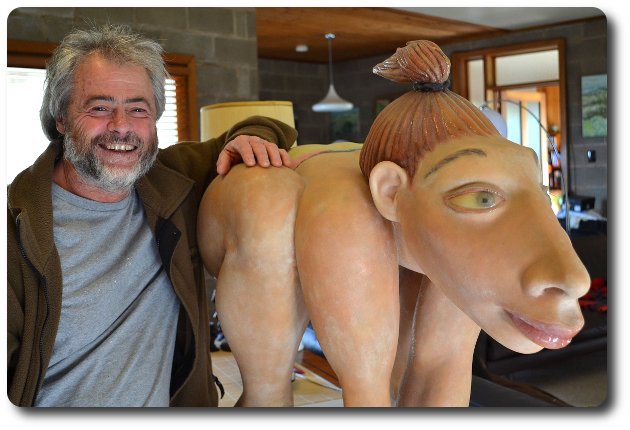
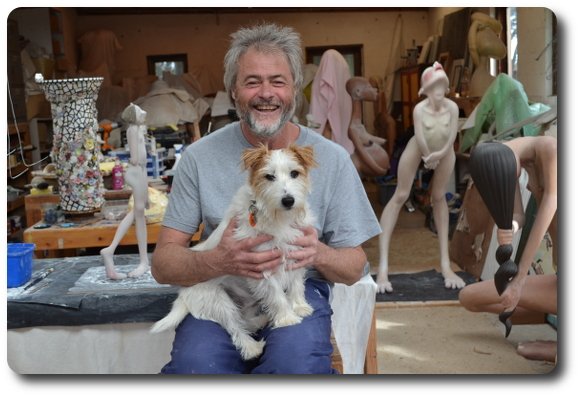
Port Fairy sculptor Don Stewart with one of his creations. Lately it has been his activism, as much as his art, that has propelled him into the headlines.

By Carol Altmann

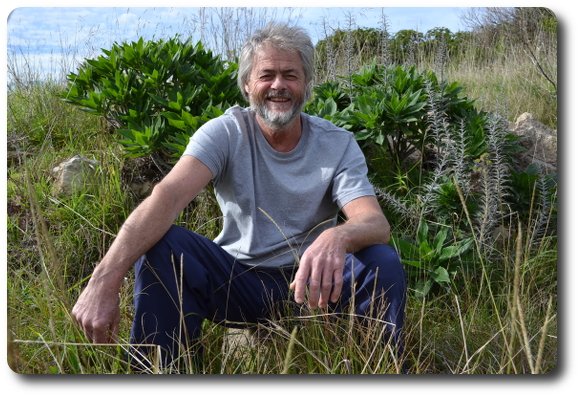
On first appearances, Don Stewart looks more like the artist that he is and much less like the robust activist he has become.

Yet the slightly-built, soft-spoken, always-smiling sculptor from Port Fairy has been a central figure in one of the longest-running planning sagas to hit the town and which has only just been resolved.

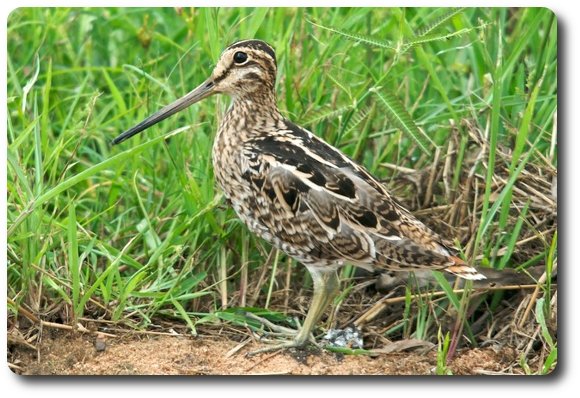
In a battle which stretches back 14 years, Don – and a small group of determined, like-minded souls – has fought to protect the habitat of a migratory bird called Latham’s Snipe that arrives between August and April each year from its breeding sites in Japan to rest up at the Powling St wetlands.

The wetlands are just a short walk from Don’s home and studio near Port Fairy’s South Beach, where Don is usually immersed in creating his wonderful fibreglass sculptures that capture a sense of character and fun.

There has been less fun, however, around the tug-o-war that developed when a large portion of Moyne Shire council-owned land adjacent to the wetlands was sold in 1998 to a former council engineer, since retired, John Bock.

lathams snipe
Worth fighting for: the Powling Street Wetlands in Port Fairy are home to one of the largest congregations of Latham’s Snipe in Australia.

“Mr Bock”, as Don always calls him, had hopes of converting the 3.5ha space into 43 building blocks but this would, Don explains, have spelt disaster for the snipe which relies on the protection of tall grass and the sustenance of the nutrient-rich wetlands.

Powling St is one of the few sites in Australia where the snipe still congregates in large numbers.

“In my view, nothing should be built there, because there are only about 36,000 of these birds left in the world and we have one of the largest habitats right here,” Don says.

Indeed, a congregation of 18 migratory birds is considered to be of national significance and 360 birds is of international significance: the Powling St wetlands has recorded up to 430 Latham’s Snipes.

Don, his wife Sherril, who is a retired art teacher, and their neighbour, author Jodie Honan, were founders of the South Beach Wetlands and Landcare Group that was set up in 1999 in response to the Moyne Shire Council’s decision to sell-off part of the site and they began to actively monitor and care for the wetlands area.

Using their first-hand knowledge, backed by expert opinion about bird habitats, the group mounted not one, but two challenges through the Victorian Civil and Administrative Tribunal (VCAT) against Mr Bock’s proposals.

don stewart2
Don on a patch of the Powling Street Wetlands that has been at the middle of an intense battle about its future.

The first, in 2008, resulted in Mr Bock having to revise his plans, which he did, reducing the subdivision to 32 blocks, including one allotment that would be given back to the council and added to the wetlands. The revised plans were put to the council last year and approved.

Most people would have given up there, but Don Stewart and the South Beach Wetlands and Landcare Group are not like most people. Just as it takes time and enormous patience to create a life-size figure in fibreglass, Don knew it would take patience to protect the snipe.

Don and Jodie, this time represented by Environmental Justice Australia (formerly the Environmental Defenders Office), returned to VCAT this year and argued that 32 blocks was still too many. VCAT agreed and reduced the number to 23, with a number of conditions, including that a protective fence be built around the snipe’s habitat. It was a significant victory for the Landcare group.

“It is a good decision and probably the best decision we could hope for, but whether the birds actually stay around once the development goes ahead, we won’t know until it is built,” Don says.

latham snipe1
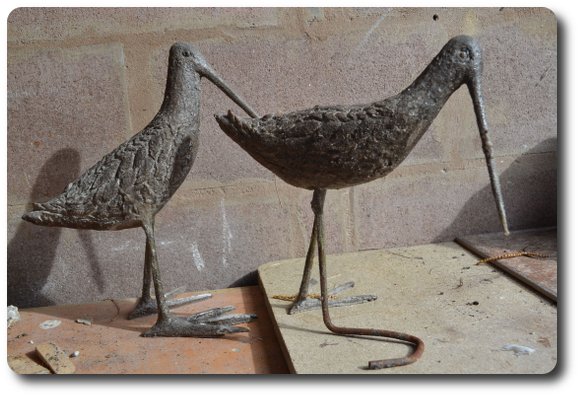
Don has created fibreglass versions of Latham’s Snipe: “Jodie says the legs are a bit too long.”

Don suggests we wander out to see the wetlands and guides me through a wire fence and onto an invisible council “road” that cuts through the private land owned by Mr Bock. As long as we stay on the “road”, he explains, we are not trespassing.

As it happens, Mr Bock – who no longer lives in Port Fairy – is down for a few days to mow his land and he spots us in the distance. I wave (what else do you do?) and he takes the opportunity to glide over on his ride-on mower to say hello.

Suddenly, I am standing between the two antagonists in what has been a long and no-doubt often heated battle, and for the first few minutes neither looks at the other as they talk. (Gulp.)

But then, Mr Bock – who I remember from his days at Belfast Shire Council – says two extraordinary things. The first: “you can’t cry over spilt milk”. The second, this time looking directly at Don: “I saw one of your snipes today”.

Don, now looking directly at Mr Bock, replies: “Really? Wow, that is late (in the season). I will have to make a note of that.”

And in that single moment – after 14 years, two VCAT hearings, endless legal argument and a lot of anxiety and stress on both sides – it felt like something of a truce.

don stewart3
Don at home in the studio, with dog Tuff: “It’s a good decision and probably the best decision we could hope for.”

The South Beach Wetlands and Landcare Group holds regular stalls at the Port Fairy Farmers Market to raise funds to pay its legal bills from the VCAT battles. Don Stewart and Jodie Honan both contribute work for sale.