From legal eagle to sea eagle: Jock Serong

jock serong1
Contrary to popular belief, writing – rather than the law – was Jock Serong’s first career choice and for many years he balanced the two before finally making the jump.

Words and photos by Carol Altmann

[dropcap style=”color: #dc943c;”] T [/dropcap]he most commonly told story about Port Fairy editor and author Jock Serong is that he was a lawyer who became a writer, but in fact it is the other way around: he was a writer who fell into law.

“English and English Lit were always my favourite subjects at school, but when I told my career counsellor that I wanted to be a writer, they suggested I do a law degree, because ‘there’s plenty of words there’,” he says with a wry grin.

But what every writer knows-  and what career counsellors never quite understand – is that there are words, and then there is writing: storytelling, building a narrative, creating a scene, turning words into living, breathing objects.

Worse, once you know that you love to write, the bug never leaves you.

All of the teenagers who kept journals and wrote short stories and loved English – and then grew up to become anything but a writer – still have a writer’s heart. Some listen to that nagging voice, most don’t.

Jock listened.

“I started writing professionally as a freelancer about six or seven years ago and had, if you like, three jobs: as a parent, my legal career and my writing, and the pressure to keep those three going all at once was increasing,” he says.

quota
Jock’s first novel was published earlier this year and has been optioned for television.

[dropcap style=”color: #dc943c;”] H [/dropcap]aving relocated from Melbourne to Port Fairy 10 years ago, Jock had already chosen between lifestyle and a more traditional career path.

He was a barrister in Melbourne, but came to Port Fairy to work as a solicitor after he and his wife Lilly, a nurse, decided it would be a better place to raise their children (they now have four, aged from 3 to 10.)

And besides, the surf was excellent.

Jock, a surfer, began writing for two or three different surf publications, while also working at Maddens Lawyers. It was his surfing connections, however, that eventually opened the door to a life submerged entirely in writing.

“Early last year, Mick (Sowry) and Mark (Willett) were nursing this idea of a high-quality magazine built around ideas of the ocean and they asked me if I would like to edit it,” Jock explains.

Like a cliff diver in Acapulco, Jock stepped to the ledge and took the plunge.

Great Ocean Quarterly was developed over the next six months and, like Bluestone, has just marked its first birthday. Also like Bluestone, GOQ is edited in the front room of a house, Jock’s house, which is where he does most of his writing.

“The last 12 months have been exhilarating, in that usually at this stage in your life, you have a sense of where things are going and you are consolidating. I feel like I am back in that period of your 20s, where you throw it all up into the air,” Jock laughs.

jock serong_2
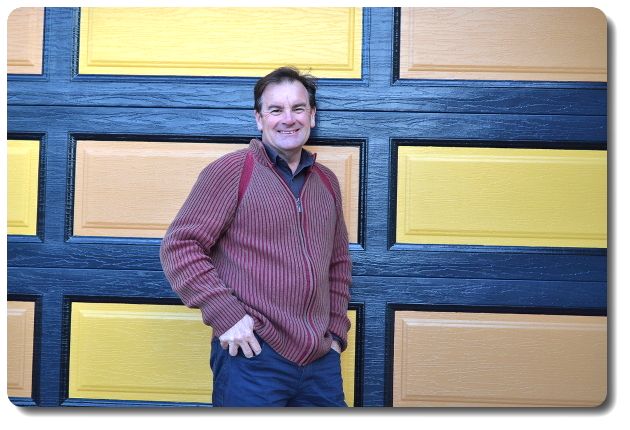
Jock, from Port Fairy, has no regrets about moving to writing full time: “The alternative was to spend the next 20 years not ever knowing if I could have done this”.

[dropcap style=”color: #dc943c;”] A [/dropcap]longside GOQ, Jock has recently published his first novel, Quota (Text Publishing), a crime novel based in a remote town in south-west Victoria.

Just in case you thought – like me – that Jock might never sleep, the novel was developed over several years and involved several major re-writes before that magical moment of being accepted by a publisher.

“All writing has that edge of hard grind under it, the hard work, but I was happy to keep going and to keep at it; I find the process fascinating,” he says.

Quota has been well-received by readers and reviewers and has been optioned for a television production by Madman, in Melbourne. Jock will write the adaptation.

As Jock wanders down Sackville St on a perfect spring day in Port Fairy, saying hello to everybody who has already said hello to him first, there is a sense that his life has turned out exactly as it was meant to be.

When asked if he misses law, he gives a writer’s answer: “I miss the characters and their stories”.

“But no, no regrets. The alternative was to spend the next 20 years not ever knowing if I could have done this.”

[box]Jock Serong will join authors Regina Lane and Clint Greagan for the Warrnambool Books Bookwiz Trivia Night this Thursday, Sept 18, at The Last Coach, in support of the Leila Rose Foundation. Click here for full details. [/box]

[button link=”http://the-terrier.com.au/subscribe-2/” type=”icon” icon=”heart” newwindow=”yes”] Do you enjoy reading Bluestone? Please subscribe here to help us thrive.[/button]

newsletter Why Not StonesYou might also enjoy…


Bool Belle Review: The Light Between Oceans

Bool Belles Review: Old Filth

From artist to children’s author: Fiona Clarke

Bool Belles Review: Mullumbimby, Melissa Lucashenko

A love story built on literary lives: Allan and Wendy Scarfe

New bookshop opens in Koroit – Dennis Melbourne


Turning creativity into a paid career


incubator

(Advertisement)

If you are struggling with how to make a living from your art, an affordable all-day workshop next Sunday (Sept 21) in Warrnambool will help to set you on the right path.

Almost half of the Australian population is creatively engaged in some form of artistic creation, but only a tiny fraction possess the skills and experience to transform their passion into a successful career.

Secrets of Success is an all-day seminar for independent artists and small-medium arts organisations presented by John Paul Fischbach, founder and CEO of Melbourne’s Auspicious Arts Incubator.


John Paul Fischbach from the Auspicious Arts Incubator will lead the Warrnambool seminar next Sunday.

[box]“Lively, engaging, respectful and inspiring. Lots of great practical examples, very positive. I left feeling affirmed and inspired with practical tools to make my business work.”  Shepparton participant[/box]

Secrets of Success takes participants through a comprehensive evaluation of their own work as entrepreneurs, offering real tools to manage their finances, time and mental attitudes towards creativity as a rewarding and lucrative asset.

Presented in an engaging and accessible manner, the day aims to dispel the murky half-truths and flat-out misconceptions many in the arts world have towards business.

What’s common knowledge in other industries can be alien to artists, who frequently don’t have access to the knowledge and resources required to succeed in business. This one-day event aims to turn that situation around.

The seminar is subsidised by the Warrnambool City Council, so tickets are only $25 a head.

The day runs from 9.30am (for a 10am start) to 5pm at the Lighthouse Theatre Studio and all participants receive a 70-page Arts Business Tool Kit.


[box type=”download”] For more information and tickets, visit www.artsbusinesssuccess.com[/box]


New column: Exploring our retro architecture

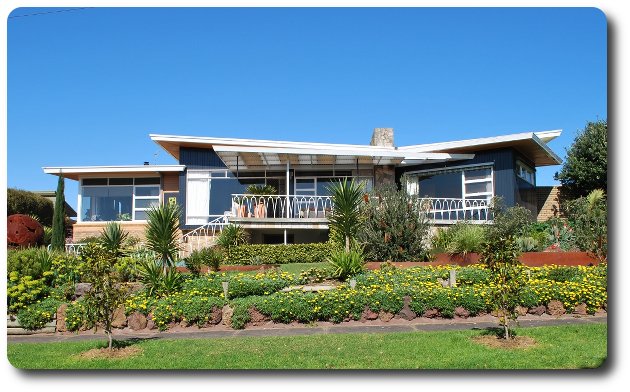
Architect Clinton Krause has a particular passion for mid-century architecture, as reflected in his own Warrnambool home: the fifth Krause family home he has either built or renovated.

We are delighted to welcome a new monthly columnist, architect CLINTON KRAUSE, who previously worked in Daylesford before relocating his business to Warrnambool. Clinton will explore the mid-century architecture that gives our city so much character, but about which most of us know very little…

A casual Sunday drive around the suburban streets of Warrnambool will often lead to the discovery of one of our best kept secrets: our city is endowed with a wonderful collection of intact, mid- century (1950s-60s) residential architecture.

Often complemented with matching landscape and décor, these unique houses are still much loved by their owners and provide an enticing glimpse into an exciting era of architectural optimism and innovation.

I intend to explore the story behind some of these homes – including my own – as part of my new monthly column with Bluestone Magazine.

With all things Retro back in vogue, the ‘Old-Modern’ houses of the late 50’s / early 60’s are enjoying the renewed attention of a whole fresh crop of designers, owners and ‘movers and shakers’.

So where did the distinctive styling of these homes come from?

clinton house small
The Krause house in Altmann Ave, formerly owned and built by John Downie, is a stunning example of mid-century architecture in Warrnambool.

The cutting edge prototypes for the modern mid-century family home originated in post-war America, arising from the need to house the growing populations attracted to the job opportunities and climate of the beautiful west coast.

Talented architects and designers fleeing war-ravaged Europe made their way to California to resume business and, together with the catalyst of the upwardly mobile avant garde, an explosion of creative innovation spread rapidly out across the country.

Eventually ripples of this new design movement found their way to our shores where daring architects, builders and owners began experimenting with entirely new interpretations of the beloved family home.

The priorities for the modern home of this time departed radically from the status quo of English bungalows and triple-fronted brick veneers.

jarrett house
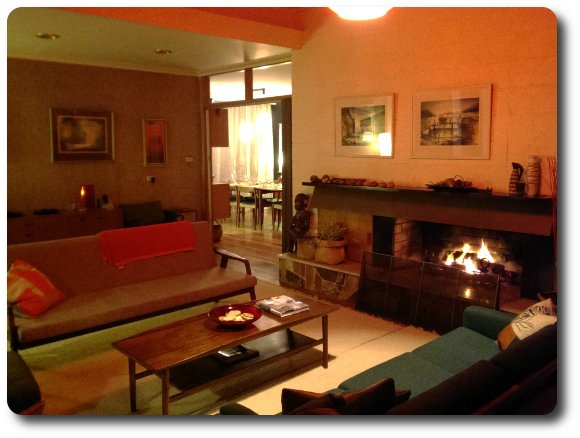
Furnishings in keeping with the style of the mid-century homes is an important part of the equation (and addictive!). This is the interior of the Portland home of Meg Jarrett and Jack van Roo, from Be Seated.

Relaxation of social standards meant that internal spaces became increasingly more informal. Open planning dissolved the boundaries between dining, living and kitchen areas. Huge expanses of glazing opened up the views, natural light and solar warmth, and often took in garden vistas, creating a visual flow between inside and out.

These new kids on the block announced their bravura with bright ‘pop’ colour schemes, a mash up of exterior claddings and cocky rooflines that jutted into the air and hovered impossibly above the ground.

Striped timber lining boards, op-art garage doors and expanses of crazy “crazy paving” all competed for the attention of the casual onlooker.

Furnishing the interiors of these sculptural show-offs also demanded special attention: Grandma’s heavy Victorian heirloom sideboard was just not going to cut it…

cocktail bar
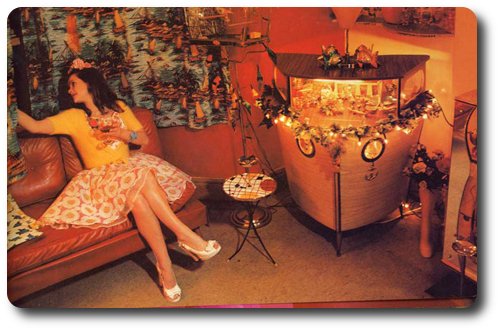
Cocktail bars either commanded attention or were tucked away in one of the intriguing nooks and crannies within the house design. Image: ladyluckrulesok.com

In response, many mid-century homes incorporated ingenious designs for storing the detritus of the modern consumer (a bit like the architectural equivalent of an SUV).

Feature walls not only provided warmth to the décor and screening for privacy, but often concealed a multitude of storage nooks and crannies to house cocktail bars, entertainment systems, glassware and even seating.

An added benefit was that furniture did not dominate or diminish the sculptural interiors and the clean open spaces ensured that all attention was focussed on the garden outlooks, the abundant natural light and the carefully selected and placed groovy furniture.

The architects of this era brought affordable and innovative good design to the masses. Over the coming months, local examples of this unique era in architecture will be explored and celebrated in recognition of an important and unique period of Warrnambool’s built heritage.

Clinton

A bit more about Clinton: Graduated Deakin Uni 1985 ( hons). Practiced in Geelong , Melbourne and Daylesford. Specialising in residential work with 20 years of service in Daylesford and surround. You can find him on the web here.

Clinton-Krause


Councillors views on Rolf Harris mural

Rolf Harris
The debate is yet to really begin about the future of the Rolf Harris mural in Warrnambool.

This is the full text of responses from elected councillors on the future of the Rolf Harris mural in Warrnambool. See the related Opinion piece here.

Cr Michael Neoh: Council will discuss the matter as a group. I would respectfully say that it is appropriate to address issues in a considered manner and not to not act in haste to meet external deadlines.

“As you would be aware the painting has been fully covered and we were awaiting for any indication of an appeal processes which seems unlikely now. The acting CE and I recently discussed raising it in a future briefing and I assume it will be an item, like many others, on a briefing agenda in the near future.”

Cr Kylie Gaston: “I think we do something like put a white ribbon over the perspex. I don’t like destroying art and, if we remove it completely, the opportunity to convey a message about violence toward women has been lost.”

Cr Peter Hulin: “Quite clearly it should be painted over unless Harris is successful in any appeal to his conviction. If there is no appeal. Remove it. (If it remains) it could send a message that we condone this child predator’s behaviour.  This is a very serious matter and council as leaders of the community need to show the leadership this issue demands.”

Cr Jacinta Ermacora: “My personal view is that, in the first instance we should show respect to victims of violence who live in our community.  We should no longer celebrate his art work as he used his notoriety to abuse children and women.  This dynamic is not uncommon in our community and represents the ‘abuse dynamic’ which as a community we sign on to if we take no action.

“I believe that as the piece belongs to the Warrnambool City Council and thus belongs to the Warrnambool community, there should be a discussion with relevant stakeholders and community as to what to do with it.  I believe that the voices of victims aught be given significant weight in this matter.  I also believe that there is no ‘right’ answer in this, except to show recognition to the feelings of people in our community that have also experienced sexual abuse as a child or adult.”

Cr Peter Sycopoulis: “Considering that the artwork is painted directly on to the wall of the Lighthouse Theatre, I believe at this point in time, my preferred option would be to completely cover and fasten the artwork in question with some form of solid panelling.
I believe that a plaque could be mounted beside it to serve as a  reminder that underneath lies a painting by Rolf Harris who was convicted of (sexual assault charges) and that our society has chosen to show our disapproval of this type of predatory behaviour by not publicly displaying his works.”

No reply from Cr Brian Kelson or Cr Rob Askew.


Grappling with the work of a predator

rolf mural
The impromptu mural by Rolf Harris in the loading dock at Lighthouse Theatre – it has since been covered by perspex. Image: ABC Radio South-west Victoria – Jeremy Lee.

OPINION – Carol Altmann

[box] A warning: this piece contains details of Rolf Harris’s crimes which some readers may find distressing.[/box]

[dropcap style=”color: #a02f2f;”] I [/dropcap]t is more than two months since the Warrnambool City Council promised a discussion about the future of the Rolf Harris mural in light of his convictions for molesting children but, until now, we have not heard a word.

As readers will recall, an impromptu mural by Harris in the loading dock of the Lighthouse Theatre was covered by painted perspex after he was convicted on 12 counts of sexually abusing four girls aged between eight and 19, with the community split over whether the work should be retained or painted over.

Mayor Michael Neoh, at that time, said there was no room for a “knee jerk reaction” and the future of the work needed a considered response – perhaps it would be reinterpreted by adding a white ribbon over the perspex or some other symbol of denouncing violence against women. (Except Harris’s crimes were not about women, they were about sexually abusing children.)

Then the discussion fell quiet as if, by keeping the mural out of sight and out of mind, we might all just forget about it.

But survivors of child sexual abuse never forget, and neither do we.

Mayor Michael Neoh. Image: ABC.

[dropcap style=”color: #a02f2f;”]W [/dropcap]hen Bluestone emailed each councillor for an update on their personal view about the mural, Mayor Neoh initially sounded annoyed that he was being pressed to “act in haste”.

“Council will discuss the matter as a group. I would respectfully say that it is appropriate to address issues in a considered manner and not to not act in haste to meet external deadlines,” he wrote.

When asked what deadlines he was talking about, Mayor Neoh replied:

“As you would be aware the painting has been fully covered and we were awaiting for any indication of an appeal processes which seems unlikely now. The acting (Chief Executive) and I recently discussed raising it in a future briefing and I assume it will be an item, like many others, on a briefing agenda in the near future.”

So does Mayor Neoh still want the mural retained or not? We don’t know.

[dropcap style=”color: #a02f2f;”] O [/dropcap]ur view on the mural is unequivocal – it should already be gone and you can read our reasoning in our earlier opinion piece – but the councillors are divided.

The full responses from councillors can be found here, but, in summary: Cr Kylie Gaston and Cr Peter Sycopoulis said they wanted the work retained – but covered – and with some form of educational message added, such as the white ribbon symbol or an explanatory plaque.

Cr Peter Hulin said that unless Harris successfully appealed his conviction (which appears unlikely), the mural should be painted over.  While Cr Jacinta Ermacora said there was no right answer, she believed the fate of the mural should be decided by the community and “relevant stakeholders”. “I believe that the voices of victims aught be given significant weight in this matter,” she said.*

We did not receive a response from Cr Brian Kelson or Cr Rob Askew.

Rolf Harris
Rolf Harris was earlier this year convicted on 12 counts of sexual offences against children. Image: The Guardian

[dropcap style=”color: #a02f2f;”] W [/dropcap]hat I wonder is this:

Would the council still be tip-toeing around this issue if the mural had been painted by a Warrnambool man who had since been found guilty of the same crimes as Rolf Harris?

[learn_more caption=”You can read details here: contains explicit content”]Harris’s crimes include touching an eight year old girl’s vagina, digitally penetrating a 15 year old girl on multiple occasions, and licking the vagina of a 15 year old girl while she was asleep and her parents, whom Harris had been visiting, were downstairs.[/learn_more]

These are among the crimes which the judge outlined in his sentencing of Harris and they need to be named up. (You can read the full remarks here).

The celebrity status that Harris used to cover up his crimes (including in 1986, when he painted the Warrnambool mural), is the very same status that is protecting him now.

We don’t need white ribbons and plaques and educational reinterpretations to remind us that this man is a predator and, to this day, has shown no remorse: he typifies so many sexual abusers, including those who still walk free in our community.

“But it is art”, is the most common response from those who find it impossible to accept that this mural must go.

It is a painting, to be sure, but in my mind not all art is created equal.

rolf cover up - herald sun
Melbourne paint shop owner Frank Penhalluriack took one of the “most important stands” of his life in rolling over a Rolf Harris mural after the artist’s conviction. Image: Herald-Sun

[dropcap style=”color: #a02f2f;”]P[/dropcap]ublic murals, by their sheer nature, are transitory: they fade, they are painted over, they are removed.

We know this because about 12 years after Harris spontaneously created his mural from an errant paint splodge, another commissioned mural less than 400m away was bulldozed to make way for a string of soul-less apartments in the Ozone carpark without so much as a whimper.

This was a work by local indigenous artist Fiona Clarke.

Harris’s work will remain in dozens, if not hundreds, of private art collections around the world – he was nothing if not prolific – and had this mural been treated the same way as Fiona Clarke’s when the Lighthouse Theatre was upgraded, it would already be gone. (Apparently the plans were modified to accommodate the mural, such is the power of celebrity.)

If only we, as a city, had the courage and fortitude of Frank Penhalluriack, the Melbourne paint shop owner who, the moment Harris was found guilty, rolled a bright-red roller over an impromptu Harris mural painted in his shop in 1990.

“It is one of the most important stands I have ever taken,” he told the Herald Sun.

I wonder how many of us – and our city councillors – could say the same thing?

* Since being contacted by Bluestone, Cr Ermacora raised the issue at last week’s council briefing, which is the first in a series of steps toward opening a wider community discussion.

[button link=”http://the-terrier.com.au/subscribe-2/” type=”icon” icon=”heart” newwindow=”yes”]If you would like early access to Opinion pieces, please subscribe to Bluestone.[/button]

newsletter Eat And Drink StonesFind more Opinion pieces here…


You paid for the party: here’s who came

Trader levy halved: a victory for voices

Flagstaff Hill at $15 million crossroad

Unravelling the mystery of art commissions

Lack of schooling a ticking bomb in south-west

What about more fun for grown-ups?

Council’s racing hospitality bill hard to swallow