The enduring legacy of architect ‘Tag’ Walter
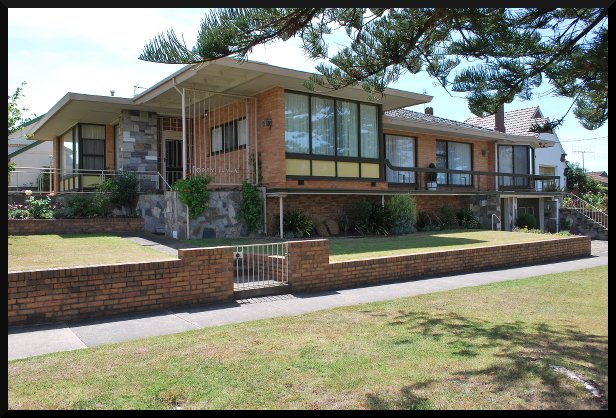
Former Walter family home 47 Henna
The former Walter family home at 47 Henna St, Warrnambool, which still looks as good as they day it was built in the mid 1950s. Tag Walter also designed and built the home next door, where he started his business.

Bluestone columnist and architect CLINTON KRAUSE previously worked in Daylesford before relocating his business to Warrnambool. Clinton explores the mid-century architecture that gives our city so much character, but about which most of us know very little.

If there is one architect that has made a culturally significant and architecturally definitive contribution to our built landscape here in Warrnambool it would have to be Tag Walter.

William John Taggart Walter – or ‘Tag’ as he was always known – was born in 1909 the son of a builder/developer and one of 5 children. Tag started practice from his own home that he designed and built in 1934 at 49 Henna Street.

This house, a modest pre-war English style bungalow, still stands, but it is the later family home next door at 47 Henna that displays many of the mid-century design elements that the practice was to embrace and become renowned for.

Built in the mid-1950s, this house was a crossover-hybrid of the prevailing tiled hipped roof forms and stepped back ‘waterfall’ room layout, but also played with exciting new design trends.

Oversized eaves, large geometrically partitioned walls of windows, and cantilevered balconies lend the home a slightly ‘Japanese pavilion’ aesthetic. Abstract wrought iron balustrades and panels of crazy stone cladding further enhance the modern signature of the building.
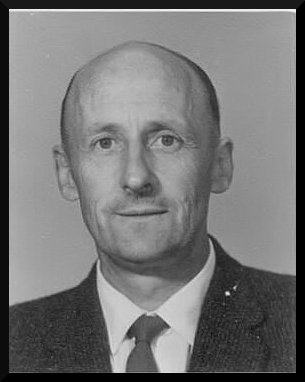
William John Taggart Tag Walter
William John Taggart ‘Tag’ Walter: his designs remain highly sought after. Image courtesy of Robyn Poynton.

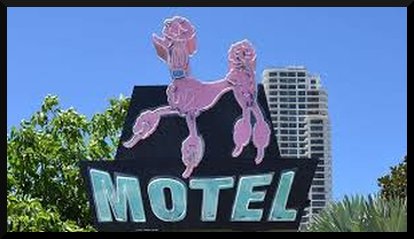
pink poodle gold coast
The Pink Poodle motel was one of the most famous on the Gold Coast, but unfortunately only it’s neon sign remains.

Tag brought Bruce Auty into the practice in 1951 and it is surprising how prolific this partnership became.

The pair brought wonderful examples of American 50’s/60’s ‘Googie Style’ to the district – a futuristic design movement redolent of America’s infatuation with the space age, streamlining and car culture. Surviving examples of this distinctive style can still be seen around town in the facades of Mack’s Snacks, Kermonds and Prontos on Raglan Parade – originally designed as a slick, eye-catching car showroom.

Walter and Auty’s work extended throughout the Western District and projects included hospitals, churches, community halls and ongoing development of the iconic Fletcher Jones factory site: masterplanning of the original buildings and gardens having been designed by Tag back in 1948.

A notable interstate commission was the famous Pink Poodle resort on the Gold Coast – a hedonistic motel complex complete with swingin’ bars, bistro, pool and of course a giant, neon, poodle street sign. It was a favourite destination for honeymooners, but while the poodle sign has been preserved, the original building was demolished in 2004.
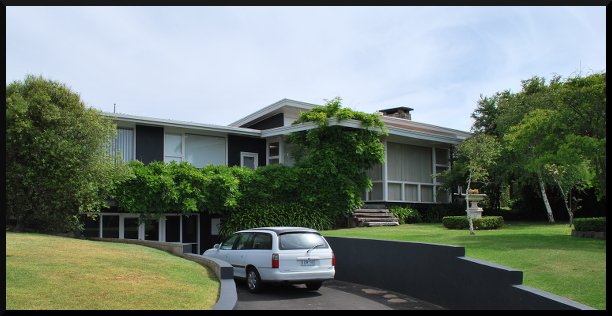
David Jones ( son of Fletcher ) Family Home. Verdon Street
A classic ‘Tag’ design: The former family home of David Jones (son of Fletcher), Verdon St, Warrnambool.

The Walters also found time to raise three daughters who fondly remember their father as an affectionate, kind, generous and meticulous man.

Robyn Poynton recalls that “Dad was always taking me in the car to visit building sites around the district,” and that the family would often attend “opening ceremonies amongst revered dignitaries such as the Premier Henry Bolte”.

Robyn also warmly remembers her sister Joan “doing a training year in Dad’s office on the drawing board, where she would assist with water colour rendering of the perspective drawings”.

Tag worked throughout the sixties, before handing the reigns over to Bruce in 1969. A freak boating accident in 1973 cut short the life of Bruce and brought the practice to a close (but that’s another story…).
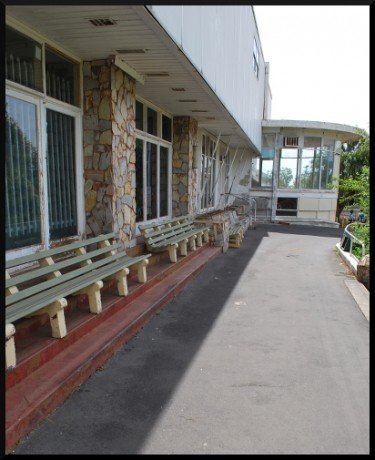
Building details. Fletcher Jones Complex.
Building details, Fletcher Jones factory complex, Warrnambool.

After retirement, Tag remained registered as an architect and continued to undertake a number of development projects with family members and giving of his time generously to the community right up until his death in 1987.

Walter and Auty were the sole architectural firm in Warrnambool during the 1950’s and 60’s and were leading exponents of Modernism throughout Western Victoria.

Further examples of the firm’s work will be explored in greater detail in later features.

References/acknowledgements: Builtheritage Pty Ltd (Simon Reeves); Warrnambool and District Historical Society; Ms Robyn Poynton (daughter of Tag Walter).

Next Month: A Christmas treat – One with the Lot!

Clinton-Krause


Sucking the wind right out of Portland’s sails

portland-july14_83
Portland is still waiting for its economic ship to come in. Street art on the side of the Julia St Creative Space, Portland.

OPINION

What is the long-term future for the beautiful seaside town of Portland and, moreover, does anybody care?

It appears that even when you have the Premier as your local member, it’s hard to get people to sit up and take notice that Portland – Victoria’s birthplace – is not growing, but going backwards.

The town’s population has failed to grow beyond 11,000 and, in 2001, it slipped below 10,000. It currently sits at around 10,700.

The harsh reality for this proud and robust community is that house prices are stagnant, the Year 12 attainment level is among the lowest in the state (49 per cent of students in the Glenelg area don’t complete Yr 12) and unemployment is consistently higher than for the rest of the south-west.

And while it cannot be declared to be dying, Portland’s hopes of building a strong future on the back of one bright hope – the renewable energy industry – are eroding.

Wind tower manufacturer Keppel Prince Engineering, which is the town’s second biggest employer after Alcoa, has been forced to rip 100 people from its 360-strong workforce because of changes to the federal Government policy on the Renewable Energy Target (RET).

The RET, in a nutshell, is the carrot to urge energy companies to invest in renewable energy rather than fossil fuels. Such a carrot means that companies like Keppel Prince, who make wind turbines, can attract more customers and therefore employ more workers.

But judging by what is happening in Canberra, the RET is about to be slashed, making the carrot far less carroty.  As a result, Keppel Prince (as it has been warning for months) has had to lay people off.

house prices
House price growth in Portland (green line) has been on a downward trend for the past 8 years. Source: Australian Property Monitors.

One hundred job losses out of a population of 10,700 is huge, especially when there are not a lot of options to find other work in the town.

It is not unreasonable to suggest that a fair portion of these 100 – and their families – will leave Portland to find jobs elsewhere.

The good people of Portland have known for many years that, if they hope to have a strong future, they need to reinvent themselves and broaden their horizons from the “old” industries of aluminium smeltering and forestry.

Last year’s closure of Alcoa’s Port Henry aluminium smelter  provided a reality check on Portland’s vulnerability if it continues to rely on Alcoa as its largest employer, no matter how good it has been for the town in the past, or how important it remains.

Renewable energy was seen as a potential goldmine for the town, with even the Committee for Portland describing it as a “big kicker”, but now the momentum is being lost.

The loss of 100 jobs just weeks out from a state election would normally leave a local member rushing to explain what he or she was going to do about it, for fear they would face an electoral backlash.

Yet despite facing an election on November 29, local member and Premier Denis Napthine has emerged from the news unscathed, apart from impassioned words from locals like Neville Dennert, a Keppel Prince worker who will lose his job and who took to Facebook to air his spleen.

portland-july14_75
Portland had been hoping for a significant role in the renewable energy industry, but the loss of 100 jobs at Keppel Prince is a major setback.

Dr Napthine holds his seat by an almost 12 per cent margin and one of the great disadvantages of living in such a safe seat is that your local MP doesn’t have to fight too hard for your vote: this applies whether the seat is held by Liberal, Labor or anybody else.

So Dr Napthine was able to manage the Keppel Prince disaster by firstly blaming others – in particular, wind energy companies – for buying their wind turbines from China, rather than shopping local. He then suggested Keppel Prince might do well out of other infrastructure projects that the Coalition has promised, such as the East-West link.

Sorry, but surely Portland deserves more certainty than that.

The state government, for example, could commit to introducing a state RET which was one of the ideas pushed at the renewable energy forum held in Portland in August. That idea was supported by none other than former federal Liberal leader Dr John Hewson, who was a guest speaker.

The Member for Wannon, Dan Tehan, has also avoided any serious backlash, despite his party being the one messing around with the RET.

Mr Tehan says he is hoping for a “middle ground outcome” where both “old” industry – such as aluminium smelting, which soaks up enormous amounts of electricity –  and “new” renewable energies can both thrive.

The reality so far, however, is that renewable energy projects are collapsing before they even get off the ground because of the uncertainty around the RET. Just last week,  it was reported that wind projects for Ararat and Penshurst are also under a cloud for the same reason.

Portland is being told to keep the faith, but for those 100 workers who have already been ‘let go’, it must sound like a load of hot air.

[box]Note: The Labor candidate for the seat of South-West Coast, Roy Reekie, penned an open letter to Keppel Prince workers after the announcement of the 100 job cuts. You can download it here. You can also find The Greens candidate Thomas Campbell’s updates on the issue via his Facebook page here. The Australian Wind Alliance website is here. [/box]

newsletter Eat And Drink StonesYou can read more Opinion here…


What is holding Portland back?

Granny’s Grave buried in bureaucracy

All words, no funding, for Fletcher Jones story

Grappling with the work of a predator

Unravelling the mystery of art commissions

Lack of schooling a ticking bomb in south-west


Fletcher Jones cross will light up again

fj cross-sharrock-hs
The last Fletcher Jones cross, which has been in storage at the Warrnambool City Council depot, is to be returned to Pleasant Hill and lit up again. Image: Robin Sharrock, Herald Sun.

By Carol Altmann

[dropcap style=”font-size: 60px; color: #A02F2F;”] T [/dropcap]he last cross to adorn the Fletcher Jones silver ball in Warrnambool is being restored to light up again at Pleasant Hill from next month – but not on top of the ball.

Instead the cross, which has been in storage at the Warrnambool City Council depot since 2010, will be located somewhere within the gardens as an illuminated artistic installation.

The cross has already been returned to the new owner of the Fletcher Jones complex, Dean Montgomery, who plans to have it lit up by December 1, in time for the Fletcher Jones Christmas Garden Party on December 14.

Dean told Bluestone in an email interview that it was time for the cross to be returned to the site, but it was unfortunately logistically impossible to return it to the top of the ball.

 “I am not sure if it will ever be on top of the ball again, as all of the fixings have been removed several years ago,” he said.

The silver ball, however, will be completely repainted either later this year or early next year.

The return of the cross – which replaced an original wooden cross in the 1980s – is a symbolic milestone in the revitalisation of the iconic site, part of which will house a new Warrnambool Motor Museum from next year.

Dean said he was on track to open the first stage of the museum before July with up to 50 exhibits – expanding to more than 150 vehicles by 2016.

speedster - 1
The rare Porsche 356 Speedster, originally owned by George Andronicus (from the coffee importers fame) and later bought and raced by Ian Hamilton (pictured) at the 1966 Rothmans 12-hour race in Queensland against some very famous drivers. It will be among the Warrnambool exhibits. Image: supplied.

[dropcap style=”font-size: 60px; color: #A02F2F;”] I [/dropcap]nternal rooms have been demolished, asbestos removed, windows and roofing replaced and new walls and toilets added. Ironically, one of the biggest clean ups involved removing more than 1000 old car tyres dumped in the buildings.

“The first stage will be next year and then whilst that is open, the larger area will begin being renovated,” Dean said.

He said the public response to the motor museum had already been “huge” – its new Facebook page attracted hundreds of likes within hours – and he believes it will become a major tourist attraction for the city.

“I think it will be really interesting and a real drawcard for people visiting Warrnambool. I really have a love of all things automotive and in all forms.”

The museum will feature a number of exhibits from Dean’s own personal collection, including vintage, classic and sports vehicles, and racing cars driven by the legends of Australian motor racing including Peter Brock, Alan Moffatt, Dick Johnson and Sir Jack Brabham.

For Dean, the story behind each car is as important as the car itself, so even a total non-motoring enthusiast should find it a challenge not to get caught up in the collection.

dean with bill wills
Dean Montgomery, right, with Bill Wills from Ballarat who faithfully restored this T-model Ford truck that will be part of the Warrnambool Motor Museum. Image: Dean Montgomery.

[dropcap style=”font-size: 60px; color: #A02F2F;”] W[/dropcap]hile the Warrnambool Motor Museum is being developed, the existing secondhand markets are also in for a makeover and will be relocated to a larger, one-level space that will see a wider range of products.

“I want it to be much more then just a vintage market,” Dean said.

“Probably a mix of vintage, antique, craft, art etc. I would like to see some locally made new products within the market too.”

There are also plans for a new cafe/restaurant, and an expansion of the existing Factory Arts space to accommodate more tenants.

Outside, head gardener Lex Caldwell, who has kept the gardens alive mostly through volunteer labour, now has more funds to restore the garden beds and furniture, and repair fountains that were no longer functioning.

fletcher jones_4
The Fletcher Jones gardens are looking the best they have in years, with the revitalisation of the site well underway.

[dropcap style=”font-size: 60px; color: #A02F2F;”] D[/dropcap]espite the cost and enormity of the whole task, Dean, who is a Geelong-born, self-made millionaire now based in China, said he had “found the whole experience so far fantastic” and the people of Warrnambool friendly and helpful.

He was particularly impressed by the work of local builder, Jeremy Porter, who is coordinating most of the clean-up and build.

There is still one “missing” item, however, that Dean would dearly love to add to the site’s revival.

“What I would love to find is Fletcher Jones FJ Holden that I believe he used to drive.

“Wouldn’t that be great to find and have it restored within the museum?”

Check your old sheds: it just might be in there.

Goss coupe
Built in 1975 this Ford monster has been driven by some of the biggest names in Australian motor racing, including Alan Moffatt, Jim Richards, Kevin Bartlett, Sir Jack and Geoff Brabham. Its new home will be the Warrnambool Motor Museum. Image supplied.

[box]The Fletcher Jones Christmas Garden Party, coordinated by the F Project, will be held on Sunday December 14, 11am-3pm, with artisan stalls, live music, food, children’s activities and – naturally – a visit from Santa. Meanwhile, work is also progressing on securing funds to record some of the Fletcher Jones stories from within the community.[/box]

[button link=”http://the-terrier.com.au/subscribe-2/” type=”icon” icon=”heart” newwindow=”yes”]Bluestone is aiming for 500 subscribers. If you enjoyed this story, please click here to become one![/button]

newsletter Eat And Drink StonesYou might also enjoy…


Capturing Warrnambool’s diverse heart

Unearthing literary treasures in tiny town

Restoring a treasure back to life: 222 Timor St

Who is the Granny behind Granny’s Grave?

Art is the heart of old Hawkesdale home


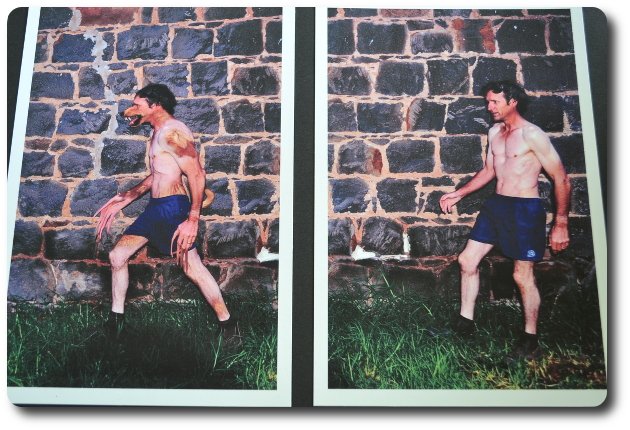
Young creatives: the mythology of Alex Jones


alex jones_26
Brauer College Year 11 student Alex Jones with the work of his fellow art students behind him. Alex’s work is part of the school’s Art & Design exhibition at the Lighthouse Theatre.

Words and photos by Carol Altmann

[dropcap style=”font-size: 60px; color: #DC943C;”] A [/dropcap]lex Jones is one of those young creatives who has been drawing for as long as he can remember and whose natural talent just oozes out of him, much like the images he creates.

The Year 11 Brauer College student from Bushfield is making his mark as a young artist to watch, with his exploration of life, death, mythology and the darker, surreal elements of fantasy and reality.

“Ever since I was little I have loved books about mythology and fantasy and using my own imagination to create those worlds,” Alex, 17, says.

 “I have always drawn pretty dark stuff, much to the disgust of my grandmother,” he adds, laughing.

alex jones_10
A digitally manipulated image – featuring Alex’s father and golden labradors.

alex jones_2
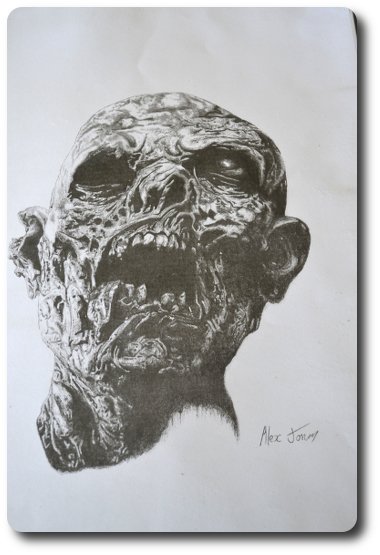
Perhaps not one for Grandma, but the detail in Alex’s drawing is remarkable and won the people and staff choice awards in the 2013 WRAD Art in Schools Competition

[dropcap style=”font-size: 60px; color: #DC943C;”] A [/dropcap]lex works across a range of mediums, including pencil, paint, sculpture, photography and printing, to create images that are often morbid or foreboding, yet mesmerising.

“I like to convey messages about life and death and different ways of looking at life, while also making the work really detailed,” he says.

Alex’s favoured themes are a stark contrast to his cheerful disposition and love of the sea, and he laughs as he admits that most of his work is not displayed at home (his mother, Yvonne Lefebure, is a textiles teacher at Brauer).

But his attention to detail and a willingness to explore different approaches and techniques is inspiring.

At an age when most young artists are still mimicking the work of others until they find their own style, Alex will take an idea and then push it, pull it and stretch it around until it becomes his own.

alex jones work2
Alex’s roadkill lantern, which is part of an installation at the Brauer Art & Design Exhibition.

alex jones_12
Life, death and decay are common themes in Alex’s work, including this photograph of a fungi that is reproduced in a scratch drawing.

[dropcap style=”font-size: 60px; color: #DC943C;”] G [/dropcap]ail Higgins, head of the Brauer Art Department and one of Alex’s teachers, tells a story of how he found some roadkill, let it dry out, and used the skull together with moulded, clay horns and bits of fur to create a new work.

“He puts a great deal of thought into how he approaches each piece,” Gail says.

And Alex himself explains how he experimented with making his own paint pigments from wine, blueberries and raspberries which he then used for a printmaking piece on the crucifixion of Christ.

But perhaps his most striking work is one of three that are included in the Brauer College Art & Design Exhibition now showing at the Lighthouse Theatre, Warrnambool (until Nov 16).

It is a highly detailed eagle that has been etched onto individual panes of painted perspex that are mounted into a vintage window frame.

alex jones bird
Alex’s winning work from the Portland Rotary Art Show: the eagle etched into panels of painted perspex (detail).

[dropcap style=”font-size: 60px; color: #DC943C;”] T [/dropcap]he majestic bird has its wings outstretched, as if in flight, but its head flops to one side and a medieval sword runs down the centre of its body.

“The window symbolises the interface between life and death,” Alex explains.

“You only get to see glimpses from one side – not the whole picture. And the sword, well it symbolises mans killing of an innocent creature.”

Gail is right: Alex puts a lot of thought into each of his pieces.

The eagle image recently won best contemporary painting at at the Portland Rotary Art Show and Alex’s work has also been recognised with a people’s choice and staff choice award in the 2013 Western Region Drug and Alcohol Art in Schools competition.

Despite his talent and love of art, however, Alex intends to put his attention to detail and inquisitive mind to work in another career, as a scientist.

Given the synergies between science, life and death, it seems the perfect fit.

alex jones_4
Alex experimented with making his own pigments using blueberries, wine and raspberries for this work on the crucifixion of Christ.

[box]The Brauer College Art & Design Exhibition is open until Sunday November 16, Lighthouse Theatre, Warrnambool. It was curated by Gareth Colliton, from the Warrnambool Art Gallery, with the assistance of two Brauer College students Gemma Stormer and Emily Bakic. Free entry.[/box]

[button link=”http://the-terrier.com.au/subscribe-2/” type=”icon” icon=”heart” newwindow=”yes”]Bluestone needs 500 subscribers to thrive. If you enjoyed this story, please click here to become one![/button]

newsletter Why Not StonesYou might also enjoy…


Young creatives: Indigo Crabbmor a year on…

The magic of the Coorong: Port Fairy exhibition

New women’s art prize unveiled for IWD

Capturing Warrnambool’s diverse heart

Developing a passion for vintage cameras: Denise Regan

Just the kit for Portland culture: Culture Kit


Fun4Kids: the missing bits

peppa_pigtheme

OPINION

When the Warrnambool City Council gathers tonight (3/11) for its monthly public meeting, there will be one item missing from the agenda: the full picture of the parlous state of the Fun4Kids festival, as outlined to councillors a fortnight ago.

For some strange reason, this report – unlike others – did not make the cut and will not be released to the public until at least December, despite the future of the festival being the topic of the moment.

But the full report provides some fascinating details, such as the fact that there is, as yet, nobody to run the 2015 festival.

As you now know, the eight-day festival – whether you love it, don’t like it, or are not-fussed either way – posted a record loss in 2014 which requires $593,000 of council funds to cover, or around $150,000 more than anticipated.

It also posted a record low attendance of just 19,758. By way of contrast, in 2005, the event attracted 32,112 people.

neoh1
Mayor Michael Neoh remains confident that the fading Fun4Kids festival can be turned around in six months. Image: ABC

Fun4Kids is dying, and has been for some years, but several councillors and Mayor Michael Neoh remain confident that they can turn things around in just six months and will spend at least another $450,000 to do so.

This means that the total ratepayer subsidy since the festival began is closing in on $7 million.

Let me say that again: $7 million.

It has already been pointed out by Cr Peter Hulin that if Fun4Kids was producing such a stimulus to the local economy, why are there so many empty shops in the heart of Warrnambool?

And isn’t it just a little strange to spend $450,000 on Fun4Kids to stimulate the local economy while also asking traders to pay a compulsory levy to raise $300,000 to stimulate the local economy? (In a neat piece of synchronicity, objections to this levy close today).

And why can’t the council afford to offer 8 weeks of free summer car parking in the CBD to try and make visitors linger longer – at a cost of $100,000 – yet it can fund 8 days of Fun4Kids for $593,000?

australian-money

None of it makes sense, and it makes less sense when you see the full details of the Fun4Kids briefing provided to councillors on October 20.

While we wait for the official release, here is a summary in dot points:

* As it stands, there is nobody to run the Fun4Kids festival. Both the Service Manager (Events and Promotion) and the Marketing Manager have resigned from their roles. Both positions have been advertised, but not filled. Another part-time staff member will be taking maternity leave in December.

* There has been “an erosion” in sponsorship and in-kind support for the festival, but the 2014 event still secured $646,250 of in-kind support. (Imagine the cost to ratepayers without it!)

* Ticket sale revenue has dropped 30% from 2012 to 2014 ($505, 381 to $372,479).

* Locals are abandoning the festival. Of the 19,758 people who came to the 2014 festival, 9100 were from Warrnambool, compared to 13,812 in 2013. This is despite heavily discounted ticket prices for locals in the final days of the event.

* Less people are coming from Melbourne: 3965 in 2014 compared to 5590 in 2013.

* Council staff met with a lot of groups after the 2014 Fun4Kids festival to discuss the disappointing results: these groups included Sovereign Hill, Great Ocean Road Tourism, Federation Square and Melbourne Major Events. These groups highlighted a lack of local support and the increased competition in children’s entertainment as significant issues.

fun4kids_logo1

Given all of the above, it is not surprising that council staff recommended Fun4Kids not continue in 2015.

This is the nub of what they said to councillors on October 20:

“Despite the positive feedback and suggested recommendations, Council officers are not confident, given the above findings, the financial results of the festival, the loss of events and promotions capability within the organisation, and the overall increases in the costs of running the festival, that it would be possible to attract back the levels of audience participation that the festival needs to meet its financial targets.”

They then went on to recommend that community groups, traders and tourism bodies be told as soon as possible that the event was ending, and that council develop an “events strategy” to build on the city’s strengths and attract tourists all-year round.

But we know what happened: the advice was dismissed and the council now has six months to pull off a miracle turn-around.

While nobody wants to be the person who closes down Peppa Pig, it takes true grit and leadership to admit that the event has had its day and another $450,000 could be better used on developing a fresh attraction.