The thinking behind building a Big Life

child-barling
The Big Life program aims to prepare children for the challenges of life by helping them recognise their own strengths, qualities and talents. Image: Stockimage/

[box] We asked MICHAEL BARLING (Big Life program) and SEAN KENNY (President of Warrnambool Student Wellbeing Association) to write for us about the issues facing students in the south-west:[/box]

Guest writers: Michael Barling and Sean Kenny

[dropcap style=”font-size: 60px; color: #DC943C;”] I [/dropcap]ncreasingly the issues that kids are dealing with in schools are a product of a broader social problem.

We can help kids manage their immediate challenges through chaplaincy and other forms of case management, but the strategic aim is to also address the root causes and reduce the number of kids in crisis.

Put another way, there is always a need for an emergency department in a hospital because life happens and injury is a part of being human.  But it also makes sense to teach people how not to injure themselves and create environments whereby the really big injury risks are avoided.

Over the years, chaplains have identified some consistent themes central to some of the emotional ’injuries’ people tend to get.  We have framed these as five big questions.  These are at the heart of the Big Life program.

[dropcap style=”font-size: 60px; color: #DC943C;”] T [/dropcap]hese questions are:

  • How do I relate to people who are different to me? (Living with difference)
  • How can I love and be loved? (Relationships & sexuality)
  • What is the meaning of life? (Spirituality and purposeful occupation)
  • How do I make family work – even if I haven’t got one or don’t want mine? (Family in the 21st century)
  • What do I do when bad things happen? (Grief and loss)

The appeal of framing A Big Life around The Big Life questions is that it gives schools a platform to engage and connect kids with life’s challenges in an optimistic and hopeful way.

This perspective involves allowing kids to identify and acknowledge their strengths, qualities and talents.  From this broad direction, A Big Life is developing along the lines of a whole-school, strengths-based approach that seeks to develop daily habits, tools and routines that help develop the optimistic and hopeful perspectives of our kids.

At the application level, it has meant both Warrnambool and Brauer Colleges developing a Morning Welcome routine that leverages off the energy and commitment of our teachers to raise awareness to and build the strengths of our kids.

Our Morning Welcome focuses on modelling positivity and persistence, on learning and developing new capacities and applying those new capacities with a consistency so that they stick with our kids.

Underpinning our Morning Welcome is the development of a mindfulness habit that encourages kids to focus, become more self-aware, develop a sense of empathy and approach situations with a calmer perspective.

barling
Former Emmanuel College teacher Michael Barling is steering the Big Life program in Warrnambool. Image: Supplied.

[dropcap style=”font-size: 60px; color: #DC943C;”] T [/dropcap]he structures and routines that are developing as part of our Morning Welcome are proving effective.

However, the multiplier effect of our teachers will be the determining factor in any success. The other great multiplier that we hope to harness is our parents and guardians.

As teachers undertaking the emotional labour of caring for our students, we have a strong appreciation of the next level of emotional labour our parents and guardians go to in caring for their children.

We have so much that we want to do.

A Big Life is in the swimming lessons game. We could be lifeguards pulling kids out of trouble. Or pool fence installers putting barriers between our kids and trouble. No, we want to be swimming teachers so we can develop the capacities and strengths of our kids to get themselves out of trouble.

parent teenage
Big Life builds on the work of school chaplains and extends into the family, school and home. Image: Huffington Post.

[dropcap style=”font-size: 60px; color: #DC943C;”] W [/dropcap]here has Big Life come from?
The ‘Big Life’ program has emerged out of the work of school chaplains who have been operating in Warrnambool secondary schools for more than 50 years.

The chaplaincy program has a long history of working in partnership with local schools and their community. Our chaplains have worked incredibly hard to support the wellbeing of kids, staff and parents, in both uplifting and devastating life situations.

At the heart of chaplaincy is a holistic view of the person.

It aims to offer pastoral care to people, walking a short part of an individual’s life with them. It sees people as neither a clinical issue to be fixed or social problems to be solved.  

Chaplains help join the dots. Whether it is acting as a referral service for more intensive support and care, or helping people make sense of a troubling life situation, pastoral care aims to help people understand their needs, challenges and concerns more deeply, and act to improve their life.

It has become increasingly clear that whilst pastoral care can be offered individually, many of the challenges individuals face relate to how the broader community functions.  Individual care is only effective when located in a community that cares.

That’s what Big Life is trying to do – extend these caring ideals beyond the individual, toward the community.

We want to help people live full and fruitful lives – and we can only do this by creating a community that understands what it means to grow, learn and live – together.

newsletter Why Not Stones You might also enjoy…


A friendship built on rock solid foundations

Lack of schooling a ticking bomb for south-west

Young creatives: Indigo Crabbmor

Young creatives: the mythology of Alex Jones

Young creatives: Bronwen Rose and ugly beauty


A road tour of some of W’bool’s retro best

75 verdon st
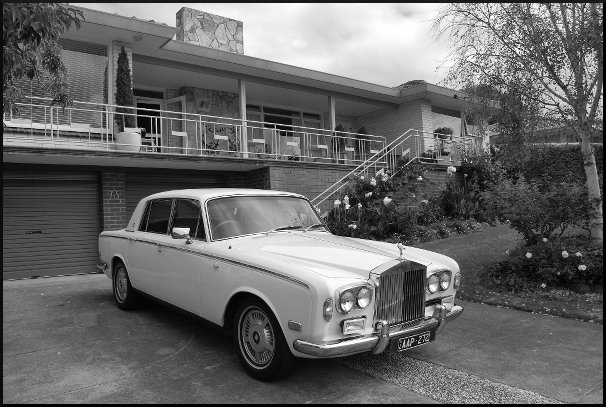
75 Verdon street – one of a number of mid century ‘Dream Homes’ built for the booming aspirational post war generation. Harry Droste’s classic Rolls Royce looks right at home in the driveway.  Image: Clinton Krause architect.

Bluestone columnist and architect CLINTON KRAUSE previously worked in Daylesford before relocating his business to Warrnambool. Clinton explores the architectural styles that gives our region so much character.

I had the great pleasure this month of taking my research out on the road accompanied by local motoring enthusiast Harry Droste. Harry has a large collection of classic and vintage vehicles and our tour around town was all the more enjoyable travelling in some of his appropriate-era cars.

As we set off, it also became clear that Harry is a valuable repository of information about mid-century architecture: he and his father set up a joinery workshop in the early 50’s and worked in conjunction with architect Tag Walter on many of the gems we set out to find.

Harry recalls Tag as a generous and helpful man, who offered Harry his first workshop to provide the bespoke cabinets that Tag designed for all his developments.

Our first stop was a Tag design, set within a street of iconic houses in East Warrnambool.

Verdon Street is unique in that nearly all the houses are superb examples of the mid-century ‘ Dream Home ’ – a style that saw aspirational Australian home owners looking towards American trends for new and exciting ideas. Houses became more expansive with walls of glazing, deep generous eave lines and patios and terraces to extend the living spaces outside.

Rolls Royce silver shadow saloon looking quite at home.
The Rolls Royce silver shadow saloon looking quite at home. Image: Clinton Krause architect.

75 Verdon Street is one such house owned by David and Cheryl Ryan and built by David’s parents in the late 1950’s.

The house has remained in the Ryan family and as such is remarkably original and intact. Harry was delighted to see the original kitchen still in use and was able to demonstrate a quirky design detail – a bank of drawers runs around the whole kitchen, sloping outward to add visual interest. One of the drawers even slides in two directions, providing access to cutlery from both sides of the island bench.

David and Cheryl enjoy the passive solar heating afforded by the expanses of north facing glass – the open fire is the only source of heating and is reserved for use only on the coldest of winter days.

Apart from a minor bathroom renovation, the home retains the original features and continues to provide a comfortable home for the Ryan’s and visiting family members.

The front garden complements the home wonderfully with its ‘ English Gardenesque ’ plantings of colourful perennial beds and groupings of deciduous specimen trees. The overall effect is one of a suburban idyll and indeed the pride and dedication to these period homes is prevalent in the entire Verdon streetscape of great early-modern houses.

As we farewelled the Ryan’s with a wave from our salubrious Rolls Royce Silver Shadow, I asked Harry if he knew of an intriguing house I had discovered some time back near the Botanic Gardens.

48 Botanic road - a carefully balance composition of roof lines, windows and materials
48 Botanic road: a carefully balanced composition of roof lines, windows and materials. Image: Clinton Krause architect.

The house in Botanic Road is modest in size but has been designed with great care and boasts a stunning street façade redolent with details of the best of mid-century design.

The form of the home makes good use of the wide street frontage and the illusion of an expansive structure is reinforced by a graceful sloping gable roof that extends across the whole house from boundary to boundary.

The windows are placed in the façade with attention to balance and symmetry. The framing pattern of openable sashes is repeated across the façade and emulated in the panelling to the two garage doors.

The entry porch is embellished with a whole grab bag of tricks: a raised brick planter box clad in crazy stone paving; an open roof section with exposed framing to form a pergola and ensure natural light accesses an adjacent wall of glazing;  a wide swath of crazy paving to both the terrace and the chimney breast (to be admired by guests approaching the front door ), and, to top it all off – a slender steel pipe column supports the verandah porch and is set at an oblique angle for visual interest.

As with many houses of this era, the wow factor is all reserved for the street and glimpses of the sides and rear of the building reveal a more pedestrian approach to roof forms, glazing and detailing.

A vision of suburban pride and achievement
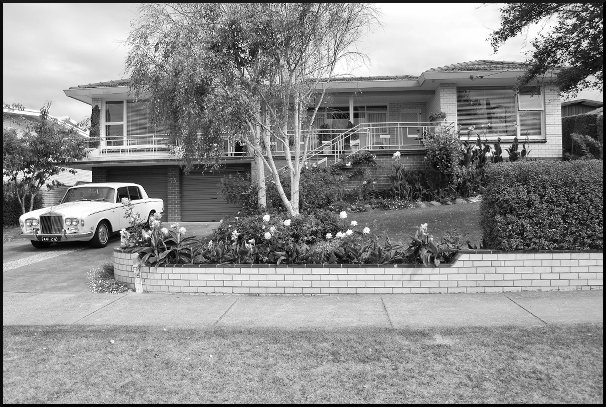
A 1950s vision of suburban pride and achievement which has again become highly sought after. Image: Clinton Kruase.

The house serves as a perfect setting for Harry’s 1957 Zephyr and our photo shoot encapsulates the ideals of emerging working class affluence along with the newfound freedom to travel.

Harry is unfamiliar with the origins of this home and its designer, so I have further research to undertake for a later feature.

We set off toward our next destination – a house in Walter Crescent: a street dedicated to the great man himself. More on that in my next column…

Special thanks to Harry Droste for providing and driving the classic vehicles for the grand tour.

Next week: The Tour continues with a visit to the Hobbit house.
Clinton-Krause


Unearthed: how the Warrnambool cemetery works

1-cemetery_15
Warrnambool Cemetery Trust secretary, Clive Rayner: “The cemetery is a very interesting place”.

Words and photos by Carol Altmann

[dropcap style=”font-size: 60px; color: #A5CECD;”] T [/dropcap]here is both a solemnity and a fascination about cemeteries, especially one as old and beautiful as the Warrnambool cemetery which houses almost as many dead as are living in the city: around 28,000 people since 1854.

Yet for all of the times I have walked through this calm, historic space, I have never really understood how it operates, in the sense of:

  • who owns it;
  • who decides what headstones are permissible;
  • what happens when an old headstone falls down (as is happening now);
  • is there a central database of who is buried there and;
  • does anybody live in the heritage-listed house that has the quietest neighbours in Warrnambool?

To find out the answers to all these questions and more, Bluestone spent several hours with the very informative and forthcoming Clive Rayner, secretary of the Warrnambool Cemetery Trust.

cemetery_3
Lean on me: ageing tombstones are either repaired by family willing to spend the funds on restoration or laid down to avoid causing injury. Image: Bluestone Magazine.

[dropcap style=”font-size: 60px; color: #A5CECD;”] T [/dropcap]he first thing Clive explains is that the cemetery land is owned by the State Government and the seven-member trust is answerable to the Department of Health, which oversees the laws that govern cemeteries in Victoria: the trust ensures these laws are followed.

“We never have any trouble filling vacancies on the trust (which is re-appointed every five years). The cemetery is a very interesting place,” he says.

As can be expected, there are a lot of rules and regulations that govern public cemeteries, from coffin sizes and plot depths to what can and can’t be done in the grounds.

It is, for example, illegal to play sport, fish, bathe, hunt or camp in a public cemetery, just in case you were inclined to play a spot of lawn bowls or set up the Coleman tent for an overnight stay.

More seriously, however, the trust is responsible for ensuring that cemeteries run smoothly, that they are well kept (most of the old Warrnambool cemetery is hand mown) and that it strikes a balance between the sensitivities of the bereaved, public safety and long-term preservation of the grounds.

This brings us to monuments.

cemetery_6
A modern, retro-fitted memorial sits alongside a simple, less conventional monument in the old part of the Warrnambool cemetery. Image: Bluestone Magazine.

[dropcap style=”font-size: 60px; color: #A5CECD;”] A [/dropcap]s Clive explains, monuments are designed and installed by stonemasons in consultation with the bereaved, but there is no hard and fast rule that all memorials have to be traditional.

“The families or friends work with a stonemason who can advise them on what they can and can’t do, but the trust does have discretion too,” Clive says.

Special requests can be put in writing to the trust which will then make a decision on whether the monument is legal or appropriate, including whether it will last long-term, the size and how it will be installed. There are a few examples of what might be called less traditional monuments around the grounds, such as a rustic wooden cross in the lawn section.

The trust also monitors temporary items placed on a gravesite.

“Some graves can become virtual shrines and so we have to make sure we keep that under control, while also, of course, remaining sensitive,” Clive explains.

cemetery_4
Another example of a less conventional memorial that sits within the old section of the Warrnambool cemetery. Image: Bluestone Magazine.

[dropcap style=”font-size: 60px; color: #A5CECD;”] E [/dropcap]recting a monument is one thing, but maintaining it is quite another, as is beginning to show on some of the graves in the old part of the cemetery.

Wrought-iron surrounds are rusting away, slabs have broken up, and about 10 elaborate headstones are threatening to topple over while others have already succumbed.

“Sometimes with the very old graves we are unable to find a family member or, if we do, they are not interested in spending the money needed for the repairs. In that case, if a headstone is going to fall down, we will remove it and lie it down on the grass,” Clive explains.

At the other end of the spectrum, descendants of some long lost souls have sought permission to mark previously unmarked graves in the old cemetery, or replaced simple wooden markers with a more permanent memorial.

cemetery_1
The heritage-listed stone house built in 1878 for the sexton (cemetery manager) has not been used as a dwelling for some years. Image: Bluestone Magazine.

[dropcap style=”font-size: 60px; color: #A5CECD;”] W [/dropcap]hich is a lovely segue into genealogy and whether there is a central database of cemetery records.

“We are working toward that,” Clive says, “it has been 10 years in the making already and we are probably still some months away from being finished”.

At the moment, anyone with a surname between A-S can be located by the cemetery trust using its computers, but S-Z is still in hard-copy ledgers: 28,000 people is a lot of names to transfer.

The trust office is one of the rooms still used in the heritage-listed house on the cemetery grounds. Built around 1878, the house was designed for the sexton – the manager of the cemetery – but is no longer used as a dwelling.

“It has no windows on the north side, so you can imagine how cold and dark it can be in here in winter,” Clive says.

As we talk, a woman from Adelaide pokes her head into the office and asks Clive if he can check the record about her relative, one of Warrnambool’s early settlers. He scratches down the details on a Sticky Note and promises to email her.

“We get a lot of that and I try to help where I can, especially if people have come from a long way,” he says.

For a place that honours the dead, the cemetery is surprisingly full of intriguing life.

[box]A new Warrnambool cemetery east of the city will be announced shortly and will be the first new location in more than 150 years. It is expected to start operating within five to eight years.[/box]

[button link=”http://the-terrier.com.au/subscribe-2/” type=”icon” icon=”heart” newwindow=”yes”]Please click here to subscribe and support Bluestone Magazine.[/button]

Stones Smile newsletterYou might also enjoy…


A fence full of happy souls at Tyrendarra: the ‘shoe fence’

Montgomery buys a slice of ‘Motang’ history

From ugly quarry to garden of Eden

The beautiful craft of book binding: Murray Simper


Harris mural a lost opportunity to take a stand

jenny altmann- smaller
‘Autumn’ painting: acrylic, gouache and pen, by Jenny Altmann. Image reproduced courtesy of Jenny Altmann.

Analysis – Carol Altmann

How extraordinarily healing and beautiful something like this work by local artist Jenny Altmann would have looked at the Lighthouse Theatre instead of a Rolf Harris mural covered in black Perspex, apparently forever.

Imagine if an artist like Jenny (disclosure: my former sister-in-law), whose art often deals with themes of healing from sexual abuse, had been asked to replace what has become an embarrassment for our city?

Warrnambool City Council, on our behalf, would have made headlines around Australia for its courage in grasping a rare opportunity to send a symbolic message to all survivors of sexual assault that we, as a community, will stand with you over and above any cult of personality.

Such a message would be particularly powerful given Warrnambool has more than double the state average rate of child abuse: 16.5/1000 compared to 7/1000.

But last Monday night we blew it and we deserve headlines like this one.

For all of the bluster about censorship, separating the art from the artist, and fears of replacing the mural being the “the thin-edge-of-the-wedge”, the decision really boiled down to one of celebrity.

The only reason the mural is remaining is because it was painted by Rolf Harris – who is actually better known for his entertainment than his art – but nobody has had the courage to say it.

This was not about preserving all art at all costs.

In fact, less than two hours after deciding to keep the mural, the council was praising its spectacular upgrade of the Lake Pertobe maze, where old murals (painted by children?) were replaced by the works of street artists.

Unfortunately these children were not as famous as Rolf Harris.

And, as I have already written, local indigenous artist Fiona Clarke saw her mural at the Ozone carpark removed to make way for apartments, and nobody blinked an eye.

Unfortunately Fiona is not as famous as Rolf Harris.

sheffield harris
The Sheffield Council had the white paint out and over a Rolf Harris mural on the side of the Sheffield Archives building in the UK shortly after his conviction. Image: BBC News.

In the art world and beyond, murals come and murals go and the Sheffield Council in the UK had no qualms – after Harris’s conviction on 12 counts of sexual assault – about painting over one of his murals on the side of the Sheffield Archives building.

An even earlier Harris mural, at the Sheffield swimming pool, had already been lost when the pool was demolished.

Removing a mural does not erase Harris’s crimes or stop sexual assault, but it is a symbolic gesture that sexual predators deserve nothing more than our disgust for the ruin they can inflict on their innocent victims.

Many of the people who wanted to see the Harris mural replaced are survivors, but to “out” yourself as a survivor in a regional city is enormously difficult because, often, the shame is still there and, in many cases, the perpetrator (even the dead ones) still garners respect.

I thought that the majority of our councillors absolutely understood this and, indeed, Cr Jacinta Ermacora (who earlier worked as a social worker at the South West Centre Against Sexual Assault) lifted my spirits when she told the council meeting that:

“One of the hardest things for survivors is to see their abusers continue their life in the community, unaffected, still respected in their community and sometimes even community leaders, while they, and their children, suffer and survive in confidential silence.”

I felt like leaping out of my chair and applauding.

But just as it appeared as if Cr Ermacora was about to crush the reputation of people like Harris hard under her heel, she went on to argue for all the reasons that the mural should remain, including that its future was irrelevant to the bigger picture of preventing sexual assault.

And then this:

“I don’t believe we should indulge in an angry, lynching squad armed with paint rollers, because that says more about ourselves than it does to our sensitivity and acknowledgement toward local survivors,” she said.

I have always admired Cr Ermacora as a strong woman who has achieved great heights in local government, but I still cannot understand where this attack was coming from, particularly when many members of of this metaphorical “lynching squad” were survivors.

Crs Sycopoulis, Gaston and Neoh have been equally as disappointing, falling somewhere between respecting survivors, not wanting to “destroy” art and finding a compromise that appears to have cheered no-one.

Only Crs Peter Hulin and Brian Kelson argued for removal and so the mural will remain, under black Perspex, for time immemorial, although I doubt anybody really believes that.

If this was really a victory for art, why is nobody celebrating?


Sovereign Hill strikes gold as ‘Flaggy’ struggles

pan-for-gold-sovereign-hill-2880
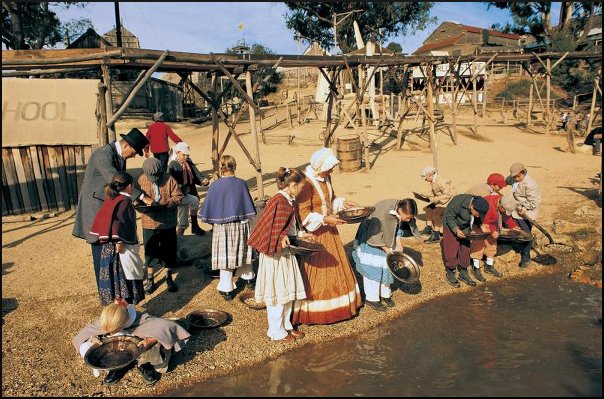
Children dressed in period costume pan for gold at Sovereign Hill: just one of the many daily activities for visitors to the site. Image: Sovereign Hill.

Analysis: Carol Altmann

Why is Sovereign Hill in Ballarat still booming after 45 years and Flagstaff Hill in Warrnambool is struggling to survive?

Both are in regional Victoria, both opened in the early 70s and both rely on a mix of reality and fiction to capture our colonial past – yet their individual fortunes could not be more different.

The numbers for Sovereign Hill are simply staggering: in 2013-14 it recorded 731,000 visitors of which more than 100,000 came from overseas.

Flagstaff Hill recorded less than 60,000.

In 2013-14, Sovereign Hill turned over $24 million in revenue and recorded an operating profit of $775,000. It employs 360 staff and has 250 volunteers.

By contrast, Flagstaff Hill has gone from making a profit to running at loss of around $500,000 a year, it employs only 13.5 staff and has 135 volunteers.

The first response might be, oh, Sovereign Hill must receive more government funding. No, it relies on generating its own income to survive.

Oh, but it is only 90 mins from Melbourne! Yes, but Flagstaff Hill is only an hour from the 12 Apostles, one of the top tourist attractions in Australia.

Perhaps the entry fees are cheaper at Sovereign Hill? No, in fact they are more than double the entry fees to Flagstaff Hill at $49.50 adult/$22 child/$122 family.

To my mind, the difference comes down to two critical things: i) Sovereign Hill has aggressively and successfully gone after the lucrative Asian tourist market and ii) Sovereign Hill itself is full of life, characters and things to do.

Flagstaff hill
While Flagstaff Hill Maritime Village occupies one of the best spots in Warrnambool, it is a largely static museum whose fortunes are flagging. Image: Bluestone Magazine.

In his submission to a recent state parliamentary inquiry into heritage and eco tourism, Sovereign Hill Chief Executive Officer Jeremy Johnson laid out some startling facts.

Having sniffed the wind early on the growing Asian tourism market, Sovereign Hill now employs four staff in China to sell itself as a destination direct to the Chinese. (In January it hosted a hugely successful 1850 fashion show and competition in Shanghai. See here.)

It also hires 17 Mandarin and Cantonese speaking tour guides on site – and has used such guides for 20 years.

Incredibly, one in three Chinese tourists to Victoria now visit Sovereign Hill.

Of course Flagstaff Hill has known about the burgeoning Asian market too, but only now is it lumbering into life to do anything about it, with an upgrade of its sound and light show that will be multi-lingual.

When I visited Flagstaff Hill a few weeks ago, there were no multi-lingual maps or signage, and the introductory film shown to all visitors is in muffled and difficult “olde” English (being extracts from a colonial diary).

There were certainly no Mandarin-speaking guides about, in fact there were very few people (visitors or volunteers) about at all, despite it being the height of the school holidays.

Which brings me to the second point. Flagstaff Hill is more static now than it was 30 years ago.

Tourists love things to see, do, touch and listen to, and this is where Sovereign Hill leaves Flagstaff Hill in the shade.

sovereign hill xmas july
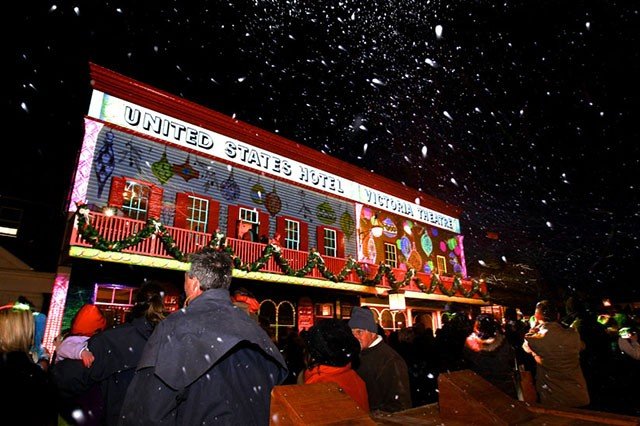
The winter blues have been transformed into a tourism winner at Sovereign Hill with its “Christmas in July” event that taps into the White Melbourne light show theme. Image: Sovereign Hill.

It Sovereign Hill, visitors can pan for gold, have their name printed on a “Wanted” poster, buy some Raspberry drops from the boiled sweet shop, or watch a building “burn” down, and on it goes…

At Flagstaff Hill, the visitors walk into the re-created shops, bar and blacksmiths etc expecting to see someone doing something and – apart from one or two exceptions such as the boatbuilders – there is nobody doing anything.

One more example: Ballarat is freezing in winter, even colder than Warrnambool. But Sovereign Hill turned this down-time into an up-time by launching a two-week Christmas in July event across the school holidays.

Among other things, they light up buildings, create fake snow, run plays by the local theatre group and, last year, the crowds reached a record 42,000. In other words, almost as many people visited Sovereign Hill in those two weeks than for two-thirds of the year at Flagstaff Hill.

So what is Flagstaff Hill doing in response to its troubles?

Well, it is about to spend another $3 million (on top of the $5.7m spent in 2003) “refreshing” the sound and light show ($2m), adding a handful of holograms rather than real people to its buildings – which sounds like a maintenance nightmare – and upgrading the wharf and main entrance.

According to its own masterplan, a full makeover of the village will cost up to $15 million, so rather than throw $3 million into it for little impact, we could try to do more with what we already have.

For example, if the council is persisting with the Fun4Kids Festival, why not hold it at Flagstaff Hill, refocus it with a strong maritime theme (pirates, stowaways, shipwrecks…) move it to the early January school holidays when – compared to events in Port Fairy, Warrnambool is dead – and run special trains from Melbourne (The Shipwreck Express?) that deliver visitors virtually to the door.

And why not offer studio space at Flagstaff Hill to the many artists and crafts folk around the area who do metal work, wood work, glass work, textiles and so forth, so that they get exposure (and sales) and visitors can see people in action?

And why not consolidate all of our historical artefacts in one place, rather than have them spread between Flagstaff Hill and History House (that few visitors even know exists), so that people can see, touch and learn about them?

Flagstaff ingots_10
Despite having historic lead ingots from the Loch Ard on loan from the Federal Government, there is not one sign at Flagstaff Hill explaining what they are or where they come from. Image: Bluestone Magazine.

Lastly, and most importantly, why not make more of the treasures at Flagstaff Hill, such as the Loch Ard ingots which, according to a report in the local paper, Flagstaff Hill founding member John Lindsay thinks are no longer that important at all.

Despite having several hundred of these lead ingots on site, there is not one explanatory sign telling visitors what they are or where they came from.

During my last visit to Flagstaff Hill I was in the Reginald M, that houses some of these ingots, and a young boy asked his mother what they were. She didn’t know, so I said that they had come off the Loch Ard shipwreck and he should try and lift one to see how heavy it was.

His eyes opened wider and he tried to lift one end.

“Orrrrrr.”

History comes alive in those moments – and, as Sovereign Hill well knows, they don’t cost a fortune, but they are pure gold.