Peter Ronald on the destruction of 100-year-old ‘Rowitta’
rowitta-blog
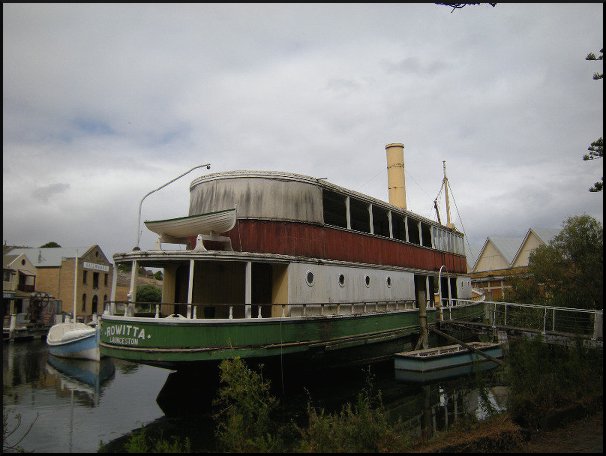
Fading away: the 100-year-old wooden steamer, Rowitta, is being pulled apart after it was decided by Flagstaff Hill to discontinue all maintenance. Image: Amanda Turnidge-Jones.

Bluestone invited the former director of Flagstaff Hill, PETER RONALD, to write on the imminent destruction of the Rowitta, one of the oldest vessels at the Flagstaff Hill Maritime Village:

ANALYSIS – Peter Ronald

The Rowitta has involved some difficult decisions for Flagstaff Hill over the years, but it seems the vessel will soon no longer exist. (*The WCC has since announced the removal of the Rowitta began on April 20, 2015.)

The destruction of historic ships is an unusual pursuit for maritime museums and accordingly, I have been asked by Bluestone Magazine to contribute my opinion on the issue.

I do so with some reluctance, but perhaps it is timely to put some matters on the record. I have always sought to grace an honest question with an honest answer; that is simply my aim here. Anybody seeking my views on this issue would have received precisely this same answer.

The vessel’s hull was originally purchased and moved onto the site with the idea of creating the impression of a sailing ship as the centrepiece of the village. This initial concept was – without any disrespect to those responsible – primarily about creating atmosphere rather than the noble goals of maritime heritage conservation.

As I attempted to steer Flagstaff Hill from “maritime village” to “Maritime Museum”, it became essential to reassess the role and significance of this primary centrepiece: the Rowitta hull. Options for the hull were clear; to pursue the “atmospheric” notion, restore the vessel to its original configuration, return it to the ocean (for sale/use elsewhere), or just let it rot (a “caged” shipwreck on the Shipwreck Coast).

I suspect that these may have been the sorts of options reconsidered by current Flagstaff Hill management. The underlying question however is, why?

Why, some 20 years after the decision to restore and preserve the vessel, was the matter revisited? Why does total destruction of the Rowitta now seem like a good idea? The answers are clear, but it is not a pretty story.
rowitta launceston
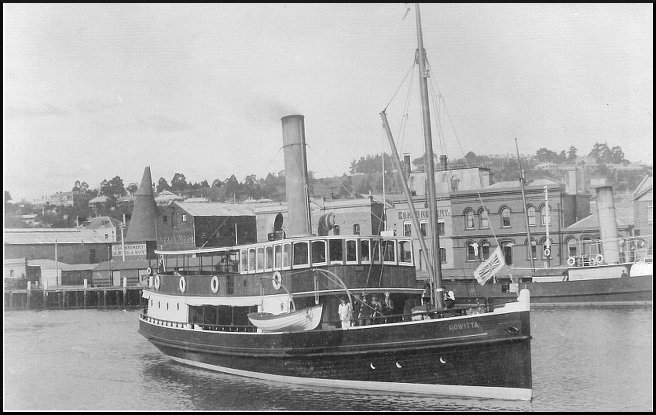
The Rowitta in her prime as a steamer on the Tamar River, Launceston, shortly after her launch in 1909. Image: On the Tide (Vol 1), reproduced courtesy of Launceston Reference Library.

Historic ship preservation is a well practised activity around the world and typically involves a period of extensive restoration, followed by meticulous maintenance. Through the research, hard work, and amazing skills of the late Ron Stewart, the hull was ultimately restored to its former glory as the historic steamer, Rowitta.

When I left Flagstaff Hill, the restoration was largely complete (the reconstructed aft cabin being used as an education centre/classroom) and maintenance was ongoing.

What happened next, in my view, is that Flagstaff Hill entered a “dark age” from which it is yet to recover.

Let’s be clear, under the planned and precise direction of the City’s then Administrators (and followed by subsequent Councils), the ethical constraints of the museum philosophy which had guided development for a decade, were abandoned in favour of a “tourist” focus.

The logic was that a change in emphasis from museum to tourist facility would herald even higher levels of economic success. Well, the scores are now on the board in relation to that failed experiment, and the Rowitta is symbolic of the collateral damage.

No longer an historic object in the care of a Maritime Museum, maintenance lapsed under the new direction. The high standard of restoration that had been achieved was simply eroded through neglect. That splendid work, so diligently accomplished by Ron Stewart, apparently deteriorated to the point that it was no longer even safe to enter the vessel.

rowitta rotting
The rotting Rowitta: the boat has been off-limits to Flagstaff Hill visitors for some time after it was considered unsafe to board. Image: Bluestone Magazine

The debate around “historic” ship or mere replica, raises a relevant and well studied aspect of historic ship preservation. It is true that any historic vessel preserved in an open-air environment will, as the result of basic maintenance, require the replacement of original fabric.

Over time, the percentage of original fabric present in any such vessel will therefore, effectively diminish: this is particularly true of timber vessels. In the Rowitta’s case, the hull is of completely original configuration and, I would argue, of primarily original fabric.

The deck has been renewed and the upper-works have been replicated. The end result of this equation, however, and by the standards of international maritime museum practise, is that the Rowitta was – and remains – an historic vessel.

To suggest otherwise is simply an argument of convenience used to justify a predetermined outcome.

Curiously, if the vessel was positioned just 350 metres to the south (ie. on the beach) it would now automatically be afforded the full protection of Historic Shipwreck legislation.

With the above background, I can only sympathise with present management. I believe the current manager is again pursuing museum goals for Flagstaff Hill, and for this I commend him, but the policy decisions of the past make the task a truly formidable one.

It should never have come to this: Flagstaff Hill’s “dark age” was unnecessary and, in any case, lasted far too long.

In the Rowitta example, the cost of the failed experiment will now be born by future generations through the loss of a piece of Australia’s maritime heritage: a 100-year-old historic ship.

I observe with sadness that Warrnambool’s maritime museum has been taken to the point of “burning the furniture”; one of it’s oldest and largest historic artefacts. Flagstaff Hill may never recover from the “dark age”, but there are foundational lessons to be learned from this current humiliating predicament.



Picking up our road tour of retro beauties

1hobbitt house
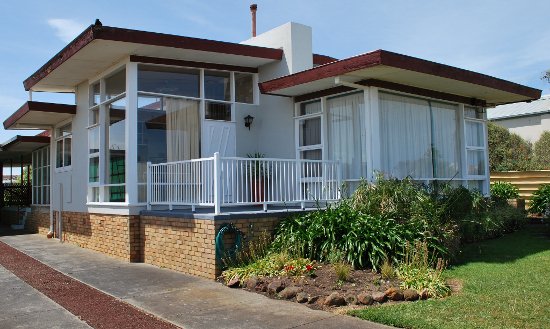
The ‘Hobbit’ house in Walter Crescent. A quirky ensemble of traditional and contemporary design elements, including an attention grabbing oversized porthole window. Image: Clinton Krause.

Bluestone columnist and architect CLINTON KRAUSE previously worked in Daylesford before relocating his business to Warrnambool. Clinton explores the architectural styles that gives our region so much character. Visit his website here.

You may remember last month we started a tour of some of Warrnambool’s retro design beauties and this month we pick up where we left off with a visit to Walter Crescent in central Warrnambool.

This estate, as the name suggests, was established by the Walter family in the early 1930’s and showcases a number of architect Tag Walter’s earlier designs.

The prevailing residential style of this time was the English worker’s cottage and houses generally incorporated the romantic stylistic design features of this era.

Steep pitched terracotta rooves, bay windows, decorative gable ends, red clinker brickwork and timber windows with beaded glass sash panels were all adopted with abandon, giving the streetscape a nostalgic prim and proper ‘British’ feel.

These houses were designed by Tag during his transitional period – and one house in particular provides an interesting  hint of what lies ahead.

No. 24 Walter Crescent is the oddball in a street of well-mannered conservative dwellings. A hybrid mix of conventional stylistic details, juxtaposed with a hint of some new, cutting-edge ideas this house is an intriguing  and important exception.

1DSC_4985
What better way to tour one of Warrnambool’s most interesting streets – Walter Cr – than in a 1957 Zephyr which was right at home outside the so-called “Hobbit house”. Image: Clinton Krause.

The owner fondly describes her home as the “Hobbitt House’’ – a reference to the oversized porthole window in the front façade which would definitely appeal to Bilbo Baggins.

Built in 1949, this house begins to reveal some of the mid-century devices of the impending international style: large expanses of glazing span from floor to ceiling, the extension of base brickwork to form a planter box as a decorative feature for the entry, a glazed screen to the porch is obliquely angled in contrast with the more regular lines of the building elsewhere.

My travelling companion, local car enthusiast Harry Droste, selected a 1957 Zephyr for our tour and it looks right at home against the kerb outside #24.

We continue on our tour to 60 Jukes street, built just 10 years later than the Hobbit house, but light years from the prevailing architecture of the street we have just left.

2jukes street
The house at 60 Jukes St built and designed by young draftsman Don Hunt. A celebration of the emerging new language of the modern vernacular. Image: Clinton Krause.

Designed by Don Hunt a young draftsman employee of Tag Walter and Bruce Auty, the excitement and eagerness to embrace the emerging zeitgeist is immediately evident.

Walls of glass wrap around all three sides of rooms that orientate towards the ocean views. For its day this would have been unprecedented and only seen in commercial shopfronts.

Flat rooves with deep eaves and wide fascias appear to ‘ground’ the building – as if to prevent the glass shell from floating away and there are hints of crazy paving and innovative cabinetry to the interior.

This house is currently proposed for inclusion in Warrnambool City Council’s Heritage Register and is a worthy and unique example of mid-century architecture and culture.

For the final leg of our tour, we make a quick visit past some other homes that will be subject to further investigation in the future – it is clear that there are still many great retro houses out there waiting to be rediscovered!

3nelson street
A glorious two-storey ‘bauhaus’ influenced Tag Walter designed city townhouse. Image: Clinton Krause.

2DSC_3882
Another example of a ‘crossover’ house – fusing the old and new design language of this transitional period in architecture. Image: Clinton Krause.

Postscript: We have since had contact with the family members of a house featured in last month’s column – 48 Botanic Road, Warrnambool. We plan to return and explore more of the story behind  this wonderful mid-century home in the near future.

Next Month: Breathing new life into some mid century marvels.

Clinton-Krause


Letters: Walk in memory of a working class man

[box]We encourage readers to write a letter to Bluestone Magazine if you have something to say, or a special event to promote. Write to us at editor@bluestonemagazine.com.au. 

This edition, Margaret Donehue writes about an annual walk coming up in Koroit on May 2 in memory of a man who championed the working class and Alison Aplin has feedback on her open garden, Timandra.[/box]

william mclean
William McLean’s memorial in the Tower Hill cemetery.

[dropcap style=”font-size: 60px; color: #8F9F59;”] D [/dropcap]ear Readers,

Among the old graves in the Tower Hill cemetery is the grave of a Koroit-born shearer, William McLean who was born in 1870. He died a penniless criminal released from jail early so that he could die at home.

McLean’s grave, paid for by donations from working class families at the height of the Great Depression is an impressive polished red granite column with the top incomplete to symbolise an unfinished life. The epitaph is attributed to poet and writer Henry Lawson.

For many years after his death, locals walked each Sunday to McLeans grave and, in 1932, five hundred people attended a memorial there.

A small group still gather each year on the Saturday of the Koroit Irish Festival and after a five-minute history lesson, the energetic participants walk the scenic route around Tower Hill to Mickey Bourke’s pub in Koroit. The less energetic gather at the coffee shop or pub to get a head start on the refreshments before going to the festival. This is family friendly and everyone is welcome at this year’s event on May 2.

Like many shearers of his time, McLean followed the seasonal work to the large shearing sheds in central and Western NSW. Under a forced agreement of the times, shed hands were paid five shillings – less than 50 cents – per week and any worker who left before all the work was complete would not be paid.

The living standards for these workers were abysmal and they had no legal rights. In an attempt to gain some rights, 8000 rural workers joined the Australian Workers Union and many lived in strike camps, supported with food and necessities from the local community while they tried to find sustainable work. A number of men received six months jail for belonging to a union and those associated with strike camps received two years hard labour on an automatic charge of riot.

On August 26 1894, unionists, including William McLean, went to Grassmere station to talk to non-unionists. On entering the shearers hut, McLean was shot in the lung and John Murphy, who accompanied him, was shot in the back.

Six men – John Jones, John Virgin, Hughe Graham, Hector Osborne, Albert Kerr and Alfred Montgomery – attempted to carry McLean and Murphy back to the camp. They were stopped by police and all eight were arrested and charged with riot. All defendants, including McLean and Murphy, who were carried into court on stretchers, were given two years hard labour. After suffering harsh prison conditions both men died from their wounds.

Over a century after his death, the column on McLean’s grave continues to immortalise a local hero.

You may wish to access the “ McLean Walk” Facebook Page for more details on the walk as they come to hand.

Margaret Donehue

* * * *

Timandra looking south 1500 x 1125
The spectacular Timandra garden at Narrawong.

Open garden success…despite the weather!

[dropcap style=”font-size: 60px; color: #A02F2F;”] T [/dropcap]hank you to Bluestone Magazine for the promotion of Timandra’s Open Garden. Other than the shockingly cold and miserable weather, the open was a success, with $1200 donated to Portland District Health.

Because of the constant unreliability of the weather (which is obviously a figment of my imagination!) we will need to put a lot more thought into our opening days. The weather has a profound effect on visitor turn-out.

I feel that people would be more inclined to visit our garden in high heat than the cold, especially since the garden is at least 6 to 7 degrees cooler during summer from the canopy of trees.

But the response from the visitors was very positive. It is a very different garden in every respect, and people enjoy this difference immensely. People leave wondering how they can incorporate a little bit of what we do in Timandra in their own garden.

Sustainability will one day become the norm with private gardens, but it is a long and slow process bringing about change, even if it is for the better.

– Alison Aplin, Timandra, Narrawong.

[box]You can write to us at editor@bluestonemagazine.com.au Please include a full name, address and contact number. Letters are published at our discretion and may be edited for clarity only.[/box]

newsletter Art Music StonesOlder letters here…

Milk processing plant location needs forward thinking


The quietly dramatic art of Anne Fleming

anne fleming

Words and photos by Carol Altmann

[dropcap style=”font-size: 60px; color: #8F9F59;”] O [/dropcap]ne of the many beautiful things to come out of the inaugural South-West International Women’s Day Art Prize was the opportunity for people to see works by artists who don’t receive – or necessarily seek – a lot of exposure.

One such artist is the softly spoken, warm-smiled Anne Fleming, a painter and ceramicist who works from her home studio in the main street of Dunkeld and who operates a small gallery in the same location called The Waiting Room.

Like many artists, Anne is not particularly keen on spending precious creative time learning how to master Facebook, or worrying about how to run a website, so apart from a presence on the South West ArtsAtlas , most people find Anne’s studio by happy accident.

It is a delightful discovery.

anne fleming_14
The beautifully glazed work, “Catching up”, which not only reflects Anne’s talent, but her wry sense of humour.

[dropcap style=”font-size: 60px; color: #8F9F59;”] D [/dropcap]elicate, finely glazed ceramics are displayed alongside Anne’s often-dramatic oil paintings inspired by the landscape: not just that of her immediate surroundings, but those of her extensive travels in remote Australia. She and her husband Doug, a GP, love to head out in their Toyota troop carrier to “camp rough” – there is no caravan attached.

“I have never been interested in painting pretty, chocolate-box type images. I love exploring the contrasts and the drama and to say something about what this landscape means to me,” Anne explains.

There is a similar drama and movement in Anne’s sculptural work but these, unlike most of her paintings, are influenced by observing people rather than places.

Anne picks up one such work, “Catching up”, a beautifully white-glazed piece which at first appears to be two young women sitting having coffee, until you look more closely.

“One is talking on her mobile and the other is checking her mobile, which is how many young people catch up these days,” Anne says, laughing.

anne fleming piece
Anne’s entry in the inaugural South-West International Women’s Day Art Prize, “Dancer”. The work now belongs to a lucky Warrnambool owner.

[dropcap style=”font-size: 60px; color: #8F9F59;”] A [/dropcap]nne chose one of her sculptural works to enter in the South-West IWD Art prize – ‘Dancer’, inspired by the Bangarra Dance Theatre – and it is this piece, and others like it, that hint at her first career as a physiotherapist.

This is a work by someone that clearly knows how bodies move and what they look like when they do.

It is the same with another piece, a bent-backed shearer, who again reflects another stage in Anne’s life when she and Doug decided to move from the Mornington Peninsula to the south-west.

“We decided we wanted to live on a few acres, so Doug started looking around for a practice in the country and there was one at Penshurst,” Anne explains.

“The only problem is that it is very hard to just buy a few acres in this part of the world, so we ended up with 500!”

The pair had never farmed in their life, but were thrown in the deep end when about 1000 sheep were delivered “to the front door” of their property and needed to be mustered into a back paddock.

“They had to go through this tiny gate. We had no sheep dogs, but we had kids on bikes, and it took forever,” Anne laughs at the memory.

anne fleming_43
‘Wangi Falls”, oil on board, is one of Anne’s many dramatic landscapes inspired by her “rough camping” trips to remote Australia.

[dropcap style=”font-size: 60px; color: #8F9F59;”] W [/dropcap]hile still working as a physiotherapist – and a farmer – Anne returned to study art at Deakin University in Warrnambool in the 1990s and picked up a thread that had lain dormant while she raised her family.

Growing up in Adelaide, Anne would watch the work of her mother, Dorothy Potter, who was part of Val Morgan Advertising and responsible for designing ads shown at cinemas and drive-ins.

“My mother was very artistic…and I had always loved art, but I hated art at school because that was all very formal, about colour wheels and that sort of thing,” Anne says.

Anne took a series of small classes and workshops, but it was only once she enrolled at Deakin and studied under the guidance of lecturers like Graeme Birt and Ross Gray that she began to find her “voice”.

“You are always learning,” she says, “and it’s never what you might call easy.

“A lot of people say, ‘oh, it must be so relaxing to just paint’, but it is often agony and very frustrating but then, at some point, the painting takes over and it works…and you realise you have created something that nobody has done before.”

anne fleming_25
Anne Fleming in her Dunkeld studio: “You are always learning and it is never what you might call easy.”

[box]The Waiting Room gallery can be found at 107B Parker St, Dunkeld. Open “haphazard” hours, but mostly weekends. Contact Anne on 0438 361 761. See more of her work on South West ArtsAtlas here.[/box]

[button link=”http://the-terrier.com.au/subscribe-2/” type=”icon” icon=”heart” newwindow=”yes”]Bluestone is aiming for at least 500 subscribers in 2015. If you enjoyed this story, please click here to become one.[/button]

newsletter Art Music StonesYou might also enjoy…


Clarice Beckett Art Award open for 2015

‘Granny’ rises from the grave for IWD

Discover the many sides of Helen Fitzhardinge

Biblio art prize an open book for 2015

Farms, faces and wide open spaces: Peta Jolley


Win a Lana’s Garden hamper or Piccolo voucher

lana

CLOSED (winners Karen Walsh and Victoria Araldi)

[dropcap style=”font-size: 60px; color: #A02F2F;”] T [/dropcap]he next 10 yearly subscribers will be in the draw for a fantastic hamper from Lana’s Garden featuring all of Lana’s wonderful rhubarb products including a coulis, rhubarb and raspberry jam, a chilli salsa and Lana’s famous rhubarb vinegar.

PLUS there is the chance to win a $50 voucher from Piccolo Restaurant Warrnambool, to enjoy a fabulous dinner from their autumn menu.

Thankyou so much to Lana and Piccolo for keeping the wind in our sails!

[button link=”http://the-terrier.com.au/subscribe-2/” color=”orange” newwindow=”yes”] Subscribe here[/button] via Paypal, credit card or direct deposit and enjoy all the Bluestone benefits.

Piccolo Logo