Remembering Eva: an arts matriarch
eva gaspar-bunyon
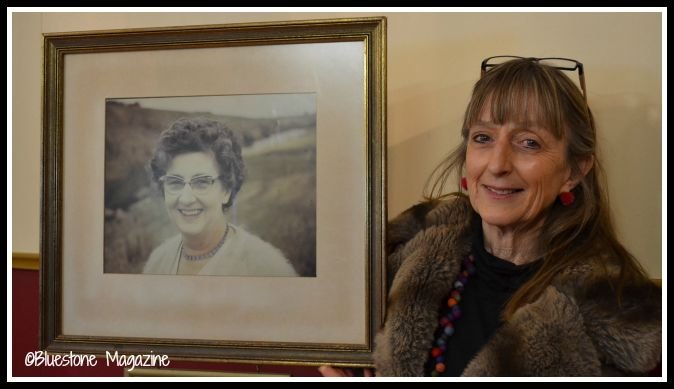
Helen Bunyon, from The F Project and The Artery, with a portrait of the late Eva Gaspar who, like Helen, devoted her life to helping the local arts scene while also being an artist herself.

By Carol Altmann

There is nothing like a tour of the local cemetery to crystallise the mind about how quickly we can forget trailblazers of their time, like Warrnambool musician, photographer and artist Eva Gaspar.

It was during one of family historian Ray Welsford’s gold-coin tours of the Warrnambool Cemetery that I heard Eva’s name raised as one that is slowly vanishing from the landscape since her death in 1978.

Yes, there is a road named in her honour, but perhaps because she was not a sporting hero, never married and never had any children, there are few public memorials to commemorate her enormous – and generous – contribution to developing Warrnambool’s cultural scene in the 50s, 60s and 70s.

eva gaspar_bowes
Warrnambool Art Gallery Acting Director Murray Bowes with a hand-tinted photograph, “Wollaston Bridge”, taken by Eva Gaspar in 1976 and purchased by the gallery in 1977.

It wasn’t always this way.

The original Performing Arts Centre in Warrnambool had the Eva Gaspar Theatre as its centrepiece when it opened in 1983, but the name was dropped when the complex was redeveloped as the Lighthouse Theatre in 2012.

Eva’s portrait is still in the building, but you have to walk to the southern wing to find it, alongside some magnificent tapestries and an assortment of other historic photos.

So who was Eva?
thunder point
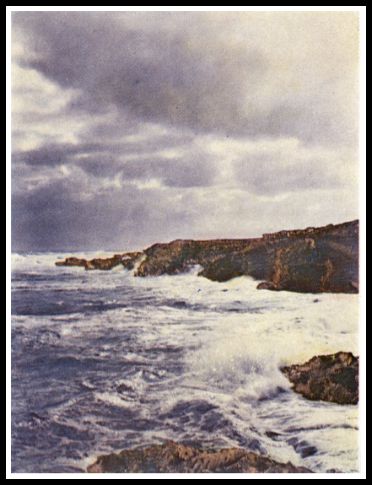
“Thunder Point”, photograph coloured with oils, Eva Gaspar. Reproduced from the catalogue “Exhibiton by Eva Gaspar: Drawings, Photography, Warrnambool Art Gallery, April 1977,” with permission from the Warrnambool Art Gallery and National Library, Canberra.

In contemporary terms, apart from her devout Catholicism and serious perm, she is perhaps best described as the equivalent of today’s Helen Bunyon, from The Artery/F Project: a long-term, tireless and generous volunteer to the arts, who was also an artist herself in music, drawing and photography.

“Eva loved photography – she was part of the very big and very passionate photography scene in Warrnambool in the 1950s and 60s,” recalls photographer John (“Jack”) Wilkins.

That scene, as Jack explains, included his own father, Alex Wilkins and Ralph Illidge who, between them, not only photographed just about every wedding and child born in Warrnambool during that time, but also built an impressive social history archive through photography and film.

eva portrait
A portrait of Eva Gaspar – a copy of which hangs in the Lighthouse Theatre and Mozart Hall.

Eva, Alex and Ralph were all founding members of the City of Warrnambool Camera Club, with Eva holding the presidency from 1954 to 1977, during which time the club hosted the most extraordinary competition of international photography.

“That was in 1964 – it is hard to imagine it now, but they had this whole thing going on in little old Warrnambool and it attracted entries from around the world,” says Jack, in his usual gregarious style.

(Remarkably, some footage from the event is part of the Alex Wilkins’ archive which Jack is now slowly converting to digital and uploading to the internet – he has kindly agreed to us including it here. See below.)

Eva, who later became part of Collett, Bain & Gaspar printers, at one stage worked upstairs in Alex Wilkin’s photography studio in Liebig St (now the office of local MP Denis Napthine), where she would hand-colour the images.

Like any artist, however, she no doubt aspired to holding her own exhibition and through her close connection to the then director of the Warrnambool Art Gallery, John (‘Jack’) Welsh, she finally did so in 1977 – just a year before her death at the age of 65.

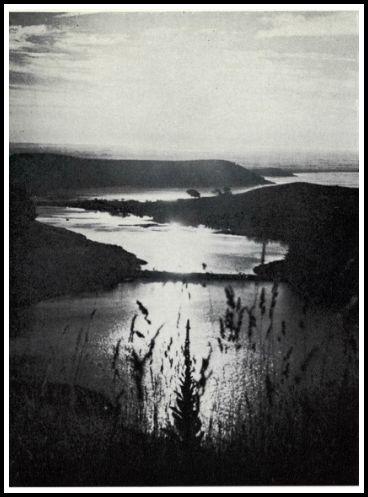
The exhibition catalogue (printed by Collett, Bain & Gaspar) lists 39 photographs “coloured with oils”, mostly of local scenes, together with 13 monochromes, again of local scenes, and 10 drawings inspired by religious icons and even Shakespeare.
tower hill
“Tower Hill”, monochrome, Eva Gaspar. Reproduced from the catalogue “Exhibiton by Eva Gaspar: Drawings, Photography, Warrnambool Art Gallery, April 1977,” with permission from the Warrnambool Art Gallery and National Library, Canberra.

Eva was a deeply religious woman from a religious family, with a nun and two priests among her siblings, and she was the organist at the St Joseph’s Catholic Church in Warrnambool for almost 30 years.

It is through her music that Eva Gaspar is most recognised.

According to the Warrnambool Historical Society, she formed her own choir and junior orchestra in 1948 to commemorate the birth of Mozart, and this group not only staged elaborate annual performances of Mozart operas, but went on to become the Mozart Choral Society that still operates from Warrnambool’s cute Mozart Hall today (where you will find another portrait of Eva).

Somewhere in between all of this activity, Eva still found time to teach music to young people for free.

For more than 40 years she taught music, singing, wind and string instruments to a legion of young musicians for whom a keyboard had nothing to do with a computer.

What a generous, creative soul was Eva Gaspar.

eva gaspar_photo
A closer look at the hand-tinted photograph, “Wollaston Bridge” taken by Eva Gaspar in 1976 and purchased by the Warrnambool Art Gallery in 1977.

[box]Bluestone would like to thank Ray Welsford, Jack Wilkins, the Warrnambool Art Gallery and the National Library for their assistance with this story.[/box]

newsletter Why Not StonesYou might also enjoy…


A life behind the lens: Jack Wilkins

Revealing the eye of the tiger: Peter Clayfield

Who is the ‘Granny’ behind Granny’s Grave?

Capturing W’bool’s diverse heart: James Mepham


W’bool losing its character, brick by brick

259 Lava St
The 1940s maisonettes at 259 Lava St, Warrnambool, were demolished last week, despite being the last example of such maisonettes in the city. Image: Supplied.

Analysis – Carol Altmann

Another irreplaceable piece of Warrnambool’s urban landscape has been reduced to rubble without, it seems, a word of warning.

The well-known, pre-war apartment block at 259 Lava St (next to Aldi supermarket) was bulldozed last Tuesday (14/7), to make way for something which has not yet even been decided but which the owners, the Salvation Army, believes will better suit it needs.

Such was the swiftness of this particular demolition that nothing was salvaged, or offered free to others, so passersby watched in horror as window frames, glass panels, doors and fittings were broken up by a bulldozer and stuffed into waiting trucks.

It is enough to make you weep, and that’s exactly how a Bluestone subscriber felt when she sent us a series of photos she had taken of the travesty.

We posted them on our Facebook page where, within a few hours, they were seen by more than 4000 people and sparked a robust discussion about how we should treat our old buildings, but the debate, of course, was all too late: this building is already gone.

And this was a special building.

We know this because the Warrnambool City Council’s own heritage reports tell us so.

259 Lava in tact
How the twin maisonettes at 259 Lava looked when in tact. They were part of a between-wars architectural movement called Inter-war Moderne. Image: Google Maps.

According to these reports, the apartments at 259 Lava St were one of only two examples of twin maisonettes in Warrnambool built in the “Interwar Moderne” design. This design was originally developed by one of Melbourne’s most notable architects, Robert Demaine, and, in this case, adapted by Marsh Michaelson.

The only other example of such twin moderne buildings in Warrnambool was the side-by-side buildings of “Sandilands” at 1A Liebig St (the former Madden’s building) and 1 Liebig St, known as Colern.

Sandilands, despite being recommended for heritage protection, was not protected but instead bulldozed earlier this year to make way for a nine-storey apartment block.

And Colern, despite being originally recommended for heritage protection, recently had that recommendation dropped. Why? Because without Sandilands, it has less architectural significance.

This logic means Colern could be bulldozed too.

Can you see what is happening here?

One domino falls and they all fall: from having three fine examples of moderne design, we could easily have none and those people, like Bluestone, who treasure the character of Warrnambool’s urban landscape, are at a loss as to what to do about it.

Because as it stands, the “community consultation”, if you can call it that, is simply not working.

sandilands down
One half of another example of such architecture, Sandilands, (the former Madden’s building) was demolished earlier this year. Image: Bluestone Magazine.

Nobody is arguing that every old building in Warrnambool needs to be saved, but at least some of the shock at seeing great chunks of our streetscape disappear might be lessened if we all had the chance to have a say.

Part of that process, of course, is also hearing in plain English why a building should go: is it beyond repair? Has it been condemned? Full of asbestos? Are there many other examples of that style around? Will something extraordinary or beautiful take its place?

At the moment we are left in the dark and, once a building is gone, it is left to rumour and speculation as to why.

The council can rightly argue that more information is out there, but it is up to you to find it, buried somewhere in council agendas, reports, minutes, special briefings and papers.

We here at Bluestone keep a relatively close eye on council happenings, and we did not see or hear a word about 259 Lava St being earmarked for demolition.

Cr Peter Hulin, who is currently overseas, made a Facebook comment that he, too, knew nothing – and he is on council!

If he doesn’t know and we don’t know, what hope does the everyday Warrnambool resident have?

Surely we can do better than this and surely we deserve better than this.

Even a simple listing on the council’s website – “Demolition Applications” – would help.

(As it happens, Heritage Victoria held a forum in Warrnambool last Friday (17/7) to see how it could improve the 20-year-old Heritage Act.)

222 shop finished
The once-derelict, and heritage listed, building at 222 Timor St has since been transformed into retail and upstairs apartments. Image: Bluestone Magazine.

Built heritage is critical to a city’s character – Port Fairy knows this well – and while Warrnambool is tearing its down, other cities are finding new ways to revitalise old factories, warehouses, shops and houses: especially those in a CBD, where they become highly sought after, and very cool, housing.

Warrnambool lawyer Luke Taylor is doing just this above 222 Timor St (Biba Hairdressing), which was a virtually derelict dump when be bought it, but the 1850s building will soon house two, gorgeous apartments and its renewal is helping to transform that section of Timor St.

My thinking is that we don’t ever really “own” a building – we are merely custodians for a time – and if we are lucky enough to own a special piece of architecture, then it belongs both to us and the community.

Historian Jennifer Bantow also believed this. She was part of a passionate group of people who saved Murweh, the Fitzgerald’s historic home at the north end of Liebig, from being bulldozed in the 80s.

When I last spoke to Jennifer, who now lives in Geelong, she asked me: “So, is Warrnambool still pulling down its old buildings, or has it finally ‘got’ it?”

Judging by the events of last week, the answer is clear.


WCC continues to close off public scrutiny

meeting
The Warrnambool City Council has decided to become more transparent by moving more of its business behind closed doors. Image: thenerve.org.

Analysis – Carol Altmann

It would sound like a line from Monty Python if it weren’t so serious, but the Warrnambool City Council is increasing its transparency by moving more of its business behind closed doors.

That’s right: as part of its decision to finally podcast its monthly meetings so people can listen online, a majority of councillors agreed (4-2) to no longer allow councillors to ask questions in “general business”, but to have such questions restricted to council briefings, which are closed.

On top of this, the podcasts will be edited, as necessary, by the Chief Executive Officer before they are released.

This is not about transparency, but about control.

It is part of an ever-increasing damage control mentality that is engulfing the council because some councillors refuse to stick to the script and raise issues that are uncomfortable or potentially embarrassing.

These are issues, I would strongly argue, that the community has every right to know about.

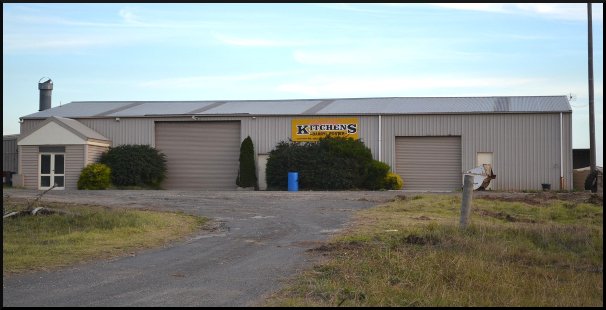
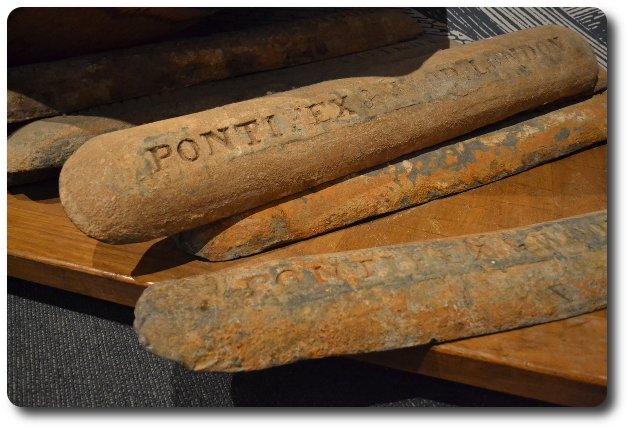
Take, for example, the recent decision to spend up to $50,000 on a shed that nobody else wanted and which will cost up to another $90,000 to move (it is still sitting out on Wangoom Rd, by the way). This issue was raised by Cr Brian Kelson in general business, as were questions about the saga of the missing Loch Ard ingots (and other historic items) from Flagstaff Hill.

Does the public have a right to hear about these things as part of an open council meeting? Of course it does.

porter shed
The council’s purchase of a unwanted shed for up to $50,000 was among the issues that have been revealed through general question time. Image: Bluestone Magazine.

The truth, however, is that it is becoming increasingly harder for anyone to ask questions of the council, or to express a public opinion on its performance.

This has even extended to the council monitoring comments by the public that appear on social media.

Bluestone is among those who have been sent letters by the council in response to comments made on Facebook – in our case it was a broad, hot-headed swipe by a reader claiming the council was “corrupt” – asking for proof of the statements made so it could investigate them further.

While such hyper-vigilance against alleged corruption is admirable, the message from the council is clear: we’re keeping an eye on you.

Working alongside this monitoring is a well-oiled public relations machine inside council, where information is issued via a carefully prepared media release and then dutifully reproduced almost verbatim by the mainstream media.

This way, the council hopes you, the ratepayer, only get to hear all of the “good” news, because nobody has the time, or opportunity, to find out more.

Like Oliver Twist, Bluestone always asks for more, but, like Oliver Twist, we are rarely obliged.

Let me give you just one example.

Whats-in-the-box
Image: www.lemauricien.com

Earlier this year, Cr Jacinta Ermacora made front page news with revelations that $250,000 had been spent on sorting out various legal disputes and in-fighting between councillors over the past two years, including $150,000 to employ a governance officer to handle these issues.

Such an extraordinary revelation deserved greater scrutiny and so Bluestone asked for a breakdown of this $250,000: where had the money gone and on what? And what was the role of this governance officer? Was she hired to deal only with litigious matters between councillors or was her role much broader?

Despite several emails to Cr Ermacora, the council’s director of corporate services Kevin Leddin and the council’s media manager, Nick Higgins, we are still waiting.

In the meantime, there has been not one shred of extra information given to the public about where a quarter of a million dollars of their money has gone.

The next step, if we were to pursue it, is to lodge a Freedom of Information application, which costs money and can take months.

Having said that, we have recently lodged FOIs for other matters, including the investigation into the “Wilma Wright” letter writing saga, and the investigation into the missing artefacts from Flagstaff Hill, because it is one thing to report the outcome of those investigations, but quite another to learn how they came to these conclusions.

A close-up of the Loch Ard ingots, each of which bear the maker's mark.
The full extent of items missing, unaccounted for, or lost at Flagstaff Hill Maritime Village was only exposed after questions asked in an open council forum.

This is the tightly managed WCC world which already operates and the removal of general question time it is only going to make it worse.

There are also moves afoot to make it harder for the public to ask a question at council meetings, and journalists will need permission to record an open meeting, which in this age of digital media is so ridiculous it is beyond comprehension.

Combine this with a new policy that says councillor emails can be monitored and reported back to the CEO and you are inching toward a system based on paranoia rather than transparency.

This is a concern for the media, of course, but it should be of even greater concern for the people of Warrnambool.

As I have written about before, the ability to ask questions of our government bodies, be they state, federal or local, is critical to a thriving democracy and each time information moves behind closed doors, we become further disempowered.

foi
www.lemauricien.com

The council is justifying all of this because of laws around defamation, copyright, privacy and conflict of interest, all of which already influence how the council operates and should not change one iota because of podcasts.

But if we needed any more proof that such undemocratic changes are unnecessary, we only have to look at other councils who podcast or live stream. We picked one – Hobson’s Bay City Council, around Altona.

It has been podcasting since at least early 2014 and a quick look at a council agenda and minutes reveals there are “Questions from Councillors”, “Public Question Time” and, lastly, “Urgent and Other Business”.

That looks like a council leaning forward, not turning inward.

The fact that a majority of our councillors, unlike Hobson’s Bay, support less transparency, rather than more, is completely at odds with why we elect councillors in the first place.


Tehan remains opposed to marriage equality

DanTehan
Member for Wannon Dan Tehan (Liberal) remains personally opposed to gay marriage but supports a conscience vote on the issue. Image: Liberal Party, Australia.

By Carol Altmann

[dropcap style=”font-size: 60px; color: #A02F2F;”] T[/dropcap]he federal MP for Wannon, Dan Tehan, remains personally opposed to same sex marriage, despite growing support within his electorate for the move.

Two online polls in the past two years by the local newspaper, The Warrnambool Standard, reveal support for marriage equality in the south-west has grown from 57% in 2013 to 72% in 2015, reflecting a similar trend nationally, with a 2014 poll by Crosby-Textor showing 72% support.

And as revealed by Bluestone, the current incarnation of the Warrnambool City Council also contains a majority who support marriage equality, although it has not made a formal declaration, unlike more than a dozen municipalities around Australia who have voted to support the move.

Despite this shift, Mr Tehan has not moved from his position of being personally opposed to same sex marriage, while at the same time supporting a conscience vote on the issue which would allow MPs to vote based on their individual views, not party policy.

Mr Tehan emailed us this response in answer to our question as to whether growing support for marriage equality would change his views:

“The Government’s long standing position is that it supports the current definition of marriage contained in the Marriage Act 1961 (Cth), which states that marriage is a union between a man and a woman. 

However, I acknowledge that there is a diversity of views in the local community about this.

If the issue is to be addressed in this term of the Commonwealth Parliament, the question of a conscience vote will be considered by Government Members and Senators in the Coalition party room.

While I support the traditional definition of marriage, I also support this issue being dealt with as a matter of conscience.”

A cross party bill on same-sex marriage will be introduced when Federal Parliament resumes on August 11, which those in support of the change hope will lead to a vote on the issue.

The Liberal Party is expected to decide a week later, on August 18, whether it will allow a conscience vote so its members can vote against the party policy if they so choose.

Lobby group Australian Marriage Equality says its figures show only four more lower house MPs need to declare their support for marriage equality for there to be a majority, with the Senate showing a one-vote majority.

[button link=”http://the-terrier.com.au/subscribe-2/” type=”icon” icon=”heart” newwindow=”yes”]Bluestone needs at least 500 subscribers in 2015. If you wish to support independent media, please click here to become one.[/button]

newsletter Eat And Drink StonesYou might also enjoy…


Where does WCC stand on same-sex marriage?

Bringing Bobby J into the light

Facing the truth of violence against women


Win a night and dinner at The Merrijig Inn

merrijig night
The historic Merrijig Inn in Port Fairy. Image: Merrijig Inn.

CLOSED – WINNER ANNOUNCED IN JULY 19 EDITION

[dropcap style=”font-size: 60px; color: #A02F2F;”] W[/dropcap]e like to reward our loyal subscribers for the enormous part they play in making sure Bluestone Magazine keeps going and growing.

This time, we are offering our subscribers the chance to win a night in a king suite at the historic and gorgeous Merrijig Inn, Port Fairy, together with an $80 voucher toward dinner in the sublime Merrijig Kitchen.

The first 50 subscribers to email us at editor@bluestonemagazine.com.au with the answer to this question will go in the draw: “What are first names of the two women who run the Merrijig?”

To help you out, here is a link to our earlier story on the owners.

Thankyou to the Merrijig, who are supporters of Bluestone Magazine, for helping us to offer this fantastic prize.

Are you not a subscriber yet? What are you waiting for? Join us here for $85 a full year.