WCC Mackay trip: Keeping it in the family
Mackay_region_header

Analysis – Carol Altmann

[dropcap style=”font-size: 60px; color: #A02F2F;”] T[/dropcap]he Warrnambool City Council recently went on a short, “fact finding” visit to north Queensland, but the odd thing is that the partners of two councillors were also part of the delegation.

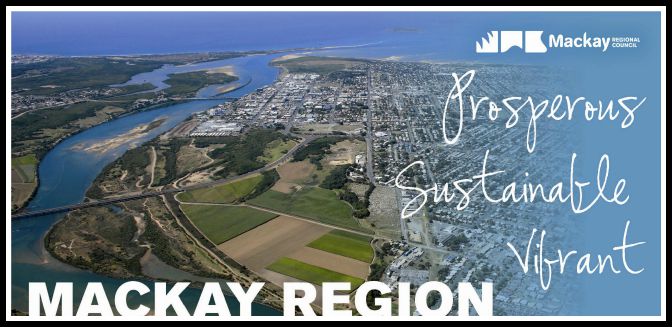
As was reported in the local paper, Councillors Rob Askew, Jacinta Ermacora and Kylie Gaston took a flying visit to Mackay on August 17 and 18 to see progress on an $18 million upgrade of its central shopping strip.

What wasn’t mentioned is that CEO Bruce Anson and Crs Peter Sycopoulis and Peter Hulin were also part of the “fact finding mission”, as were two, less expected attendees: Francis Broekman, who is Cr Ermacora’s husband, and Dulcie Askew, wife of Cr Askew.

From what Bluestone understands, Mr Broekman and Mrs Askew were not just merely helping to carry the luggage, but were active participants in the discussions and behind-the-scenes-briefings with the Mackay Regional Council.

This begs the question, of course, as to who paid the expenses for Mr Broekman and Mrs Askew, including any portion of airfares, accommodation and meals, and what was their official role in the delegation, if any?

We put these questions to the council yesterday (25/8), alongside another question: were the partners of all councillors invited to come along on the “fact finding mission” – even at their own expense – or only some? (We are yet to receive a response.)

Francis Broekman
Francis Broekman, partner of W’bool City Councillor Jacinta Ermacora. Image: Twitter.

[dropcap style=”font-size: 60px; color: #A02F2F;”] P[/dropcap]erhaps Mr Broekman and Mrs Askew were holidaying with their spouses in Queensland at the time of the council’s visit, but that still doesn’t explain why they were included in what was essentially council business.

The other nagging issue is just how useful was an eight-person delegation to Mackay toward progressing Warrnambool’s long-awaited revitalisation of Liebig St?

The report in the local paper confirmed that it was not the first time Warrnambool City Council representatives had visited Mackay to see what was happening in this region of 120,000 people that is halfway between Townsville and Rockhampton.

Bluestone has been told some council staff have travelled to the city at least twice in the past three years before this most recent “fact finding mission”.

Why Mackay? Why not save a 5000km round trip and see what is happening in other cities around Victoria like Bendigo, Castlemaine or Geelong?

By the time you add up airfares, food and accommodation for at least six people, travelling to Mackay is surely not the most efficient option.

Meanwhile, back in Liebig St, the silence is deafening – no jackhammers, no shovels, no clusters of busy people in hard hats and safety vests – while we wait to see if the multi-million dollar upgrade will be funded by the State Government.

And while we wait to hear about funding, a few shops are playing musical chairs by relocating to new premises in the same strip – creating an illusion of growth – while more businesses disappear altogether and a record number of shops remain vacant.

At the risk of sounding gloomy, it is only going to get worse before it gets better.

If the revitalisation goes ahead, as it must, businesses already feeling the pinch will have to hold on tight as customers deal with messy roadworks and construction sites.

Some retailers who have gone through a similar street upgrade have suffered a 40 per cent drop in trade. Where were these businesses? Mackay.

Bluestone didn’t have to travel 5000km return to find this out: the details are all there online.

subscribe

You can find more Analysis here…

How Bruce Anson appears to have a job for life

W’bool is losing its character, brick by brick

WCC continues to close off public scrutiny

Where does the WCC stand on same-sex marriage?


The write stuff: author Steven Conte

steven conte - hat
Author Steven Conte, who won the inaugural Prime Minister’s Literary Award in 2008 with his debut novel, is now living – and writing – in Port Fairy.

Words and photos by Carol Altmann

It says much about the fickle world of literary success that Steven Conte, the inaugural winner of the Prime Minister’s Literary Award in 2008, is driving taxis two nights a week in Port Fairy.

But Steven, a clear-headed, well-travelled, 41-year-old, has seen enough of life to realise that personal self-worth and external notions of “success” should never share the same room.

“It is no doubt professional humiliation, but I long ago succeeded in separating off my personal sense of self with professional success, which is just as well,” he says over coffee at Charlie’s on East.

Indeed, Steven sees cab driving – one of many such jobs he has taken over the years to support his writing life (others include life modelling and bar work) – as not only a great way to meet the Port Fairy locals, but to earn at least some income while preserving the freedom he needs to write.

“At the moment I am driving two nights a week, which is far better than spending 37 hours a day in an office and having the money, but no time to write,” he says.

“I think all writers know that, to be a writer, you have to commit financial self-mutilation somewhere along the way.”

zookeeper war

It is seven years since Steven won the lucrative, $100,000 Prime Minister’s Literary Award, with his first novel, The Zookeeper’s War, a story based around an Australian woman who is married to a German zookeeper, set during the fall of Berlin in the Second World War.

The novel was described, variously, as “an extraordinary debut” and “a powerful exploration” of the issues of trust, fidelity and the brutalities of war as it is experienced by all sides.

Since those heady days of high-profile success, Steven has relocated to Port Fairy with his wife, Jackie Bowe, who comes from south-west Victoria, and their infant son. He is now working on his third novel since the award.

Yes, a third novel, and what happened to the second helps to explain how things haven’t quite worked out as might have been expected.

spencer tunick
Baring it all: the Spencer Tunick ‘Naked City’ photo shoot in Melbourne provided inspiration for Steven’s follow-up novel, but it was never published. Image: Travelcity.

As Steven explains it, his second novel was a completely different scenario to that of his first, which always makes publishers nervous, especially when your first novel was such a success (The Zookeeper’s War was published internationally).

Naked at the Bridge is set in contemporary Melbourne and focuses on the fictional lives of two women – a couple – who take part in Spencer Tunick’s real-life photo shoot on the Princess Bridge in 2001. Dozens of people gathered on the bridge that day, including Steven Conte, to be photographed naked for Tunick’s signature “Naked City” shoot.

“It is a contemporary story…as opposed to the historical fiction of The Zookeeper’s War, but the premise just wasn’t grabbing people and I couldn’t get it published,” Steven explains.

Five or six years work was destined, so far at least, to remain in a drawer.

conte-green
Steven Conte at East Beach: “I long ago succeeded in separating off my personal sense of self with professional success, which is just as well.”

While more fragile beings might have curled up into a ball and decided that a writing life was too hard on the soul, Steven pointed himself in a new direction that builds on where he has already gone before.

“I am writing another World War II book…historical fiction, and I am really excited by it and feeling confident about where it is going,” he says.

As any writer knows, to talk too much about a book in progress is to put a hex on it, so Steven will reveal only that it again has a strong European storyline, with an intriguing link to Russia’s Tolstoy.

At this stage the book is still a “glorified blueprint”, but Steven is back into the discipline of writing three to four hours every weekday on a laptop set up in his garage/office.

He doesn’t have an agent and there is no definite publisher for his work in progress, but Steven sees such realities as part of the bigger existential crisis facing the entire publishing industry.

“The ground is shifting beneath us and what might be how things operate one year, is not how they are operating the next.

“This is why you cannot see it as anything to do with your own self worth. You might ask yourself, ‘at what point do I give this up?’, and I am not at that point.”

[box]You can visit Steven Conte’s website here.[/box]


How Bruce Anson appears to have a job for life

bruce anson abc
Warrnambool City Council chief executive officer Bruce Anson is poised to be appointed for another three years, without the position being advertised. Image: ABC Radio.

Analysis – Carol Altmann

As anyone who has ever been hired on a contract knows, there is no guarantee you won’t have to compete for your job when that contract ends: except if you happen to be the Chief Executive Officer of the Warrnambool City Council.

As was announced by way of a public notice yesterday (15/8/15) CEO Bruce Anson is set to be reappointed for a third consecutive term on a salary package close to $300,000, although this time it will be for three years from January 2016 rather than the usual four, taking him up to 2019.

All up, Mr Anson will have been CEO for 11 years and employed by the council in various capacities for more than 20 years.

Since Mr Anson took up the CEO’s position in 2008, it has never have been advertised.

While some might argue this gives a council stability, others, like Bluestone, would argue it also stifles any chance of bringing fresh thinking into the council’s top job and ensuring that the city still has the best person in that powerful role.

Mr Anson might well be that person, but surely Warrnambool deserves to be able to throw open the doors and see what other talent might be out there, while also, of course, encouraging Mr Anson to apply.

This happens all the time at the most senior levels of the public service, and at the top level of the higher education sector, so why isn’t it happening here?

The answer is astonishing.

By law, a council can choose to either reappoint its CEO, or re-advertise the position: these two options are always on the table every time a CEO’s contract comes up for renewal.

But Bluestone has learned that the highly secretive review committee that oversees the assessment of the CEO’s performance and recommends what should happen at the end of each contract, has categorically ruled out advertising as an option.

In fact, Bluestone has learned, the performance development review committee says to expect Mr Anson to apply for his own job is an implausible scenario.

The committee also believes that advertising the role would be “a very remote and unlikely possibility” and the only way it could happen is if the council no longer wanted Mr Anson to be in the role.

In other words, under this system, Mr Anson could have a job for life, as long as he wants it.

That is some rare air in today’s world.

The majority of the review committee – made up of Mayor Michael Neoh, Cr Jacinta Ermacora and Cr Kylie Gaston, with Rod Coutts as the independent chair – justifies this approach because, despite what the law says, councils apparently do this all the time: only advertise the CEO’s role if the CEO is leaving.

Maybe they do, but that doesn’t make it right.

Ballarat City Council has this month been grappling with the very same issue, with up to four of the nine councillors in favour of making sure CEO Anthony Schink’s position was advertised.

It wasn’t, and a majority of councillors (although we don’t know how much of a majority) recently voted to sign on Mr Schink on for another three years.

With the way the numbers currently fall at the Warrnambool City Council, the recommendation to reappoint Mr Anson for another three years on around $300,000 a year will also be passed by a narrow majority of 4/3.

It’s great work, if you can get it.


Fishing for great stories from Fletcher Jones

anne skepper_2
Anne Skepper Van Bakel back at the scene of the “crime”, where as a little girl, she was caught red-handed trying to fish coins out of the wishing well at the Fletcher Jones Gardens, Warrnambool. These stories are now being collected as part of a social history project.

By Carol Altmann

[dropcap style=”font-size: 60px; color: #A02F2F;”] T[/dropcap]hey are words that will send a chill into any child’s heart who is up to a bit of mischief: “Oi, what do you THINK you are DOING?”

Anne Skepper van Bakel still remembers the sound of the booming voice, and what she was “doing” was leaning into the wishing well in Warrnambool’s Fletcher Jones gardens, helping her older brother, Bob Markwell, as he tried to pull the coins through the protective grid using a sharp stick topped with a lump of chewing gum.

“As if it was ever going to work,” Anne says, laughing at the 44-year-old memory of getting caught red-handed by Fletcher Jones worker Allan Jennings.

The pair, however, came up with the perfect excuse as to why they were both “fishing” in the wishing well, which is still a feature in the garden’s today and is still used to collect money for charity.

“We told him we were trying to get our chewing gum back!” Anne laughs.

anne skepper
The daily dispatches at Fletcher Jones, written by Eric Tonkin, captured all manner of happenings, including the wishing well “incident” which caused great laughter.

[dropcap style=”font-size: 60px; color: #A02F2F;”] N[/dropcap]either Anne or Bob managed to retrieve either a 20 cent or 10 cent piece which, in 1971, was enough to buy a sizeable bag of lollies and maybe even a pie from the Flaxman St milk bar about 100m down the road.

But their ingenious attempt was enough to warrant the attention of the late Eric Tonkin who, as part of his duties at Fletcher Jones, compiled the daily staff newsletter.

In his recording of the event, Eric describes the culprits as two little girls (young Bob had longish hair) and praises them for their quick comeback line.

“What would a poor silly male say if caught in this impossible situation? He would be absolutely stumped!” he writes.

About 400 of these newsletters have been passed on by Eric’s family to the Fletcher Jones: Stories from our Community project that will kick off later this month in an effort to collect the best of the many thousands of community stories and memories around the Fletcher Jones factory, Pleasant Hill gardens and silver ball water tower.

bun bag
Generosity of spirit: Tim Carlton’s bun bag, kept from when Sir Fletcher had fruit buns flown in from Adelaide for morning tea. Image courtesy Julie Eagles/Tim Carlton.

[dropcap style=”font-size: 60px; color: #A02F2F;”] P[/dropcap]roject coordinator Julie Eagles says it is stories that bring history to life and make a community care about its built heritage.

“The strong community connection to the Fletcher Jones site is what has saved it, in the end, from demolition by neglect,” she says.

“There is something very special and very interesting about this site and it is really a part of people’s lives – not only from the past, but today – so it is not just about telling a story, but making those connections.”

Anne’s wishing well story is just the sort of gem that the storytelling project is hoping to uncover when it holds two sessions at Archie Graham Centre later this month and early September (see full details below).

Another of Julie’s favourite stories is that of Sir Fletcher organising to have freshly baked fruit buns flown from Balfours, in Adelaide, to the Warrnambool factory for a staff morning tea. Thanks to her work with former employee Tim Carlton, who is now 95, there is even a surviving bun bag to prove it.

The project has also uncovered the little known fact that Sir Fletcher converted a school bus that sat on a beachfront block at Port Fairy and was made available free to staff and their children for school holidays.

“We are now at the point where we are ready to start gathering these stories, to see what’s out there, and then we can look at how those stories will be presented,” Julie explains.

Ideas so far include an online archive, a book, and an exhibition, while plans are also afoot to install a 6m photographic panel on the side of the Fletcher Jones factory, showing some aspect of its past.

alex wilkins video
A short video by the late Alex Wilkins which captures factory life. Video courtesy of Warrnambool Historical Pictures: Alex Wilkins Collection.

[dropcap style=”font-size: 60px; color: #A02F2F;”] A[/dropcap]nne, who has just recently returned to live in Warrnambool, has a few more tales of her own, and says growing up on nearby Barkly St meant almost daily visits to the Fletcher Jones gardens, which “we thought of as our backyard”.

“There was one time when I thought it would be a good idea to take a goldfish home from the Fletcher’s goldfish pond – I really wanted a goldfish,” she says.

“So I wrapped it up in my jumper and ran all the way home with it, but when I got home, it was dead as a doornail. I was so disappointed!”

One of Anne’s best stories, however, is from the day the silver ball was hoisted into the sky in 1967 – an event that changed the landscape of Warrnambool.

“A worker told me that it was going to be filled with Coca Cola and I thought, ‘wow, I’ve got the scoop here!’ so I didn’t tell a soul.

“I then kept going back to see if I could catch any drips, but there was never any drips and there certainly wasn’t any Coca Cola.”

The stories project has been funded by a grant from the Gwen and Edna Jones Foundation and by the family of the late Sir Fletcher Jones.

former employees
The stories of the people – workers, families, visitors and all those who have had a connection to the Fletcher Jones site – are now being collected for a new project. Image: Save the Silver Ball and Fletcher Jones Gardens.

[box]What made Fletcher Jones special or interesting? Did you, or someone you know, work there? Bring along a photo or an object or just come and share stories over morning tea – the best stories will become part of a collection and yours could be one of them! Wed Aug 26 and Wed Sept 16 @ 10am, Archie Graham Centre, Timor St, Warrnambool. Bookings essential: (03) 55594892. To keep up to date with this project, join the Silver Ball and Fletcher Jones Gardens Facebook page here.[/box]

[button link=”http://the-terrier.com.au/subscribe-2/” type=”icon” icon=”heart” newwindow=”yes”]Bluestone is aiming for at least 500 subscribers in 2015. If you enjoyed this story, please click here to become one![/button]

newsletter Eat And Drink StonesYou can read more Fletcher Jones related stories here…
 

No cutting corners: Jack Hancock joins Fabrication II

Fletcher Jones cross will light up again

Motor Museum to revive Fletcher Jones site

All words, no funding, for the Fletcher Jones story


Remembering Eva: an arts matriarch

eva gaspar-bunyon
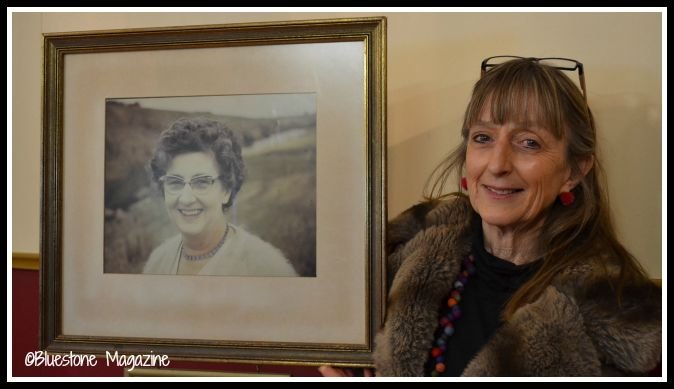
Helen Bunyon, from The F Project and The Artery, with a portrait of the late Eva Gaspar who, like Helen, devoted her life to helping the local arts scene while also being an artist herself.

By Carol Altmann

There is nothing like a tour of the local cemetery to crystallise the mind about how quickly we can forget trailblazers of their time, like Warrnambool musician, photographer and artist Eva Gaspar.

It was during one of family historian Ray Welsford’s gold-coin tours of the Warrnambool Cemetery that I heard Eva’s name raised as one that is slowly vanishing from the landscape since her death in 1978.

Yes, there is a road named in her honour, but perhaps because she was not a sporting hero, never married and never had any children, there are few public memorials to commemorate her enormous – and generous – contribution to developing Warrnambool’s cultural scene in the 50s, 60s and 70s.

eva gaspar_bowes
Warrnambool Art Gallery Acting Director Murray Bowes with a hand-tinted photograph, “Wollaston Bridge”, taken by Eva Gaspar in 1976 and purchased by the gallery in 1977.

It wasn’t always this way.

The original Performing Arts Centre in Warrnambool had the Eva Gaspar Theatre as its centrepiece when it opened in 1983, but the name was dropped when the complex was redeveloped as the Lighthouse Theatre in 2012.

Eva’s portrait is still in the building, but you have to walk to the southern wing to find it, alongside some magnificent tapestries and an assortment of other historic photos.

So who was Eva?

thunder point
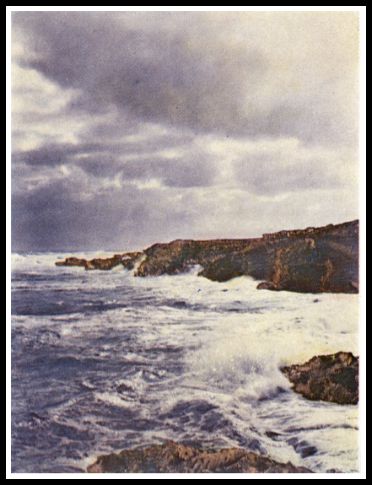
“Thunder Point”, photograph coloured with oils, Eva Gaspar. Reproduced from the catalogue “Exhibiton by Eva Gaspar: Drawings, Photography, Warrnambool Art Gallery, April 1977,” with permission from the Warrnambool Art Gallery and National Library, Canberra.

In contemporary terms, apart from her devout Catholicism and serious perm, she is perhaps best described as the equivalent of today’s Helen Bunyon, from The Artery/F Project: a long-term, tireless and generous volunteer to the arts, who was also an artist herself in music, drawing and photography.

“Eva loved photography – she was part of the very big and very passionate photography scene in Warrnambool in the 1950s and 60s,” recalls photographer John (“Jack”) Wilkins.

That scene, as Jack explains, included his own father, Alex Wilkins and Ralph Illidge who, between them, not only photographed just about every wedding and child born in Warrnambool during that time, but also built an impressive social history archive through photography and film.

eva portrait
A portrait of Eva Gaspar – a copy of which hangs in the Lighthouse Theatre and Mozart Hall.

Eva, Alex and Ralph were all founding members of the City of Warrnambool Camera Club, with Eva holding the presidency from 1954 to 1977, during which time the club hosted the most extraordinary competition of international photography.

“That was in 1964 – it is hard to imagine it now, but they had this whole thing going on in little old Warrnambool and it attracted entries from around the world,” says Jack, in his usual gregarious style.

(Remarkably, some footage from the event is part of the Alex Wilkins’ archive which Jack is now slowly converting to digital and uploading to the internet – he has kindly agreed to us including it here. See below.)

Eva, who later became part of Collett, Bain & Gaspar printers, at one stage worked upstairs in Alex Wilkin’s photography studio in Liebig St (now the office of local MP Denis Napthine), where she would hand-colour the images.

Like any artist, however, she no doubt aspired to holding her own exhibition and through her close connection to the then director of the Warrnambool Art Gallery, John (‘Jack’) Welsh, she finally did so in 1977 – just a year before her death at the age of 65.

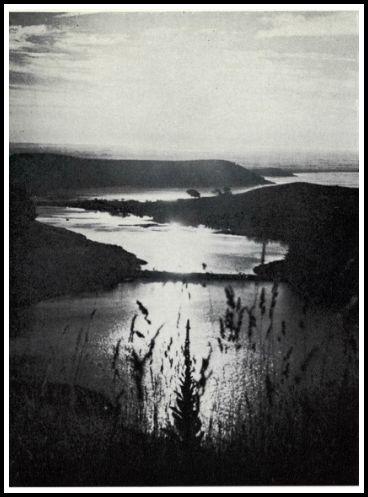
The exhibition catalogue (printed by Collett, Bain & Gaspar) lists 39 photographs “coloured with oils”, mostly of local scenes, together with 13 monochromes, again of local scenes, and 10 drawings inspired by religious icons and even Shakespeare.

tower hill
“Tower Hill”, monochrome, Eva Gaspar. Reproduced from the catalogue “Exhibiton by Eva Gaspar: Drawings, Photography, Warrnambool Art Gallery, April 1977,” with permission from the Warrnambool Art Gallery and National Library, Canberra.

Eva was a deeply religious woman from a religious family, with a nun and two priests among her siblings, and she was the organist at the St Joseph’s Catholic Church in Warrnambool for almost 30 years.

It is through her music that Eva Gaspar is most recognised.

According to the Warrnambool Historical Society, she formed her own choir and junior orchestra in 1948 to commemorate the birth of Mozart, and this group not only staged elaborate annual performances of Mozart operas, but went on to become the Mozart Choral Society that still operates from Warrnambool’s cute Mozart Hall today (where you will find another portrait of Eva).

Somewhere in between all of this activity, Eva still found time to teach music to young people for free.

For more than 40 years she taught music, singing, wind and string instruments to a legion of young musicians for whom a keyboard had nothing to do with a computer.

What a generous, creative soul was Eva Gaspar.

eva gaspar_photo
A closer look at the hand-tinted photograph, “Wollaston Bridge” taken by Eva Gaspar in 1976 and purchased by the Warrnambool Art Gallery in 1977.

[box]Bluestone would like to thank Ray Welsford, Jack Wilkins, the Warrnambool Art Gallery and the National Library for their assistance with this story.[/box]

newsletter Why Not StonesYou might also enjoy…


A life behind the lens: Jack Wilkins

Revealing the eye of the tiger: Peter Clayfield

Who is the ‘Granny’ behind Granny’s Grave?

Capturing W’bool’s diverse heart: James Mepham