The power of a single, anonymous note
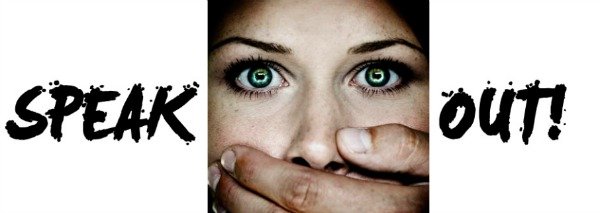
This piece was submitted by a reader. I will keep her name anonymous.

[dropcap style=”font-size: 35px; color: #8cc7d0;”] I [/dropcap]t was with a heavy heart that I read the angry backlash to a Facebook post by Bluestone Magazine* on topless dancers performing in Warrnambool during what was also 16 days of activism against gender violence.

Reading the stream of comments, it became very clear to me that we have such a long way to go in educating people about the link between the objectification of women, gender inequality, and domestic violence.

Increasingly, I have felt a deep sense of powerlessness about the social and political issues currently plaguing our world. While there seems to be collective outrage on social media, there also seems to be a corresponding amount of despair.

Donate

With the far right increasingly gaining momentum and power, and with basic human rights being used as a political pawn, I often feel the problems are just too enormous and insurmountable for any individual to effect any positive change. Perhaps we also feel this way about domestic violence: what can we do, as an individual, to make a difference?

When I reflect on what was personally a game changer for me in domestic violence, it was actually a small and individual act of kindness and bravery from a stranger. 

In my early 20s I was at a pub with my new boyfriend. He was drunk, abusive and out of control, flinging insults at anyone who crossed his path and throwing himself around like a human grenade.

Although the relationship was only new, a series of abusive relationships beforehand had me feel responsible for his behaviour. During the night, however, a woman came up to, looked me in the eye and asked, kindly but firmly, “what are you doing with him? He is a dickhead and you are beautiful.” I laughed in her face and turned away, but those words were like a tiny seed planted in my heart.

The night ended with me climbing through a laundry window to escape my wonderful new boyfriend. Earlier in the night, backing up to me in the street, he had tried to piggyback me, but instead I was thrown straight over his head and face planted the concrete.

In terror, I had made a run for it, with him trailing behind shouting my name. I remember frantically banging on the locked front door of a house party I had left, trying to get someone to hear me over the loud music.

Over the coming months something changed in me.

I slowly came to believe the stranger’s words. I was beautiful, and although I still wasn’t sure I deserved better, I was also resolved not to put up with any more crap. The decision was finally in my own hands, not in the hands of an abusive partner. Quite rapidly my life choices began to change. While it felt awkward and unfamiliar, I eventually let myself fall in love with a man who treated me with kindness, respect and adoration. We are still together to this day.

Recently I tried to plant a similar seed in another young woman’s heart.

I had just witnessed a raging fight between her and her partner in a caravan park. He had taken her mobile phone and refused to give it back. She had eventually barricaded herself in the camp kitchen when his anger reached a terrifying peak. After the police attended, a fragile silence enveloped the campground, but I knew this was far from the end of it for her.

Too scared to intervene, I left a note for her under the passenger side door handle of their car. I told her that she was young and beautiful and that her partner was abusive. I told her that I struggled to leave a similar relationship, but did not regret it for one second. I told her that she may think she can be the one to change him, but that he will never change enough for her to live a happy and healthy life. I told her to get out while she could and not look back.

I often wonder what happened to that young woman. Where was she now? Was she able to escape the toxic cycle of abusive relationships and diminishing self-esteem?

A common strategy in psychology when someone is feeling overwhelmed with an issue is to break it up into smaller, more achievable goals.  Indeed, the lesson I learnt from my kind and brave stranger is that seemingly small acts can have a huge impact.

While we have a long way to go in ending domestic violence, we all have the power to make a difference.

Tell the females in your life that they are beautiful, strong and worth it. Not just young girls, but women of all ages: we all need to hear it.

Plant the seed of hope in someone who needs to hear it. Do small things and do them often. Because you just never know when your ‘small’ may be someone else’s ‘big’.

[box]*The Facebook post was in November last year when, on the same day as the 2016 White Ribbon campaign launch, a local bar hosted a fundraiser around topless women, lap dancing and private dances. The response to the post was vitriolic, with accusations of women shaming, demeaning professional dancers and undermining an attempt to raise funds for a good cause. As it happens, the manager of the bar and I had a correspondence and agreed that the timing was poor, even if we had differing views on the event itself. That is open to a much bigger discussion. – Carol[/box]

Follow up piece: How we get from topless bars to abuse


The boy who talked to teapots: Bill Abrahams

Bill Abrahams has taken a boyhood love of beautiful objects and turned it into a passion for op shops and collecting.

By Carol Altmann

[dropcap style=”font-size: 35px; color: #8cc7d0;”] A [/dropcap]sk Bill Abrahams how his obsession with op-shops, thrift shops and secondhand stuff began and he pulls out a memory from deep in his early childhood.

“It began with these little teapots. I was about three or four – very young – and my mother (Warrnambool artist Marie Cook) would buy them for me in the op shop. The op shop ladies started to keep them aside for me, actually, because they weren’t very exotic teapots, just those little metal ones,” Bill recalls with a laugh.

“They became my friends, these teapots. I would hang out with them, talk to them, and my grandfather built me a little red wagon so I could take them for walks.”

Donate

The slightly eccentric little boy grew into a slightly eccentric young man who, during his senior high school years in Warrnambool, distinguished himself by wearing elegant costume jewellery – marquisette brooches, diamante-studded pins, that sort of thing – on his school jumper.

“I don’t think the teachers knew what to do with me, to be honest,” he laughs.

“It was clearly not part of the school uniform, but I think it was easier just to ignore it, or maybe they thought it was cool, I don’t know.”

Bill with one of his collection of vintage after-five gowns from the 1930s, 40s and 50s that were once worn by Melbourne society women.

Bill’s avant-garde dress sense as a schoolboy in the 90s was more than just a push-back against authority, however, it was also a statement about his sexuality.

“I came out in high school and I was getting picked on anyway, so I thought, oh well, I might as well just wear what I like,” he says.

It was the beginning of a melding between Bill’s emerging identity as a gay man and his love of beautiful, secondhand objects, be it clothing, linen, jewellery, ceramics, furniture, glassware or kitsch memorabilia.

“After I moved to Melbourne (to study art history) I worked in a gay-owned op-shop in Fitzroy that was simply amazing. On a Monday, all of the drag queens would bring in these amazing outfits that they had last worn at the weekend, looking for something new,” he says, smiling.

“But it was also an education for me. I would listen to the older guys – and they were all guys that worked there for some reason – talk about what it was like for them as young gay men, when AIDS was first around and about the whole gay scene around the commission flats.

“It was incredible to listen to those stories.”

Unfortunately the op-shop went broke after, as Bill tells it, spending “too much on polished concrete floors and chandeliers”.

A wedding cup from the 1800s where the man pledged sobriety and the woman, domesticity, apparently guaranteeing a union as “firm as an oak”.

Bill is now 33, back in Warrnambool and studying for a teaching degree, but he remains one of the best known faces around the top four op-shops: the Salvos thrift shop, St Vinnies, Lifeline and the RSPCA shop where he also volunteers.

“It is an obsession, no doubt about it. I get really upset if for some reason I can’t go, because you never know what might be coming out that day,” he says.

Bill is compelled to visit at least one op shop every day, even when on teaching rounds, during which he manages a brisk walk (he doesn’t drive) after school to the CBD, where he can often squeeze in an hour of browsing before they close for the day.

The workers all greet him by name and he, in turn, knows the routines of the op shops right down to when they put their fresh supplies of linen out on sale (sorry, I have to keep that a secret…).

Bill strikes a pose with one of the many beautiful glass pieces in his collection, this one being originally owned by his grandmother.

Bill credits his great aunt, Betty Beavis, and his grandmother for giving him a collector’s heart and a stylist’s eye: he knows the good stuff, like the cedar wood, Georgian-period chest of drawers that popped up at the Salvos for $100. It is still his greatest find, in terms of value.

Some treasures he collects to sell for fun through his etsy store , providing funds to spend back in the op-shops, while other collectables, clothing and jewellery are just too good not to keep.

“I can’t show you my bedroom, really I can’t. It is embarrassing,” Bill explains, before relenting and allowing me a quick peek.

Yep, it is “busy”, but not overwhelming, and there are objects of great beauty and whimsy: a wedding cup from the 1800s, a stunning glass jug, designer dresses from the 1940s…

“I see it as recycling,” Bill says.

“And anything we can do that helps reuse and recycle, well, that has to be a good thing.”

Bill chose this as one of his favourite pieces of kitsch: a souvenir from Surfer’s Paradise that is open to all sorts of interpretation.

[box]Bill recently sold a large range of his costume jewellery to Channel 7 for use in its period drama series, A Place to Call Home, starring Noni Hazelhurst. His op shop finds are now finding buyers from around the world. You can visit his etsy store, The AsFoundEmporium, here. [/box]


Historic trees could have been saved

Opinion/Analysis by Carol Altmann

[dropcap style=”font-size: 35px; color: #8cc7d0;”] D [/dropcap]o you remember the two giant Norfolk pines that were cut down at the Warrnambool Police Station late last year?

I do, because I couldn’t believe the Warrnambool City Council didn’t try harder to save them – but, as I have since learned, they actually ignored their own advice to let the chainsaws in.

Here is a photo of what we are talking about, taken after the limbs were cut off in preparation for their full removal last August:

The two mature Norfolk pines being prepared for removal in August 2016.

These weren’t just any old trees.

The pair had historical links to the beautiful Church of England property next door (built in 1855) and were considered so important by the council that they were specifically mentioned in the planning permit issued in 1996 for the new Warrnambool Police Station in Koroit St.

In particular, the trees were not to be “removed, destroyed or lopped” without written consent from the council.

The new station opened in 1999 but, it appears, had immediate problems with drainage and flooding which to me says more about a poor build in the first place rather than the position of the two trees.

In 2005, a member of Victoria Police – I don’t know who, because names have been redacted from the Freedom of Information documents I received from the council – sent the council an email, saying the pine trees were continuing to cause water damage to the new building and needed to go.

“All advice we have and our own observations tell us that out problems will continue whilst the trees remain in place. I seek approval to remove both of them forthwith,” he/she wrote.

Two weeks later in November 2005, a council officer wrote a detailed response on behalf of the council’s Built Environment Committee.

The most important paragraph of that letter is this:

“…the trees have a positive contribution to the streetscape, have demonstrated historical links with the church property next door, clearly the intention of the endorsed plans is to retain the trees and therefore the removal of the trees should only be considered as a last resort.” (my emphasis)

Crucially, the council also recommended the police obtain a Structural Engineer’s report on what could be done to either the building (eg. adding more gutters) or to the trees (eg. root barriers) to fix the problem.

The council even offered the police a free arborist service and access to its Heritage Advisor.

But neither happened. In fact, nothing happened.

Fast forward five years to 2010 and the police wrote to the council again and – again – asked how it could get rid of the trees.

This time, however, there was no detailed response, but a six-line letter from a different council officer to that who responded in 2005.

And this time, the historic trees were suddenly considered dispensable because they might – might – cause problems.

“Given the retention of the trees is likely to be problematic, Council does not object to their removal,” he/she wrote. (My emphasis).

It is hard to get a sense of the size of the remaining tree stumps, but you could stand on them and stretch out your arms and your fingertips. I hope that helps.

I am not sure when a written permit expires, but it took a further six years before it was used to cut down two Norfolk pines that were apparently causing so much trouble.

No wonder so many people were shocked – at no time has there been any public information or discussion about the trees, despite their significance.

Instead, a six-year-old permit, issued behind closed doors and by a different group of councillors (if they knew about it at all), was enough.

I have tried to talk to the police about why they removed the trees now, more than 10 years after they were considered a dire problem. They didn’t respond.

As such, I am unable to confirm one story doing the rounds that the space will be used for extra car parking.

Surely not.

Now some of you will be shrugging your shoulders and saying, oh, they were just trees, but to me this sequence of events reveals so much about the weakness of our planning laws, the way decisions are made in private and then how they are pitched to the public.

As custodians of our natural and built heritage, we can surely do better than this.

[box]You can see all of the Freedom of Information documents relating to this story here and here.[/box]

This is the first of three Terrier pieces that will be free to access. If you would like continued access, please become a paying supporter by clicking the box below.

Donate


Starting again…

[dropcap style=”font-size: 35px; color: #8cc7d0;”] M [/dropcap]ost of you will remember Bluestone Magazine, a small start-up that brought an online, fully independent magazine to south-west Victoria in 2013.

By the time it closed in late 2016, Bluestone Magazine was making a name for itself as a place where you could enjoy a quality read about people within your community and also find out what was really going on, as we were not afraid to dig deeper into local issues.

Sticking your neck out in a small community is not an easy thing to do, but I think it is something that journalists and writers have to do if they are true to their profession, so I am sticking my neck out again. (You can find out more about my background here.)

This website is an experiment to see if south-west Victoria still wants an independent voice.

I have been lucky to harness some great writers to help me out, including experienced former Fairfax and Crikey journalist Lee Nicholson who will specialise in writing about the local live music scene (picking up where she left off more than 20 years ago when she started a music column with the local newspaper).

Former Fairfax and Crikey.com journalist Lee Nicholson has recently returned to Warrnambool and will write about the local live music scene.

Local identity and passionate op-shopper Bill Abrahams will write an occasional, humorous column on the world of collecting, op-shops and the joys of finding that irresistible bargain.

I will also be bringing you stories about people, politics and guest writers who will air their spleen on all manner of topics. Yep, I like a bit of variety!

There will be no ‘editions’ as such, instead I will publish small batches of fresh stories as they are written.

If you would like to have the story links sent straight to your inbox, join the mailing list here.

I am not going to charge to read the stories, but if you want to make a donation you can do so here:

Make a donation

So here we go, starting again, stretching the arms, legs and heart.

I hope you enjoy it.


From bondage to a whole new discipline

Leah Potter first came into my life as a bondage and discipline queen: now she lives a much quieter life in Penshurst.

By Carol Altmann

[dropcap style=”font-size: 35px; color: #8cc7d0;”] W [/dropcap]

hen I last saw Leah Potter about 14 years ago, she was standing 6ft 5″ in heels, wearing black lace, and gripping a whip in readiness for a bondage and discipline night in the wilds of Tasmania.

You may want to read that first sentence again.

At that time – and it feels like a lifetime ago – Leah became an international media sensation overnight after placing a $25 classified ad in the Hobart Mercury saying something like:

Fetish weekend. Chalet. Discrete.

The chalet was part of Tarraleah, a former and largely abandoned Hydro town in the Tasmanian central highlands, a place known for its isolation and freezing winters, rather than raunchy romps in light underwear.

“I knew what was going on in Tasmania and the various things that people were into – they can pretend all they like, but I knew,” Leah recalls with a rolling laugh.

“Leah from Tarraleah” became an international sensation in 2003. (Newspaper article originally produced by The Australian).

Leah came up with the idea of the B&D weekend to boost the meagre income she and her partner Jason were making as lessees of the chalet which, in 2002, sometimes saw only two people a week stop for a beer. (The entire town of Tarraleah was up for sale last year for $11 million: my, how times change.)

Such was the success of her promotion, “Leah from Tarraleah” was soon fielding calls from Channel 7, The Australian, and the BBC – and featured in a book I wrote about Tasmania, Four Seasons with a Grumpy Goat (Allen & Unwin).

While Leah was an unforgettable character, I never expected to see her again, especially after I returned to Tarreleah several years later and learned she and Jason had moved to Darwin.

It was something of a shock then, when Leah recently sent me a Facebook message, saying she had read my book and that she and Jason were now living in Penshurst. Penshurst!

We had to meet and this time I met not “Leah from Tarraleah”, but Leah Potter, and she is also an unforgettable woman.

A newfound love of painting is at the centre of a much quieter, happier life for Leah today.

At 47, Leah is in a space where she can reflect upon – but not regret – all that she has done to survive what has been at times a heartbreaking and challenging past.

It is a story that spins from her escaping her violent father as a teenager, becoming pregnant at 17 and moving through a series of bad relationships that saw her drift in and around the back roads and small towns of Australia like a tumbleweed.

“I remember leaving the Northern Territory with seven cents in my pocket, that was it, and I had a young baby. I drove to this town in outback Queensland and went into a pub, and there was just one guy sitting at the bar, so I asked him ‘is there any work in this town?’,” Leah says.

“He said, ‘can you drive a tractor?’ And I said, ‘no, but I can learn.’ He then says, ‘can you shear a sheep?’ ‘No, but I can learn.” And finally he says, ‘well can you ride a horse?’ and my eyes popped open, because yes, I could ride a horse!”

It sounds like a “walked into a bar” joke, but it was the beginning of Leah’s new life, where she spent more than two years learning from the farmer how to muster, shear, crop…and drive a tractor.

And then this happened:

[dropcap style=”font-size: 35px; color: #8cc7d0;”] H [/dropcap] ow do you recover from the loss of a child?

Well, of course, you don’t. As anyone who has lost somebody they love knows, you just try to learn to live around the gaping hole.

For Leah, that has meant grabbing every opportunity that has come her way, taking chances, and keeping her heart and mind wide open to embrace those who, like herself, live on the margins.

She speaks eloquently and passionately about the many things that now occupy her time: raising her two children with Jason, a new found love of painting, and her forensic interest in the indigenous history and brutal white settlement of the south-west that has led to her self-publishing a book, Safe Country.

Leah with one of her two young sons, Louis, who is home-schooled and, having spent an afternoon in his company, one of the most articulate children on the planet.

There is also the phenomenal success of the local “Buy, Sell and Swap” groups that Leah started on Facebook that, collectively, have more than 100,000 members across south-west Victoria, and the couple of Airbnb cottages she and Jason run in Penshurst, where they moved because they could buy three houses for the cost of one in Darwin.

And while her health has not been good – a metabolic disorder has caused major weight gain and requires surgery – she refuses to focus on the negative: survivors don’t do that.

“Everything I go through, I think, ‘this is something else I can write about to share with other people’,” Leah explains.

“Every day I am grateful for my life and for living in Australia; we should all be grateful for that.”

As if on cue, the lyrics of a Neil Young song float through the loungeroom, providing a perfect, brief soundtrack to Leah’s life:

Hey hey, my my
Rock and roll can never die
There’s more to the picture
Than meets the eye.
Hey hey, my my.

[box] You can download a pdf copy of Safe Country here.[/box]