Broken link for Artlink

artlink-jen
Artlink staff Gayle Clark, who has since resigned, and Jenny Altmann, with artist Alex Rees who is one of the program’s many success stories.

Analysis – Carol Altmann

[dropcap style=”font-size: 60px; color: #A5CECD;”] J [/dropcap]ust when things were looking up for Artlink – the unique art program for people with disabilities – it is being taken out of Warrnambool’s CBD and dropped into the industrial estate. From here, it will surely wither and die.

We wrote about Artlink late last year and, like others before us, were impressed by what a small, hard-working group of artists has achieved in bringing so-called “outsider” art into the mainstream.

Art by people with disabilities is a growing, global movement and the opportunity to create, display and sell art in a high-profile public space is critical to its commercial and personal success, otherwise we have not moved on from the dark days of such work being created in “sheltered workshops”; well away from the mainstream.

It makes sense, then, that the success of Artlink hinges on its high-profile location in the 124-year-old Ellerslie College building in Koroit St, which was leased by Western District Employment Access (WDEA) in 2010 and which it beautifully refurbished to create a light-filled gallery. (WDEA still uses this image on its home page).

The gallery had hosted several successful exhibitions, including the wonderful, annual Warrnibald portrait prize that was first held in 2012 and has shown the potential to become something very special for the city. Several Artlink artists have also developed their own following, such as Alex Rees, who has Down’s Syndrome, and whose work now hangs in many Warrnambool homes.

Things were gathering momentum, but now the wheels have fallen off.


artlink building
Home no more: Artlink has moved out of the beautiful Ellerslie College building and into the industrial estate.

wdea_2
The Albert St building where Artlink will be co-located with various WDEA work schemes.

[dropcap style=”font-size: 60px; color: #A5CECD;”] T [/dropcap]he three-year lease on the Ellerslie College building expired last December and, for reasons which are yet to be fully explained, WDEA decided not to continue there but to instead find another home for Artlink.

That new home was announced by media release as being 11 Albert St, Warrnambool: where Artlink was once 150 metres from the WDEA headquarters in Fairy St, it is now 150 metres from an abattoir.

Eleven Albert St is where WDEA operates many of its work programs that involve recycling e-waste, clothing, garden waste etc and it is appropriate that these be located in an industrial estate, but an art program and art gallery?

How many people will wander into an industrial estate to see an exhibition? How many drinks-and-nibbles openings can you host with the smell of the meatworks wafting in through the windows?

In its media statement, WDEA says it hopes the Artlink artists will have their work displayed in other galleries around the city, but if this was as easy as it sounds, surely there would have been no need for Artlink in the first place.

The official reason for moving out of Ellerslie was “high operational costs”, but when I asked what these costs were, I was told that WDEA CEO Mick White didn’t wish to give any more detail. How strange.


wdea_4
The $3.5 million WDEA headquarters in Fairy St, Warrnambool, that opened last year.

[dropcap style=”font-size: 60px; color: #A5CECD;”] S [/dropcap]o I can’t tell you what these high operational costs were, but I can tell you that there is a lot of money in disability: not necessarily for those with disabilities, most of whom struggle financially, but in the provision of services for the disabled and those in need.

In 2009, WDEA had a total income of $6.7 million, the majority of which is government funding for the various services WDEA provides. In 2013, that total income was almost $16 million: almost triple that of four years ago.

While more funding means more programs and therefore more people being assisted, what troubles me is that fast-growing organisations like WDEA can also become bloated and vast amounts of money are soaked up by bureaucracy and buildings, rather than on the very people they are intended to serve.

Shortly after WDEA secured the lease on Ellerslie, it bought a property at 52 Fairy St, hired talented local architect Dean Picken, and built an impressive $3.5 million office block that opened last July – six months before it broke the news to Artlink that it was moving out.

Here are some more of WDEA’s operational costs: staff costs have climbed from $3.3 million in 2009 to $9.2 million in 2013. In the same period, the value of its car pool has climbed from $697,000 to $1.34 million and the annual cost of running these cars each year has more than doubled to $236,518. Advertising and marketing costs have similarly climbed from $158,000 in 2009 to $338,825  in 2012.

WDEA has been hugely successful – it now operates out of a growing number of regional towns including Horsham, Ballarat, Ararat and Stawell – but has it become so big as to lose sight of why it first began in 1989?

When you are small, like Artlink, it is easy to get lost in the never-ending expansions.

It is up to us, as a community, to ensure that they are not forgotten.

Disclaimer: Artlink artist and staff member Jenny Altmann and I share the same surname because she was once married to my brother. We remain friends, but, like most of my friends and family, she would prefer I did not write articles that feature her. Sorry Jenny.

Logo Smile newsletter

More opinion pieces…


Losing sleep over a lot of rubbish

Close Flagstaff Hill; save Fletcher Jones

 A little less conversation, a little more action

When scrutiny is sub-standard, democracy suffers


Nothing minor about this Mini

[box] Welcome to Treasures: this is a new section where we invite you to tell us about an object or item that you treasure. It might be sentimental, it might be valuable, it might be part of a collection, or it might be something you just can’t live without. If you have a treasure that we can feature here, let us know! Email us at editor@bluestonemagazine.com.au and tell us about it.[/box]


mini minor


[dropcap style=”font-size: 60px; color: #A02F2F;”] H [/dropcap]ave you seen this car?

It is not lost, stolen, missing, for sale or sold, but it was once a much-loved little mover for Cheryle (Chez) and Terry Wilson, a couple from Portland, who have set out to try and find where it may have ended up since they last saw it in the 1970s.

At first glance, it looks like a regular old Mini Minor with some sexy mag wheels, but look again.

This Mini is actually more mini than a Mini thanks to some custom work by Terry and his former panel beating workmates Peter Hudson, who now lives in WA, and Kevin Radcliffe.

“The boss (Peter) brought the car into work one day and asked what we might be able to do with it, so I said I would have a bit of a go at modifying it,” Terry explained.

Terry removed a metre from the middle of the Mini so that the back seat became the front seat, giving a whole new meaning to the term “back seat driver”.

“You actually drove it from the back seat. People thought I must have just chopped the back off, but when they opened the boot, there was a normal size boot: the piece that was missing was from the middle of the car,” he said.

wilson
Terry Wilson, of Portland, was the man behind the modification.

[dropcap style=”font-size: 60px; color: #A02F2F;”] T [/dropcap]he body modification meant that the Mini was no longer roadworthy in the technical sense, but it still made a serious impression at the Portland drag races.

The three men raced the car for fun during the mid 1970s and Terry’s tweaks to the motor saw the Mini Minor move in a major way.

“Kevin was driving it and it was a beast. We asked him how fast he was going and he said he was afraid to look,” Terry laughed.

“At one point, though, he said the speedo had gone past where it should go.”

After two or three years of fun with the car, Peter apparently sold it to Mini World in Melbourne and it was never heard of again.

mini2

[dropcap style=”font-size: 60px; color: #A02F2F;”] L [/dropcap]ate last year, however, Chez decided to try and track the car down via online advertisements on ebay and Gumtree and while she received a healthy number of Mr Bean jokes in reply, there have been no confirmed sightings.

“One person told us it was listed on ebay, but it was not the same car,” she said.

“For all we know, it might have been recycled and turned into a washing machine,” Terry added.

Perhaps also keep an eye peeled for a washing machine with one hell of a spin cycle.

[box type=”bio”] If you can help with any information about the modified Mini Minor, please contact Chez at portlandautowreckers@hotmail.com or on 0428 508 998[/box]


For the love of horses

emma mclean small

[dropcap style=”font-size: 60px; color: #A5CECD;”] H [/dropcap]elping animals in distress is one of the noblest things us flawed humans can do.

While most of us are familiar with the good work of the RSPCA, Animals Australia and Wildlife Victoria, there is also a large number of individuals doing their bit by rescuing injured or neglected animals, saving broken birds, fighting to protect native habitat, or rehoming a former family pet.

Bluestone Magazine has found two such people in Emma McLean and Matt Hee, both of Allansford, who save unwanted or neglected horses.

Emma, followed more recently by Matt, is the south-west Victorian representative for Second Venture Horse Rescue, a new and still relatively unknown not-for-profit group that covers most of Victoria and into NSW.

Second Venture, as it sounds, aims to give old, injured, neglected or surrendered horses a second chance at life.

floss-small
Happy horse in a new home: Floss tries out the territory at Emma’s property.


[dropcap style=”font-size: 60px; color: #A5CECD;”] A [/dropcap]s Emma explains, the horses are usually surrendered by owners who are no longer willing or able to care for them, although others are referred to Second Venture because of concerns about neglect.

The rescued horses are picked up by the Second Venture rep, vet checked and, if required, have a visit by the dentist and farrier, all at the rep’s expense. The rep also covers the floating costs to collect the horses and provides feed, blankets and all the other necessities, including retraining and resocialisation.

When they are happy and healthy again, each horse is rehomed with a new owner who doesn’t pay for the horse, other than a $35 a year “leasing” fee. Second Venture then checks on the horse after a month, six months and a year to see that it is in good hands.

“The only horses we don’t rehouse are stallions, for obvious reasons, and we won’t let a horse go until it is safe to be around,” Emma says.

Emma has been the south-west Victorian rep for about a month and had her first surrender last week, Floss, an 18-year-old thoroughbred chestnut that she intends to keep as one of five horses she cares for.

treats-small
Now that’s roughage! Home-made horse treats are one way of raising funds.

[dropcap style=”font-size: 60px; color: #A5CECD;”] S [/dropcap]econd Venture relies entirely on donations and the goodwill of supporters who are prepared to loan a float, for example, or offer equine services at a discount rate and so it’s not surprising that much of Emma’s time is taken up with finding ways of raising funds.

When Bluestone visited, Emma was preparing horse treats made of molasses, oats and other horsey ingredients to sell to raise money for the horse sales, where Second Venture tries to buy horses that are otherwise destined for the knackery. The horse treats, thankfully, have been selling like hotcakes through orders on her Facebook page.

Shari Henderson, from Cherwood Park Equine Supplies in Warrnambool, has been one of Emma’s biggest supporters and continues to admire her dedication.

“We need more like her,” she says.

We happen to agree: Emma is our first quiet hero for 2014. You can contact Emma via her Facebook page or on 0432 625 880. Find out more about Second Venture Horse Rescue here.

[box] Emma will receive a coffee and cake voucher from The Pavilion Café in Warrnambool. Thankyou to owners Mary-Ellen and Jon Watson for supporting this week’s Quiet Hero.[/box]

Pavilion-Inverse-small

Logo Smile newsletter

 If you enjoyed this story, you might enjoy…


No bolting, just tolting for Icelandic horses

Walking with strength and purpose: Susie Alexander

On the road with the Schoolies

Tackling a hidden terror: Pat McLaren

A life-changing adventure: Schoolies with a Cause 

A winner for Woodford

United we stand – Wbool Uniting Church


Different life stages for pages

joe logan1

[dropcap style=”font-size: 60px; color: #A5CECD;”] G [/dropcap]iven Joe Logan is a reader, an English teacher and a bibliophile, what she does to used and old books can only be described as tough love.

In order to create her craft as an upcycler of pre-loved books, she first needs to pull them apart or, at the very least, remove several pages, fiddle with the spines, or redecorate the covers with an assortment of creative twists.

“The first hard cover book I had to pull apart was very hard, but it does get easier: you do get over the desecration,” Joe, from Portland, laughs.

During the working week, Joe teaches senior English classes at Portland Secondary School, but in her spare time she works as one half of luciandjoe (pronounced Luci and Joe) creating new-from-old pieces using bookbinding and papercraft techniques.

joeloganbooks

[dropcap style=”font-size: 60px; color: #A5CECD;”] W [/dropcap]hile Joe enrolled in several workshops to learn the traditional methods of bookbinding/restoration and papercraft, she has since turned those techniques on their head to create her own style.

“Basically I learned how to do things the proper way and then butchered those techniques to create something very individual, but which still maintains the integrity of the original book,” she says.

Joe scours op-shops, tip-shops and secondhand stores for pre-loved books that may be a bit crusty, but still have a certain charm or character: perhaps an interesting cover, for example, or some lovely illustrations.

The books are then transformed into something useful and beautiful by having fresh, blank pages added, some old pages removed, and a freshening up of their covers through beading, or stitching, or by adding a special trinket.

joe logan book

[dropcap style=”font-size: 60px; color: #A5CECD;”] T [/dropcap]hrough this technique, an old encyclopaedia starts a new life as a funky travel journal, a cookbook can become a photo album, or a long-forgotten adventure book is reborn as a diary.

“Every book I select has its own character and I keep that character, because that is also what makes each piece individual and appealing,” Joe explains.

Like most creators, Joe started out making gifts for her friends about 10 years ago, before Megan Langdon, from The Little Bookshop, in Portland, saw the potential in the unique products and began to stock a few pieces. The response prompted Joe to “go public” and, in the past three years, she has started a market stall that visits Warrnambool, Ballarat, Port Fairy and Geelong, while also setting up a shop online.

“People still really love books – they love the tactile nature of a book,” she says.

“And, at the same time, there is a resurgence in crafts and people are more appreciative of hand-made, quality possessions.”

port fairy card

[dropcap style=”font-size: 60px; color: #A5CECD;”] A [/dropcap]side from upcycling books, Joe creates a range of cards using her own photographs (such as those taken during a trip to Paris), or screenprinting her own designs.

“I am enjoying exploring the papercraft side of things a bit more and seeing what can be done with screenprinting and embroidery, for example, which brings together my love of paper and fabric,” she says.

People can also commission Joe for a one-off piece of work – perhaps using a book they have chosen – but she has had to knock back customers looking for a book restorer.

“When people ask me if I can restore one of their treasured books, I say ‘you might want to take a closer look at what I do to books!”’

Now we did mention earlier in this story that Joe is one half of luciandjoe, which means there is another half: Joe’s silent partner, Luci.

Luci is 11, white-haired and, despite having four paws, is not particularly dextrous. She is, however, Joe’s beloved Maltese Shih tzu and loves nothing more than a dog-eared book.

luci

[box type=”bio”] Joe Logan will run a series of workshops at the Julia Street Creative Space, Portland, in March. Contact the space (03 5523 6566) for more details. Visit the luciandjoe online store here or find them on Facebook here.[/box]

Logo Smile newsletter If you enjoyed this story, you might enjoy…


Happiness is a home full of pins and needles: Kristi Packham

Hot glass melts hearts: Robert Gatt and Freya Marriott

A long way from Pomonal to Pip: Kate Bouman 

Finding inspiration in the natural world: Jill Edwards

No time limit on this wearable art: Helen Bunyon


Losing sleep over a load of rubbish

cannotsleep

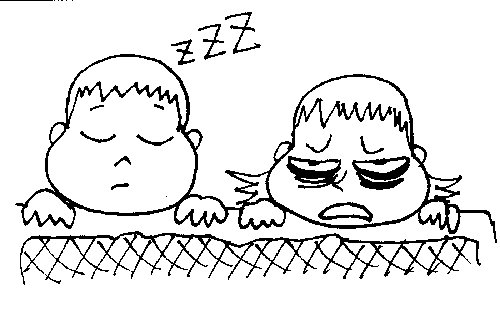
We are not sure what sins Warrnambool has committed to deserve being woken in the middle of the night each week, but its poor residents endure what are possibly the worst rubbish collection times in Australia.

Yes, it’s a first-world problem to be worrying about garbage collection times, but what a blessing it was over Christmas – due to a change in routine – to have a brief respite from the normal 3am kerbside collection.

I remember when I first moved to Warrnambool last year and being woken by what I thought was a car accident outside my bedroom window in the dead of night, only to leap out of bed and find the garbage truck squealing and flashing its way along the street.

It later returned to pick up rubbish from the other side of the street. Then the recycling truck turned up … Four passes in two hours does not make for a good night’s rest! (We also know of at least one courtyard in Warrnambool where the rubbish truck reverses the whole way in, despite their being a wide turning circle at the end. Can you imagine the racket?)

flashing lights
An accident in the dead of night? No…just the garbage man doing his job at some ungodly hour of the morning.

Bluestone Magazine decided to do a spot survey to find out if Warrnambool residents are the only Victorians who endure garbage pick-ups anywhere from 10pm to 3am: the 10pm folk are the lucky ones!

Our spot survey included councils and shires in Victoria, Tasmania, New South Wales, South Australia and Queensland and we found that all residential kerbside rubbish collections took place between 6am and midday – except in Warrnambool.

Even in the largest city in Australia, Sydney, the rubbish for Sydney City Council is collected at around 9am.

There is no doubt rubbish collection is a vital weekly ritual and we are grateful for an efficient service, but why has Warrnambool gone for a nocturnal pick-up?

We went in search of an answer.

telopea-garbage-bin-row-side-ur
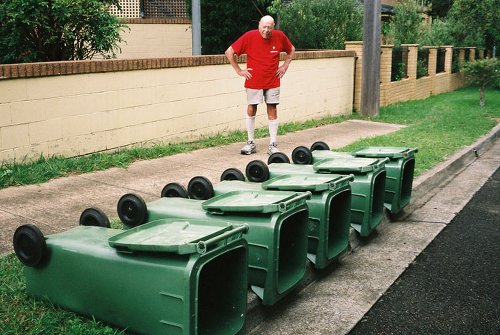
The only things exhausted after rubbish night in Sydney are the rubbish bins. (Pic: http://www.walksydneystreets.net)

Warrnambool City Council contracts Wheelie Waste to provide a weekly garbage and fortnightly recycling collection. Wheelie Waste  also provides rubbish collection services for 12 other council areas in Victoria, including the Moyne Shire and Colac Otway Shire – both of which have rubbish collection starting from 6am.

I called Wheelie Waste to find out why Warrnambool wasn’t also on the 6am schedule, but they didn’t want to comment to Bluestone Magazine and directed me to the council.

The council’s Manager of Communications, Nick Higgins, was more forthcoming:

“The night time collection of waste occurs for two main reasons: safety and efficiency,” he said in an email.

“Collecting during daylight hours would mean the trucks would be on the streets when there is more pedestrian traffic and potentially during school drop-off times.”

(But what about Sydney, surely it has more pedestrian traffic?)

Nick then went on to say:

“Collection of waste during the day is more costly due to the collection being less efficient as a result of factors including traffic, parked cars and school zones, all of which slow down the service.”

house

So in effect, the council’s main reason for collecting rubbish overnight is about cutting costs – although we are not sure how much is saved – because if it was all about safety, every other council would run overnight collections to avoid running over any school children.

We already know that Wheelie Waste has no problem with collecting waste during the day, because its general manager of contract garbage, Chris Philp, said late last year that manoeuvring around traffic and parked cars was not a problem.

“We pick up waste all around Victoria and don’t have problems with cars parked on the road,” he said.

I wonder, if asked, would Warrnambool residents prefer an end to their weekly garbage wake-up calls, or saving a dollar or two from their rates? After all, the biggest savings in the cost of garbage collection have come from recycling. Maybe it’s time for a re-think.

Let’s sleep on it.

How we compare: Warrnambool 10pm to 4am; Port Fairy (Vic) from 6am; Portland (Vic) mid-morning; Cheltenham (Vic) from 6.30am; Mirboo North (Vic) around 8.30-9am; Ballarat (Vic) from 7am; Traralgon (Vic) between 6am-9am; Colac (Vic) 6am- midday; Albury (Vic) from 6am; Richmond (Vic) 9am-noon; Gawler (SA) from 7am; Port Adelaide (SA) from 7am; Huonville (Tas) 8am; Kingston (Tas) around 7am; Sydney City (NSW) 9am; Northern Rivers (NSW) 10am; Manly (Qld) from 7am.